Why do you feel good when listening to others' problems? Why do people get over the Jhanas?
Imagine, you are eating a delicious piece of chocolate, or receiving a soothing massage, or rejoicing in listening to Beethoven. These experiences fill you with positive valence (pleasure). From an unexamined view, the pleasure of these experiences is thought to be found in the tastes, sensations and sounds themselves; that pleasure is about access to the good feelings and suffering the bad feelings.
However, I prepose that there are no feelings or sensations in themselves which feel good or bad, rather pleasure and suffering are actually comparative judgments (made pre the conscious intellect, of course) and so are actually relative, just like direction is.
In general relativity, there's no absolute direction. 'Up' doesn't exist in the universe as an intrinsic property. Direction only makes sense relative to a reference frame and valence works the same way.
A cold shower is unpleasant compared to the warmth of your bed. The same cold shower is refreshing compared to the heat of summer. Neither experience is actually unpleasant or refreshing. The valence exists only in the comparison - in the relation between the current state and the reference frame you're measuring from.
Your reference frame, in this case, is the transitional contrast. What you felt before. What you expected. What you're contrasting against.
We all want to feel better, abate our pain or at least stay feeling good. But how to actually navigate the pleasure/suffering space? The naïve view would suggest feeling good is about maintaining certain experiences, like Jhana, and avoiding certain states like sadness - as if these are stable states in the plane of consciousness that we can position ourselves on.
The implications of how this affects our motivations are actually quite significant. As the Effective Altruists communities endlessly debate how best to steer the future with which projects to work on, hardly any of them have deeply looked into how suffering works - especially not at their own consciousness and suffering. Instead, they run ahead with philosophically examined views (yes), but not very phenomenologically informed views.
And even most people on the contemplative path are trying to arrive at a place, to stay within a desirable 'attractor state'. But there are no places to arrive at and stay at and continue feeling one way about. Instead, trying to continuously feel pleasure would be more akin to trying to only go forward. But as we even collectively find, the great march of self development and of civilisation doesn't only progress forward in one direction - we inevitably run out of room in an area. Instead, the more skilful approach is to learn how to track transitions, play with reframing and create lots of degrees of freedom for energy to move.
Because there is no objective measure on the valence of any state, it all depends how consciousness is transitioning from and to 'states'. For this reason Nibbana has been described as both the highest happiness and the complete cessation of suffering - one definition additive, one eliminative. The value judgement depends on the approach, not on the state itself (in fact there are no states themselves). This relativity and changing reference frames is also why people 'get over' the Jhanas.
Given this understanding, that means states which are typically associated with suffering like low ambition or anger need not be hugely displeasurable if we can skilfully transition into and through them and find helpful framings. How to navigate the pleasure/suffering space in a way that is most agreeable comes down to recognising our frames and aligning expectations, understanding where we're coming from and going to, with our sensory stimuli. This requires extreme mindfulness and highly developed conscious optionality.
And this is why contemplative practices, done well, really transform people's relationship with suffering and how they experience their emotions.
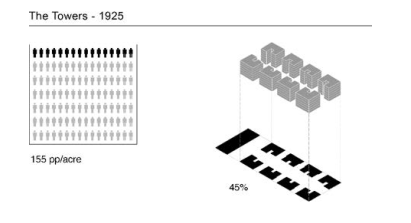
Let's do a little investigation courtesy of "Housing Density: From Tenements to Towers", a presentation by the The Skyscraper Museum by Bloom and Altwicker.
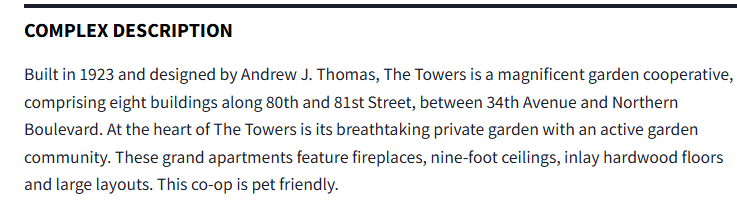
First The Towers in Jackson Heights - a six story 1920s building development... low density?
A very respectable 155pp / acre
@micsolana Needs to be marine. Q comes down to predation habits + how they scale with size
The largest marine reptiles (icthyosaurs) were macropredators, hunting for big fish. This gets less efficient with size
blue whales’ filter feeding is more efficient with size
qed blue whale = GOAT
@gregogallagher Split-bros think muscles need 48hrs to recover, which is why they rest for five minutes and do the next set for that same muscle group.