The modern Indo-European cognates of “father,” descended from a root more than 6,000 years old:
🦁 Persian — Pedar (پدر)
🇬🇷 Greek — Πατέρας (Patéras)
🇪🇸 Spanish — Padre
🇮🇹 Italian — Padre
🇵🇹 Portuguese — Pai
🇫🇷 French — Père
🇮🇪 Irish — Athair
🇩🇪 German — Vater
🇬🇧 English — Father
🇳🇱 Dutch — Vader
🇦🇲 Armenian — Hayr (հայր)
🇸🇪 Swedish — Far
🇮🇸 Icelandic — Faðir
Root: *ph₂tḗr
Proto-Indo-European
We need a movie about the massive alliance of Dacian, Germanic, Illyrian, Sarmatian armies against the Roman empire in 6ad-11ad and 160sad. It sounds like such an epic struggle for autonomy. Millions of soldiers involved. Imagine the conversations Sarmatians and Germanics had.
@daiki__q@Kh14124326@BalaamAndDonkey The languages of UK and France, as well as Greek, are Indo-European languages and share the same language family as Persian (all four are Indo-European). Is it logical to consider English,French, Greek as part of the Persian language? Because of their shared language family.
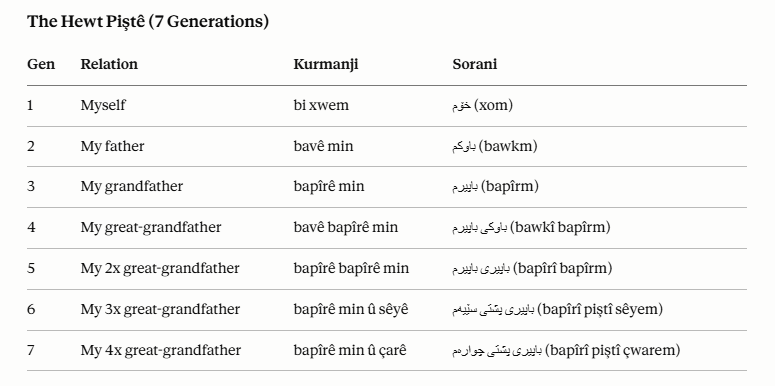
Hewt Piştê is a Kurdish genealogical tradition that has largely died out in urban settings, but it was once an important custom whereby an individual knew seven generations of their own paternal ancestry. This practice was also found throughout the Turco-Iranian world and is a product of ancient Iranian heptadic numerology combined with Iranian patrilineal inheritance customs.
The number seven was once regarded as a highly sacred symbol in the Iranian world, to the point that it appears repeatedly in cosmology, eschatology, rituals and cultural practices, topography, and many other aspects of life. Going even further back, Indo-Iranians considered the numbers three, five, and seven to be holy, but it seems that Iranian contact with the ancient Mesopotamian world during their migration from Central Asia to the Iranian Plateau consolidated and strengthened the superstitions surrounding the number seven. This is why, in the pre-Islamic Iranian world, they believed in seven heavens, seven divine beings, seven great houses, seven dastgāhs of music, and countless other examples. The importance of tracing lineage strictly through the paternal line is an extension of the old Iranian patriarchal view that children belong to the father's identity (mothers were not considered into the equation).
There are slight differences in how Hewt Piştê is implemented throughout the Turco-Iranian world. For example, among us, the genealogical sequence begins with the individual themself and ends with the fourth great-grandfather. Among others, the first generation begins with the father and ends with the fifth great-grandfather. This can be seen in Jeti Ata, the Kazakh variant of this custom. Another notable distinction is that Kazakhs, for instance, use the seven-generation principle to regulate exogamy, whereas Kurds traditionally used it to emphasise the roots of one's own lineage and heritage.
Among Baloch, Kurds, Turkmens, and other peoples of the Turco-Iranian world, not knowing the names of seven generations of one's paternal ancestors is traditionally seen as a sign of rootlessness. Among the Baloch, for example, such individuals were treated with contempt and disdain. This attitude is also reflected in insults across the Turco-Iranian world. Virtually every Turco-Iranian people possesses expressions that involve cursing someone's seven generations. In Kazakhstan, the tradition is perhaps preserved better than anywhere else in the world, even after urbanisation. There are sayings such as, "A man who knows his seventh forefather will care for seven nations," and "He who knows his seven forefathers may recite the Quran for them."
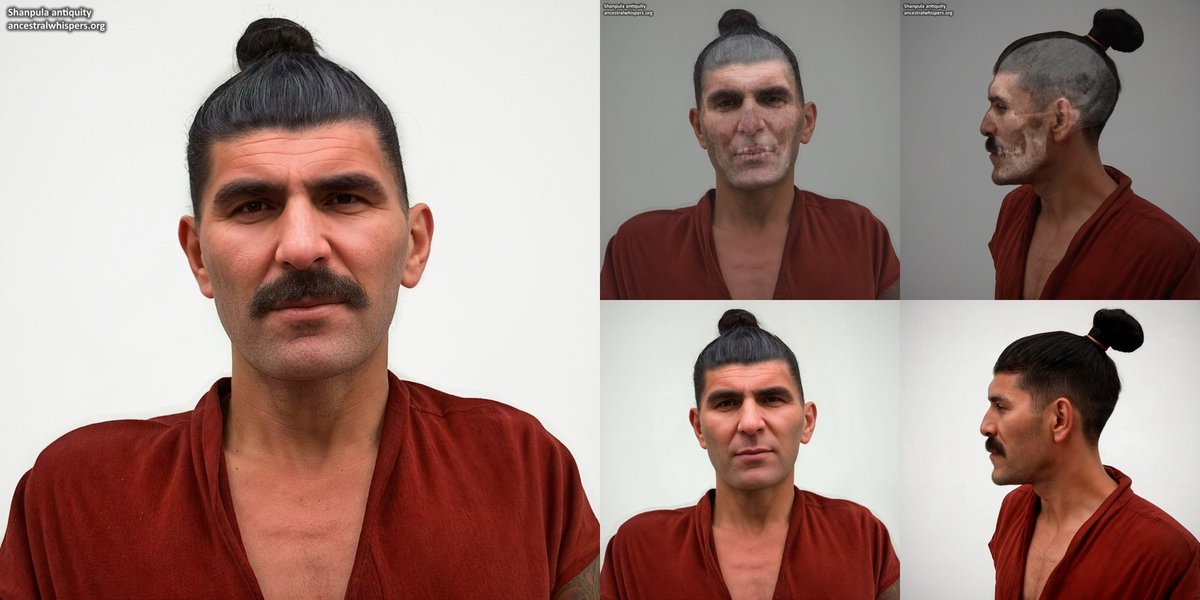
وانون-(خووار) شاه سغدی
وانونخوار احتمالا آخرین پادشاه کانگجوها (قرن پنجم پس از میلاد) بود.
بر اساس سکههای سغدی "c'cnn'p(n)c wnwn xwβ /čāčanāf(ə)nč wanōn x°əβ" به معنای «وانون، پادشاه مردم چاچ (تاشکند)» که به «خورشید پیروز» ترجمه میشود.
Polonyalı ressam Alexandre Orlowsky'nin 1819 senesinde çizdiği "Zırhlı Kürt süvarisi" çizimini dijital olarak yeniden uyarladık.
Her detayıyla muazzam.