LinkedIn had become too much noise, not enough signal. So I made LinkedIn Desk...a Grok @bot that learns your networking preferences, reviews invites daily, filters pitches and spam, recommends Accept/Ignore, and only clicks what you approve.
Clone it: https://t.co/HAZwQu5HUg
Included:
• First-Run Setup Skill: builds your personal network policy
• Review Skill: recommends Accept, Ignore, or Ask Me without changing anything
• Approval Skill: clicks only the exact actions you approve
• Daily Routine: reviews new invitations on your schedule
How can I convince the right people to allow it to read and make reports off my boomarks without using additional api money... Just usage…One my strongest use cases is grok as a second brain based on what I feed it with bookmarks...im happy to write this all up and send if it's worth the shot
If anyone wants feedback on their bots... comment with your @bot link and I'll test it and tell you how to make it better
Offer stands until I'm sleepy
@pocarles@tibor_tee@mark_k@bot Yeah I want to read and create reports of similar bookmarks...not post, I do it with the api right now but just feels like it's my own bookmarks ...should be allowed?
Google has confirmed the rollout of the goto URL parameters and told me "We have a long history of deploying technical measures against evolving forms of abuse, and we regularly take steps to protect our services and users." Story updated at https://t.co/48u7Rvh3h5
We're making Grok Bot more widely available.
All SuperGrok Plus, Cursor Pro+, and Cursor Teams subscribers now have access.
We're also offering a free trial with limited usage for all other users.
New Peec AI data from suggests ChatGPT 5.6 is reducing fan-out queries and citations for listicles, comparisons.
Are they cracking down on GEO-focused articles?
@tomekrudzki@peecAI https://t.co/5k0PAc5OYO
I used to believe that when a model hallucinates a fact about a brand, it simply lacks that knowledge in its training data and fills the blank with the next most probable tokens. On the weekend I learned that this isn't always the case.
A recent Google Research paper shows that hallucinations frequently happen despite the fact being fully encoded in the model's parametric memory.
Sometimes neural pathways from the user's prompt to the encoded fact simply don't connect to the fact, which explains why the same model sometimes returns a correct answer and sometimes it gets it wrong.
My notes, thoughts and explainer video: https://t.co/gwTF6IBYZQ
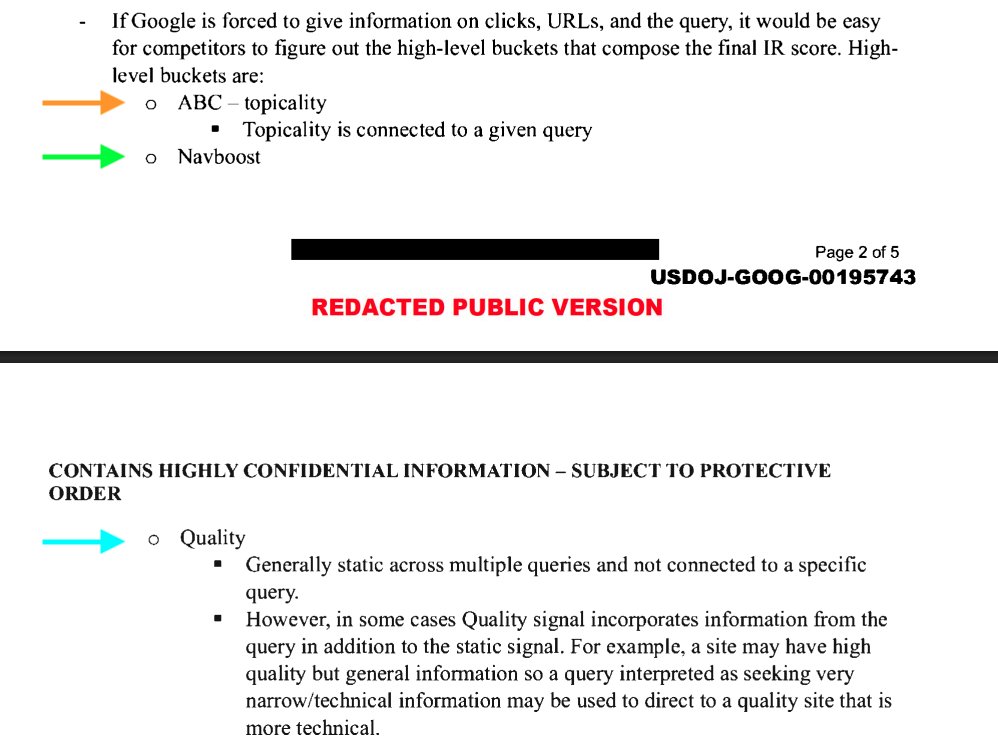
Google's biggest ranking "buckets", according to evidence collected at its antitrust trial, are:
1. Topicality: How relevant is the page to a topic/query. Heavily determined by the "ABC" ranking signals:
• Anchors - the links pointing to the page
• Body - the text on the page
• Clicks - user click signals to determine relevance
2. Navboost: a re-ranking system that uses 13 months of user click data to adjust search results (first/long/last clicks)
3. Quality (Q*): One of Google's most important signals, based on site authority + quality adjustments (e.g., Panda, Helpful Content, spam)
SEOs—including yours truly—often get distracted by shiny things. But focusing on these three ranking buckets will likely account for 80-90% of your Google visibility.
New on my Substack: I spent the past few months watching how ChatGPT's fan-out queries have been evolving and paying close attention to the awesome research being done in our space on this topic. My interpretation is that I think the site: operator is being used as a way to combat spam in ChatGPT's answers, and to produce better quality results.
I pulled together the recent research from @DavidKonitzny, @chris_nectiv, @resoneo, @suganthan, @MalteLandwehr and others, alongside my own testing, and the research is converging on the same story:
⭐ ChatGPT is running way more searches per prompt than it did a year ago, including for free/cheaper tiers (single fan-out prompts dropped from 94% to 43.5% when 5.6 became the default, per Peec AI)
⭐ A huge share of those searches are now scoped with site: operators, and the word "official" keeps climbing as a top term in fan-out queries
⭐ The domains it scopes to skew heavily toward high-authority: official brand pages, .gov sites, .org sites, established review platforms, and Reddit. In one batch of ~20 legal prompts I tested, every single response cited only .gov domains 👀
⭐ Meanwhile, URL retrieval is going up while unique domains cited is going down. More pages are being considered for the response, while fewer pages are being cited.
My theory: OpenAI is experimenting with limiting its searches to places it already trusts, which is one way of managing the quality of retrieved information. It reminds me of the early days of Google's E-E-A-T, but this time, ChatGPT style. And with 5.6 Luna becoming the default for free users (90%+ of ChatGPT usage), this behavior isn't limited to paid tier users anymore.
There are also risks involved in this approach, including ChatGPT constructing site: searches against wrong (and sometimes parked, purchasable) domains, which @MalteLandwehr covered in a great post recently.
Check out the full article, with all the data attributed to whoever ran it, plus what I'd actually do about it as an SEO is linked below in the comments.
I'm curious whether others are seeing the same patterns, especially the site: queries showing up in your GSC and Bing Webmaster Tools reporting.
https://t.co/d4JpCqU4iU
New SEO Research: ChatGPT dramatically changed its fan-out queries.
ChatGPT searches have TRIPLED + it evaluates more authoritative sources: https://t.co/Qd15dqnyFQ
Ecommerce SEO: Google is bringing back its "add to cart" links within free product listing results.
This is in conjunction with UCP (Universal Commerce Protocol), where you're often able to see 3 distinct links that show on free listings:
1. Visit site: linking directly to the product page
2. Add to cart: linking to the checkout page on the website with the product included
3. Buy now: the UCP experience where you can transact directly in search results with Google Pay
I have noticed Google pushing the add-on for the cart integration in Merchant Center recently, so it makes sense that they are now testing it again in search results.
There could be a lot of benefit to integrating this experience within the free listing results, considering it skips a step for the searcher in having to find the cart link on the PDP.
Also, the more links the better when it comes to free listing results, so I personally welcome Google pushing this type of integration within the eCommerce space!
I'm worried that citation analysis research is misleading us... badly.
AI tools often already know which brands they're going to search for and recommend, so looking at the sources or URLs ain't gonna help you much. Full report: https://t.co/lpoS9q7Bfp