My kid will never know a world where humans are the smartest thing in the room.
Sam Altman said it. And it stopped me cold.
For us, AI was an upgrade. We remember life before it.
For them, it’ll just be… life. Like electricity. Like the internet. Invisible. Assumed.
Here’s the lesson:
We grew up optimizing to BE the smartest in the room.
Top grades. Right answers. Memorize, recall, win.
That game is over.
Our kids won’t compete with AI on intelligence. They’ll lose. Every time.
So what do we prepare them for?
Not “what to know.” But “how to think, ask, judge, and create.”
3 things I’m already drilling into my own kids:
1️⃣ Curiosity over compliance, the best question beats the fastest answer.
2️⃣ Judgment over memorization, AI gives you 10 options. Knowing which one matters? Still human.
3️⃣ Creation over consumption, don’t just use AI tools. Build with them. Direct them. Own them.
The smartest entity in the room won’t be human anymore.
But the most valuable human in the room?
That’s the one who knows how to work WITH the smartest entity in the room.
That’s the skill. That’s the prep. That’s the future.
Nassim Taleb's mentor proved Wall Street's math is a lie. Before black swans, Nassim Taleb had a teacher: Benoit Mandelbrot, the father of fractals.
His finding was brutal - in the textbook model, a "10-sigma" crash should happen once in millions of millions of years. In real markets, those days keep showing up.
Over the last 100 years, almost all the money was made and lost in about 10 days. The rest barely mattered.
"Only the very few rare events count. The rest hardly counts at all."
"The bell curve doesn't just understate market risk - its assumptions are absurd."
"Great fortunes were made in very few days. Great ruins happened in very few days."
~80 min, free. the mathematician who proved markets are rougher than anyone admits ↓
🚨The most dangerous 48 hours for risk assets this year starts Monday.
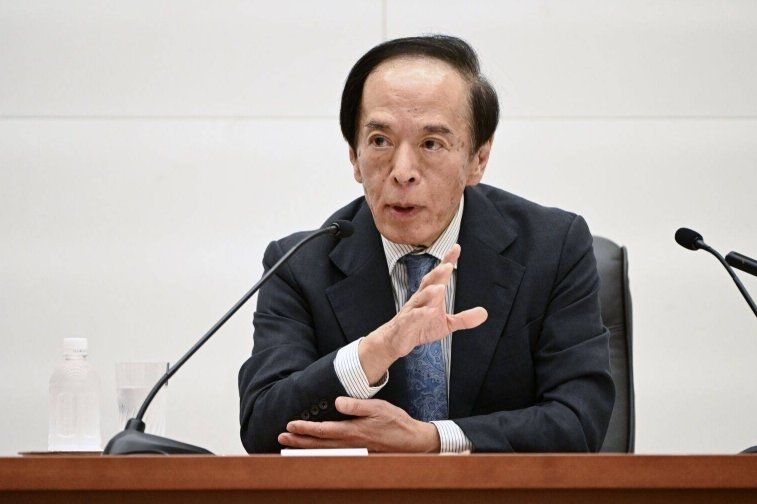
The Bank of Japan is expected to raise rates to 1% on June 16, the highest in 30 years.
The Fed meets the very next day with zero rate cut expectations and inflation still rising.
Every major BOJ hike since 2024 triggered a sharp market selloff.
In previous BOJ-driven selloffs, the Fed was actively cutting rates. Now it is expected to hold with inflation at 4.2% and rising.
Market volatility is picking up:
The Nasdaq 100 index posted 5 consecutive trading days ending Thursday with a move of at least 1% in either direction, the longest streak since August 2024.
This also matches the streak recorded in April 2025 during market turmoil following Liberation Day.
The information technology sector also ranked among both the strongest and weakest-performing sectors in the S&P 500 across 4 of the 5 trading sessions ending Thursday.
As a result, the Nasdaq 100 Volatility Index, $VXN, jumped +11 points in 5 days, or +49%, to its highest level since April 2025.
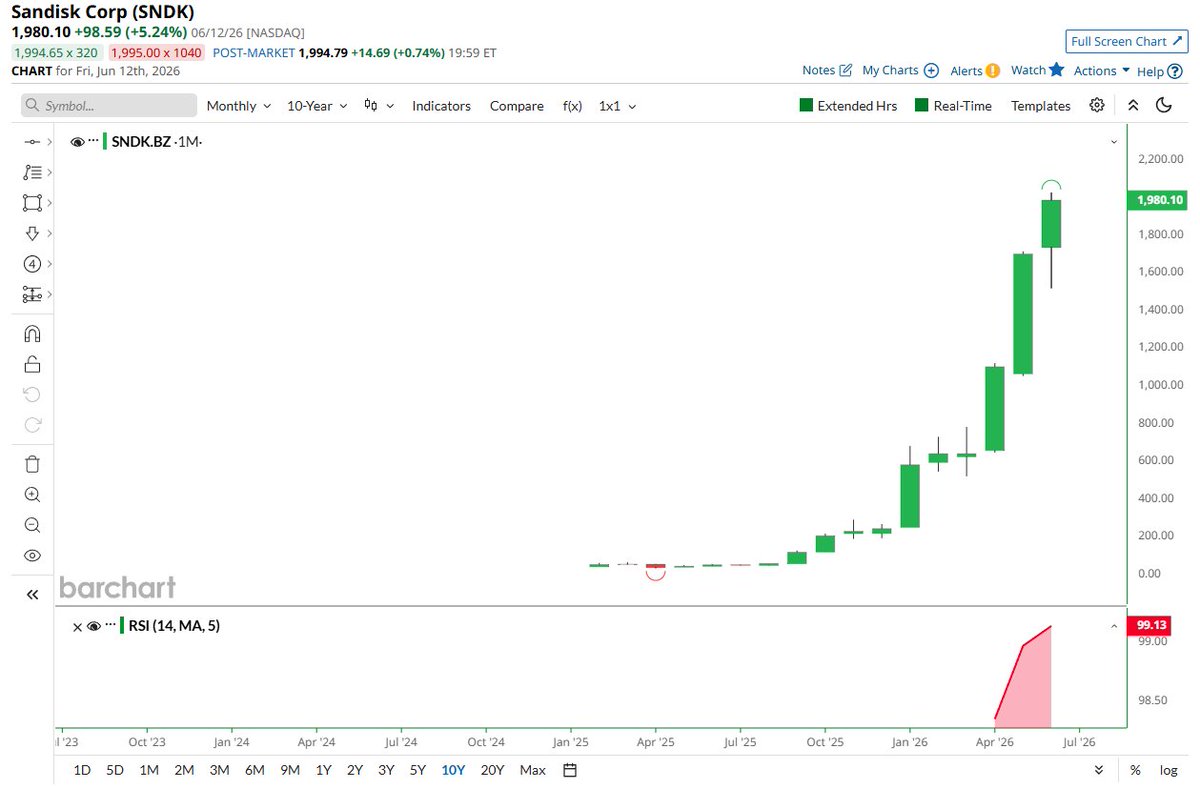
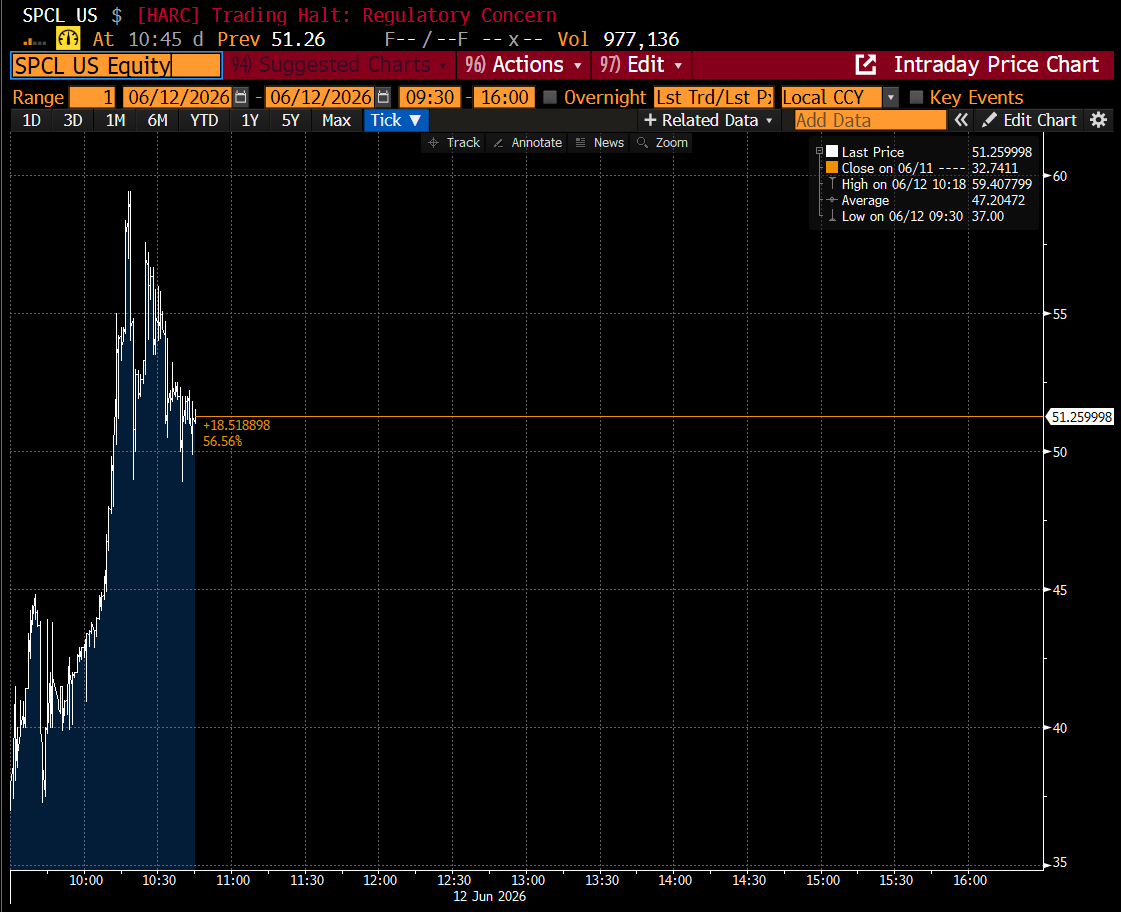
Volatility remains elevated across the technology sector.
If fixing our broken, unnecessarily K-shaped society is important to you, then please study the charts on slides 9-33 of this report: https://t.co/OTMHwOLLSu. Use the knowledge to facilitate change. Best of luck! Our children are counting on us. 💜🇺🇸
Thomas Sowell: "Intellectuals have a great tendency to see poverty as a great moral problem to which they have the solution. The human race began in poverty, so there's no mysterious explanation as to why some people are poor.
The question is why have some people gotten prosperous, and why have some gotten to a greater degree than others."
𝗝𝗶𝗺 𝗚𝗿𝗮𝗻𝘁 𝗼𝗻 𝘁𝗵𝗲 𝗔𝗜 𝗯𝗼𝗼𝗺:
"I think that today is one of the greatest bubbles of all time."
He argues the excitement around AI dwarfs the worldwide web and fiber optics, and that better technology doesn't ground the speculative spirit, it incites it.
https://t.co/ySAIQl6B7f
Nassim Taleb: the richest man in the Roman Empire woke up every morning pretending he was poor.
Seneca had more to lose than to gain from his wealth - so he rehearsed losing it. Every so often he'd live on bread and water as if shipwrecked, just to make the downside familiar and harmless.
That's the whole game, Taleb says: arrange your life so you have far more upside than downside - then randomness stops scaring you.
"Make more when you're right than you lose when you're wrong - that's antifragile."
"Always keep more upside than downside from random events."
"The Stoics aren't unmoved by the world - only by bad events."
~70 min, free. the oldest trick for surviving a world you can't predict ↓