Hype’s hitting different today for @bitdealernet
$BIT TGE is set for 12 UTC today and the demand is already insane.
Kucoin spotlight closed 6351% oversubscribed with 38M raised on a 600K cap.
$BIT is the core of the whole BitDealer ecosystem... staking for airdrops and rewards,governance power, and the liquidity base for every new game token.
The model backs itself too. Revenue from iGaming RWAs goes straight into buybacks and burns, keeping things sustainable instead of relying on hype alone.
Today’s the big moment. If everything lines up like the demand suggests, $BIT could flip the Solana gaming scene.
Keep an eye out for the post tge cex and dex announcements.
Has anyone checked out the $BIT staking pool on Kucoin yet?
They are offering a juicy 600% APR for the next 8 days.
With the IDO fully refundable I personally don't see much upside or downside in the next 8 days.
My Chaingpt buzzdrop will unlock on Dec 3 and I'm currently #13 on the @bitdealernet leaderboard.
You can buzz with me here: https://t.co/FiNneBL8Fc
GN from idOS 🌙
I want tech that feels easy, not heavy.
With @idOS_network I lock in my verification once, then move across Web3 without the usual headache. It stays private, it stays clean, and I stay in charge.
My identity goes where I go, and I never have to give it up just to get things done.
Native BTC DeFi + cost advantage 👽
Most people still treat Bitcoin like it can’t do anything outside its own chain. Meanwhile, @Pact_Swap quietly built a way to move BTC across ecosystems without bridges, wrapped assets, or paying insane cross-chain fees.
It feels closer to CEX pricing than anything on-chain, but you keep full control the entire time.
▫️Native BTC in, native assets out
▫️Fast settlement
▫️No permission needed
And swaps that cost a fraction of what every other cross-chain solution charges.
If you’ve been waiting for a real path to Bitcoin DeFi that doesn’t rely on trust or gimmicks, Pact Swap is the first one that actually feels built for users instead of infrastructure constraints.
With @genome_protocol using Splice, $NOME is creating a more sustainable approach to NFT bonuses.
• Hex Hunt rewards fuel a unified ledger
• Adapts over time to generate real revenue
• Increases engagement without wasting resources
It’s a smarter way to keep things flowing and efficient.
Yooo @kloutgg is wild, man. It turned "being chronically online" into an actual skill you can monetize.
You pick topics you think will trend on X, NFL, crypto drama, politics, whatever, and when your picks show up on the trending list, you rack up points and chase the pot.
It feels like fantasy sports mixed with prediction markets, but for culture. The bonus hits on first appearances and Bullseyes are addictive.
My brain is already mapping out what could trend each day. Honestly, it’s the first app that rewards the one thing CT actually excels at: spotting chaos before it happens.
And those Hashtag NFTs? Low key one of the smartest design choices I’ve seen this year. Every hashtag you see trending from TRUMP to BOLLYWOOD, exists as a fixed supply NFT.
Own the tag, stake it, and you earn a share of platform fees. Rarity matters too. Gold tags have insane staking power, and even the common ones can pay off if the topic is active.
And the merge mechanic? Addictive. Fuse three commons, pray for an upgrade, and chase higher tiers. Early holders also get perks and future airdrop benefits.
Imagine getting paid just for holding the internet’s favorite keywords. That’s such a Crypto coded idea I can’t help but love it.
Humanoid robots are improving. The 2025 models already look way more advanced than 2024.
But the real breakthrough won’t be the robot bodies ⇢ it’s the software + data that teaches them how to move, think, and work together.
That’s why I’m watching @openmind_agi.
They’re building something simple but powerful:
➜ train-to-earn via FABRIC data ecosystem
➜ AI operating system called OM1
OM1 can run on any robot ⇢ humanoids, drones, quads.
It helps robots:
• see
• understand what’s happening
• remember things
• react in real time
You can even install new abilities → navigation, object detection, task modules ⇢ the same way you install apps on your phone.
It’s open-source and already used by many dev.
P/S They just raised $20M from big names like Pantera, Coinbase Ventures and Pi Network Ventures.
Robotics could unlock $10T+ market and OpenMind is targeting the software layer.
They’re not making robots ⇐ but specifically building the machine internet for the robots.
talked a lot about @brevis_zk recently
privacy angle, the uniswap grant, the vana ai collab but never really broke down how it all works
so let’s fix that 👀
everyone thinks zk is privacy but that’s only half the story
the real unlock is succinctness and that’s the part that actually makes blockchains scale
think of it like this:
old model - whole network re-runs the same work -> slow and expensive
zk model - one party does the computation once, everyone else checks the proof -> fast, tiny, cryptographically guaranteed
so zk flips that model...
doesn’t matter if the computation took 1s or 10h, the proof stays small, verification stays cheap
100k ethereum txs? -> the proof only a few KB
complex logic? -> verified in ~50ms
full chain scan? -> same tiny proof, cheap cost
the size of the proof never explodes. that’s the whole magic of succinctness
and once you have that, a lot of things can unlock:
- smart contracts can read historical data without blowing gas
- heavy algorithms run off-chain but still get verified on-chain
- cross-chain data becomes trustless and verifiable
compute where it’s cheap, verify where it matters
why this matters for brevis?
real examples already show how far this can go
@UniswapFND can verify dex routing without centralized trackers.
@vana can prove ai data quality without revealing any data
and that’s just early usage. any protocol can build proof-based systems on top of brevis. no oracles, no indexers, no private servers
and remember pico prism from my first post?
99.6% real-time proving on ethereum blocks. that’s the difference between cool zk research
and production-ready stack
most zkVMs take hours. pico runs basically in real time. that’s why the partnerships keep stacking 🫡
brevis doesn’t feel like another zk project. it feels like an upgrade to what smart contracts can even be
study brevis 👨💻
Crypto things you might have missed:
-Big @Ripple update changes everything for XRP!
-Canary $HBAR ETF AUM is surging
-4 huge firms are now using @chainlink tech
-White House crypto czar says crypto is the "industry of the future"
JOIN THE LIVESTREAM NOW ON YOUTUBE AND X
On Purposeful Buidl-ing Differently:
It’s interesting to observe how the perp DEX landscape is evolving.
Many projects are beginning to rethink market structures and execution models to overcome the same architectural flaws that have limited on-chain trading since inception.
The truth is, most current DEX architectures aren’t designed to withstand extreme volatility.
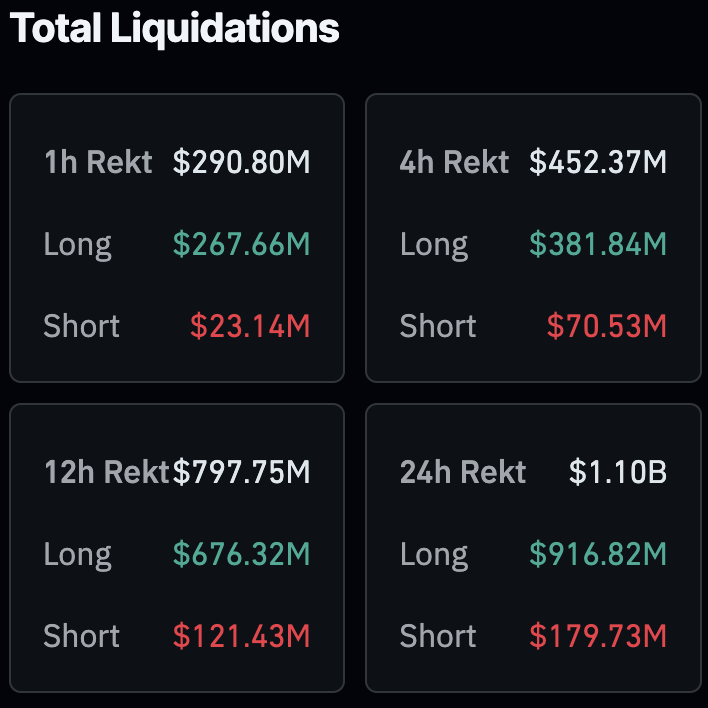
The largest liquidation event on 9/10 made that painfully clear: cascading ADLs + order book dislocations exposed how fragile the perps ecosystem still is.
Unfortunately, most DEXs rely on continuous AMMs or CLOBs, both of which do not do well under liquidation pressure:
🔸Volatile markets amplify drain cycles, draining LPs & triggering spreads to widen uncontrollably.
🔸Continuous on-chain CLOBs devolve into MEV battlegrounds, where latency traders extract toxic flow, leaving retail users w/ unfavourable fills (get rekt)
What’s needed is a more resilient execution primitive → one that eliminates latency advantage, neutralises toxic flow & redefines fairness on-chain.
-----------
Enter Dual Flow Batch Auctions (DFBA):
@ambient_finance's adoption of DFBA represents a fundamental redesign of how on-chain trades are matched & cleared.
Instead of racing for blockspace, DFBA replaces speed with fairness.
This is achieved by using an oracle-anchored, batch-based mechanism that aligns incentives between makers, takers & validators.
Here’s how DFBA works in simple terms:
1⃣Order Submission → Traders place buy/sell orders with defined slippage limits (in bps).
2⃣Batch Accumulation → Orders are collected during the block and separated into maker (liquidity-providing) and taker (liquidity-consuming) flows. Nothing clears mid-block.
3⃣Auction Execution → At block end, a batch auction clears using an oracle price (e.g. Pyth) where a single clearing price per side ensures execution based on price, not speed.
4⃣Fill & Settlement → All orders are settled atomically at the clearing price. If markets move favourably during the block, traders automatically receive price improvement.
The goal here for FDBA is to leverage on the benefits of AMMs (accessbility + simplicity) & CLOBs (tight spread + possible robust liquidity depth) for the best pricing & depth on-chain.
This essentially transforms trading into a cooperative system promoting Frequent, fair auctions that minimise MEV, reduce toxic flow, and stabilise markets under stress.
This positions Ambient to compete not just with DeFi incumbents like Hyperliquid, but even with CEXs: on fairness, execution quality, and user trust.
-----------
On Why Fogo as the Ideal Settlement Layer?
Running DFBA efficiently requires a high-performance, trader-native chain. And that’s where @FogoChain steps in.
Fogo is purpose-built for real-time trading infrastructure that striks a A fine balance between decentralisation x performance:
🔸 40 ms block times & sub-1s finality → CEX-level responsiveness.
🔸 SVM-based architecture → allows DFBA to run as pure smart contracts without protocol-level hacks or consensus workarounds.
🔸 Native @PythNetwork integration at consensus → instant oracle updates for verifiable clearing prices.
🔸 Institutional-grade reliability → built from the ground up for composability, fairness, and latency-sensitive applications.
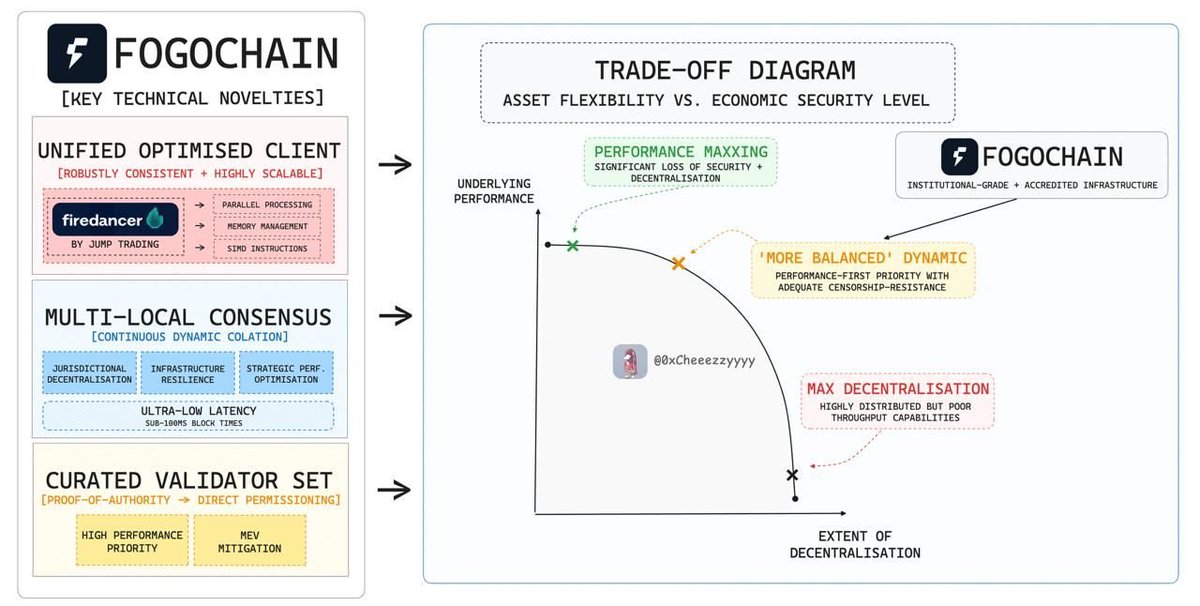
Its design reflects deep trading-market intuition → incorporating technical novelties that align speed with credible security.
This architecture enables frequent, fair batch auctions that minimise toxic flow & MEV, making Fogo the only chain capable of executing DFBA at production scale to achieve CEX-grade performance with on-chain transparency.
But ofc infrastructure alone isn’t enough, execution + expertise matter just as much.
And that’s where Fogo’s combination of trading pedigree, domain knowledge & institutional backing truly sets it apart.
Fogo isn’t just another 'fast chain', it's backed by deep market expertise + credible capital:
Core Contributors include:
🔹@RobertSagurton (ex-Jump Crypto / JPMorgan)
🔹@0xdoug (Ambient Finance)
🔹Michael Cahill (Pyth Network)
This close network between Fogo, Ambient & @jump_ brings the domain knowledge and market experience needed to make mechanisms like DFBA actually work in production.
It’s a rare blend of technical architecture + market execution → the formula required to build real financial infrastructure, not just another app-chain.
-----------
Final Thoughts
The collaboration between Ambient’s DFBA <> Fogo’s trading-optimised chain marks a purposeful evolution in on-chain market design.
It bridges CEX-grade efficiency with DeFi composability and fairness, setting a new benchmark for how transparent, high-performance trading systems can exist on-chain.
In an ecosystem flooded with experimentation, this kind of principle-driven, execution-focused buidl-ing is what will define the next generation of crypto infrastructure:
Not faster blocks for their own sake, but systems that are fair, resilient, and institutionally credible by design.
Most blockchains are built for speed, but few are preparing for what comes after. The quantum era. 🧠
@quranium_org is changing that.
They’re building a quantum-secure Layer 1, combining AI, blockchain, and post-quantum cryptography to protect the future of decentralized systems.
Quantum computers could one day break today’s encryption, and Quranium is one of the few projects already building defenses for that world.
To kick things off, they’re inviting creators to join the conversation:
💰 $50,000 worth of $QRN rewards live now on Bantr
🏆 Top 100 creators rewarded each month
⏰ Ends 16 Dec
This isn’t just another campaign. It’s a chance to help shape how the next generation of blockchain security and intelligence will look, and get rewarded for it.
👉 https://t.co/EEQ8nMaAmd
Something new is quietly forming around @ADIChain_, a Layer 2 network with a bold goal: bringing 1 billion people on-chain by 2030, starting with emerging markets.
Built on ZKSync, ADI Chain is designed to be people-centered, combining EVM compatibility with support for custom L3 deployments. This allows governments, institutions, and enterprises the flexibility to embed compliance into their networks while maintaining decentralization on Ethereum.
Their Testnet is already live, featuring Airbender, one of the fastest real-time ZK provers on the market.
What sets ADI apart is its institutional foundation, backed by Sirius International Holding, the digital arm of IHC, a $240B conglomerate with a strong global reach. This backing provides ADI with the pipelines and partnerships necessary to bring real-world use cases on-chain.
To celebrate their momentum, ADI is running a USDC Raffle where 3 winners will receive $100 each.
▪︎ Closes: October 23
▪︎ Winners notified via their Galxe-registered email.
▪︎ Enter: https://t.co/DoPUakAw5b
▪︎ Learn more: https://t.co/zwUfzeWrTp | Testnet Explorer