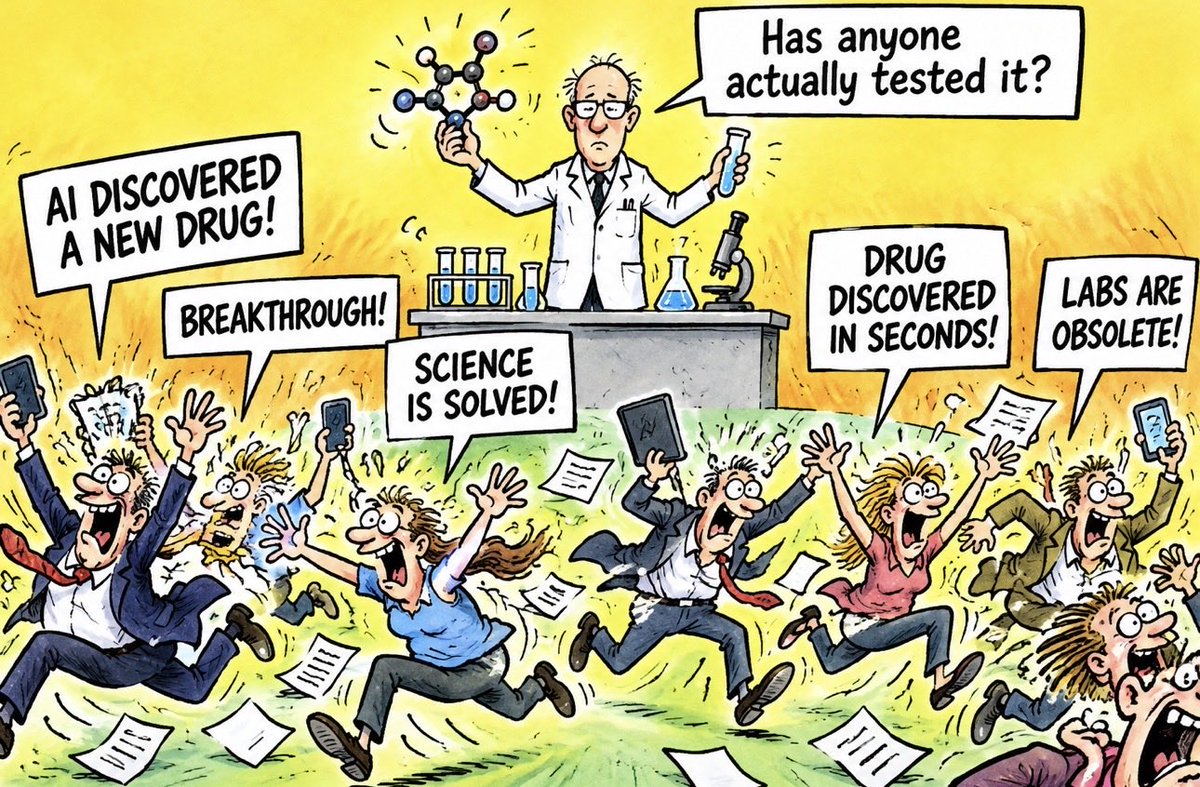
I’m a scientist. I need to say this because the AI hype is getting ridiculous.
AI can design a molecule in seconds.
That doesn’t mean it discovered a drug.
It discovered something we scientists have never been short of:
Something to test.
Someone still has to make it.
Run the experiment.
Measure whether it works.
Check whether it’s toxic.
And ultimately prove it works in the real world.
AI hype tells us:
“Prediction is discovery.”
“Simulation is experimentation.”
“Generating a molecule is developing a drug.”
It isn’t. AI is making ideas incredibly cheap.
But every new idea creates something AI cannot generate: Evidence.
And the more hypotheses AI produces, the more experiments we’re going to need.
That’s the irony nobody seems to be talking about.
AI may not make laboratories obsolete.
It may make them more valuable than ever.
You can speedrun the thinking.
You can’t speedrun reality.
RNA sequencing uncovers G-quadruplex structures and how genetic variants affect gene regulation, with G4mer predicting their impact across the transcriptome - @Penn https://t.co/nDLA2FQ4IQ
🚨 New Chapter Alert!
I’ve just added a brand-new chapter to my free, online e-book:
"Applied Machine Learning in Python" 🎉
📘 New Topic: Deep Learning with Autoencoders!
This chapter is a hands-on walkthrough of building and training an autoencoder from scratch — a nuts-and-bolts approach to help deepen your understanding of deep learning concepts.📖 Find it here:
👉 https://t.co/6ejtjBiJIu
#Python #DeepLearning #MachineLearning #AI #OpenEducation #Autoencoders
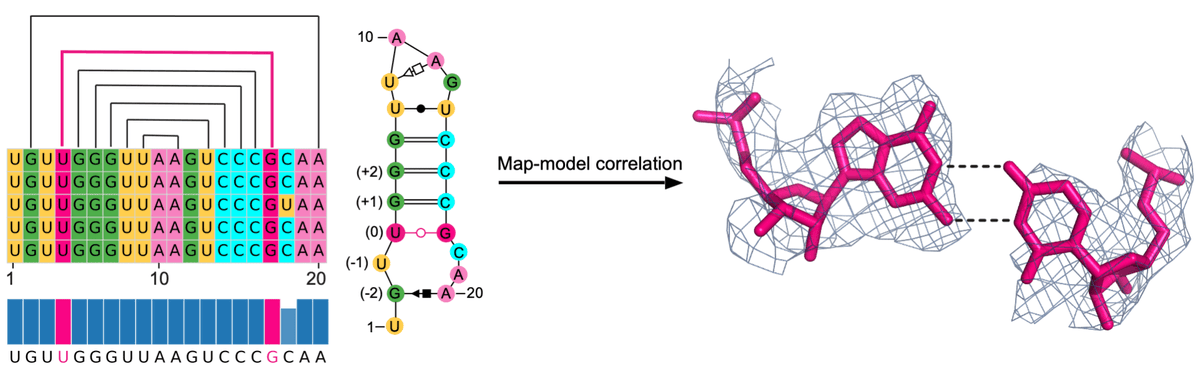
Pleased to share our new article on alternative protonation states of RNA: "Identification and characterization of shifted G•U wobble pairs resulting from alternative protonation of RNA" out in @NAR https://t.co/XKbNggJaJF
Calling all #RNA & #AI researchers! 🧬🤖 Submissions are open for the new open‑access collection “Exploring RNA Biology with Deep Learning Algorithms” in RNA Biology that I am guest editing with @YiliangDing 📄⬇️ https://t.co/gQzF5ckD5S #DeepLearning#bioinformatics#CompBio
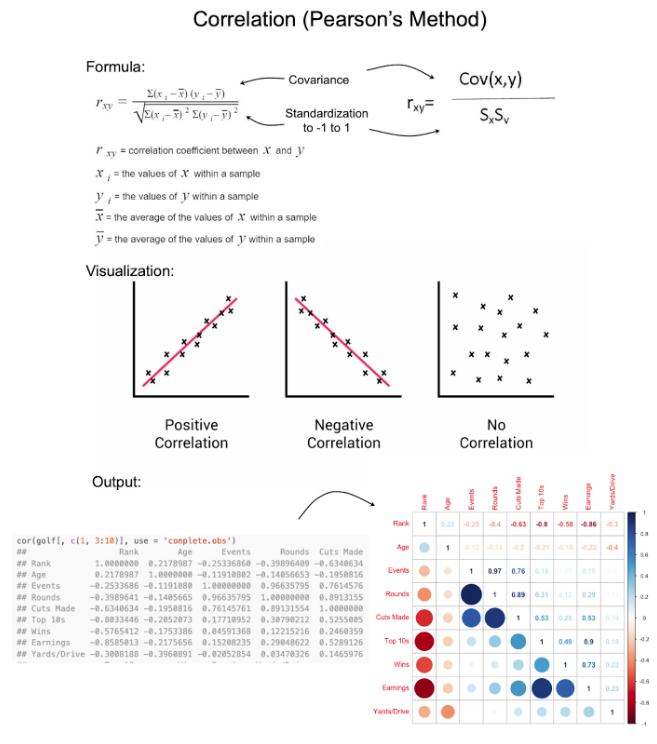
Correlation is the skill that has singlehandedly benefitted me the most in my career.
In 3 minutes I'll demolish your confusion (and share strengths and weaknesses you might be missing).
Let's go:
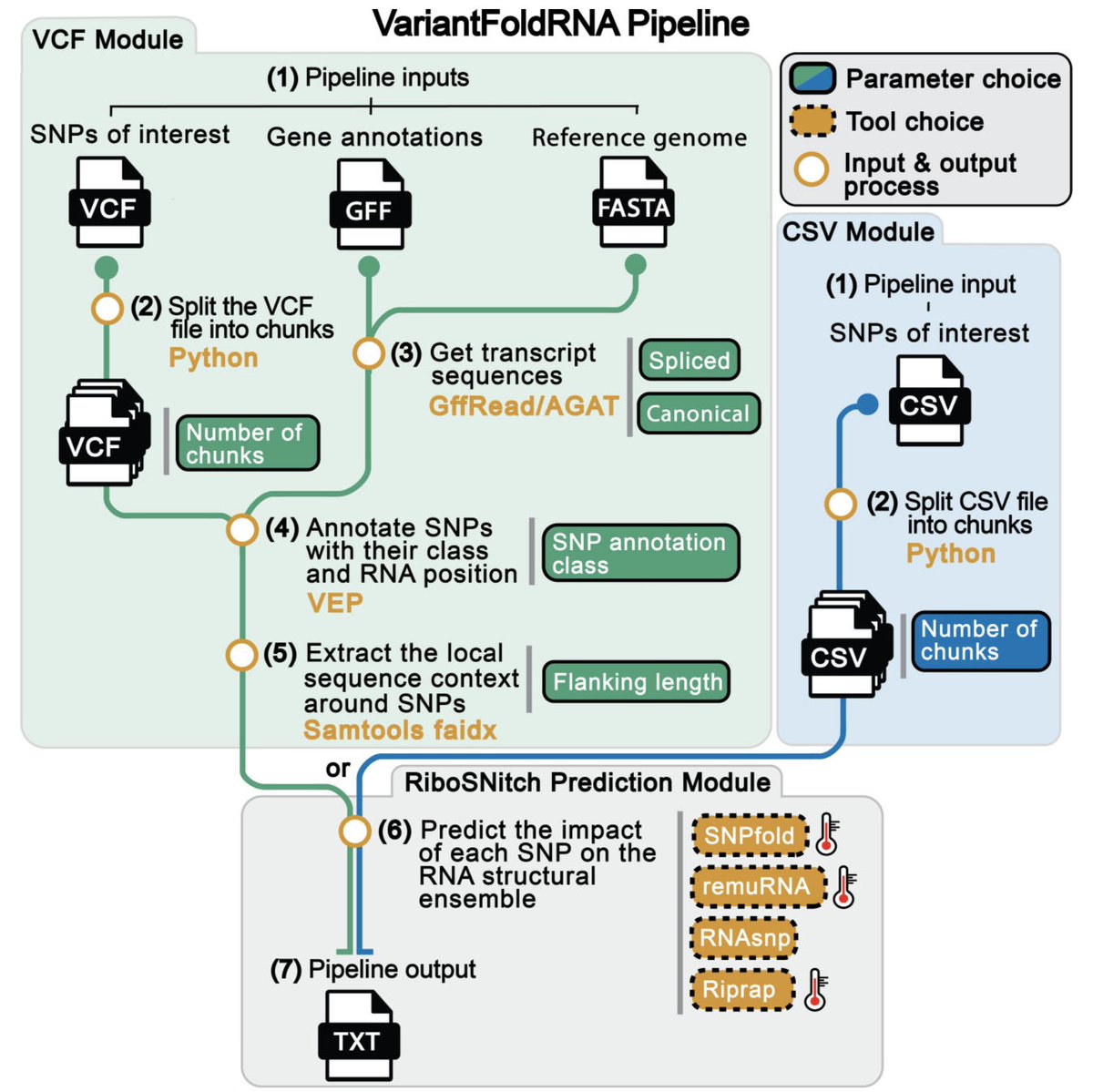
Pleased to share our new article in collaboration with the Assmann Lab "VariantFoldRNA: A flexible, containerized, and scalable pipeline for genome-wide ribosnitch prediction" out in https://t.co/mN6fYFeQsN… (Free Access) as an Editor's Choice article.
Late post, but worth sharing! 🎉 Dr. Philip Bevilacqua was the keynote speaker at the Rustbelt RNA Meeting 2024! It was an inspiring talk, not just for young trainees but for all of us in the lab.
@RRM_RNA@phil_bevilacqua
Tune in on Tuesday, Jan. 28 at 3 PM EST to hear Dr. Sara H. Rouhanifard, PhD
“Single-molecule tools for RNA mod analysis: Discovery, Quantification and Imaging”
To register click this link: https://t.co/1t9jM7QHhE
#RNA#RNAMedicine#HIRM#HMS#NEU
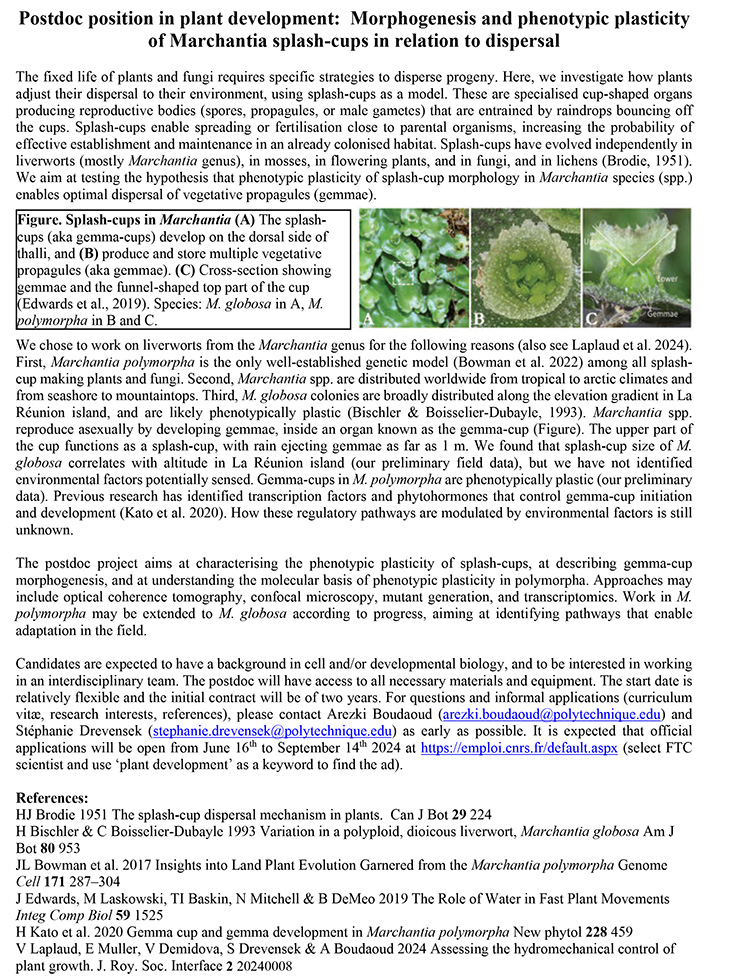
I have at least one postdoctoral position available to study bacterial gene regulation, protein-RNA interactions, and regulation of transcription elongation. I will wait for the right individual(s). Send me an email message with your interests.
Please retweet.
Decision trees are a fundamental tool for every Data Scientist. But for 3 years, I was hesitant to use them. In 3 minutes, I'll share what they are (and why I made the leap to using them). Let's go:
1. Decision Tree: A decision tree is a graphical representation used for decision-making and data analysis. It resembles a tree structure and is commonly used in machine learning, specifically in classification and regression tasks.
2. Structure: A decision tree consists of nodes and branches. The top node is known as the root node, and it represents the entire dataset. Decision Nodes: These are where the splits happen, based on a certain condition or attribute. Leaf/Terminal Nodes: These nodes represent the outcome of the decision process.
3. Splitting Criteria: This is the method of choosing the attribute for splitting the data at each node. Common criteria include Gini impurity, Entropy (information gain), and variance reduction.
4. Why I was hesitant to use them: I stuck to linear models for the longest time. I understood Linear Models, and I didn't trust Tree-Based models. I knew they were prone to overfitting which had bitten me in the past. And I also knew they couldn't predict over the max/min of the data so extrapolation was a weakness. So why did I start?
5. The Random Forest (Decision Trees on Steroids 💪 ): In 2016, I'd been monitoring several DS competitions on a website called Kaggle (it was new to me back then). And I stumbled upon a challenge where Random Forests were being used. Come to find out, a Random Forest was an ensemble of decision trees that boasted much higher stability and better performance. So I gave it a whirl. And it amazed me how powerful RF was over a simple Decision Tree.
There you have it- my top 5 concepts on decision trees. The next problem you'll face is how to apply data science to business.
I'd like to help.
I’ve spent 100 hours consolidating my learnings into a free 5-day course, How to Solve Business Problems with Data Science. It comes with:
300+ lines of R and Python code
5 bonus trainings
2 systematic frameworks
1 complete roadmap to avoid mistakes and start solving business problems with data science, TODAY.
👉 Here it is for free: https://t.co/YXG4pL97ZN
Excited to share our latest paper /w @RhysHParry on Xinyang flavivirus (XiFV) discovery in ticks from #China! Our research unveils unique structural #RNAs in the 3' UTR, shedding light on viral replication and translation mechanisms. https://t.co/Numqco7alN #Virology 🦟🔬
🚨🚨Position available🚨🚨
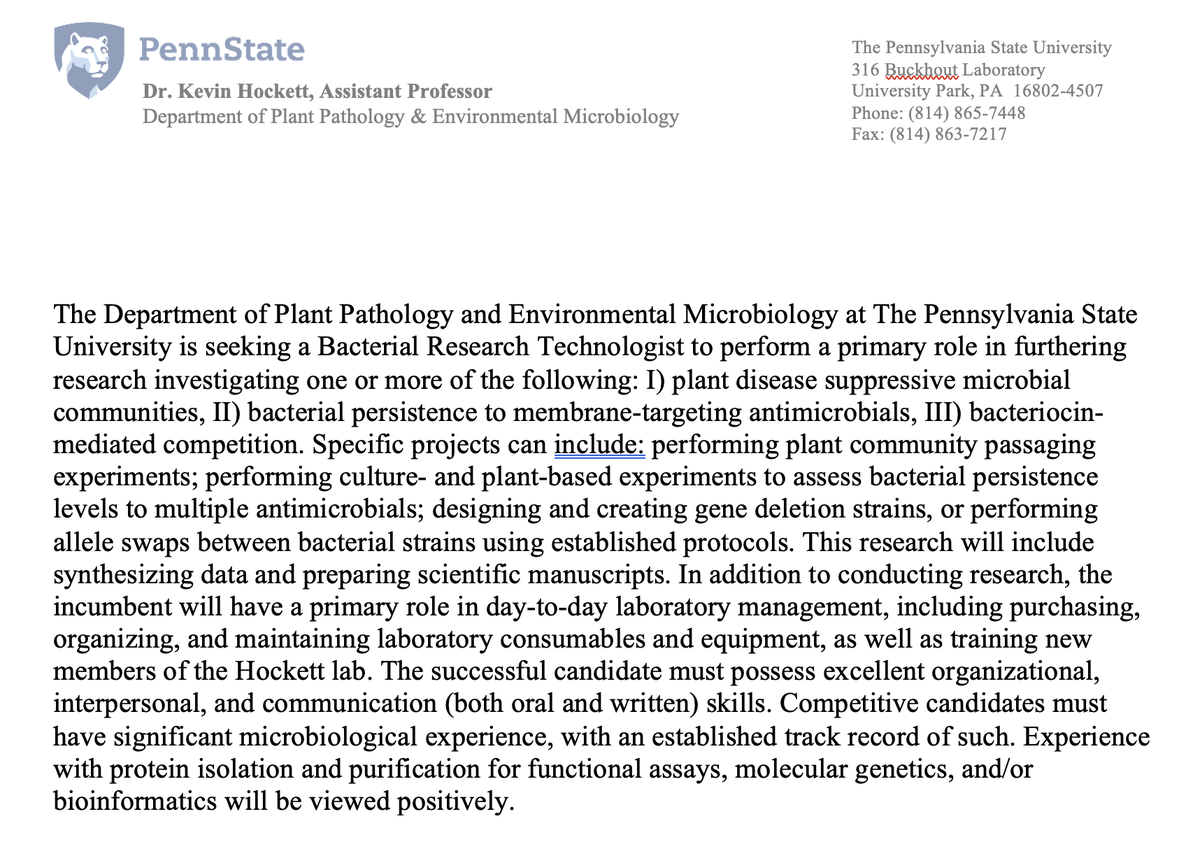
I'm looking for a lab manager/tech to work on one or more projects (see below for details) - BS or MS req - 1 yr of funding, with high probability for renewal - DM or email with questions - pls RT!
@huckinstitutes@PSUmBiome@psuPPEM@BMB_PSU
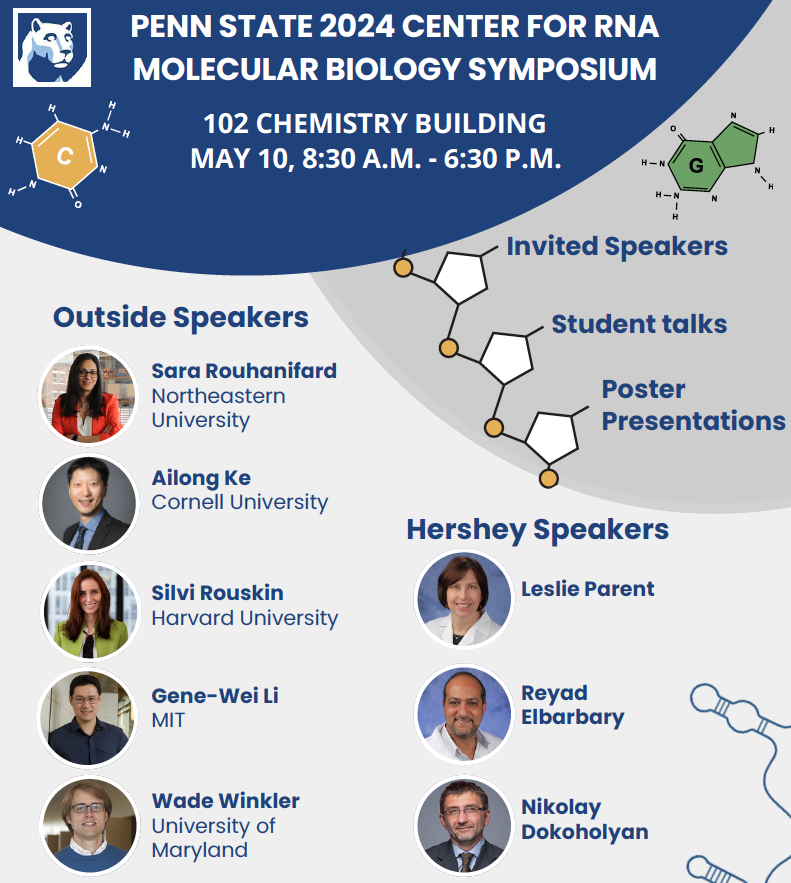
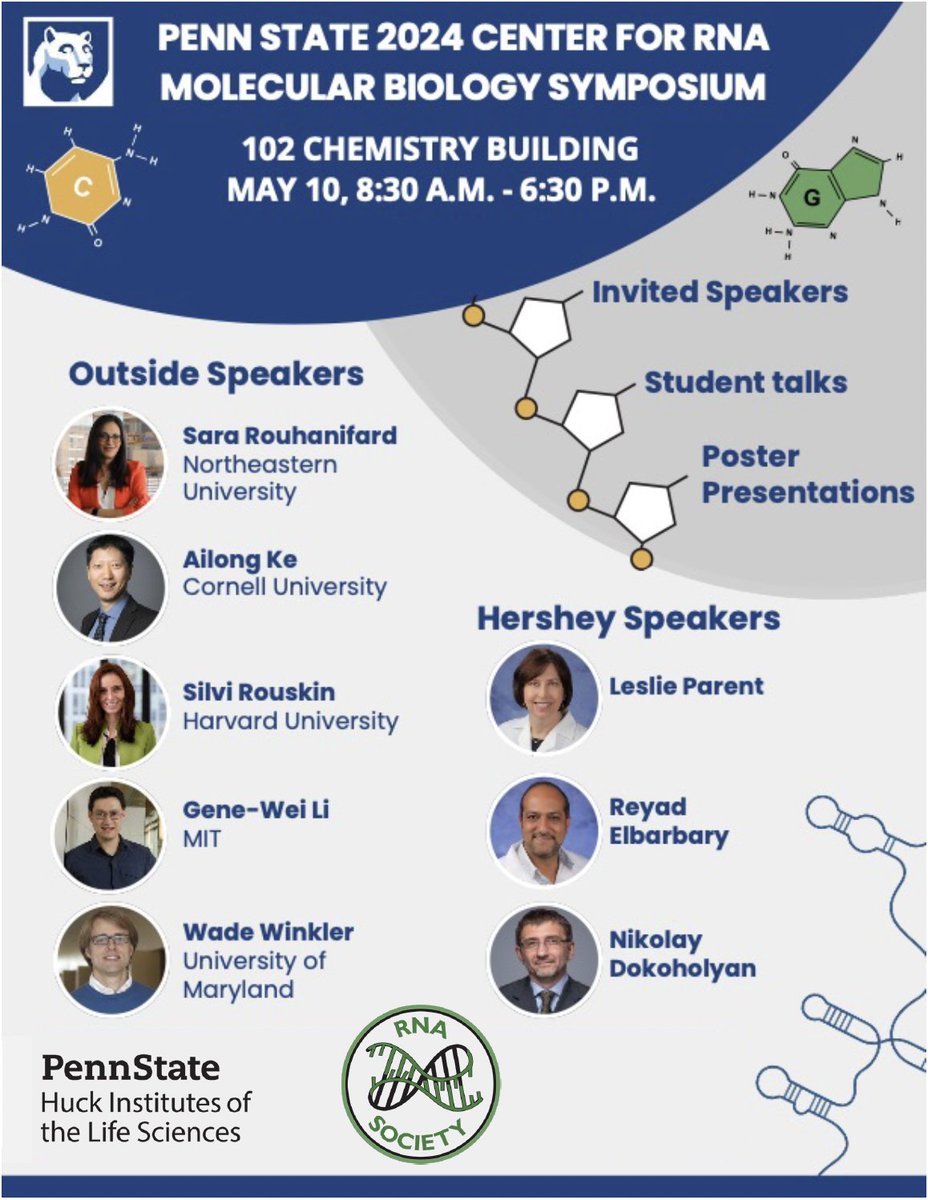
Sharear Saon and Drew Veenis from @phil_bevilacqua lab present at the Penn State 2024 Center for RNA Molecular Biology Symposium. Sponsored by @huckinstitutes and @RNASociety salon.
Happy to share SHAPEwarp-web, a webserver for SHAPE-guided #RNA structure homology search, featuring a fully-rewritten SHAPEwarp core (2 orders of magnitude faster)! We hope this will be a first step towards a "BLAST for RNA structure". Check it out: https://t.co/8jAfLj2p0q (1/n)