Our In Vivo DNA methylation editing paper is finally published. Happy to share these two transgenic mouse lines to help investigate the function of DNA methylation at gene/locus of your interest! Happy holidays!
https://t.co/8X2nguupVg
Twelve @ColumbiaPS scientists have been awards up to $100,000 in direct research support from the Schaefer Research Scholars Program, made possible through a bequest from Dr. Ludwig Schaefer. https://t.co/ljeKCGHmuA
Dear @GenomeBiology, our manuscript submitted on Dec 23 2025 was with editor since Jan 6 2026. More than 3 months without any response from editor to our emails. Understandable not easy to find reviewers, but could you provide a simple update? We spent 4 years on this paper. 🙏
Epigenetics is not a bystander in cancer. It links life’s exposures to disease risk.
It’s time to bring DNA methylation into the clinic for risk prediction.
https://t.co/SRCgdCN7JP
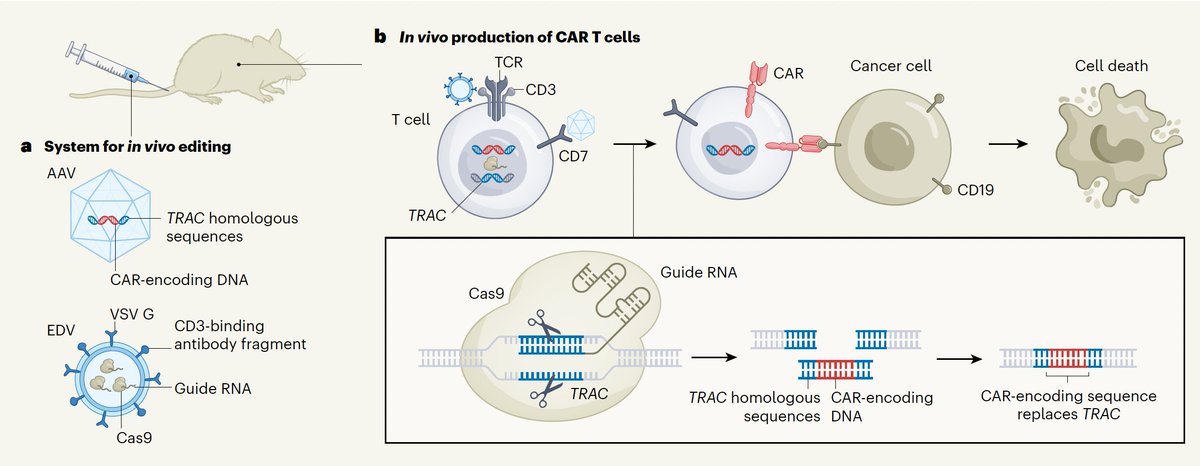
I am so excited to share our new paper in @Nature: the first programmable, site-specific integration of a large DNA payload into T cells in vivo.
A single IV injection results in therapeutic levels of TRAC-targeted CAR T cells in multiple models.
https://t.co/t3pyjHyGWS
a 🧵
We are excited to announce the release of the Human Methylation Atlas Summary and Signals tracks for hg38 and hg19. The tracks display genome-wide DNA methylation profiles across 39 primary human cell types from 205 healthy tissue samples.
Learn more at https://t.co/GB3hxaYo1H
Fluorescence Amplification Tags for Single-Molecule Imaging and Tracking of Proteins, RNA, and DNA in Live Cells (Lu Wang and co-workers) https://t.co/nwu6GHIJqJ
A new long-read preprint: run PIP-seq then PCR & put the library on ONT.
Sadly, no data available so comparisons to other tech impossible (& scripts missing). Requires @FluentBio kits (they tried to reverse engineer the whitelist which seems to breach the @FluentBio EULA).
https://t.co/G5lXsEwijE
"Today, we’re making learning these [math and science] concepts in ChatGPT even more interactive with new dynamic visual explanations. Starting with more than 70 core math and science concepts, ChatGPT will guide learners by showing how formulas, variables, and relationships behave in real time. These experiences will be available globally across all plans starting today."
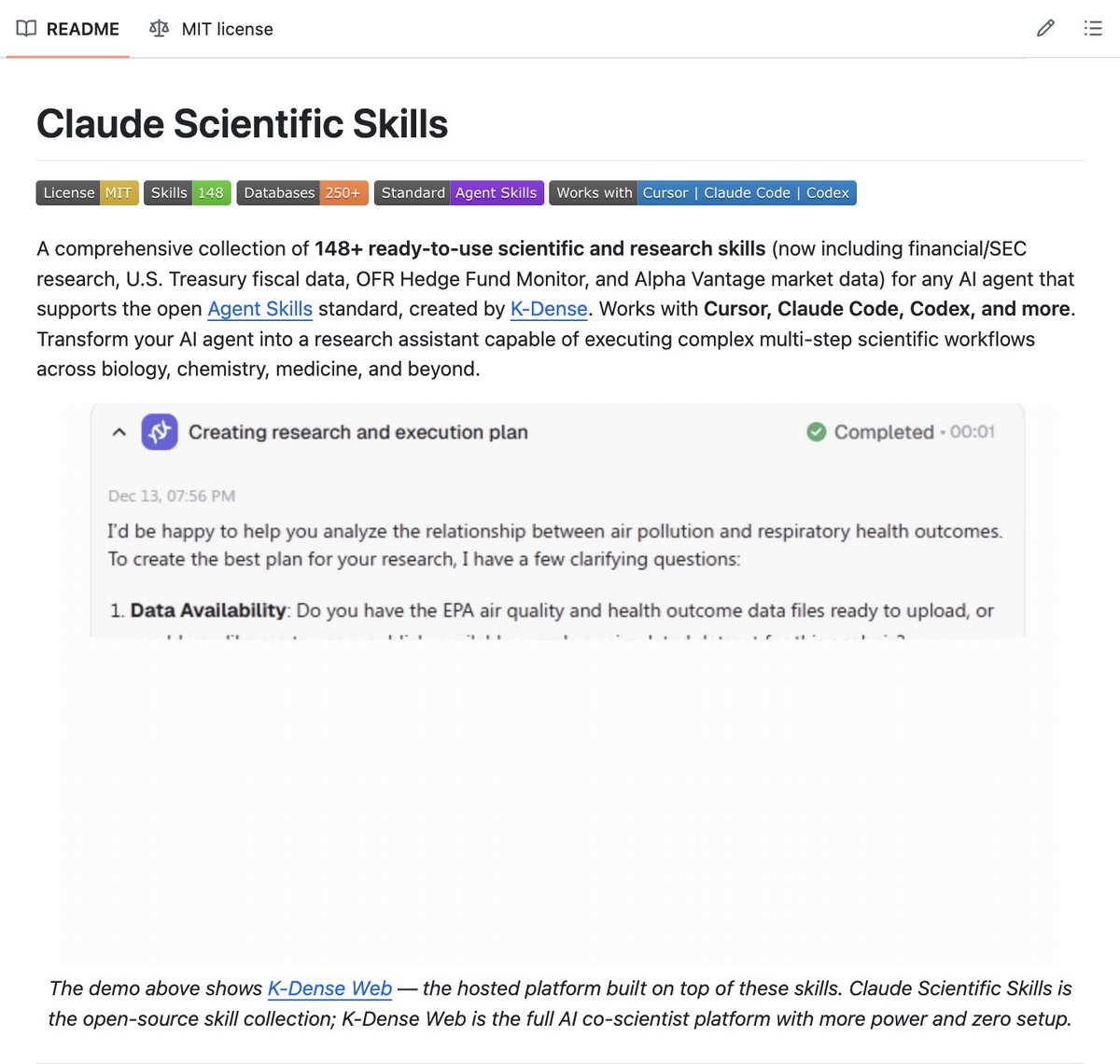
🚨 Someone just turned Claude into a full AI research scientist.
This GitHub repo called claude-scientific-skills just quietly changed what's possible with AI in science.
Most people are using Claude to write emails and summarize docs.
These researchers are using it to run actual drug discovery pipelines, analyze single-cell RNA sequencing data, interpret clinical variants, and generate publication-ready reports all from a single prompt.
Here's how it works:
You install one plugin in Claude Code. Claude automatically discovers and uses 140 scientific skills across every major research domain bioinformatics, cheminformatics, proteomics, clinical research, medical imaging, materials science, quantum computing, laboratory automation.
The skills connect Claude directly to the databases and tools scientists actually use:
→ Query ChEMBL for bioactive compounds
→ Annotate variants with ClinVar and Ensembl
→ Dock molecules with DiffDock against AlphaFold structures
→ Analyze 10X genomics data with Scanpy
→ Search ClinicalTrials. gov and match patients to trials
→ Generate PDF clinical reports with ReportLab
One prompt. Real scientific libraries. Live database APIs. Actual results.
This is what happens when someone stops treating Claude like a chatbot and starts treating it like a research platform.
/plugin install scientific-skills@claude-scientific-skills
100% Opensource. MIT License.
(Link in the comments)
Our most recent work on the “function and evolution” of #nuclear_speckles is now online at Cell @CellCellPress
https://t.co/8QvEbVcofu
Read the thread 👇for the highlights of our findings.
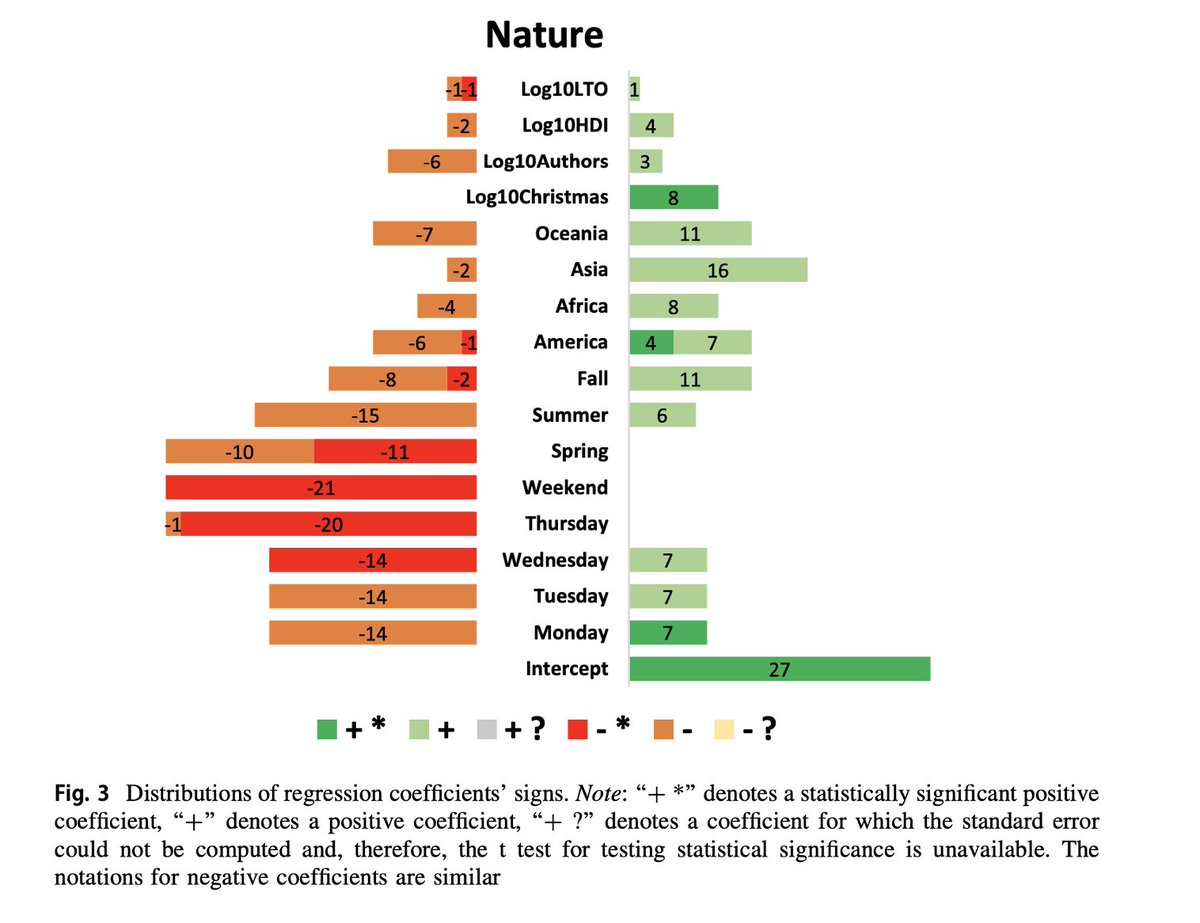
Papers submitted on Tuesdays are more likely to be accepted by Nature whereas Wednesdays seem the most likely day to submit and secure acceptance to PLOS ONE. For Cell, Mondays and Tuesdays seem the best submission days in case of accepted papers.
https://t.co/6w5AraWMzG
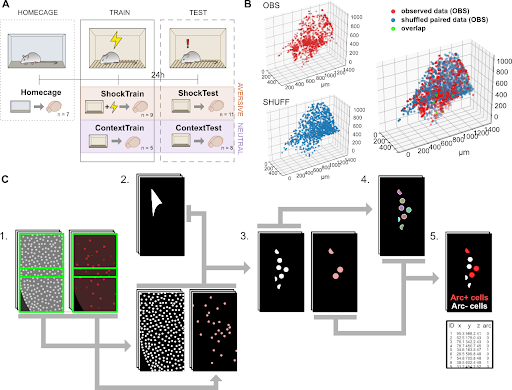
New Year, new paper from our lab. Emily Kramer used 3D light-sheet imaging and tissue clearing to examine the spatial architecture of mouse amygdala engram ensembles. https://t.co/Nbv7bV1S5B
Our In Vivo DNA methylation editing paper is finally published. Happy to share these two transgenic mouse lines to help investigate the function of DNA methylation at gene/locus of your interest! Happy holidays!
https://t.co/8X2nguupVg