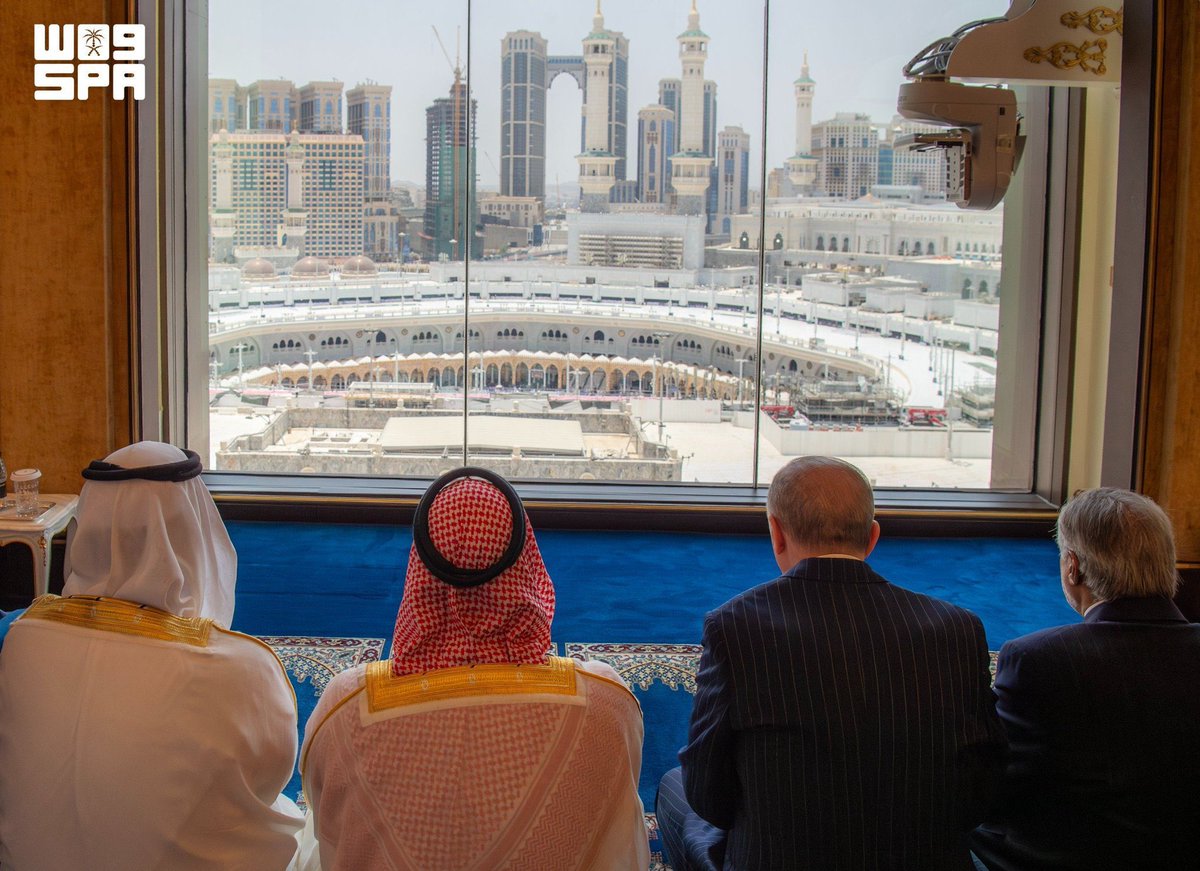
Given current regional dynamics, this is a strategic move by the parties to this agreement and serves multiple purposes for each of them. What comes of it and how it works in practice is debate-able. What isn’t debate-able is the optics of the whole thing: the Mecca agreement, signed on a Friday, followed by prayer. The ideological implications of the agreement even if not intended as its primary purpose, as a ‘Sunni’ bloc, in future will have ramifications maybe even beyond the control of the countries involved.
New Turkey-Saudi-Pakistan defence agreement does get a NATO Article 5 style language. While most are obviously seeing this from a Middle East lens, it impacts other theatres as well. Pakistan's conflict-laden relationship with India being at the top of that list.
The US/Israel war on Iran is described by some as impulsive, chaotic, and even irrational: a war that the US has already lost. This view might generate clicks, but it overlooks the deeper logic shaping American policy in the Middle East over the past decade and a half. The war in the Gulf is not a rupture from a previous, more enlightened US strategy, but its continuation by harsher means.
https://t.co/NgclTKfTFC
#Iraq’s @Mu_AlSadr announces integration of his armed faction into state security structure as Baghdad debates putting PMF under a new ministry.
PM @AliFalihAlzaidy commends the move, calling on other factions to do the same.
Will they follow, or resist?
https://t.co/z8pWu8FiMn
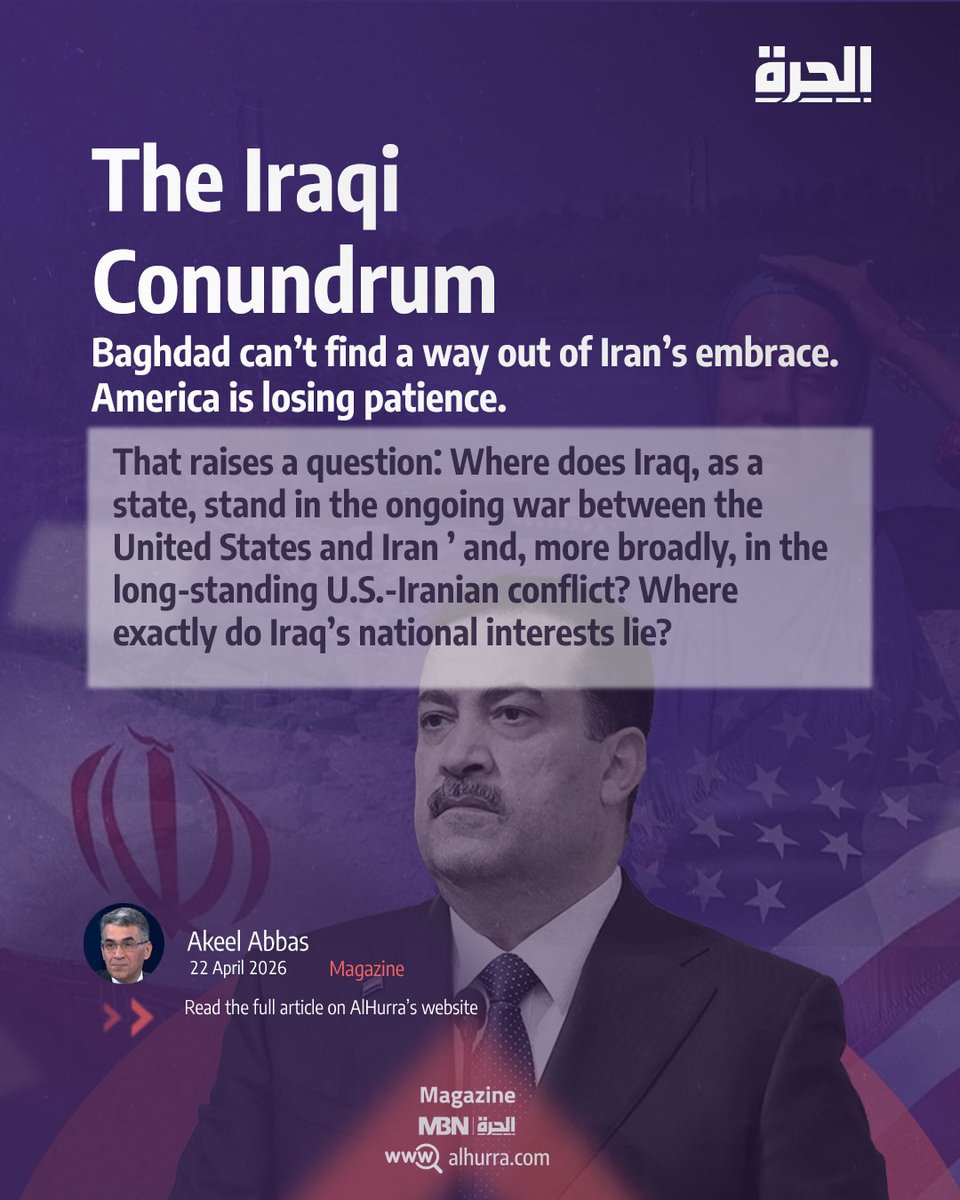
Since the start of the war Iraq has effectively provided Iran with another front for combating the United States. That raises a question: Where does Iraq, as a state, stand in the ongoing war between the United States and Iran – and, more broadly, in the long-standing U.S.-Iranian conflict? Where exactly do Iraq’s national interests lie?
Read the full article of @akeel11111⬇️
https://t.co/ESSvx2JoYd
As the US ramps up pressure on Iraq to select a PM & form a government, one quiet contender stands out: Hamid Al-Shatri. Close to Sadr, from a prominent Southern tribe, he’s Iraq’s intelligence chief who has been quietly navigating US-Iran tensions, including managing potential security issues with Damascus. Re-upping @danataibmenmy’s piece about Iraq’s potential new PM. https://t.co/3lAtuP6L89
Will the ceasefire hold?
🔹Iranian state media and government-affiliated institutions continue to frame the ceasefire as a victory, arguing that the United States has effectively accepted Iran’s terms. But developments since this morning have begun to challenge both the ceasefire and the broader narrative of success promoted by Tehran.
🔹Reactions inside Iran have not been uniform. A segment of pro-government experts – many aligned with the regime’s core constituency – have expressed skepticism about whether the ceasefire actually serves Iran’s interests.
🔹Their central concern is trust. These voices argue that the United States has demonstrated it is not a reliable interlocutor, and that the ceasefire may simply give Washington and Israel time to regroup before resuming military operations under more favorable conditions.
🔹This skepticism is reinforced by what they see as inconsistency in official messaging. Iranian leaders had repeatedly emphasized that there would be no ceasefire, only a decisive end to the war.
🔹The acceptance of a temporary ceasefire, without clarity on whether it leads to a definitive resolution, is therefore viewed as a reversal that raises questions about strategic coherence.
🔹Recent comments by Donald Trump have added to these concerns. His shift from referencing Iran’s proposed 10-point plan to promoting a U.S. 15-point framework is interpreted as a sign that Washington may already be reconsidering its position.
🔹Particular attention has focused on the substance of these proposals. The emphasis on removing Iran’s nuclear material in exchange for sanctions “relief” – rather than full “removal” – is seen as evidence that the U.S. is hardening, not softening, its stance.
🔹Beyond elite debates, some commentators warn of domestic repercussions. Public support during the war, they say, was sustained in part by trust in leadership decision-making.
🔹If that trust is perceived to have been undermined, especially through a ceasefire that appears uncertain or disadvantageous, future public mobilization may become more difficult.
🔹At the regional level, developments in Lebanon are placing additional pressure on the ceasefire. Israel’s intensified air campaign there directly challenges Iran’s insistence that any ceasefire must be region-wide.
🔹This creates pressure on Tehran to respond. From the outset, Iran’s position was that the war could not be compartmentalized, and more recently, officials explicitly stated that Lebanon must be included in any ceasefire arrangement.
🔹As a result, pro-government analysts increasingly frame the situation as a strategic challenge: either Iran responds decisively to restore deterrence, or Israel succeeds in imposing a new regional equation.
🔹In that scenario, the so-called “resistance front” would become fragmented, with its different components effectively separated and weakened.
🔹This has direct implications for Iran’s position in Lebanon, they say. Hezbollah entered the war in support of Iran and now expects reciprocal backing. If Hezbollah perceives abandonment, some analysts warn that Iran may struggle to rebuild its influence among Lebanon’s Shiite community.
🔹More broadly, such an outcome would damage Iran’s regional standing. It would reinforce a perception Tehran ultimately prioritizes its own interests over those of its allies.
🔹These concerns are also tied to Iran’s national security calculus. Some analysts argue that Israel accepted the ceasefire with Iran primarily to neutralize the northern front. From this perspective, degrading Hezbollah’s capabilities would remove a key pressure point, allowing Israel to refocus on Iran itself at a later stage.
🔹This leads to a more long-term concern: sequencing. If Iran does not act now to support Hezbollah, it may face a future confrontation with Israel without the same level of regional backing.
🔹In that sense, the ceasefire is not seen as an endpoint but as a transitional phase that could reshape the strategic environment in ways that are ultimately unfavorable to Iran.
This could suggest Trump is losing faith in the chances of reaching a negotiated deal with elements of the regime in #Iran. Until recently, he seemed to hope someone within the system might emerge to strike an agreement in a Venezuela-style scenario. This new rhetoric points to the battlefield as the place where the conflict’s outcome will be decided!
Beyond just the potential repercussions on Iranian Kurdish groups this carries, the risk of it all backfiring on the KRI and its leadership are extremely high. Comes at a time where the KRI is in a much weaker position than it ever has been economically, socially, politically inside Iraq and regionally.
Having spoken to a few informed sources, thousands of Iranian-Kurds have been armed and funded by the CIA in recent months. Most of them are already in Iran, waiting for an order to move. A minority are in Iraqi Kurdistan, waiting to cross over into Iran.
As conflict in the Middle East escalates once again, as part of the ebb and flow of an ongoing regional war since October 7, two countries have and will continue to shape the region’s map along their own national security priorities: Israel and Türkiye.
Israel and Israeli policymakers have been very clear that they are effectively driven by a national security doctrine after the Hamas attacks that require buffer zones along its Levant borders. Israel’s current incursion into southern Lebanon fits that pattern, so does its continued presence in Syria Mt Hermon, Quneitra, Suwayda etc & its annexations in the W Bank. The ideological angle to this is secondary.
Same goes for Türkiye. Türkiye’s long term goals have been to create a buffer zone along its southern borders and eradicate any Kurdish militant presence.
Türkiye is the primary external power with influence in Northern Syria, economically, and militarily. From Aleppo to neutralising the SDF. Turkish FM Hakan Fidan has indicated an incursion into Northern Iraq is impending too and its support and engagement with various groups in the North is noteworthy.
Israel and Türkiye are dictating the future of the Levant, the region that has been at the heart of instability from wars to transnational jihad. They’re also protecting themselves from future instability.
The question is where does that leave the rest of the region?
Balochistan Iran and its neighbouring Balochistan region in Pakistan are also home to two of the region's key strategic ports - the Chabahar Port in Iran and the Gwadar Port in Pakistan. Chabahar is Iran's only oceanic port and a key node of connectivity for India, whereas Gwadar serves as the southwestern terminal of the China-Pakistan Economic Corridor (CPEC).
In the scenario ethnic armed organisations cross the borders to launch a rebellion, a rapid potential state collapse will not happen in the west, but more likely in the east, in the Balochistan region close to Afghanistan and Pakistan.
Most analysis on Iran is still stuck in a 1980–1990 template: outdated assumptions about nation-states, opposition capacity, minority politics, and Turkey’s role.
But the ground reality has changed.
Reports that the CIA is arming Iranian Kurdish forces expose a deeper contradiction:
parts of Iran’s opposition are attacking the only groups with real operational capacity inside the country.
The Kurdish parties never stopped fighting Tehran.
If Kurds across the region draw the right lessons from 2015–2017, they could be in a position to shape events.
And much will depend on how Turkey approaches this moment — a strategic opening not seen since Yavuz Sultan Selim.
My article from last night:
https://t.co/heaBrwgYo4
A very risky move for Iraqi Kurdish leaders who are effectively the middle men between the US and Iranian-Kurdish groups.
For Iranian Kurdish groups, there isn’t much to lose, this is prime time to change dynamics on the ground.
But for Iraqi Kurdish leaders, the risk is upending their own regional relations, particularly with Turkiye.
Turkiye-KRI relations are often taken-for-granted as solid and stagnant but Turkiye exploits factionalism within the KRG and also maintains relations with other groups outside of the KDP and PUK, including with Sunni, Turkmen and Kurdish Islamist figures and parties.
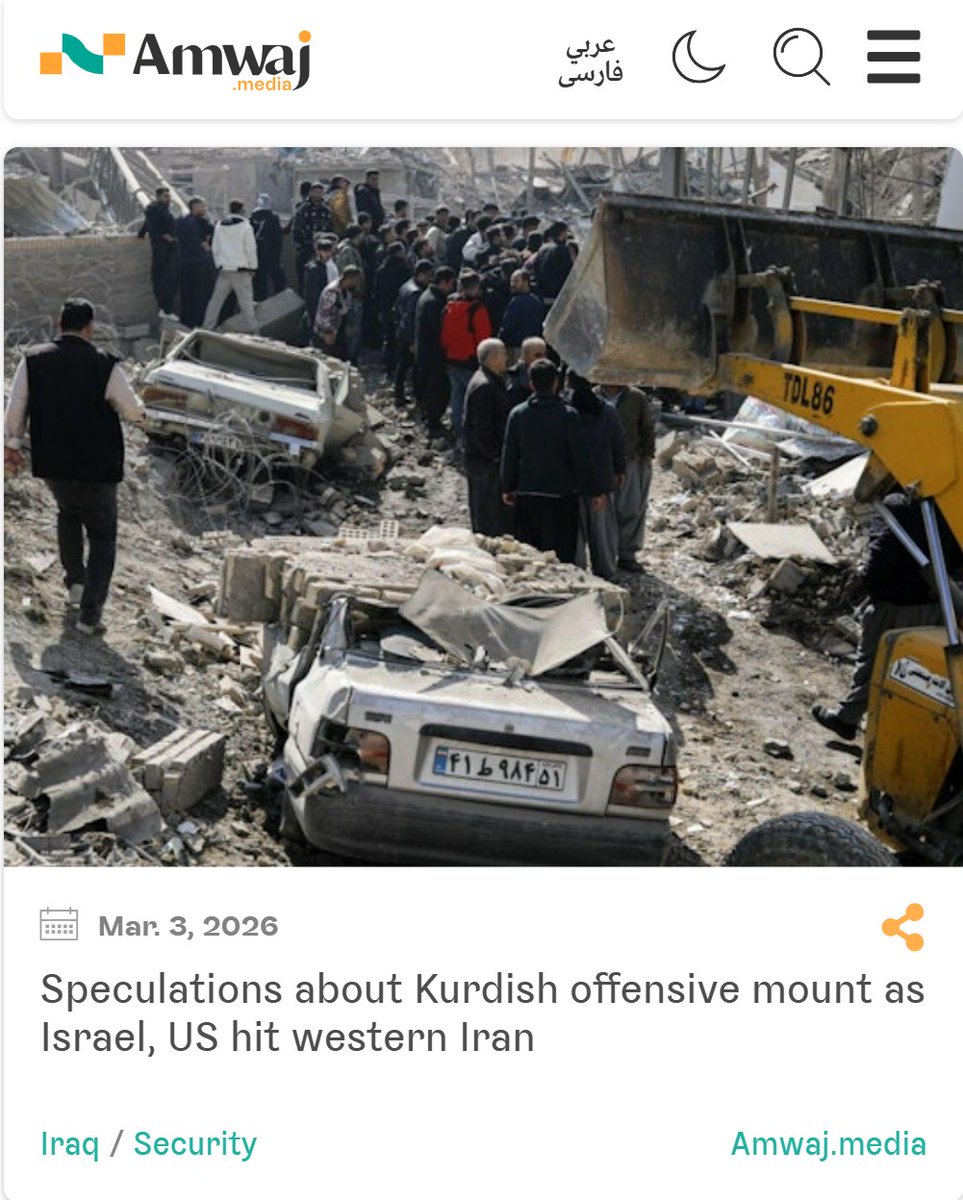
NEW: Israel is reportedly pressing the Trump admin to mobilize Iraqi-based Kurdish groups for a ground offensive inside Iran.
This as Israeli-US airstrikes have hit at least 17 cities in Iran's Kurdish areas as of Mar. 2, with Sanandaj alone targeted 25 times.
Details on @amwajmedia 👇
WASHINGTON/RIYADH, Jan 31 (Reuters) - Mark Savaya, named by U.S. President Donald Trump as special envoy for Iraq in October, is no longer in that role, sources familiar with the move said.
Why?
One source pointed to Savaya's "mishandling" of key situations, including his failure to prevent the nomination of former Iraqi prime minister Nouri al-Malikito be the country's next premier, a move Trump openly warned Baghdad against.
W/@andrea_shalal & @humeyra_pamuk