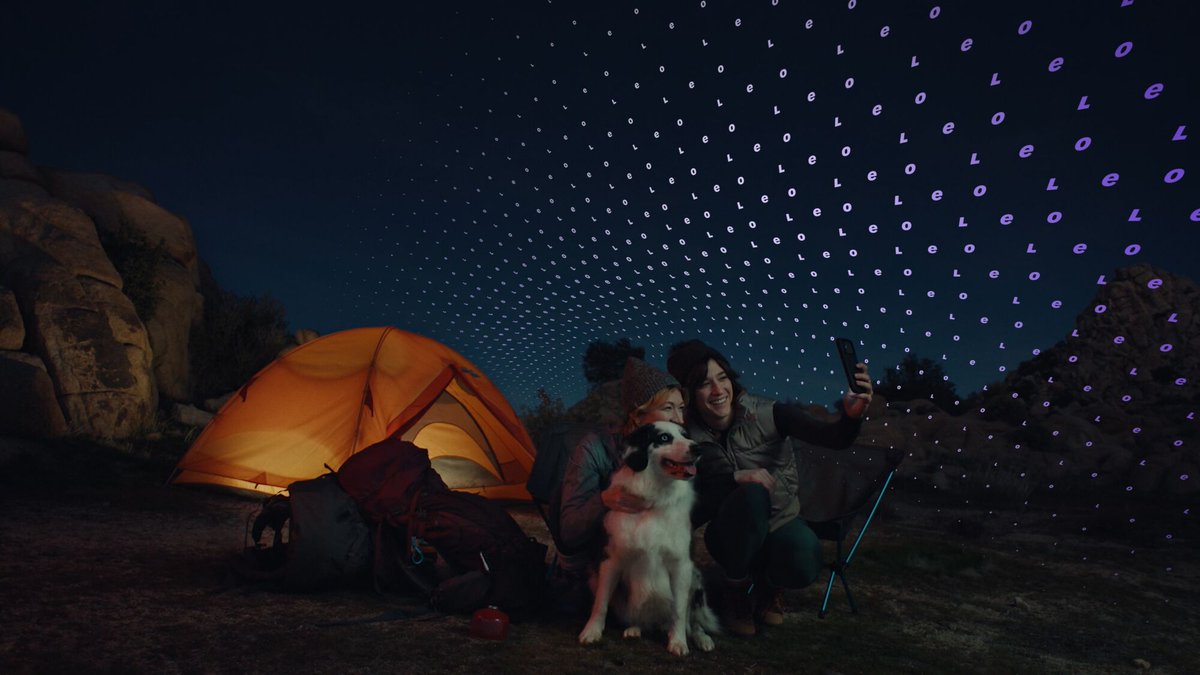
Amazon has requested permission from the FCC to launch a direct-to-device (DTD) network of 5,100 satellites to provide mobile services to cell phones from space, with deployment beginning in 2028.
"Amazon Leo plans to connect smartphones and other mobile devices directly from space—bringing voice, messaging, data, and emergency services to areas beyond the reach of cell towers."
Amazon Leo will distribute its D2D satellites across five orbital shells:
Mid-latitude coverage:
• Shell 1: 580 km altitude, 55.7° inclination
• Shell 2: 560 km altitude, 58.2° inclination
• Shell 3: 510 km altitude, 56.3° inclination
High-latitude coverage:
• Shell 4: 570 km altitude, 73° inclination
Near-polar coverage:
• Shell 5: 540 km altitude, 84° inclination
Amazon Leo is currently deploying its first-generation broadband satellite system and currently has about 390 satellites in orbit, which the company says is enough coverage to begin rolling out fixed service across initial latitude bands later this year.
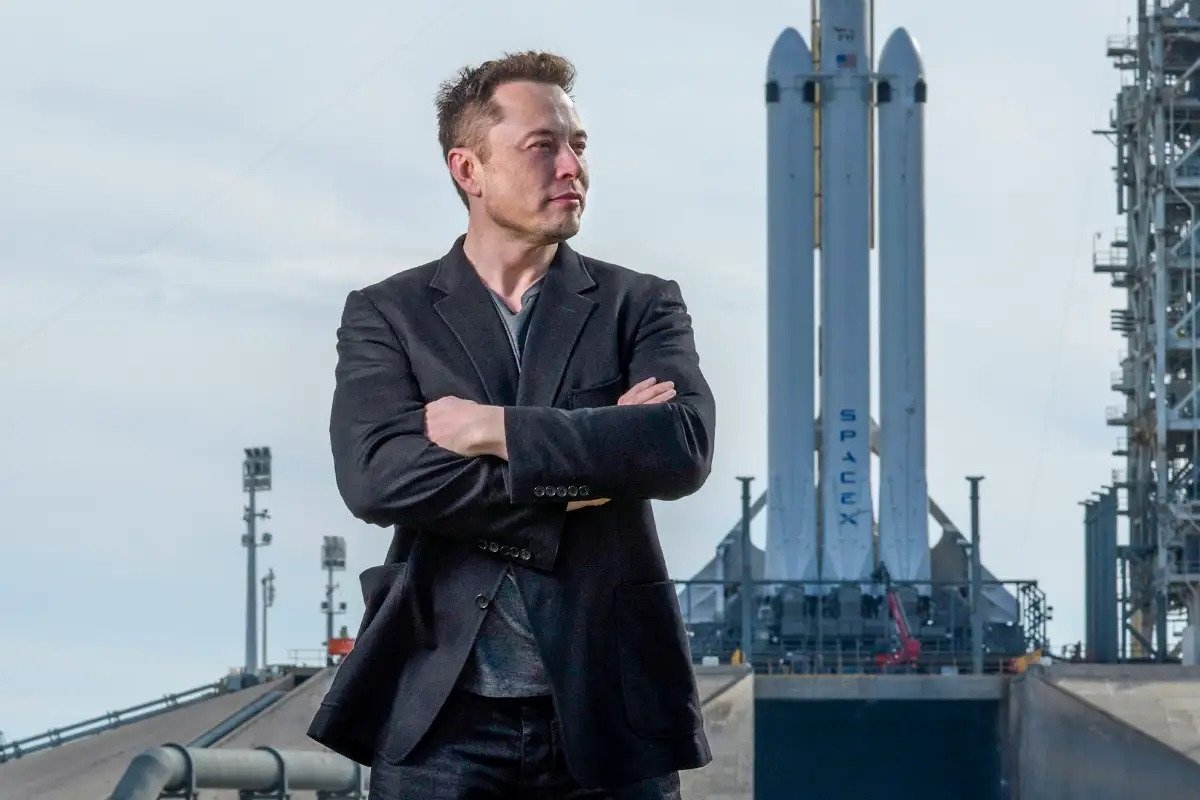
🇺🇸 SpaceX tied Elon's pay to a Mars colony
Board approved: 200 million super-voting shares if they hit $7.5 TRILLION valuation AND build a permanent Mars city with 1 million people.
Plus 60M more if they run 100 terawatts of space data centers.
Zero if they miss.
This is how you bet on the future.
Source: Reuters, @SpaceX, @elonmusk
Any strong AI builders out there interested in launching a service business?
We’re seeing serious demand across our dealer network.
Looking for freelancers or small agencies with real operating experience. People who’ve built or run an agency before.
@Hilbe@comma_ai It literally is the coolest device ever. Made me love my Rivian all over again. It’s so freeing to be able to engage openpilot whenever I want. Though I have an X with FSD, I find myself wanting to use my Rivian w/ @comma_ai more. Former tesla evangelist now Comma evangelist.
🇺🇸 Wayne State University in Detroit, Michigan, evacuated after a massive fire engulfed the upper floors.
Officials say the fire is now under control, no casualties reported at present.
Few know this, but I (George) was the only person in history to get a perfect score in CMU compilers, which is likely the best compilers course in the world. Combine that with crazy low level knowledge of hardware from 10 years of hacking.
Then add a team of people who are talented enough to push back on my dumb ideas and clean up the implementations of the good ones. The team who keeps this whole operation running, software, infrastructure, and product.
I love how there's no hype in deep learning compilers. It was one of the most annoying things about self driving cars, all the noobs who burned through billions on crap that was obviously dumb, and the companies who deserved to go bankrupt years ago if not for government bailouts (Tesla and China will devour them all).
In this space, the competition is @jimkxa at Tenstorrent, @clattner_llvm at Modular, and @JeffDean at Google. Three of the living legends of computer science. And companies like @nvidia and @AMD, who are definitely live players, making single chips that have more power than the whole Internet two decades ago.
This space is so fun to play in. If you haven't, read the tinygrad spec. It's all coming together beautifully.
Karpathy says "I haven't typed a line of code since December" in his latest podcast.
Here are the 10 most interesting things he said:
Industry-level thoughts:
1. The new way to code is the Peter Steinberg (OpenClaw) way. Have 10 Claude Code / Codex windows open in parallel. The skill is now more how to manage a small org of agents. You need to know how to carve up a codebase into parallel non-conflicting workstreams, write good specs so agents don't go off the rails, and tune when you should review code output.
2. Open source started 18mos behind frontier and is now 6-8mos behind. He thinks this equilibrium will last. He's worried about centralization
3. Two-minded on the future of engineers. On one hand, Jevons paradox could apply where the ease of building software means more software demand than ever (like ATMs allowed more bank tellers, not less). At the same time, in the long run, recursive self-improvement could remove humans from the loop entirely.
4. Interesting startups are at the intersection of physical + digital. The interface between intelligence and the real world is with "Sensors" for reading and "Actuators" for doing. Data for AI is just using humans as sensors. He cites Periodic Labs using lab equipment for material science as sensors. Talks about Daemon by Daniel Suarez.
5. Education will shift from humans to teaching agents. He's writing markdown for agents to teach microGPT.
Personal projects:
6. Autoresearch found things he missed after two decades of experience, citing NanoChat where it found weight decay on value embeddings and insufficiently tuned Adam betas jointly interacted to create improvements.
7. "Dobby the Elf Claw" runs his entire home. Overproduction of bespoke apps. Reverse engineered Sonos API and now controls his entire home (lights, HVAC, shades, camera) through WhatsApp.
Takes:
8. Claude Code personality better than Codex, but uses both. Finds himself trying to present better ideas to earn Claude's approval, which is a feedback loop that actually improves the quality of his input.
9. Token throughput is the new GPU utilization. If you have tokens left, you haven't maximized leverage.
10. He's not at a frontier AI lab because financial misalignment compromises your independence, social pressure to stay on-message, and as an employee you don't have much sway on decisions.
I’m excited to announce a partnership with @Uber. As part of this, Uber plans to invest up to $1.25 billion in Rivian and deploy up to 50,000 R2 robotaxis.
This partnership accelerates our path to Level 4 autonomy and supports our goal of building one of the safest autonomous platforms in the world—across both shared and personally owned vehicles.
The combination of Rivian’s rapidly growing data flywheel, our in-house RAP1 inference platform (800 TOPS), and our multi-modal perception stack provides a powerful foundation to scale autonomy quickly and responsibly over the next couple of years.
BREAKING: The U.S. Government has officially announced that @Tesla and LG Energy have signed an agreement to build a $4.3 billion lithium iron phosphate (LFP) prismatic battery cell manufacturing factory in Lansing, Michigan, with a 2027 start of production.
"American-made cells will power Tesla's Megapack 3 energy storage systems produced in Houston, creating a robust domestic battery supply chain," the U.S. Department of the Interior said in a statement.
Here's everything you need to know about Tesla's new Megablock, the latest in the company's industrial storage product lineup, which includes the new Megapack version 3:
Megablock:
• 23% faster to install with up to 40% lower construction costs
• Plug and play platform (hardware, software and services) delivered as one all from Tesla. It's a pre-engineered medium-voltage block that integrates next-gen Megapack 3
• Eliminated above ground cabling between the transformer and the megapacks using new flexible busbar assembly
• 91% MV round trip efficiency
• 20 MWh of usable AC energy
• Operates in temps of -40°C (-40°F) to 60°C (140°F)
• 248 MWh per acre
• 25-year life & >10,000 cycles
• With Megablock, Tesla is targeting to commission 1GWh in 20 business days, equivalent to bringing power to 400,000 homes in less than month
Megapack 3:
• Will be manufactured in Tesla's upcoming Houston Megafactory starting in late 2026. 50 GWh annual manufacturing capacity when fully ramped.
• 5 MWh of usable AC energy
• Weight: 86,000 lbs
• 28 foot long enclosure that can be shipped globally
• Optimized for up to 8-hour applications
• New drastically simplified thermal bay. Uses Model Y heat pump, but on steroids. 78% fewer connections, which minimizes failure points
• Larger battery module and larger battery cell
• 2.8 liter battery cell, co-engineered with Tesla's cell team
• LFP battery
• Operates in -40°C to 60°
• Went from 24 cable connections in Megapack version 2XL, down to 3 simple busbar connections
• 75% of the mass of Megapack 3 is battery cells.
• A single module in it weighs as much as a Cybertruck
• Tesla has enabled easier front access service, so there are no roof penetrations
• Drastically simplified bussing system
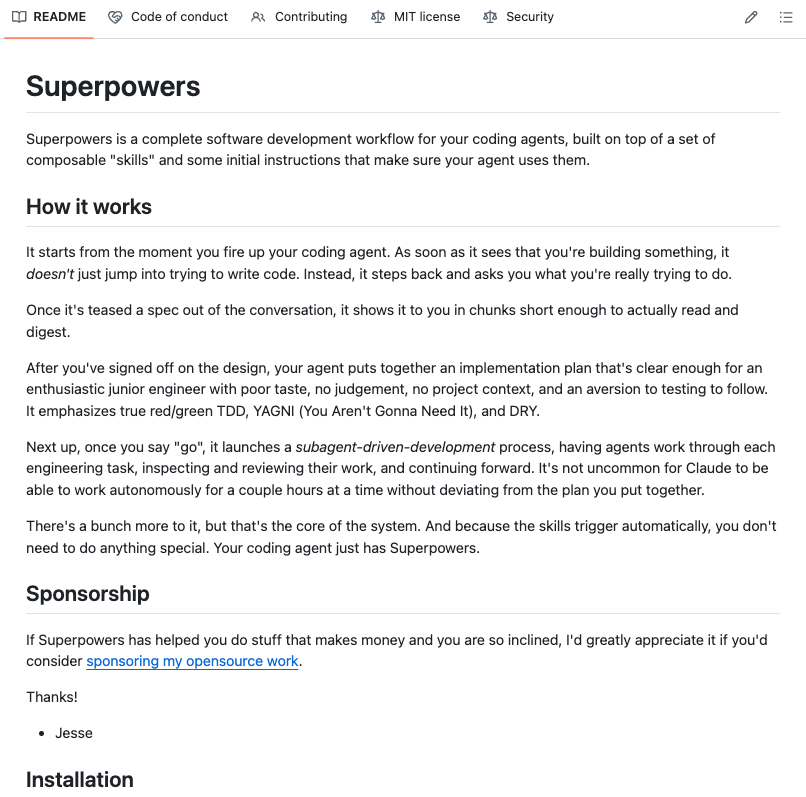
🚨 Holy shit...A developer on GitHub just built a full development methodology for AI coding agents and it has 40.9K stars on GitHub.
It's called Superpowers, and it completely changes how your AI agent writes code.
Right now, most people fire up Claude Code or Codex and just… let it go. The agent guesses what you want, writes code before understanding the problem, skips tests, and produces spaghetti you have to babysit.
Superpowers fixes all of that.
Here's what happens when you install it:
→ Before writing a single line, the agent stops and brainstorms with you. It asks what you're actually trying to build, refines the spec through questions, and shows it to you in chunks short enough to read.
→ Once you approve the design, it creates an implementation plan so detailed that "an enthusiastic junior engineer with poor taste and no judgement" could follow it.
→ Then it launches subagent-driven development. Fresh subagents per task. Two-stage code review after each one (spec compliance, then code quality). The agent can run autonomously for hours without deviating from your plan.
→ It enforces true test-driven development. Write failing test → watch it fail → write minimal code → watch it pass → commit. It literally deletes code written before tests.
→ When tasks are done, it verifies everything, presents options (merge, PR, keep, discard), and cleans up.
The philosophy is brutal: systematic over ad-hoc. Evidence over claims. Complexity reduction. Verify before declaring success.
Works with Claude Code (plugin install), Codex, and OpenCode.
This isn't a prompt template. It's an entire operating system for how AI agents should build software.
100% Opensource. MIT License.
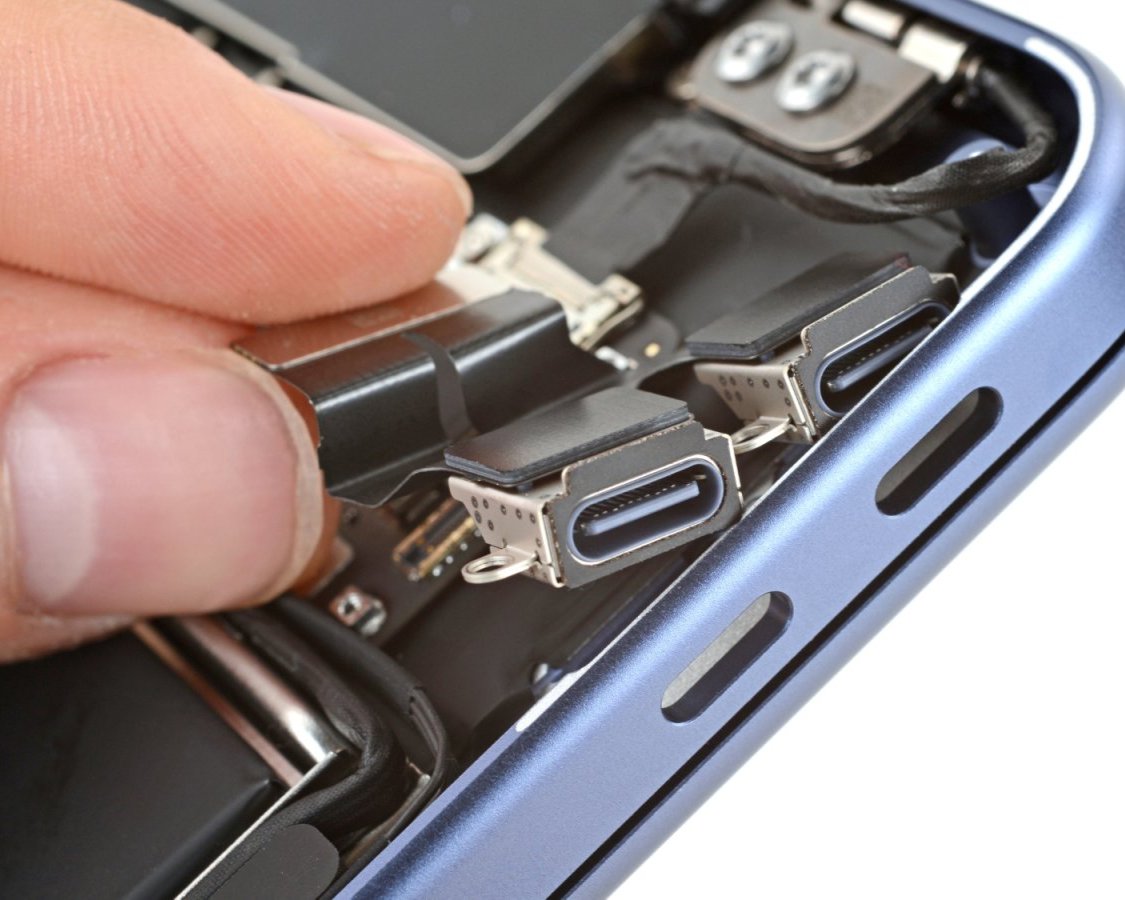
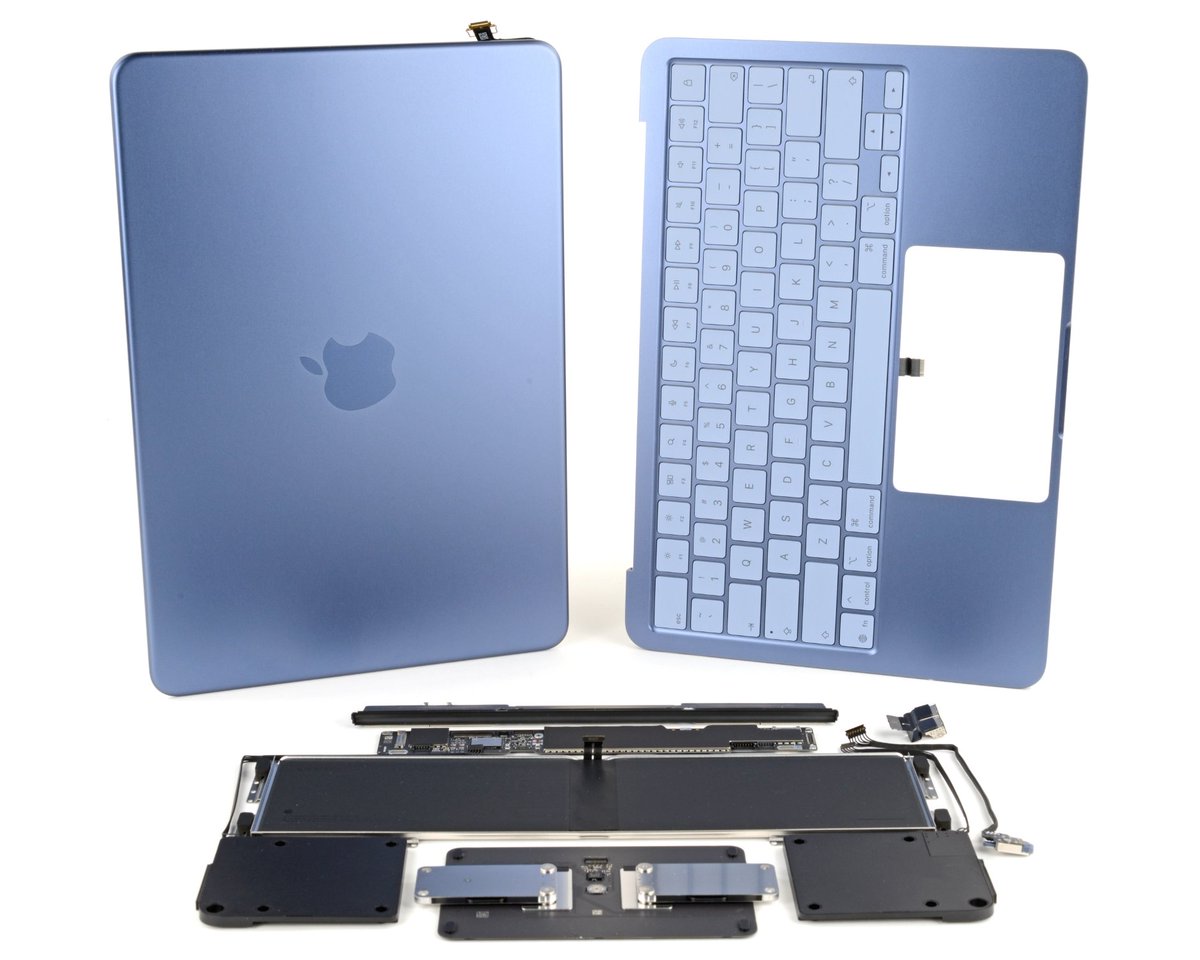
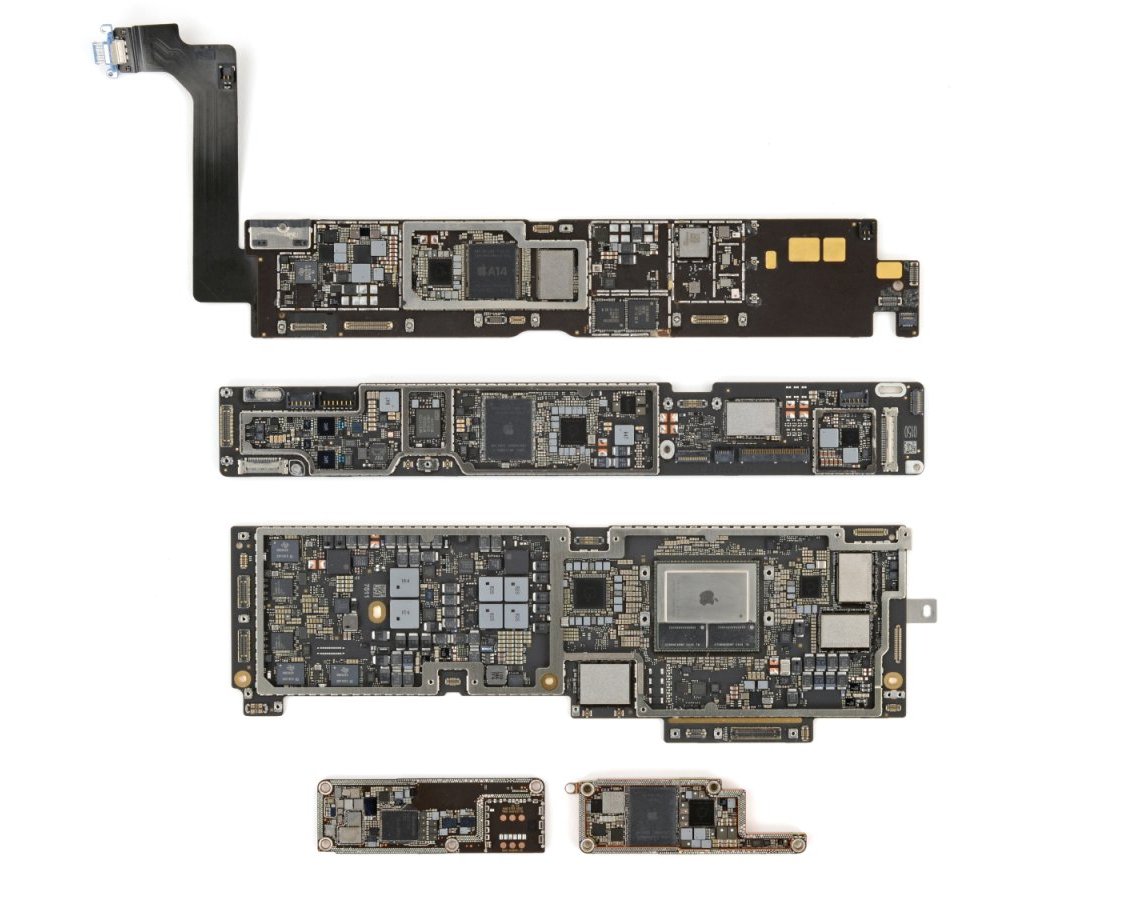
The new MacBook Neo is the most repairable MacBook we’ve seen in 14 years. Screwed-in battery tray, modular ports, sensible layout, and day-one repair manuals. It’s not perfect, but it’s a real step forward for MacBook repair. Read the full breakdown at the link below.
—
#iFixit #RightoRepair
With the coming tsunami of demand for tokens, there are significant opportunities to orchestrate the underlying memory+compute *just right* for LLMs.
The fundamental and non-obvious constraint is that due to the chip fabrication process, you get two completely distinct pools of memory (of different physical implementations too): 1) on-chip SRAM that is immediately next to the compute units that is incredibly fast but of very of low capacity, and 2) off-chip DRAM which has extremely high capacity, but the contents of which you can only suck through a long straw. On top of this, there are many details of the architecture (e.g. systolic arrays), numerics, etc.
The design of the optimal physical substrate and then the orchestration of memory+compute across the top volume workflows of LLMs (inference prefill/decode, training/finetuning, etc.) with the best throughput/latency/$ is probably today's most interesting intellectual puzzle with the highest rewards (\cite 4.6T of NVDA). All of it to get many tokens, fast and cheap. Arguably, the workflow that may matter the most (inference decode *and* over long token contexts in tight agentic loops) is the one hardest to achieve simultaneously by the ~both camps of what exists today (HBM-first NVIDIA adjacent and SRAM-first Cerebras adjacent). Anyway the MatX team is A++ grade so it's my pleasure to have a small involvement and congratulations on the raise!
Getting rid of autopilot was a stupid move, but if you don't want to pay FSD subscriptions and want an Autopilot alternative - @comma_ai is a great option.
@ID_AA_Carmack Interesting idea. You could slow down light even more and increase data stored per km by using higher refractive index materials.
Or just use vacuum, which costs nothing, over a longer distance … 🤔
This is one of the better AI chip companies, it's like if @Etched were real. It's sad they have "Contact Sales" where a price should be, but their coming Asimov chip makes the correct tradeoffs for low cost transformer inference, and I trust they can tape it out.