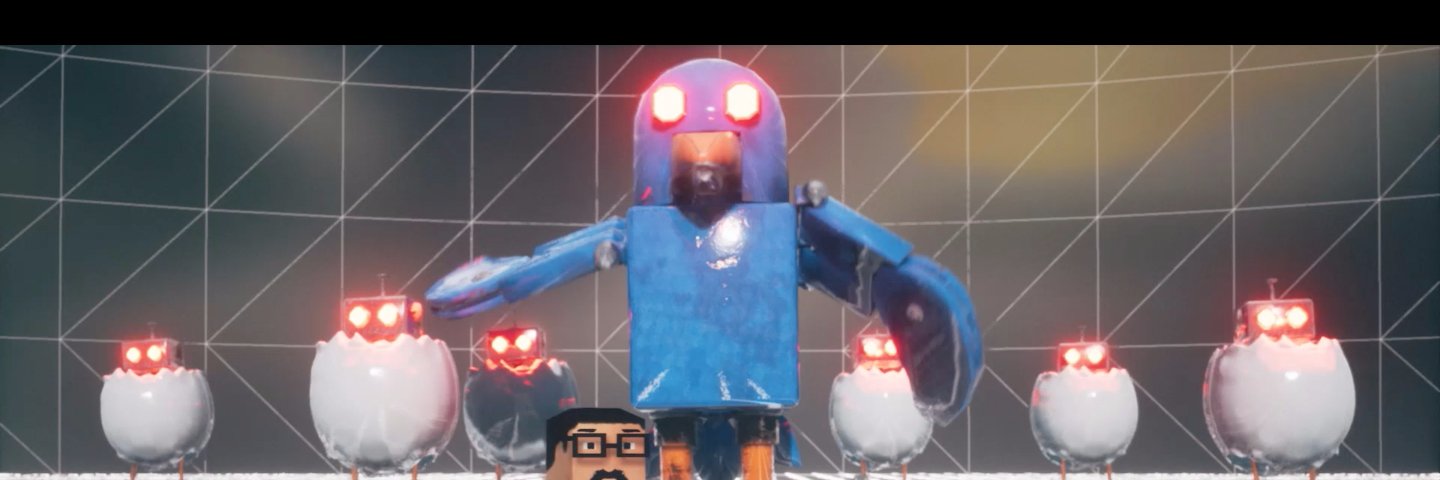
The Raibert hoppers were a triumph in the nascent days of legged robotics. Walking was too hard… so why not run first?
A clip from today’s coding stream with @shiffman from @thecodingtrain:
https://t.co/1maiJWSTHd
Robotics Coding Livestream Imminent!
I’ll be joining the fantastic Dan @shiffman of Coding Train to talk about how to make robots hop and run. Can we make a simulation of a hopping robot before we get too hungry for lunch?
Find out at 11am ET today!
https://t.co/zQ8m2VdRAh
A very special RAANAP episode this week, as @shiffman created AI versions of @robcesternino and me.
Whether you like AI or hate it, you will be blown away by what he pulled off.
https://t.co/f6CykgSLVU
A very special RAANAP episode this week, as @shiffman created AI versions of @robcesternino and me.
Whether you like AI or hate it, you will be blown away by what he pulled off.
https://t.co/f6CykgSLVU
Classic Shiffbot ( https://t.co/XHZ4EN4nJE ) - when told it's nominated for a Webby it still wants to just help me code a p5js sketch
I'm not good at this promo stuff but somehwhere there's a link you can vote for it to win 😂
cc @shiffman
We've always been the ones that have had to adapt to technology. Systems have abstractions, rules and interfaces. You need to master them for the tools to be useful. Want to drive a car? Learn how the pedals work, understand gear shifts, practice parking. Want to use software? Study the menus, memorize the shortcuts, figure out the workflows. We even build institutions around made up abstractions.
This pattern has been consistent: learn the rules, master the process. The burden of adaptation falls on us. But when we interact with AI systems, we don't need specialized commands or syntax. We simply express what we want in natural language, the way we naturally think and communicate. "Make this image brighter" replaces manual slider adjustments. "Fix this code" replaces debugging and looking through documentation.
Many things are changing, but I think the consequences of this inversion are still largely understudied. We are getting back our mental energy for actual problem-solving rather than tool operation. It allows us to work at the speed of thought rather than at the speed of interface navigation. For once, the tools are conforming to us, not the other way around. The technology is meeting us where we are.
2+ years later, Wave Function Collapse: The Overlapping Model is finally complete!
This is my most complex coding challenge yet, and I couldn't have finished it without the support I get from
@WatchNebula
Want to be the first to see it? Sign up here: https://t.co/4hOcxO5pk1
I'm tired of seeing the typical list of books recommended over and over again for software engineers. This is my list of great books (free & paid) and Youtube content creators that you should read / follow.
Featuring: @Lethain , @neoeno, @munificentbob , @shiffman, @chacon, @aarondfrancis, @3blue1brown, @ArtemKRSV and many many more who I cannot tag here
@arvindpunk@josevalim@thecodingtrain It’s a little tricky to find so I’d recommend starting with one of these!
https://t.co/RJWEvdxFfG
https://t.co/H1hqUjUJ8V
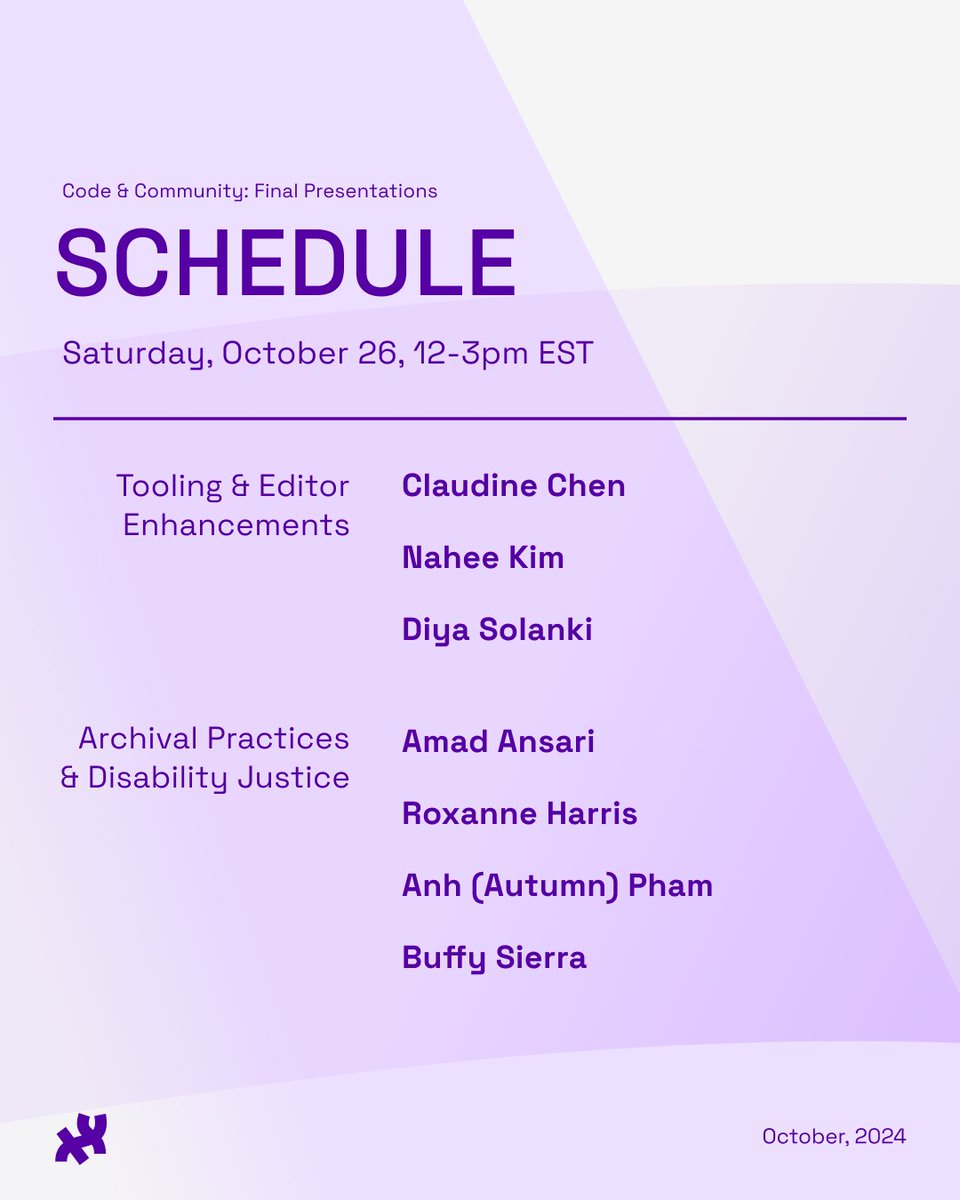
Code & Community: Fellowship & pr05 Grantees Show is in 10 days!😱 Explore presentations on editor enhancements to #disabilityjustice, archival practices, and more! Spanish translation as well as ASL will be provided by Pro Bono ASL. 🔗RSVP: https://t.co/4VzEtlVkv7 #opensource
@BentoCheeseless Ah, thank you for this feedback, it's very appreciated. The first print run from nostarch press has completed but if it gets a second print run I'll be glad to discuss this with them!
@RaquelGaudard Yes! I'm so sorry for the confusion! This is the new edition, you can tell by the cover design and publication date. https://t.co/QWdDfol0f3 I'm happy for folks to email their receipt [email protected] and I will happily offer a refund so they can get the new version!