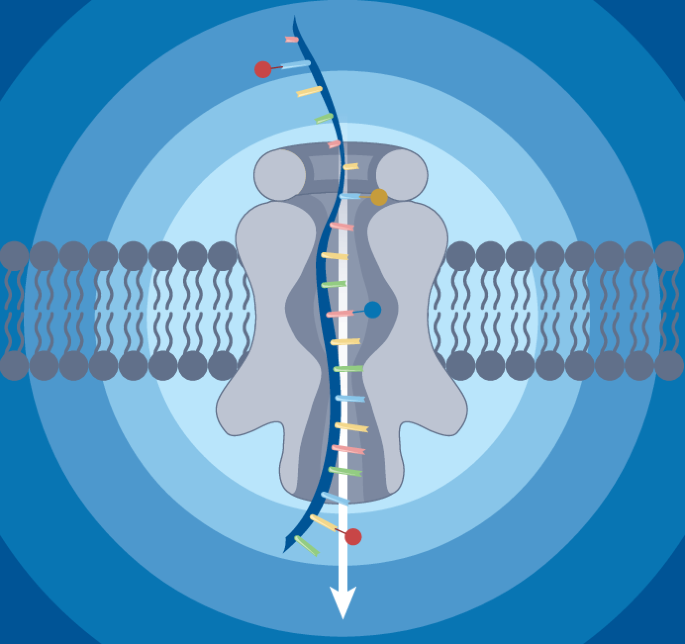
Thanks to @NatRevMCB for inviting me to highlight the paper that brought us direct-RNA-seq. It has been exciting using "my precious" nanopore to map RNA modifications.
Excited to share our new preprint! ChromE-seq reads 3D chromatin and gene expression in one cell. Across ~400,000 human primary cells, B lineage has the fewest chromatin loops and is most perturbed in trisomy 21, driving the B-cell block in Down syndrome.
https://t.co/Ssehmqjyjc
Terri was a kind and helpful friend who I had the fortunate opportunity to interact with back at CSHL. Besides being an amazing editor, she gave me a lot of significant career advice when I was still a graduate student. Truly a loss for the scientific community.
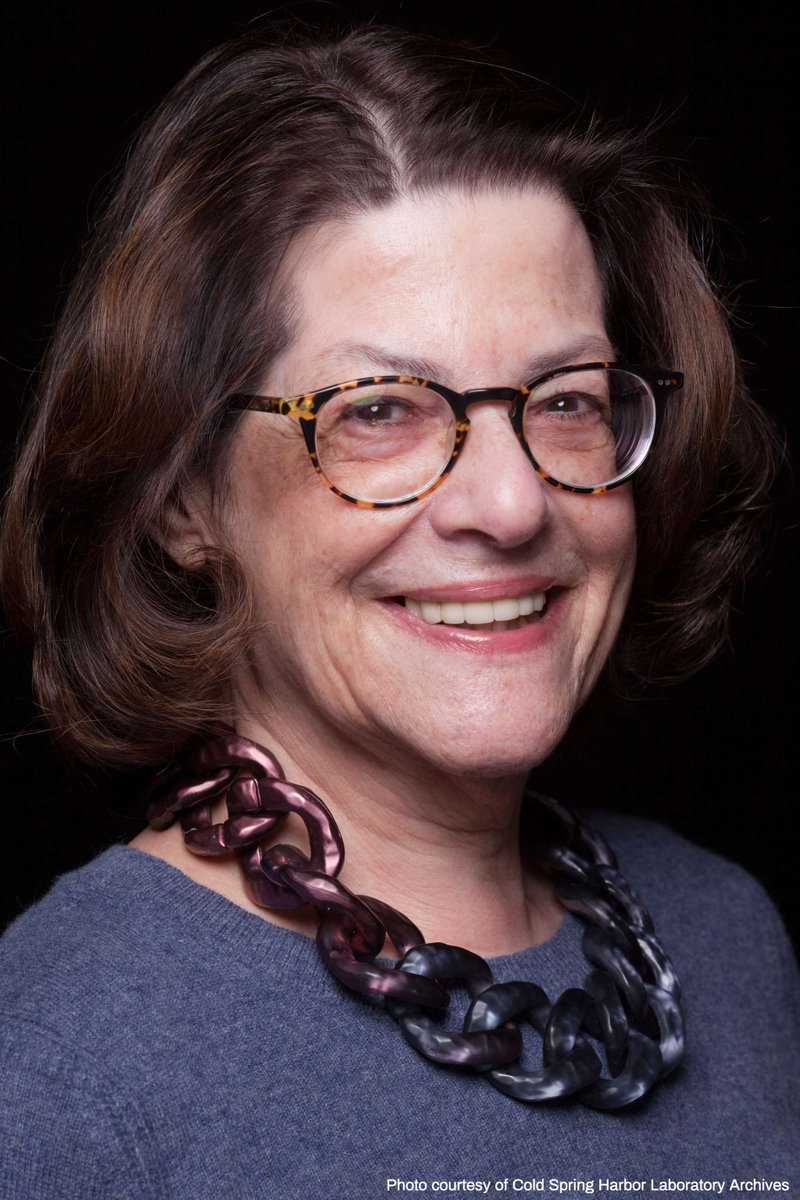
We are saddened by the loss of G&D's long-time Editor, Terri Grodzicker.
When Terri stepped down as Editor in 2022, friends and colleagues wrote about her contributions to the research community. We are re-visiting these pieces, and thinking of her.
➡️ https://t.co/JRpsVZNuIc
Forget base and ribose modifications. Phosphate backbone modifications are the next big thing. Amazing finding from @SchragaSchwartz
https://t.co/W859l21uIU
We’re proud to announce the launch of Nishimura Bank!
Queuine (Q base) and lysidine (k2C) are available free of charge for researchers!
Please visit our website for details:
https://t.co/4SEibnFA1g
I'm not sure you can conclude that biotech in Boston/Cambridge is on the right track right now. Some responses I've gotten this summer about the local ecosystem:
On China: "We'll just out-innovate them" (Not sure how that happens when both home-grown and US-trained Chinese scientists are doing world-class science)
On AI: "It's just a bubble and tech investors will move out of biotech once it pops" (The same plan brick-and-mortar stores had during the dot-com boom)
Feels like the best-case default is SF becomes the US leader for biotech just like semiconductors did in the last century. Worst-case is the US misses out entirely and the world's biotech R&D runs through China. Either way, Boston isn't in the picture unless we start experimenting with new models now
Enjoyed reviewing and summarizing this important & reproducible (yes we tried it) paper on how DMSO is sufficient to induce human balstoids from human naive PSCs, emphasizing (again) the great importance cell state has on embryo models formed. Congrat to Mo Li group & @KAUST https://t.co/Rgn0aJrCVD
A study of 110,303 manuscript submissions to two elite research journals has identified factors during the editorial and peer review stages that impact whether a paper is accepted for publication. https://t.co/xUGdwiWUrt
Our Universal Cell Embedding model, trained on a 36-million-cell dataset from various species and tissues, allows the study of organisms well beyond those in the training set: https://t.co/jnV37uXW23
Source: Rosen et al., Nature, 2026
I enjoy using IGV, but I need a more efficient tool for analyzing diploid genomes. So, I developed one for myself. It provides exceptional GPU acceleration, allowing me to uncover all essential information spanning six orders of magnitude. #bioinformatics#genomics#visualization
1/n What fraction of the human genome is essential for cellular viability?
Excited to share our preprint that explores this question by combining an unusual CRISPR system, phage promoters, and thousands of deletion launchpads.
@sudpinglay@JShendure
https://t.co/rTO1MyFv3q
Presented at #ASCO26:
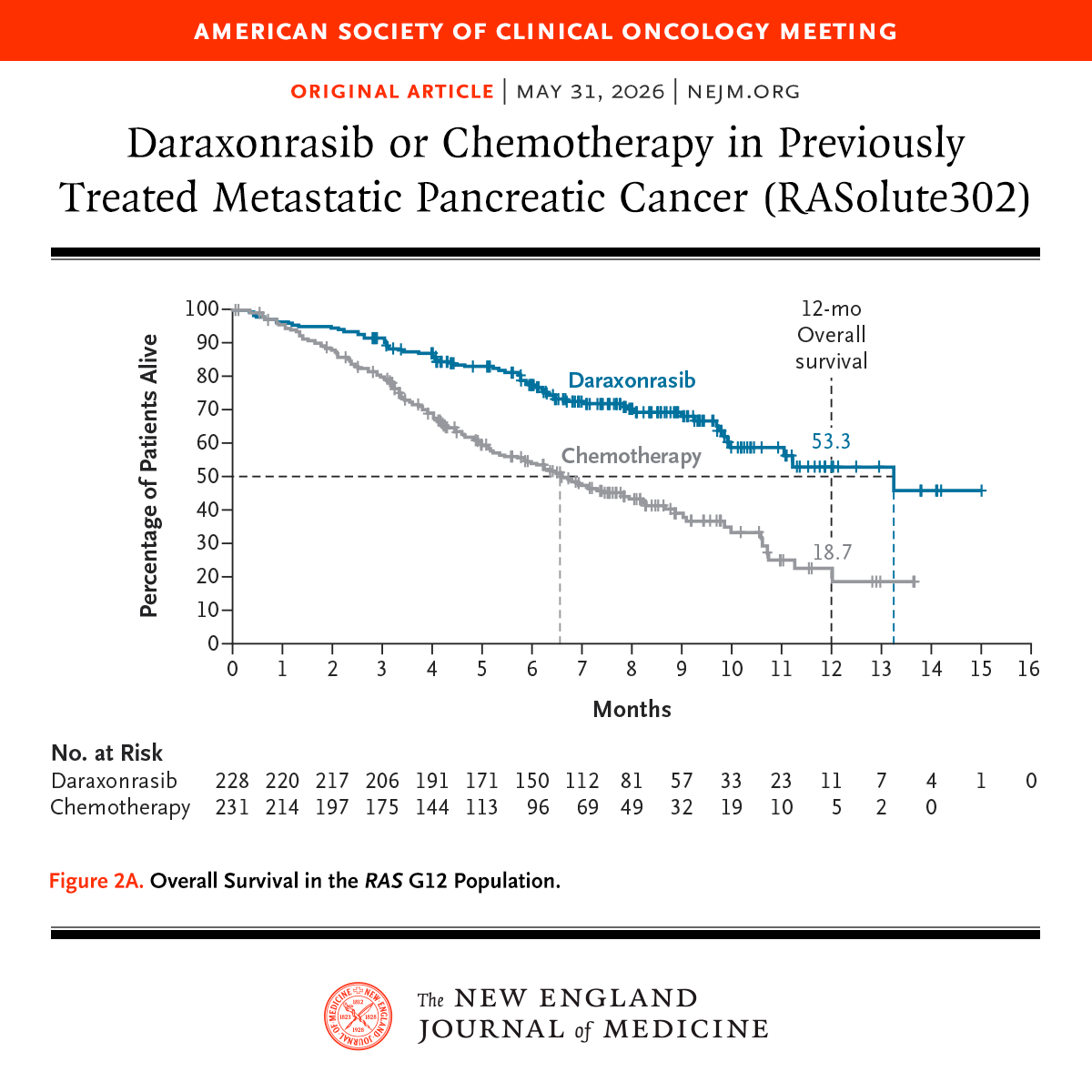
Among patients with previously treated metastatic pancreatic ductal adenocarcinoma, the RAS(ON) inhibitor daraxonrasib led to significantly longer overall survival and progression-free survival than chemotherapy. Full phase 3 RASolute 302 trial results: https://t.co/xwLWBZYRzq
@ASCO
Now out in @NatureBiotech ! Do lncRNAs commonly bind 1000s of genomic sites? Maybe they do, but the dozens of studies that report genomic binding maps of lncRNAs are deeply flawed, with probes binding suprious DNA sites rather than RNA-bound ones. https://t.co/01NroM67dK
Probably Craig Venters last interview.
The people who drone on about the necessity of NIH “basic science” are the duds and dropouts of the class.
It’s food stamps for the underachievers.