Our night sky is becoming increasingly crowded. Thousands of satellites now orbit Earth, supporting communication, navigation, weather forecasting, science, and internet services. But the rapid growth of satellite constellations is also creating concerns for astronomers.
Bright satellites can leave streaks across telescope images, interfere with sensitive observations, and make it harder to study faint objects deep in the universe. Space agencies and astronomers are now working with satellite operators to reduce these effects.
The challenge is clear: How can we enjoy the benefits of a connected world while still protecting humanity’s view of the cosmos? 🌍✨🔭
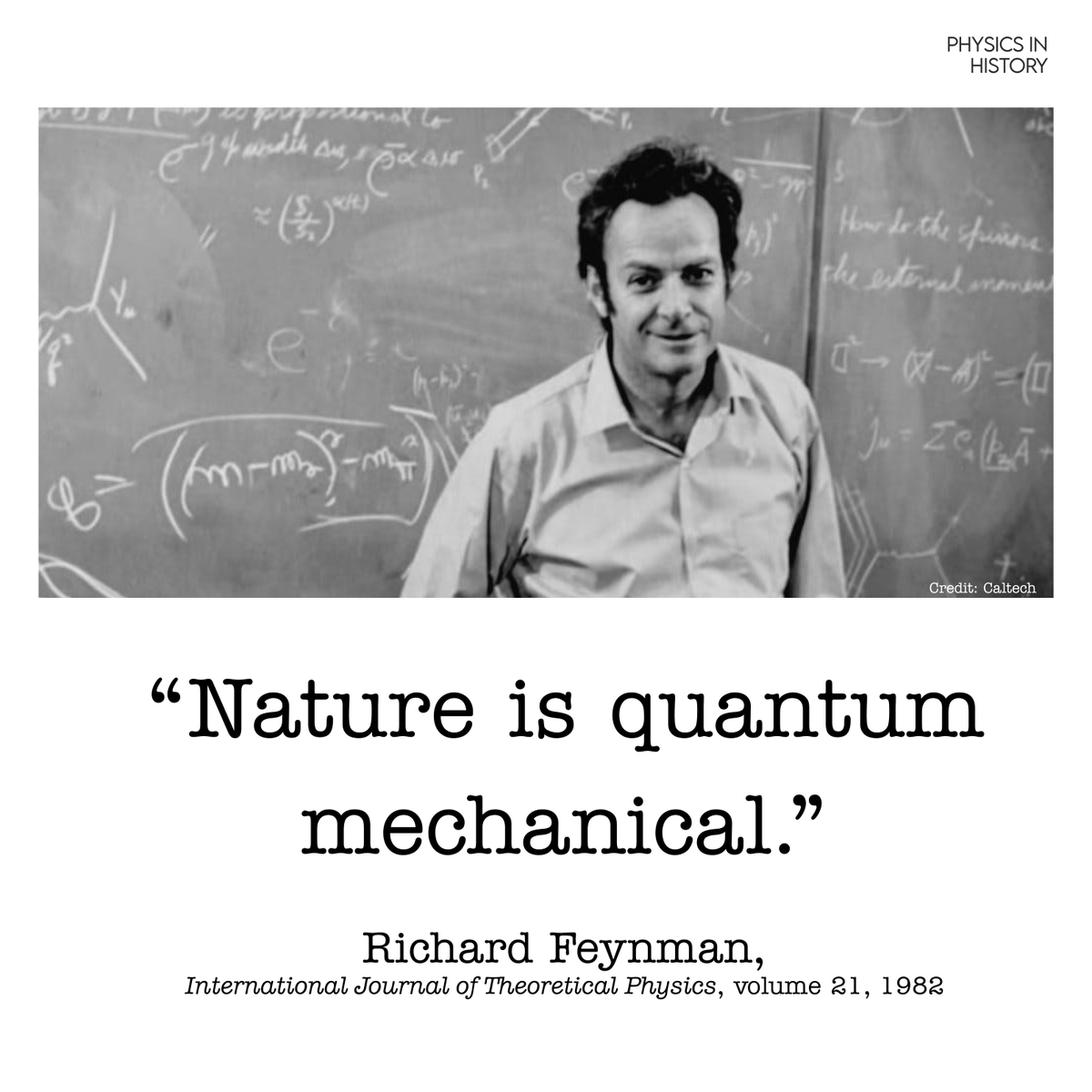
Nature isn't classical, dammit, and if you want to make a simulation of nature, you'd better make it quantum mechanical, and by golly it's a wonderful problem, because it doesn't look so easy.
-- "Simulating Physics with Computers", 1982
The Himalayas formed because the Indian Plate collided with the Eurasian Plate around 50 million years ago. This ongoing collision compresses and uplifts the crust, while erosion simultaneously wears the mountains down.
The phrase “crushing and pushing” is a bit simplified; “converging and compressing” would be more scientifically precise.
Thanks einstine sir and @NASA and @Ronald_vanLoon@Microsoft
Thanks x for hack my computer notes
I knew very first day I will win
Last 8 year's I saw my winning everyday
Sometimes I win 66% sometimes I win 85% sometimes I win 99% but this time I won by 100000000000000% n num
In 1925, Heisenberg made a radical methodological decision: instead of trying to describe an electron's unobservable orbit, he would formulate the theory in terms of quantities that could actually be connected with observations, such as spectral transition frequencies and intensities.
His paper, Über quantentheoretische Umdeutung kinematischer und mechanischer Beziehungen, was completed on 9 July 1925 and published later that year.
This became the starting point of matrix mechanics.
The interesting part is that Heisenberg wasn't initially thinking in terms of matrices in the modern sense. His arrays of quantities were subsequently recognised by Max Born as having the structure of matrices, and Born and Pascual Jordan developed the mathematical framework further.
📷 photographed Heisenberg (right) and Dirac (left)
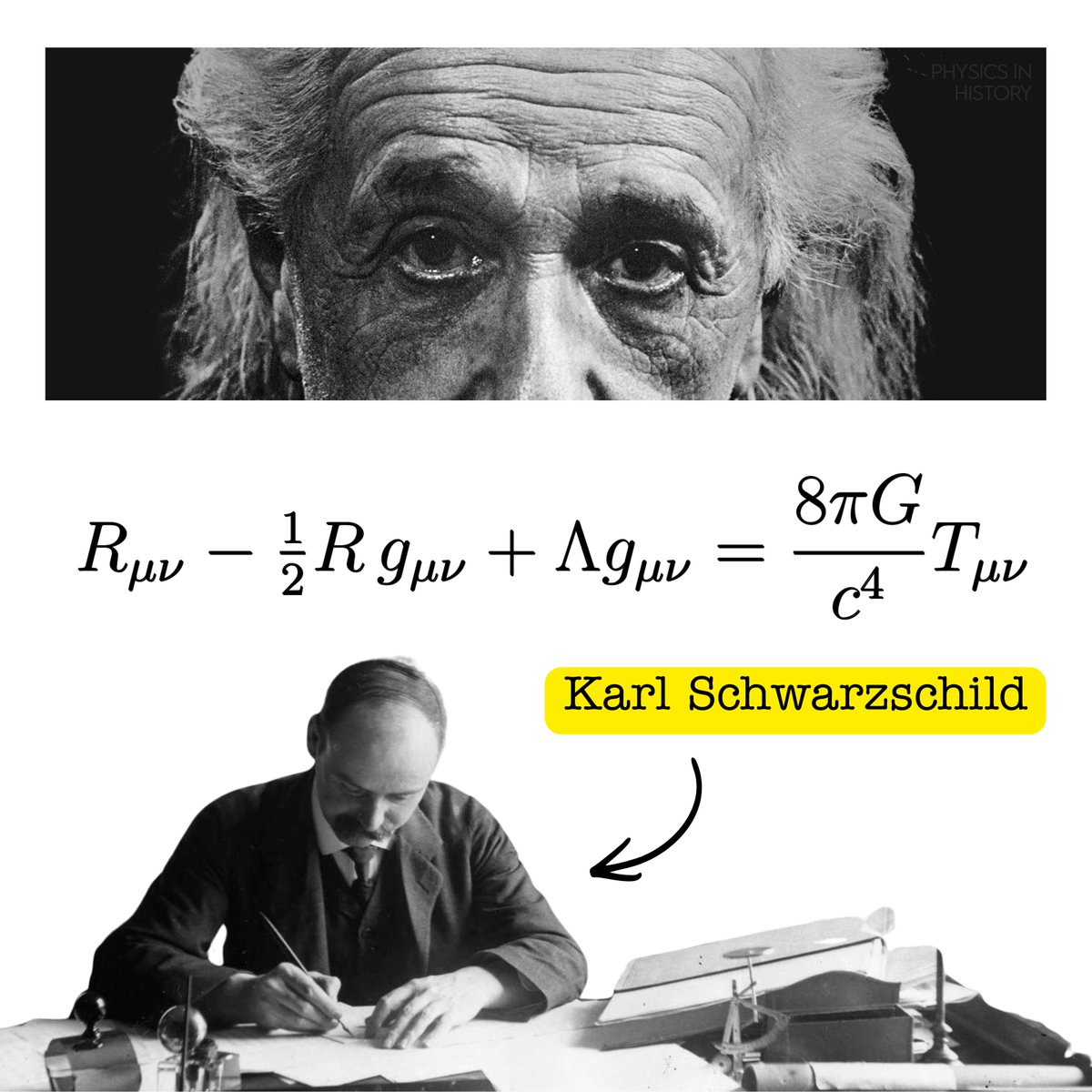
Ten coupled nonlinear partial differential equations, published in November 1915. Karl Schwarzschild, serving with the German army in Russia, found an exact solution and mailed it to Einstein in a letter dated 22 December, a month later.
Einstein presented it to the Prussian Academy in January, writing that he had not expected an exact solution could be formulated so simply. Schwarzschild died that May of pemphigus, an autoimmune disease that developed while he was at the front.
His solution contains the event horizon, an object nobody would take physically seriously for another forty years, and which Einstein was still arguing against in 1939.
Best All in One Research Assistant. From finding gaps to creating full literature reviews with line by line citations to the exact sources you have been trying to find.
Try for free today and gain access to powerful AI tools made for researchers with a database of 350M+ Sources.
The Helical Truth: Chasing the Sun at 220 km/s
Updated version
Discover the true shape of planetary trajectories as our Solar System travels at ~220 km/s through the Milky Way. This interactive 3D simulation moves beyond the basic heliocentric model to visualize the real helical motion of the planets.
#SolarSystem #Astrophysics
We are selecting 20 builders for the next Forge AI Residency.
Invite-only. 7 days of building, not watching.
This is not a course you watch later. You leave with things that run.
Dharamshala, November 2026.
The ability to sense frequency energy can be enhanced through practice, and according to sound therapy principles, the 852Hz Solfeggio tone helps balance overthinking by awakening intuition.
At the beginning of his career, Albert Einstein was not well known.
His 1905 paper on the photoelectric effect was not immediately recognized by everyone. However, Max Planck recognized the importance of Einstein’s work and invited him to meet him.
When Einstein published his theory of special relativity in 1905, he became known among some scientists, but he was still not widely known to the general public.
In 1915, he published his theory of general relativity. The theory attracted attention among scientists, but Einstein was still not internationally famous.
This changed after British astronomer Arthur Eddington led an expedition in 1919 to observe a solar eclipse and test one of the predictions of general relativity. The results were widely reported in newspapers and helped make Einstein internationally famous.
After that, journalists and photographers regularly followed Einstein and sought interviews with him wherever he went.
The concept of atomic and electron spin was formally proposed in 1925 by Dutch physicists George Uhlenbeck and Samuel Goudsmit, though Ralph Kronig first conceived the notion and Wolfgang Pauli introduced a foundational two-valued quantum degree of freedom.
Two for two! 🙌
After the Viking 1 lander touched down on Mars in July 1976, America logged its second successful Mars landing 50 years ago today when Viking 2 arrived at Utopia Planitia. The lander captured images, analyzed soil, and completed experiments in search of life in this higher-latitude location more than 4000 miles away from Viking 1.
📷 Viking 2's first color image, Sept 5, 1976
The thing with mathematics is we keep thinking about how things work. And once you figure it out, you then see other things, connections and so on. And two weeks later it's so obvious that you could kick yourself for not having thought of it sooner. The high doesn't last! So you have to enjoy it as long as it does last.
-- Ingrid Daubechies
Even at the speed of light, the universe is unimaginably vast.
Light travels at an incredible 299,792 kilometers per second, yet reaching our nearest major neighboring galaxy, Andromeda, would take roughly 2.5 million years at the speed of light. 🚀✨
This mind-blowing distance reminds us just how enormous the cosmos truly is. The stars we see, the galaxies beyond our own, and the vast empty space between them exist on a scale almost impossible for the human mind to imagine.
🌠 Space isn’t just big it’s beyond imagination.
What do you think humanity will discover beyond our galaxy? 👇✨
#
Every robotics headline right now is about vision and language models.
I think the next real breakthrough is touch.
Here's why that matters more than it sounds.