Postdoc Bioinformatics Scientist @Charitè | defining data management for clinicians | combining human genomics and microbiome in cancer and rare diseases
Yes, as a PI, you can publish more papers by pushing your students/postdocs really hard.
But NO, those extra papers will not improve your life.
▫️
They will only make everyone unhappier:
- Your team members will feel burned out and depressed.
- Journal editors will get another manuscript that no one is willing to review.
- The poor reviewers will have to review a manuscript they don’t care about.
- Fewer researchers will want to stay updated on your research as the quality and depth of the papers decline.
- Finally, YOUR well-being will suffer, as health issues and stress could outweigh any benefits gained from your 'extra push’.
▫️
Instead of pushing your students (and yourself) into becoming paper generators, try this:
- Focus on the quality and depth of research
- Let your students lead their projects, be curious and more passionatve for science
- Publish less so that your readers become more interested to read EACH of your papers
▫️
Robert Solow, the Nobel laureate in economics, once said:
"I estimate that if I had neglected the students, I could have written 25 percent more scientific papers. The choice was easy to make and I do not regret it."
▫️
By neglecting your students, you neglect the community and science.
And yourself.
▫️
#AcademicTwitter #AcademicChatter #phdlife
Check out our new preprint, where we started off building a statistical model to investigate the effects of RBPs on RNA stability, and ended up finding out that average RNA half-life in bacteria is less than a minute -- less than 1/3 of previous estimates https://t.co/RVUWGORYK0
Excited to share my first first author publication of my #PhD at @Helmholtz_HIRI! Anne-Sophie Gribling and I shared the work to develop this new tool to study #RNA folding in cells with long reads, revealing differences in structures between isoforms.
https://t.co/INbYypBnGB
Trust your gut and read our latest #siTOOLs blog post: https://t.co/WwXxMwGHvo 🌟! We interviewed Dr. @_Daniel_Ryan_ on his research focused on small RNA’s influence on Bacteroides thetaiotaomicron’s metabolism. #gutmicrobiome#bacteria
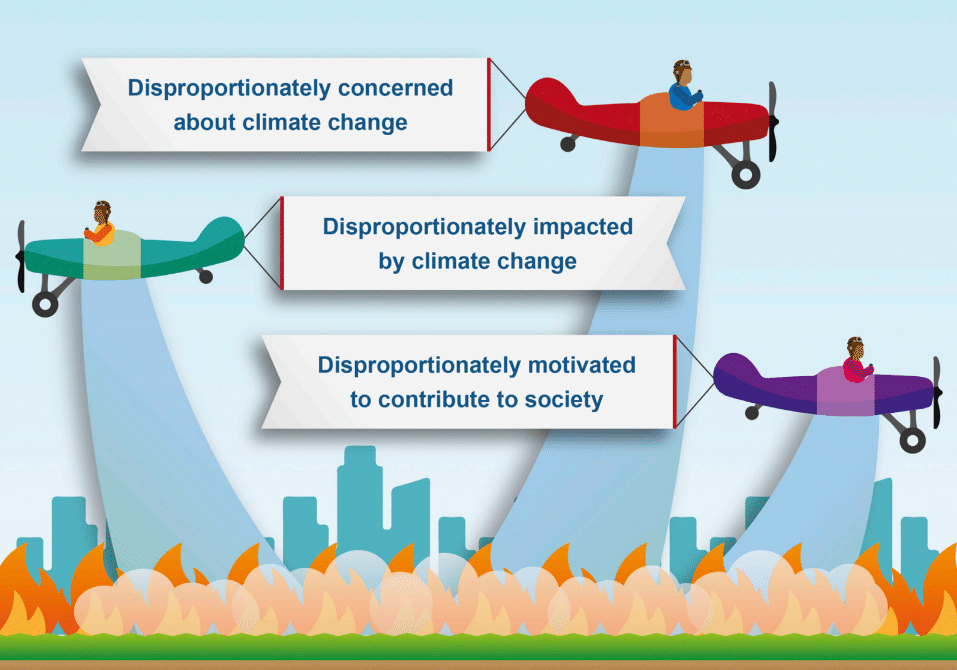
"Green Teens: Understanding and Promoting Adolescents' Sustainable Engagement"
@UniUtrecht Sander Thomaes
Read more from this @OneEarth_CP Perspective here: https://t.co/OxLVcOU7yN
Do you know you can directly subset the heatmap list in ComplexHeatmap?
ht_list[abs(cor) > 0.5, ]
ht_list[gene_type == "protein_coding", ]
ht_list[tss_dist < 1000, ]
All the parameters you set in ht_list are subsetted accordingly and automatically.
https://t.co/JQG4lHJ1l8
New preprint from the lab in collaboration with @DeutschbauerLab and @LBarquist: https://t.co/ToujPIhK1u. Stress-specific and metabolic gene expression profiling of B. theta complemented with functional genomics uncovered a ncRNA that modulates sensitivity to tetracyclines.
Happy to share my 1st 1st-author publication!
Our experiments reveal mismatch-position dependency of antisense-PNA #antibiotics. We Included this in MASON, a web-based PNA design tool. Big thanks for the support of the co-authors/helpers from @LBarquist@JoergLab@Helmholtz_HIRI
In this experiment Dr Rob Thompson of @UniRdg_Met shows just how long it takes water to soak into parched ground, illustrating why heavy rainfall after a #drought can be dangerous and might lead to flashfloods.
@R0b1et@UniRdg_water
#HIRI's Sabina @ganskih is still amazed by the #SARSCoV2#RNA genome. The @M_Munschauer lab, where she is doing her #PhD, investigates the molecular interactions between human cells and this #coronavirus. These insights contribute to the development of novel RNA-based therapies.
The Nextflow training workshop now includes over 7 hours of YouTube content, as @EvanFloden leads you through 10 chapters from total beginner to Nextflow expert https://t.co/GcEI0Zp6SE