i spent some time recreating the fruitfly "brain" upload. it's an interesting idea to simulate destructive brain uploads. the fly connectome is truly taking actions (completely untrained) that i could only call fruitflyish. i still have lots of questions so will explore this area further.
We've uploaded a fruit fly. We took the @FlyWireNews connectome of the fruit fly brain, applied a simple neuron model (@Philip_Shiu Nature 2024) and used it to control a MuJoCo physics-simulated body, closing the loop from neural activation to action.
A few things I want to say about what this means and where we're going at @eonsys. 🧵
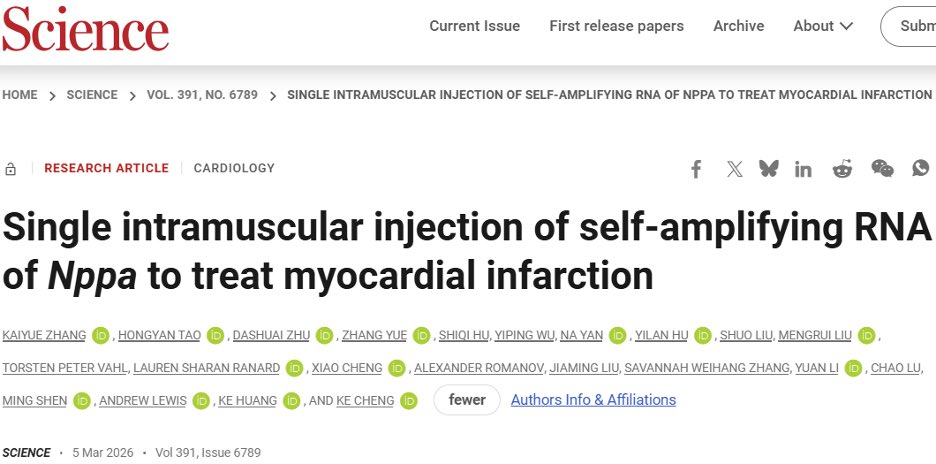
Congratulations to Kaiyue Zhang on the publication @ScienceMagazine. In the paper, we built an “RNA factory” on muscle for heart repair. https://t.co/DRDhOLKbLl
Metastasis kills most cancer patients and grows from invisible seeds. How do these seeds escape from attack by immune cells? These seeds harness stress hormones!🤯
thanks to @nyscf @parkerici for their support. Today at @Nature https://t.co/rMKnHEqQwb
UCSF researchers show a liver enzyme called GPLD1, boosted by exercise, restores memory in aging and Alzheimer’s mice by repairing blood brain barrier vessels and lowering harmful TNAP in brain blood vessels.
https://t.co/iiYnlOACUp
Some answers aren’t found in a textbook. They’re found under a rock in a creek. Or growing on a reef. 🪸
Director of Research Organisms Shane Miller and his team support everything from planarians that regenerate entire bodies to coral that spawn under carefully recreated lunar cycles.
By studying organisms most people overlook, Stowers scientists uncover how life repairs, adapts, and rebuilds.
🔗 Read more: https://t.co/O2ALnlFWg3
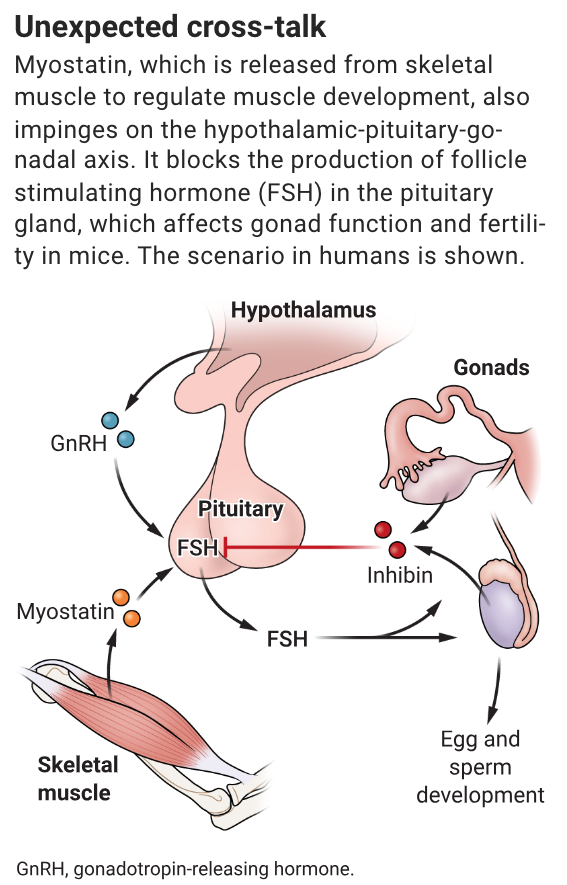
A 2025 Science study in mice identified cross-talk between muscle and the reproductive system, raising questions about interventions to increase muscle mass that might affect fertility.
Learn more in this #SciencePerspective: https://t.co/qwuHGRBINK #ScienceMagArchives
Yue Xiong, Weihua Gao, Zelai Wu, Xiukui Gao, Qiming Sun et al. (@ZJU_China) present new mouse models for visualizing the selective degradation of #peroxisomes (#pexophagy) in living animals. https://t.co/hRQkeseeGq
Here is the link to download the PDF of my course#5 on Biological computation @cdf1530. I present & discuss Self-tuning, Adaptation and Learning in biological (non-neuronal) systems, in particular during embryonic development.
Enjoy!
https://t.co/zzdhLMy6Za
Something funny learnt: some transcripts have certain sequences (ZIP code) which can be recognized by RNA binding proteins and then transported to daughter cells (yeast here), old proteins will only stay in the mother cells😆
https://t.co/yzCjsq9tjQ
New discoveries are reshaping how scientists understand the molecular connections between the extracellular matrix and lysosomes—and the resulting implications for research and therapeutics for neurodegenerative disorders.
Learn more in this @scisignal Review: https://t.co/lu6XJsmK1o
Toxoplasma gondii carefully balances calcium between its organelles. This study shows the ER, via the SERCA pump, is central to controlling Ca²⁺ in the cytosol and mitochondria.
🔗 https://t.co/g4Alj28Wtj
Migration of cell populations is a fundamental process in morphogenesis and disease. Researchers have identified a novel form of collective mesenchymal cell migration during chick gastrulation, where cells self-organise into a dynamic meshwork structure.
https://t.co/t0acs8hkkx
An amazing collection of brain-body interaction articles in this special issue. Love the beautiful vagus nerve on the cover by Andreas Vesalius https://t.co/K1El0JuJDX
Mild stresses on the body, like fasting or cold exposure, can delay ageing. But how?
A new Insight Article explores how oxygen-sensing neurons in C. elegans trigger body-wide stress signals that boost resilience and extend lifespan.
https://t.co/oRHrvXQUCp