Star trails from the ISS! Lots of cool physics to see in these. Stars moving as thin lines in the direction of our orbital path but forming arcs to the left of our velocity vector. Lightning flashes making purple spots into the time history. City lights streak by. A faint red glow is seen as part of our upper atmosphere. Surreal!
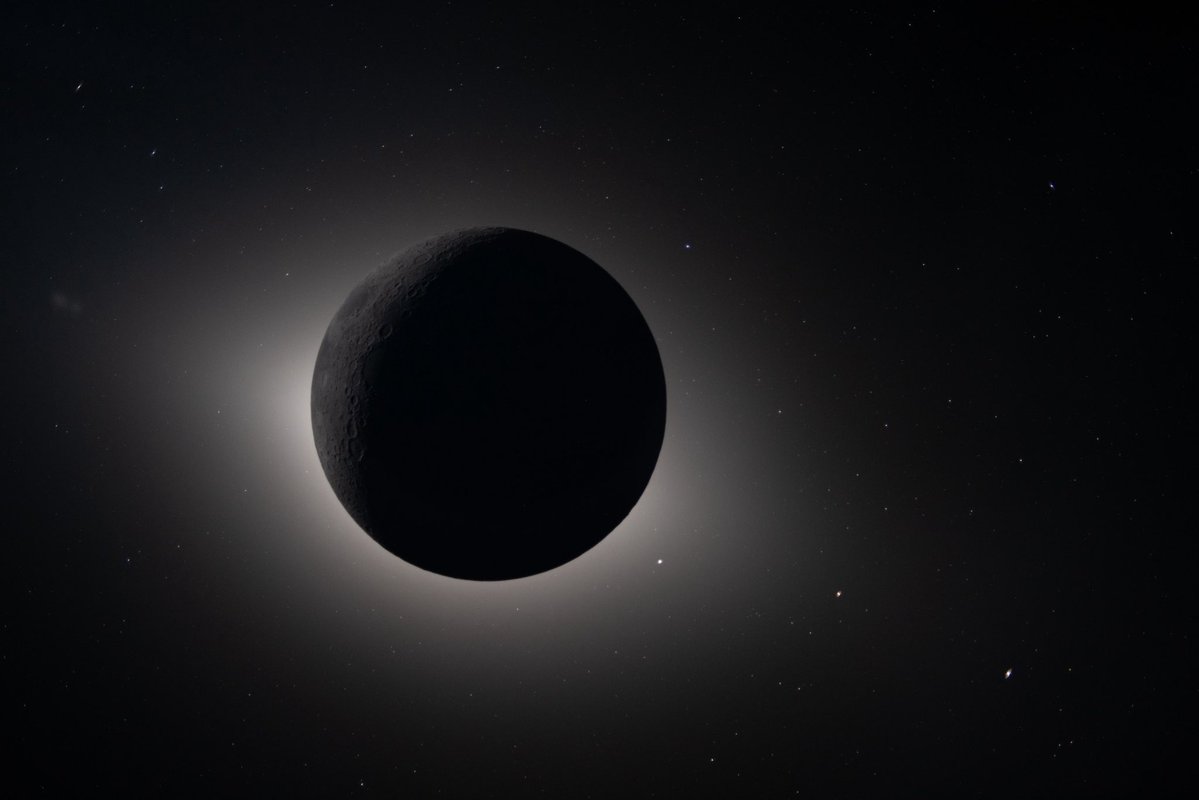
Every so often I see a post from someone that didn't find an eclipse an incredible experience. They didn't seem to get the hype.
The sun turned into a black ball with glowing plasma shooting off of it. If that doesn't get you to feel something, nothing will 😆
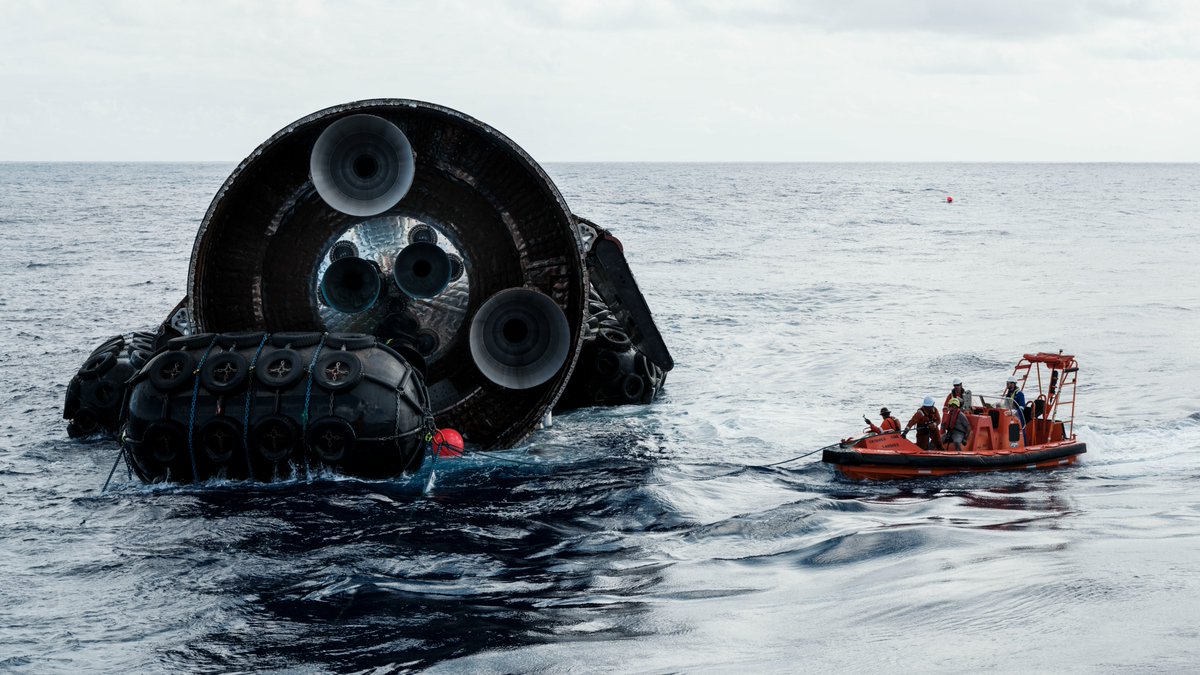
The SpaceX Recovery team is still working to recover Flight 13’s Starship from the Indian Ocean. They’ve been overcoming challenging conditions and increasingly rough seas as they attempt to guide the 52m long spacecraft to port
The largest nuclear bomb in outer space exploded 64 yrs ago today.
Starfish Prime was a 1.4 megaton thermonuclear warhead, detonated at the altitude the Space Station now orbits. It created man-made radiation belts that wrecked many satellites & lasted 5+ years.
A year after the test the USA & USSR signed the Partial Nuclear Test Ban Treaty, leading to the global 1967 Outer Space Treaty.
https://t.co/d5XO4Vl0g1
This is probably the best look at the shockwaves I’ve seen from the latest Starship flight.
Captured from a GoPro I clamped onto a proper camera to record simultaneous video. (I’ll show you the photo the better camera took in the reply)
Rocket Lab has been awarded a $90 million contract by the @USSpaceForce’s Space Systems Command @USSF_SSC to design, manufacture, integrate, and operate two geostationary satellites hosting the Heimdall space domain awareness payload produced by Rocket Lab Optical Systems.
Rocket Lab components have long played an essential role in many GEO programs, but this is our first satellite production program for geostationary orbit. The two satellites will be built on our Lightning bus, adapted for the thermal, radiation, propulsion, and station-keeping demands of GEO.
@RemoteNavigator Refreshing seeing this in my feed. Its been in the back of my mind for a while since seeing some of my favorite companies get more inte military applications. Makes me want to think more about where i put my money. Thanks!
genuinely unfathomable video i cannot begin to imagine the feeling of seeing the beauty of earth below you as you go into a firery freefall hoping you don't burn up and die lol
This photo of Earth is EXTRA spectacular for a good reason... let me explain. Most images you see of Earth from space are the daylight side of the Earth, and it's obviously very bright (see my last image), this means stars are too dim to be seen with that bright exposure setting (low ISO, high shutter and / or stopped down aperture).
BUT this image taken by the Orion crew looks so incredible because you can see the sun is BEHIND the earth, meaning it's night time on the side of the earth facing the crew in this image.
So how do you expose a night time earth from space? Same way you do on Earth! A mixture of opening up the aperture (F4 in this case), cranking the ISO (51,200 here), and using a relatively long exposure (1/4 of a second). We can see the settings used by looking at the exif data from the camera. What this means is our camera is also sensitive enough to see stars in the background of Earth, leading to an extraordinary image!!! GREAT WORK!!! These are the kind of images I've been so excited to see!
These two images were taken by @astro_reid only minutes apart. The stark difference is the result of camera settings. In the first, a longer shutter speed let in much more light from Earth, while the shorter shutter speed in the second emphasizes our planet's nighttime glow.