Radiotherapy after surgery halves risk of recurrence in a type of brain tumour that can often grow back, trial shows.
Find out more in The Lancet: https://t.co/A8i8D4Yipm #EANO2026
🇬🇧 A “revolutionary” new procedure at London’s St Thomas’ Hospital can identify the cause of an infection with a single test, potentially within hours instead of days.
Using an Oxford Nanopore GridION, it sequences genetic material in a patient sample and searches simultaneously for bacteria, viruses and fungi.
For critically ill patients, that could mean finding the infection and choosing the right treatment far faster, while reducing unnecessary use of broad-spectrum antibiotics.
It's not yet clear when the test could be made widely available, but it's the first step of a massive shift in the efficiency of diagnosing health issues everywhere.
Writer: Mhedi
In a trial involving children with Chiari type I malformation and syringomyelia, the percentage with surgical complications did not differ significantly between posterior fossa decompression with duraplasty and decompression alone. Full trial results and Research Summary: https://t.co/2o7rzKlY8q
Traditional brain tumour characterisation requires a battery of tests, delaying critical treatment decisions. Discover how Oxford Nanopore sequencing streamlines this with a single, rapid assay to provide high-confidence tumour methylation profiling. https://t.co/xGNkK5PBTw
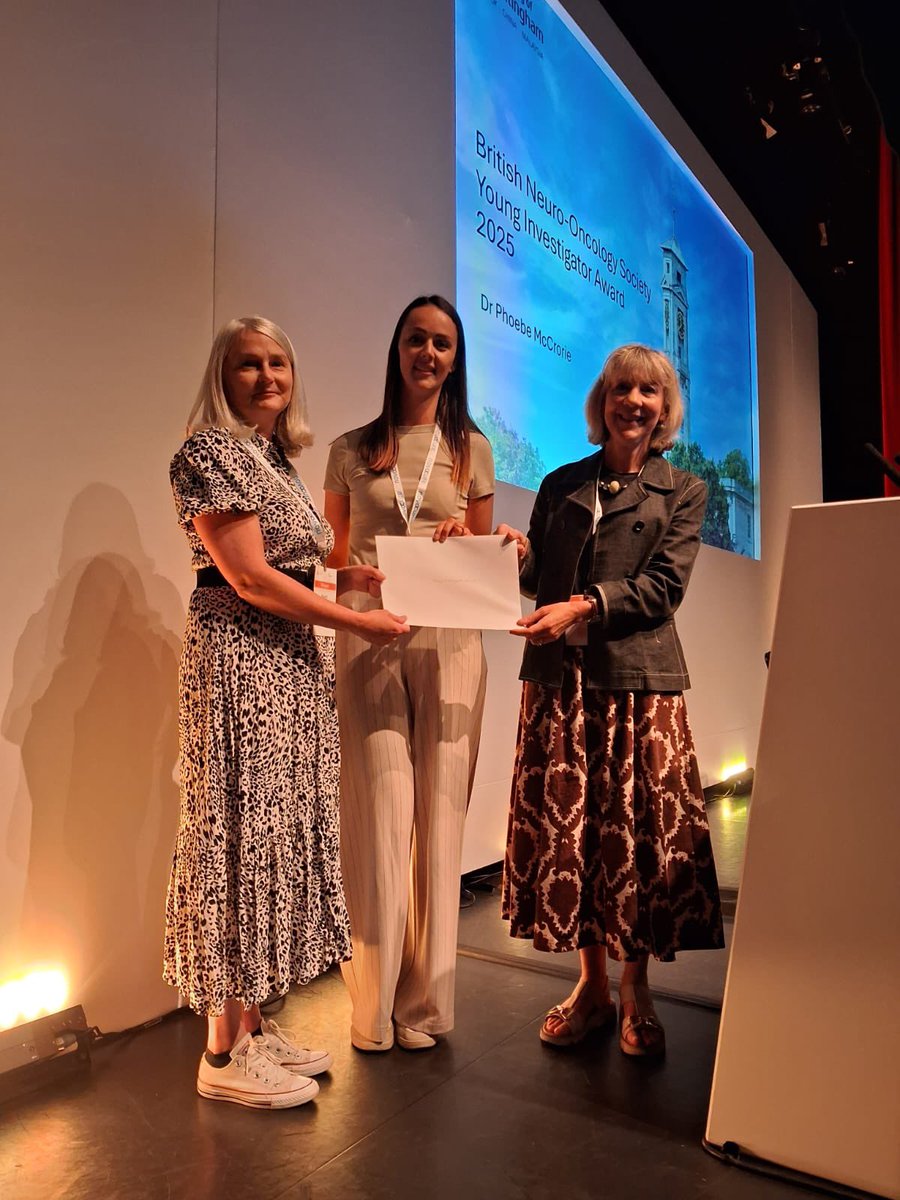
Our winner of the Young Investigator Award 2025 is Phoebe McCrorie. Congratulations!
Thank you to Karen Noble at Brain Tumour Research for supporting this alongside BNOS.
Photo - Karen Noble, Phoebe McCrorie, Susan Short. #BNOS2025
A breakthrough moment in brain infections.
Faced with a mystery infection, Judith Breuer sequenced a biopsy sample—and identified a pathogen never before linked to brain infections. Find out more. #NanoporeConf
Why wait weeks for a diagnosis?
Danny Miller discusses the future potential of Oxford Nanopore sequencing, and how clinicians could get actionable results within hours—not days or weeks. No need to batch samples. Same-day sequencing, same-day answers. #NanoporeConf
In the studio, Matt Loose shares how: “Surgeons were literally knocking, saying I’ve got a patient today. Once people see what’s possible, they start to believe it — and get excited.” when talking about his new CNS tumour profiling method.
Knowledge is power. In the studio, Matt Loose shared insights on rapid CNS profiling — and how one participant told him: “Even if the answer isn’t what you want, it’s better than not knowing at all.”
Great news about a new test that reduces diagnosis time for certain types of brain tumour. This highlights the importance of continued research to improve earlier diagnosis and faster detection for the less survivable cancers.
https://t.co/NPgNEh19LP
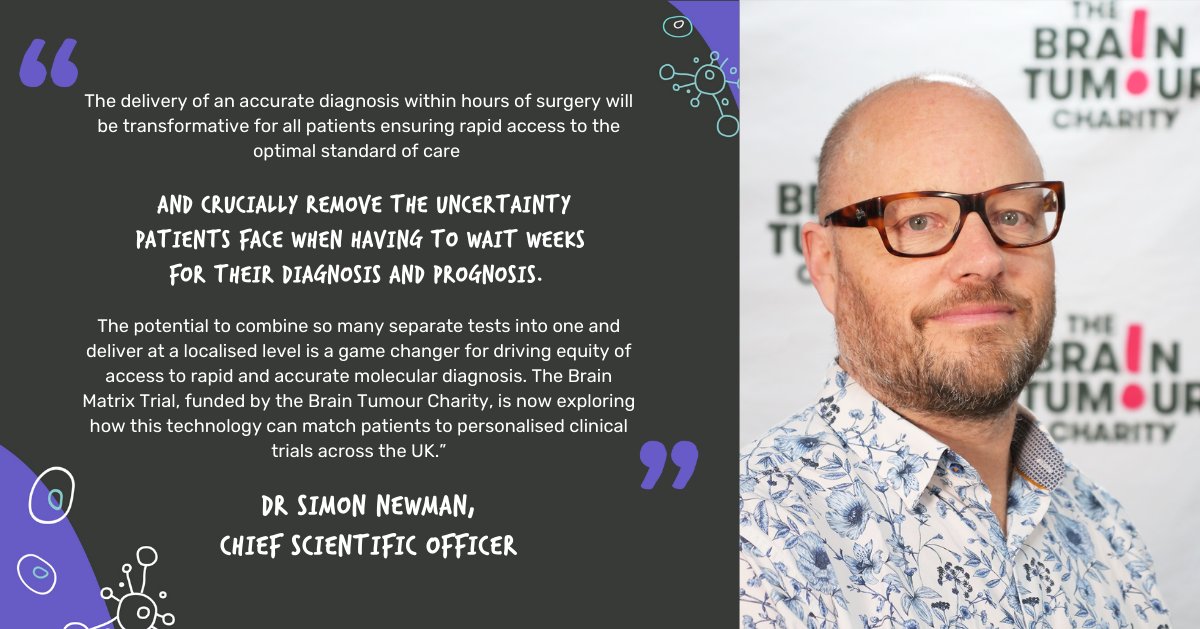
An ultra-rapid method of genetically diagnosing brain tumours has been developed, cutting the classification time from 6-8 weeks, to as little as two hours. This could remove uncertainty those face waiting weeks for their diagnosis and prognosis. Read more:https://t.co/BfEcqmZdvJ
Groundbreaking research from scientists @mattloose from @UoNLifeSci@UoNFacultyMHS & Medics @NUHMedicine means brain tumours could be diagnosed in as little as 2 hours using technology from @nanopore
Read the full story ▶️ https://t.co/X4NjKERwIl
The future is now.
In this webinar, Prof. Matt Loose showcases a revolutionary tool, ROBIN, that uses Oxford Nanopore technology for rapid and comprehensive molecular profiling of central nervous system tumours.
Watch the webinar here: https://t.co/LwJMlmxnB5
From weeks to hours.
Prof. Matt Loose shares a transformative tool (ROBIN) that uses Oxford Nanopore technology to rapidly and comprehensively classify central nervous system tumours in this webinar.
Watch here to discover what’s possible: https://t.co/Imfx2KVoGn
Proud to support #ShineALight for Brain Tumour Awareness Month & @braintumourrsch - one in three of us know someone with a brain tumour (I lost a great mate, Miles, to glioblastoma recently) yet only 1% of the UK’s cancer research spend goes into them.
This must change.