Pharmacological tinkerer and PhD. Interests include Neuroscience, human brain models and Sci-fi! Working on Autism Spectrum Disorder at UZH. Views own.
@jdpereira Congratulations @jdpereira & all the lab - your tweets bring a little humanity to working in science each day & it is great to see your successes build! As a fan of calcium dynamics I'm excited to give this a read
Below is the story of the first patient treated with a prime-edited therapeutic, developed by @PrimeMedicine in a trial led by Dr. Élie Haddad and his team at CHU Sainte-Justine. This teenager suffered from chronic granulomatous disease (CGD), an immunodeficiency, and now—10 months after treatment—the patient is healthy, stable, and living with a functioning immune system. Tracy Attebury, whose story was previously told by @ginakolata@nytimes, was the second patient treated with a prime-edited therapeutic.
https://t.co/ZiVq1SmYsn
I love living and working in Zürich, but perhaps my favourite thing is the fog. It adds such a sense of mystery and intrigue to the city... It's like living in a detective noir novel 🕵️ only without the crime
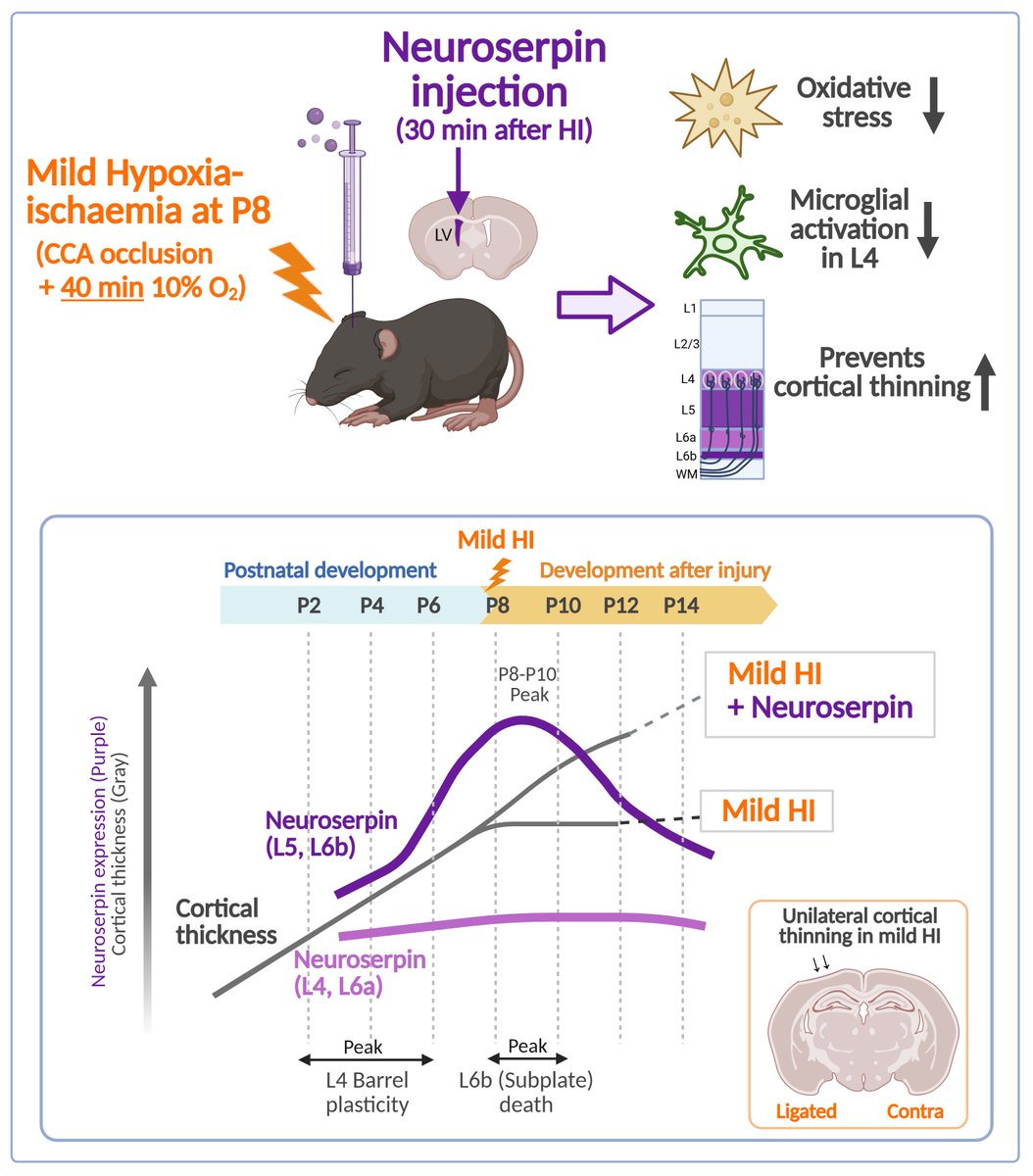
Truly inspiring work by the @ZoltanMolnar64 group. Subplate neurons showing their essential nature! Excited to see if/how this work can be translated to help brain-injured neonates 🧠
Neonatal hypoxic–ischaemic encephalopathy (HIE) is a leading cause of infant morbidity. Cortical subplate neurons transiently secrete a brain specific protein, neuroserpin.
We now show that exogenous neuroserpin is protective agains mild neonatal HIE (https://t.co/yVLm9SpdfN).
Neonatal hypoxic–ischaemic encephalopathy (HIE) is a leading cause of infant morbidity. Cortical subplate neurons transiently secrete a brain specific protein, neuroserpin.
We now show that exogenous neuroserpin is protective agains mild neonatal HIE (https://t.co/yVLm9SpdfN).
More lateral thinking from David Liu showing us amazing new tools for the fight against human genetic diseases. Excited to see how this space (rapidly) develops!
Today in @Nature we report a new prime editing strategy that can rescue a common cause of many genetic diseases in a disease-agnostic manner. This approach converts a redundant endogenous tRNA into an optimized suppressor tRNA, enabling a single prime edit to rescue premature stop codons across different diseases.
(1/15)
https://t.co/zs0qu5bhXx
Today in @Nature we report a new prime editing strategy that can rescue a common cause of many genetic diseases in a disease-agnostic manner. This approach converts a redundant endogenous tRNA into an optimized suppressor tRNA, enabling a single prime edit to rescue premature stop codons across different diseases.
(1/15)
https://t.co/zs0qu5bhXx
The microglia are the principal immune cells in the brain tied to both protection from vs progression of Alzheimer's disease. Today @Nature elucidation of a path to microglial protection
https://t.co/Cxt2htcNcS
New in @Nature, @LabNowakowski & team use barcoded lineage tracing to reveal how different cell types in the human brain form, identifying a transition during development when some progenitors shift from making excitatory to inhibitory neurons. https://t.co/Mm2WBqx9bV #studyBRAIN
We are searching for computational PhDs and Postdocs to join our group in collaboration with @TreutleinLab . We have exciting single-cell technology projects that incorporate bioengineering, computation, biology, translation. Send CV to [email protected]
SPECIAL NEUROSCIENCE SEMINAR - PROFESSOR ZAAL KOKAIA: Reprogrammed neurons and oligodendrocytes for brain repair after stroke
https://t.co/6cDD3dEcZ5
Thursday, 11th December at 4pm - Department of Physiology, Anatomy and Genetics, Sherrington Library
SPECIAL NEUROSCIENCE SEMINAR - PROFESSOR ZAAL KOKAIA: Reprogrammed neurons and oligodendrocytes for brain repair after stroke
https://t.co/6cDD3dEcZ5
Thursday, 11th December at 4pm - Department of Physiology, Anatomy and Genetics, Sherrington Library
Researchers @TheLancet identified 12 lifestyle choices that impact your dementia risk.
Here what to do to reduce your risk: 👇
1. Protect your ears
Mild hearing loss doubles risk of dementia
🧠 A new generation of biosensors is helping researchers observe brain activity with greater precision. Developed in collaboration with @HHMIJanelia, iGluSnFr4f and iGluSnFr4s make it easier to detect glutamate - an important neurotransmitter.
🔗 https://t.co/5mtHTInx5R
A pair of papers on using holographic optogenetics and compressed sensing for connectomics
Rapid learning of neural circuitry from holographic ensemble stimulation enabled by model-based compressed sensing
https://t.co/amA4i1BoGV
@NatureNeuro Now this is the dream! Seeing holographic stimulation on individual cells as far back as 2017 at SfN its staggering to see the technology develop so far. Truly inspiring time for anyone working in network research 🧠