Humanoids will soon become great practice partners for tennis and other sports.
These robots, trained by Galbot, are preparing to play with celebrities at the World Humanoid Robot Games in Beijing. They're fully autonomous.
🚨The humanoid robot sports games just wrapped up a fully autonomous 7v7 soccer match.
Booster Evolution won 3-1 on penalties against Booster Acceleration
After scoring, one robot even waved to celebrate with its teammates🤖⚽️
Both teams are from @boosterobotics#RobotSoccer
Humanoid robots can now play tennis in the style of Nadal, Federer, and Djokovic, learned from broadcast footage.
AdaPT (Noitom Robotics, Shanghai AI Lab, Dobot, SJTU) extracts professional player motions from TV broadcasts, retargets them to a humanoid, and learns both rallying and serving while preserving each player's distinctive style.
The core problem: decoupled planning-and-tracking works in sim but degrades badly on real hardware. Their fix is speed adaptation, training the tracker on randomized execution speeds while the planner learns to adjust motion speed to the incoming ball.
Deployed on Unitree G1 and the full-size Dobot Atom.
Worth noting on the sensing: the robot has no onboard vision. Ball and robot position both come from external infrastructure, a 35-camera motion-capture arena in the lab.
Paper: https://t.co/xrHLo2u9ts
9.3s…Humanoid robots have proven they can run faster than humans.
The first to cross the finish line was X-humanoid's Tienkung. Honor's Lightning has a fast start, but lacks explosive power in the later stages.
@SylviaTiongX All the matters is me as a consumer is that the story is interesting, entertaining, thoughtful… I don’t really care what tool or person are used to help with the writing. I probably like to know the source of the idea, so I can follow or acknowledge the person or the algorithm
@SylviaTiongX I use NotebookLM to do my research, so instead of reading a reference paper, I use notebooklm to create a PowerPoint deck about 10 to 12 slides, summarizing the paper. Then I read the PowerPoint, put the paper into Grok and verbally interact with Grok about paper
Living in a Simulation: Optimized for conscious observers
The laws of physics do not merely allow life — they appear strangely optimized for the existence of conscious observers. Quantum mechanics requires an observer to collapse the wave function. The universe’s expansion rate and matter distribution seem fine-tuned so that galaxies, stars, and planets can form at exactly the right times. Even the fact that the universe is understandable at all feels suspiciously convenient. This pattern suggests the simulation was built with conscious experience in mind, not as a random byproduct of blind physical laws.
Living in a simulation: Fine-tuning of the universe
The fundamental constants of physics — the strength of gravity, the mass of the electron, the cosmological constant, the fine-structure constant — are set with mind-boggling precision. Change any one of them by even a tiny fraction and stars never form, atoms cannot bind, or the universe collapses in seconds. The probability of all these constants landing in the narrow “Goldilocks zone” that allows life is so vanishingly small that many physicists have called it the greatest coincidence in science. Simulation theorists point out that this is exactly what you would expect if the universe were deliberately programmed: a designer simply set the parameters to values that produce interesting, stable, life-permitting results — just as a game designer tunes physics settings to make a world fun and stable rather than chaotic or dead.
Living in a simulation: Recursive / nested simulations argument:
If any civilization can create realistic ancestor simulations, then the conscious beings inside those simulations will eventually develop the same technology and create their own simulations. This creates an infinite regress of nested realities — simulations within simulations within simulations. In such a hierarchy, the vast majority of conscious observers would exist in the deeper, simulated layers rather than in the original “base reality.” The probability that we happen to be in the very first, top-level reality becomes vanishingly small. This recursive structure makes the simulation hypothesis not just possible, but almost inevitable once the technology exists at any level.
Solomon Tran
@SolomonIdea
Living in a simulation -Bostrom’s Trilemma
Nick Bostrom’s 2003 argument is one of the most powerful and mathematically rigorous reasons to take the simulation hypothesis seriously. He presents a trilemma:
1) either almost all civilizations go extinct before reaching “posthuman” technological maturity, or
2) posthuman civilizations almost never run large numbers of ancestor simulations, or
3) we are almost certainly living in one of those simulations.
The logic is simple yet devastating: if even one advanced civilization runs millions of realistic ancestor simulations containing conscious beings, then the number of simulated minds would vastly outnumber “real” minds in base reality. Therefore, statistically, we are far more likely to be simulated than to be in the original universe. The argument assumes only that consciousness is substrate-independent — that it can run on silicon just as well as on biological neurons — which most neuroscientists and philosophers already accept. This single argument shifts the burden of proof dramatically: the default position should now be that we are simulated unless one of the first two propositions can be proven true.
Living in a simulation -Video Game Progresss Argument:
Consider how far video games have come in just 50 years: from Pong’s two white bars to today’s photorealistic, open-world experiences with millions of players interacting in real time. If this exponential improvement continues for even a few more centuries — and current trends in AI, VR, and computing power suggest it will — then future civilizations will be able to create simulations indistinguishable from reality, complete with conscious inhabitants who have no idea they are simulated. Once that threshold is crossed, the number of simulated people will explode. Given that we already stand at the very beginning of this technological curve, the odds that we are among the tiny number of “real” people rather than the trillions of simulated ones become astronomically low.
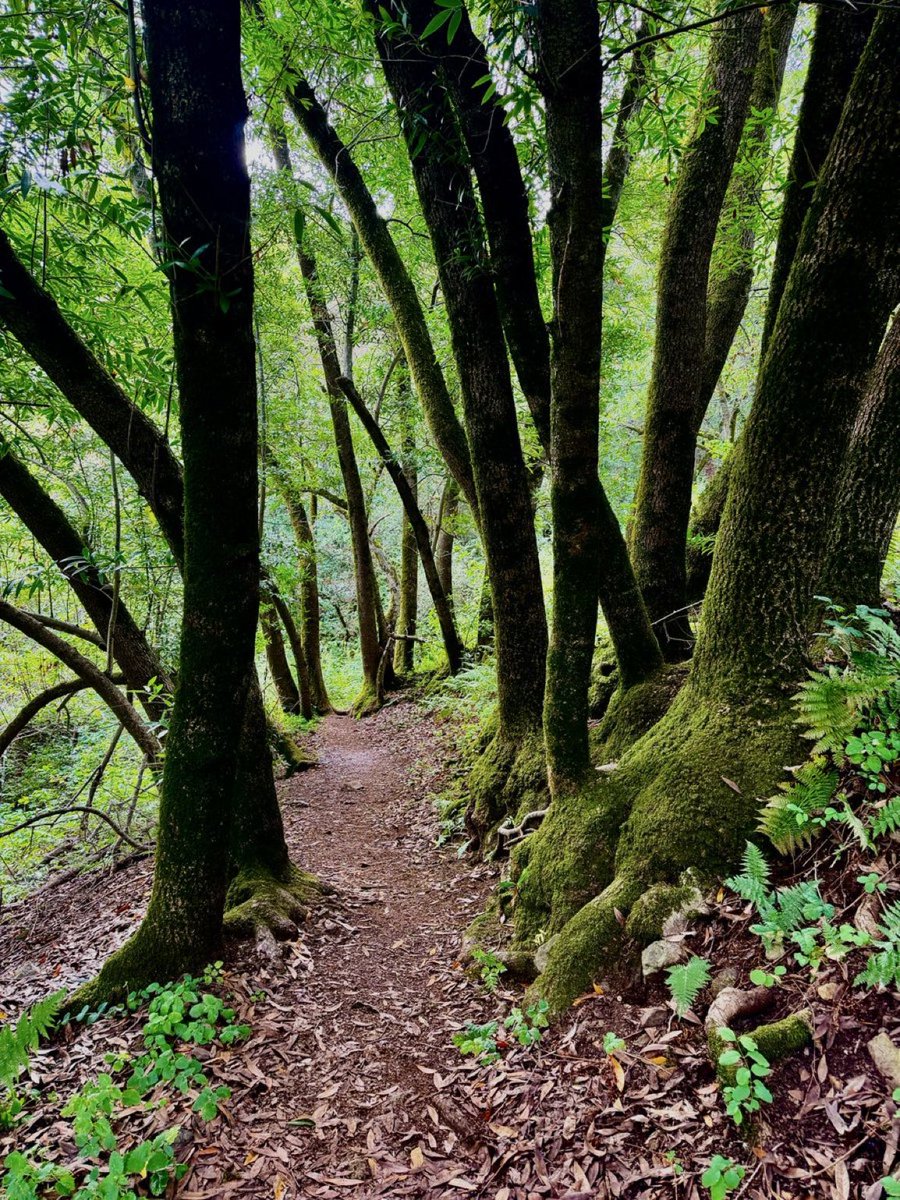
Each step on these winding trails whispers a gentle truth: movement and nature are medicine for the soul. I chase seven thousand footsteps daily, weaving through ancient trees where crisp air fills my lungs and peace quiets my thoughts. These walks melt tension away, spark fresh energy, and leave me renewed. Along the path, my camera freezes fleeting beauty, turning quiet forest moments into timeless treasures. San Antonio Range