How much can facts shift public opinion on inequality?
M.H. Go et al.'s study shows corrective info boosts support for gender equality policies in South Korea, but barely moves attitudes in Japan.
Read now: https://t.co/GCqoCMJyF2
Currently in FirstView: In “Estimating Treatment Effects on Proportions with Synthetic Controls,” @konboga and Lukas Stoetzer examine synthetic control methods (SCMs) and make the case for jointly estimating synthetic controls across multiple compositional outcomes.
From our May Issue: How Partisan Are U.S. Local Elections? Evidence from 2020 Cast Vote Records by @aleksandracone, SHIGEO HIRANO, @shirokuriwaki
, JEFFREY B. LEWIS, CAN MUTLU and JAMES M. SNYDER Jr. https://t.co/8XZCnFirBw
From our May Issue: Hidden Majoritarianism and Women’s Career Progression in Proportional Representation Systems by DANIEL M. SMITH, ALEXANDRA CIRONE, DAWN L. TEELE, GARY W. COX and JON H. FIVA. https://t.co/hENevzynPR
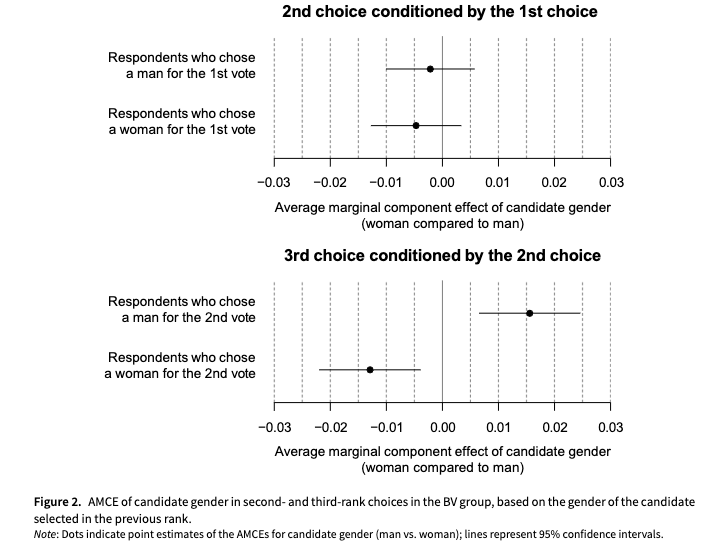
🗳️ Do multiple vote ballots increase women’s representation?
➡️ Using a survey experiment, @YoshikuniOno H. Miwa & Y. Kasuya show multiple vote ballots encourage more gender balanced voting, though men retain an overall advantage https://t.co/6yplS2n5R8 #FirstView
✨ Happy to share my new coauthored article, now out in PSRM. Based on a survey experiment in Japan, we show that allowing voters to cast multiple votes can encourage gender-balanced choices. Read it open access here:
https://t.co/6n5W0Mtf2o
From our May Issue: Institutional Recognition: Activating Representation to Build Police Responsiveness to Women by @gabi_kw, @AkshayMangla and @sandipz. https://t.co/fCpbg09M11
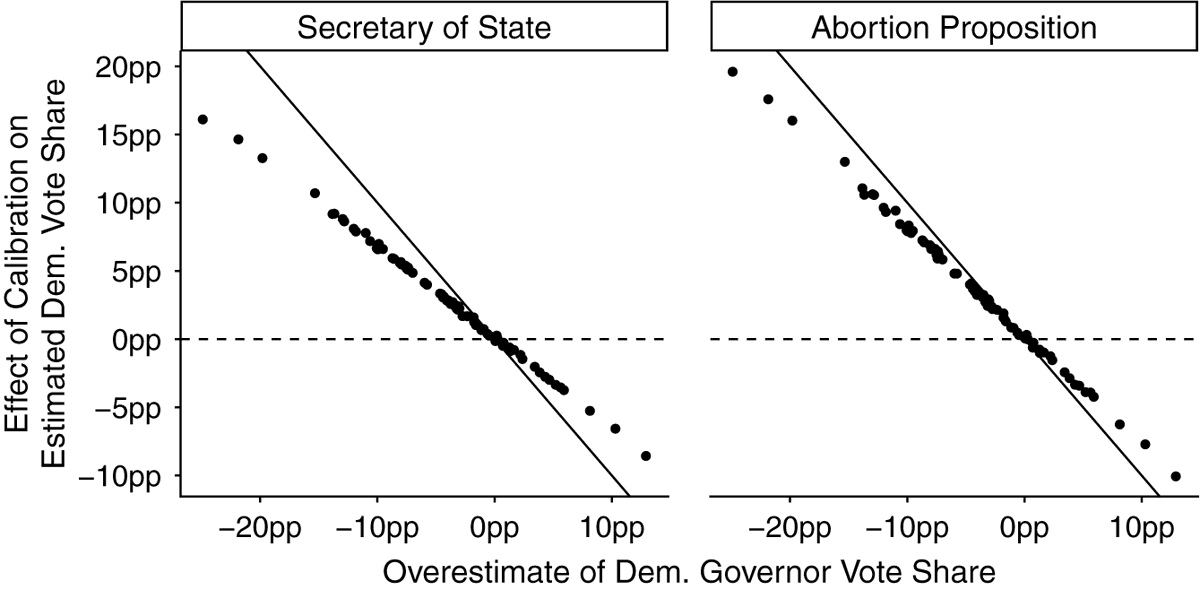
Currently in FirstView: In “Improving Small-Area Estimates of Public Opinion by Calibrating to Known Population Quantities,” @wpmarble and @joshclinton provide a framework for incorporating known population data to improve estimates of small subgroups in MRP models.
📊 Based on my journal-submission log since Dec. 2013, I made this figure showing how often manuscripts are rejected—and how long it takes—before (conditional) acceptance. I hope it helps PhD students and junior scholars see the real world of publishing in political science. 💪📚
I made a public guide for preparing social science replication packages 📦
It includes prompts for Codex/Claude Code 🤖
https://t.co/X6apuxJRfY
Please repost if this might help researchers preparing replication materials.
New paper in Nature. The more a government controls its domestic media, the more it dominates AI training data, the more pro-regime outputs we get from AI. By scraping the open web, LLMs are unwittingly laundering state-coordinated narratives into seemingly objective answers.
SNSで誹謗中傷を受けるのは、男女の政治家とも同じ量だが、そのうち性別に関わる話は、女性の方が圧倒的に多い、という研究。
Clicks and Stones: Women Politicians and Gendered Hostility Online | British Journal of Political Science | Cambridge Core - https://t.co/wF1tUxwCfY
From our February Issue: Electoral Gender Quotas and Democratic Legitimacy by AMANDA CLAYTON, DIANA Z. O’BRIEN and @jennpiscopo. https://t.co/sr51jQQwuX
女性に便益を与える政策を決定した委員会で女性が過剰代表されている時はかえって不公平と受け取られる、という研究。
How descriptive over- and under-representation impacts citizens’ evaluations of decision-making across policy domains - https://t.co/IaR0t62XnC
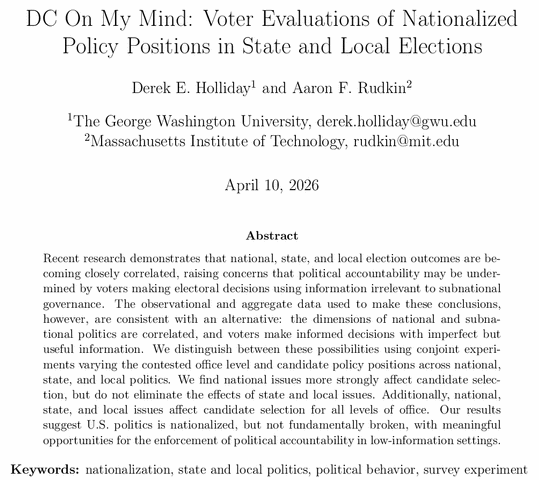
In increasingly nationalized elections, how do voters use policy information to choose candidates?
In a paper just accepted at @The_JOP (with @aaronrudkin), we provide experimental evidence of nationalized information-processing in the electorate, but with a few nuances
🧵1/8
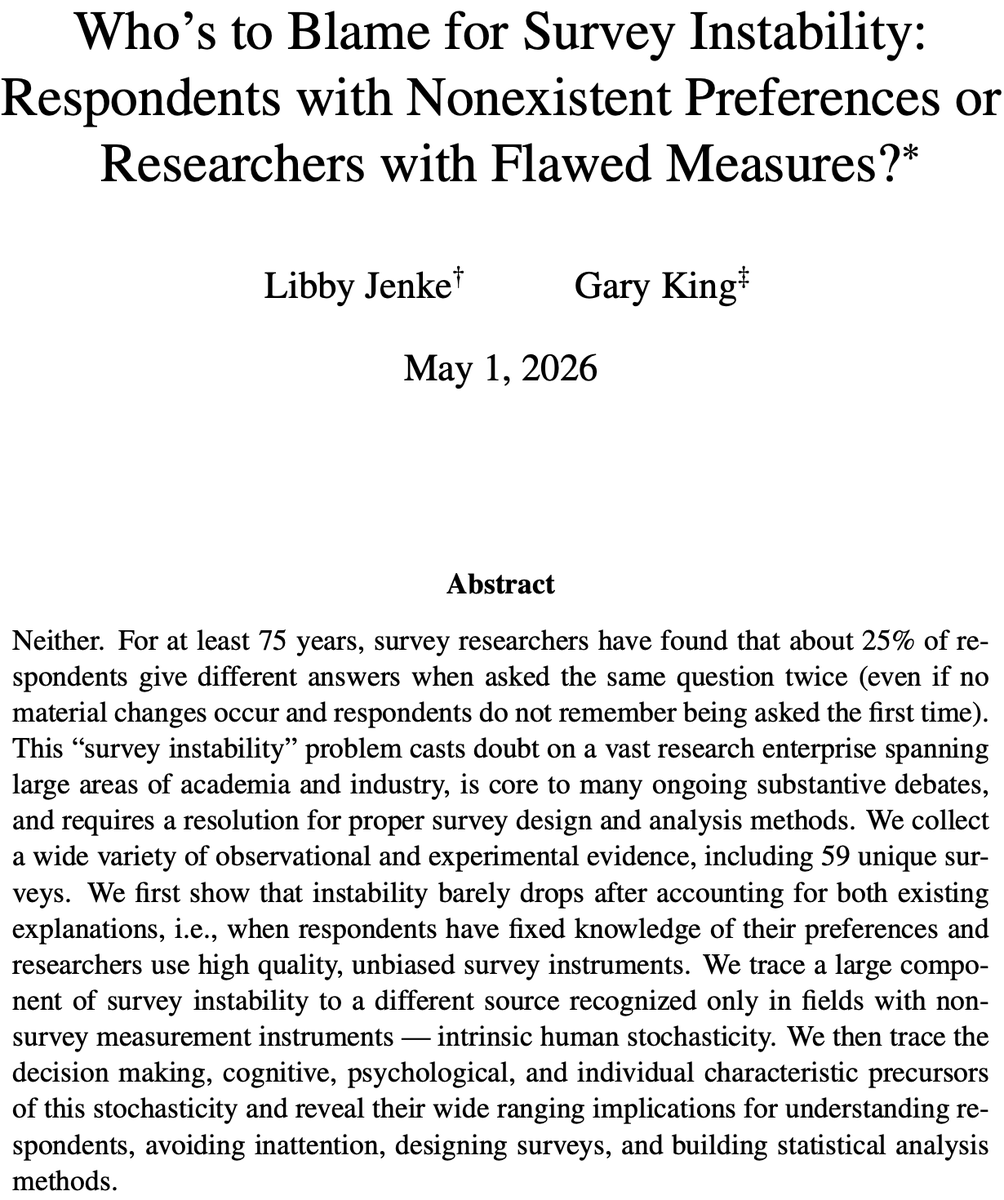
New paper: "Who's to Blame for Survey Instability: Respondents with Nonexistent Preferences or Researchers with Flawed Measures?" with @LibbyJenke. Comments welcome! https://t.co/5LhPD68qux
New article with @minheegoewhaac1, Hirofumi Miwa, and @YoshikuniOno in @poqjournal. We show that correcting misperceptions about the gender pay gap has a stronger effect in South Korea, where gender issues have become highly politicized, than in Japan.
https://t.co/jSsM1G2Ckz
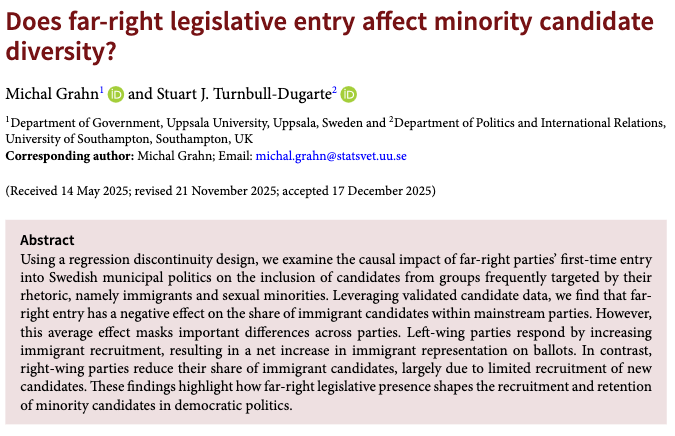
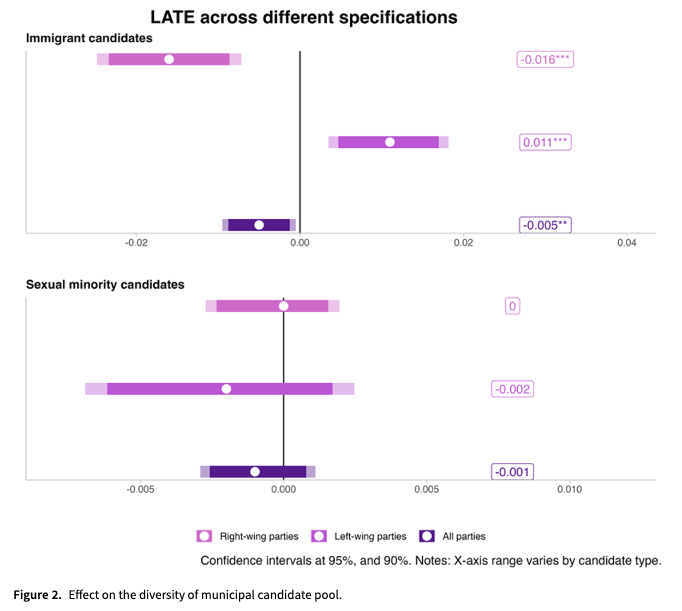
🇸🇪 Does far right entry into local politics affect minority representation?
➡️ Using an RDD, M Grahn & S Turnbull-Dugarte show far right entry reduced immigrant candidates on the right, while left parties increased immigrant recruitment https://t.co/OXKG29VJQc #FirstView
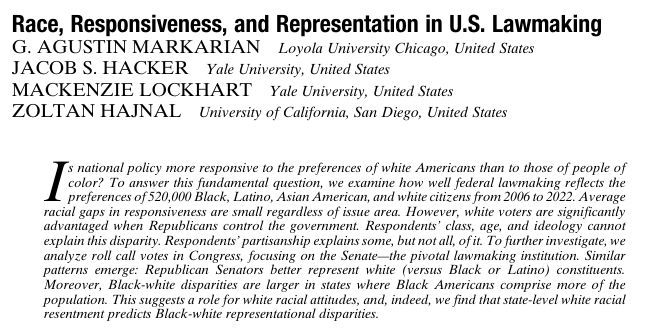
From our FirstView: Race, Responsiveness, and Representation in U.S. Lawmaking by @markarian_g, JACOB S. HACKER, @lockhartm and ZOLTAN HAJNAL. https://t.co/oT7iQgjoFy
"Do Women Legislators Legislate Differently Than Men on Gun-Related Policy? A Suggestive Yes" by Patrick Cunha Silva (@LoyolaChicago), @markarian_g (@LoyolaChicago), and Brady Mudge (@LoyolaChicago), is available to read at the link below:
https://t.co/A94Oxu04Tz