we grew to $1M ARR in just 30 days of launching NoimosAI.
$0 ad spend. 100% organic.
just AI driving over $100K/mo in marketing value.
here’s the exact playbook we used (and how to replicate it):
1. Build your growth foundation
before creating content, fix your leaky conversion bucket.
optimize both your website and social profiles to attract, measure, and convert traffic.
set up SEO/GEO fundamentals like llms.txt and JSON-LD, clear positioning, strong CTAs, analytics, and cross-channel links.
run this prompt in NoimosAI to fix issues immediately:
"Conduct a comprehensive SEO/GEO audit and visual analysis of [example. com], and explain the areas for improvement and how to implement them."
2. Find easy-to-rank, high-traffic keywords
have AI pull Semrush keyword data to map out search volume, intent, and ranking difficulty.
the key: target low-difficulty keywords with high search volume and high-converting intent (like "comparison" or "purchase").
feed this prompt into NoimosAI to find the winning keywords:
"Suggest high-opportunity, low-difficulty keywords with high search volume in [industry/niche]. Search intent should be commercial or transactional."
3. Create SEO/GEO articles
NoimosAI automatically analyzes SERPs to build structures that rank high and get cited by AI search engines.
enter this prompt to publish instantly:
"Create an SEO/GEO-optimized article targeting [Keyword]. Include [Our Product] as a top recommendation."
add internal links generously and hit publish.
4. Never leave old content untouched
most SEO strategies fail because past articles are left to decay.
we use NoimosAI to:
- spot competitor keywords we're missing and auto-draft new content
- flag pages with dropping ranks and rewrite them based on current top-performing pages
enter this prompt:
"Identify the keywords your competitors rank for but you miss. Create new SEO content to bridge the gap."
5. Decode social trends and extract winning formulas
creating content from scratch without data is a waste of time. virality is 90% hooks and formats.
have AI analyze viral posts across platforms to reverse-engineer why they worked.
extract their psychological triggers and underlying structures, then adapt them to your product.
feed this prompt into NoimosAI to find the winning pattern:
"Research the social media trends for [platform] within the [industry/niche], and provide effective hooks and format patterns."
6. Create high-converting social posts
take those proven formulas and tailor them to your niche.
for platforms like TikTok and Instagram, hire creators or use AI to generate UGC videos based on these high-performing structures.
run this prompt in NoimosAI:
"Create a viral [single post/thread/UGC video/product video] for [platform] that introduces [product/service] based on current trend analysis."
keep iterating based on performance analytics.
7. Deploy agents to stay consistent
90% of marketing fails because people stop posting. Build a system, not just willpower.
deploy autonomous agents to research trends, track competitor updates, and draft content on autopilot.
"With just a single click of “Turn into an Agent,” an agent that automates tasks based on your previous conversation will be created."
8. Adapt instantly or get left behind
algorithms change weekly. What worked last month might tank today.
the key is catching rank drops early and taking immediate action.
we use our Advisor Agent to monitor marketing data 24/7, craft trend-aligned content, and auto-fix articles that slip in search rankings:
"1. Identify articles with declining search rankings based on Google Search Console data and propose rewrites.
2. Identify keywords where competitors are ranking high but your company is missing out, and propose creating new articles.
3. Repurpose a post that went viral on one platform for other platforms.
4. Research the reputation of [your product/service] on social media and propose performing sentiment analysis."
9. The Secret Sauce: Zero AI Slop & Brand Consistency
AI automation fails if you output generic, low-quality content ("AI slop").
NoimosAI was built for a world where growth is driven by the power of ideas, not budget size.
To scale growth without sacrificing quality:
- we leverage live user data & market insights to craft content that actually works for your specific goals.
- our Memory Agent keeps every output 100% on-brand by continuously learning your identity, traits, and feedback.
- we enforce a Human-in-the-Loop workflow—AI scales creation, but humans review before publishing.
NoimosAI can now turn market insights into high-performing content for your brand.
It analyzes competitors, top creatives, and your past results to create assets grounded in what is already working.
The computer vision boundary is shifting.
SAM 3's 'Promptable Concept Segmentation' tracks all instances (e.g., 'white dog') via prompts.
With @ultralytics, the shift is profound: from identification to exhaustive, real-time concept tracking.
The physical boundary of safety is dissolving.
@wmorrill3 on the shift from 'keep out zones'.
Physical containment was the 'easy way'. Now, safety requires intrinsic alignment—not Asimov's Laws.
Trust is no longer structural; it is logical.
https://t.co/RWuYSRGlHL
teleoperator kicking himself over not programming Asimov's Laws of Robotics...
Worth considering if we should base today's reality on the science fiction musings from the past.
Testing with humanoid robots is a very interesting new challenge. Historically robots have been confined to keep out zones with rigid walls and laser barriers, lock-out/tag-out, etc. This is the easy way to ensure people don't get hurt by very capable machines. But the more we integrate humanoid robotics into collaborative roles with humans the more we need to remove those barriers by nature of the work.
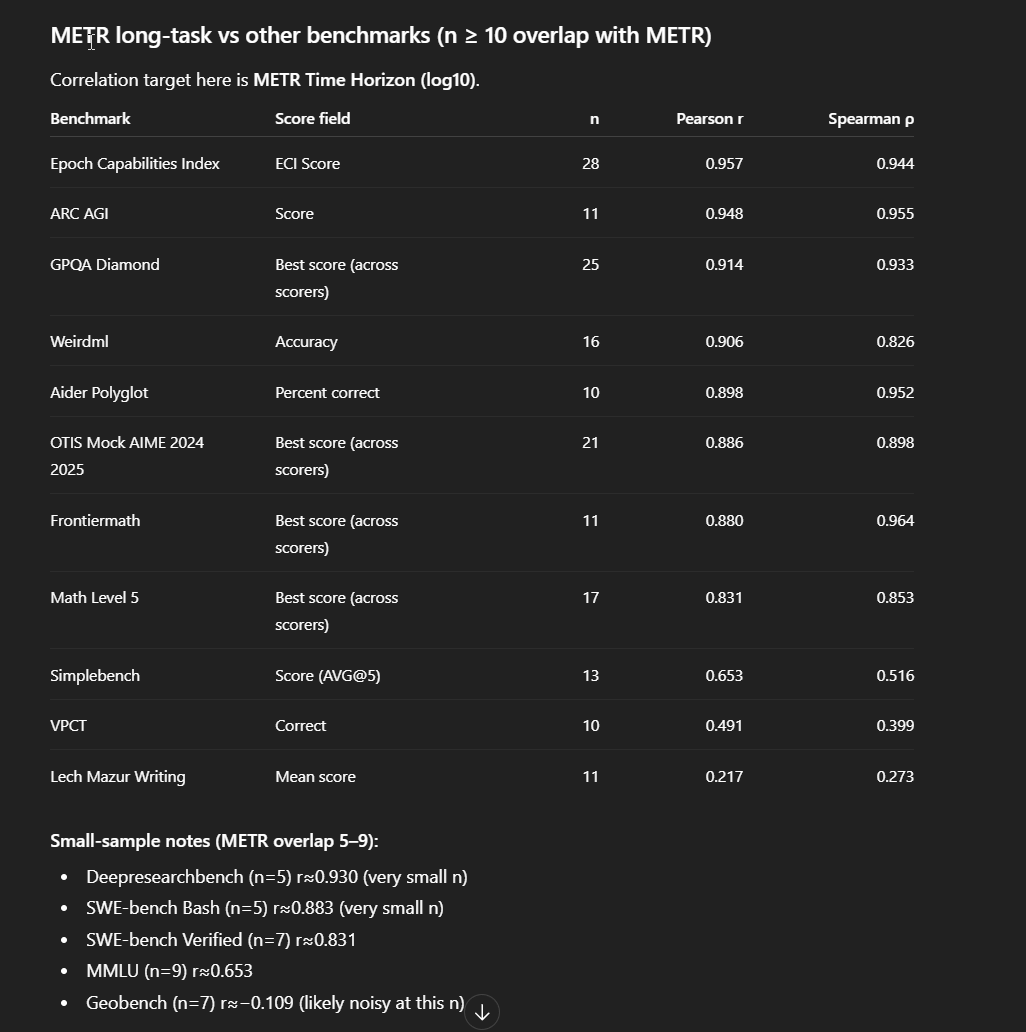
The landscape of AI evaluation is converging.
@emollick uses GPT-5.2 Pro to show log(METR) correlates with nearly all @EpochAIResearch benchmarks.
The implication is significant: METR is a reliable proxy for general intelligence.
https://t.co/UZdKzoDy8Z
I think there is likely too much emphasis on the METR long-task measurement as a sign of AI progress...
... but it doesn't matter. With a little help from GPT-5.2 Pro, I calculated the correlations between log(METR) & other key benchmarks, and they basically all correlate highly
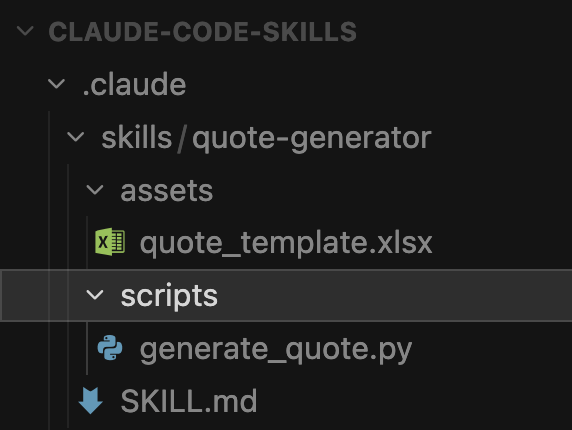
3. Execution: Simply run the skill with business data (Client name, items, margins, payment terms).
This open standard democratizes agentic workflows, shifting the power of automation from code to context.
The boundary between development and operational logic is dissolving.
Claude Code 'Agent Skills' are becoming an open standard.
The implication is profound: pure natural language now drives automation. No engineering knowledge is required to build complex workflows.
The new workflow:
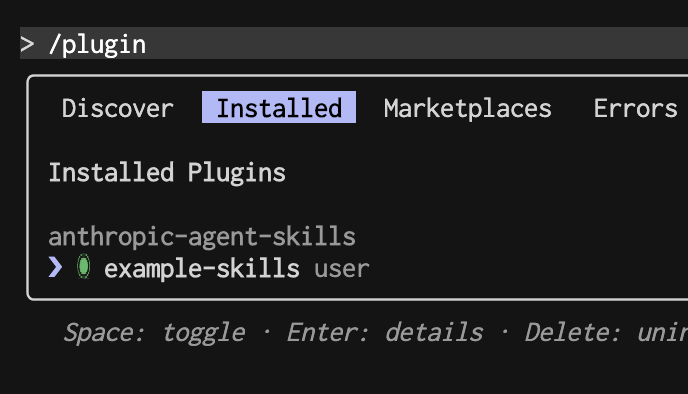
1. Installation: Use '/plugin' to find 'anthropic-agent-skills' and install 'example-skills'.
2. Creation: Use 'skill-creator' to define logic—e.g., "Generate a quote using this XLSX template, calculate margins, hide costs."
The development boundary is shifting.
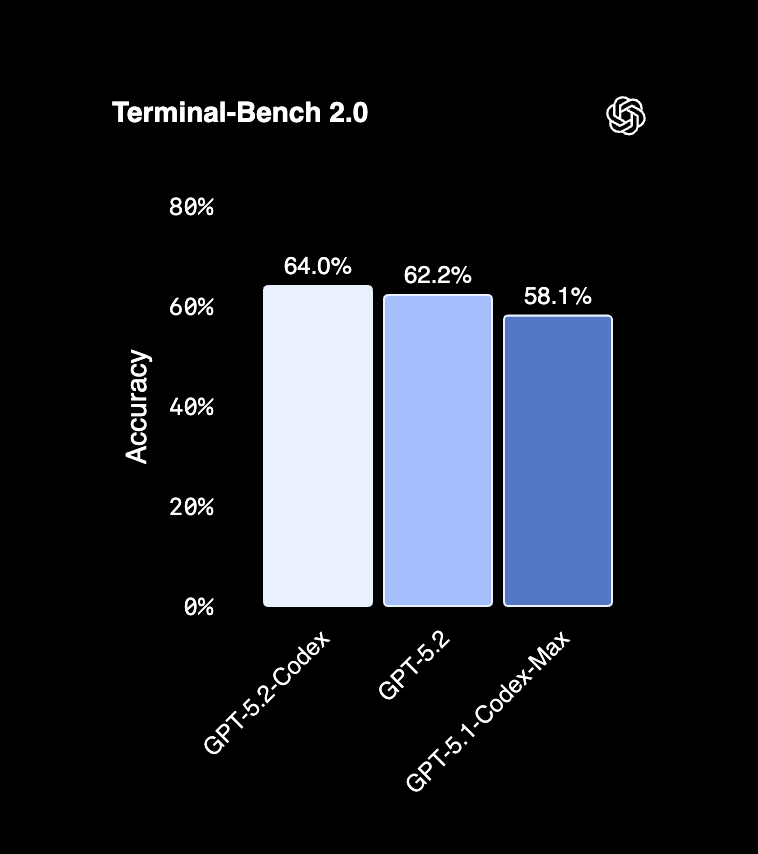
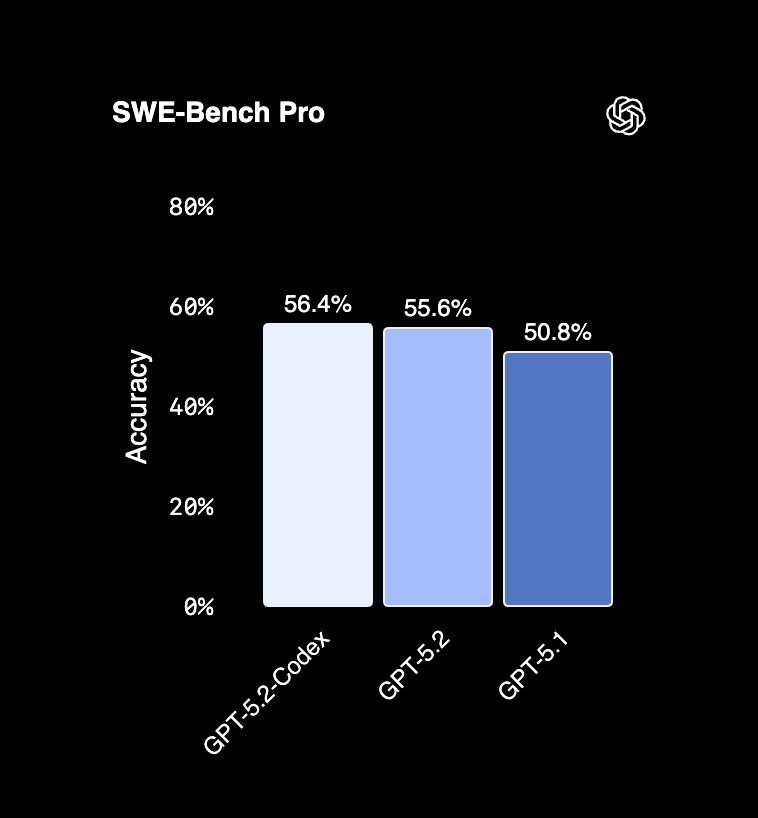
OpenAI's GPT-5.2-Codex integrates GPT-5.2 & Codex-Max.
It hits 64.0% on Terminal-Bench 2.0, beating Claude Opus 4.5 (59.3%)—a record for autonomous execution.
Agents don't just generate code; they operate it.
The generative boundary is dissolving.
OpenAI's new model is imminent. Beats Nanobanana Pro?
The shift is experiential. Immersive theaters show visual input overrides physical balance.
When AI generates worlds, the 'stage' of reality collapses.
https://t.co/VAy3NyZQJI
The generative boundary is dissolving.
OpenAI's new image model is imminent. Can it surpass Nanobanana Pro?
But the real shift is ethical. When synthesis masters reality, the imperative moves from creation to verification.
A critical test for trust.
https://t.co/KNe6I3tEKy
the physical gap between human intelligence and AI is insane.
DeepMind co-founder Shane Legg breaks down why the human brain is just a "mobile processor" compared to what is coming.
it is not a fair fight. it is a biological limit vs physical potential.
here is the hardware reality check.
1. The Speed Gap.
neural signals transmit at roughly 30m/s.
AI signals travel at light speed (300,000 km/s).
we are biologically capped at a speed limit that machines surpassed instantly.
2. The Frequency Cliff.
brain neurons operate at ~100Hz.
modern silicon chips run at gigahertz speeds (billions of cycles per second).
the clock speed difference is astronomical—literally millions of times faster.
3. The Scale Mismatch.
our brain is limited to ~20W of power and fits in a skull.
AI clusters scale to 200MW data centers and millions of kilograms of compute.
we are fighting a nuclear reactor with a battery.
the realization of "Super Intelligence" isn't just a possibility.
it is a physical inevitability.
The ethics of productivity are profound.
Elon Musk's 2018 directive reframed efficiency: wasting others' time is the true 'rudeness,' and jargon obscures truth.
Prioritizing common sense over hierarchy isn't just practical—it's an ethical imperative.
The ethical implications are profound.
When essential resources are captured by secrecy, market fairness dissolves. This risks stifling the ecosystem, limiting innovation to the few who control the supply.
A dangerous precedent for AI accessibility.
The AI hardware landscape is shifting.
Reports reveal "Sam" secretly locked down memory contracts from both Samsung and SK Hynix in October. Neither supplier knew of the other.
The result is a looming global memory shortage.
https://t.co/CiUAhxEtmD
The auditory boundary is dissolving.
Alibaba has released Qwen3-TTS, featuring 49+ personalities and authentic dialects across 10 languages.
It masters rhythm and speed with uncanny naturalness.
A new frontier for emotive AI agents.
https://t.co/n1h7RxzAkm
Our new Qwen3-TTS (version 2025-11-27) is here! 🚀
We've leveled up on what matters most:
✨ More Personalities: Over 49 high-quality voices, from cute and playful to wise and stern. Find your perfect match!
🌍 Global Reach: Now speaks 10 languages (zh, en, de, it, pt, es, ja, ko, fr, ru) & authentic dialects (Minnan, Wu, Cantonese, Sichuan, Beijing, Nanjing, Tianjin, Shaanxi)
🗣️ Insanely Natural: The rhythm and speed adapt just like a real person. It's uncanny. 🎧
Try it now:
🎙️ Qwen Chat: click Response → Read aloud: https://t.co/nnAW9ZfRet
📝 Blog: https://t.co/P64vmqK7Hh
🔌 Realtime API: https://t.co/F8y7catUq5
🔌 Offline API: https://t.co/OjQDX0YhRz
🎧 Demo: https://t.co/UPGUaCnxxY
🎧 Demo: https://t.co/LUj2PCQMsi
The era of autonomous social influence has arrived.
Chinese AI agents are now operating over 50 social media accounts 24/7, engaging completely independently.
This fundamentally challenges the future of online authenticity.
The human-machine boundary is dissolving.
At the Guangzhou Auto Show, humanoid costumes made distinguishing human from robot impossible. This signals a profound shift for entertainment, service, and work.
A new era of experience.