PhD position alert 🚨. I have a fully funded PhD position in my group at DTU-Bioengineering. If you want to work with protein phase separation and aggregation in neurodegenerative diseases, this could be a great opportunity for you.
Apply here:
https://t.co/zTBiXj1NBQ
This is an exciting time, and I will soon be looking for motivated PhD students and postdocs to join my group. If you’re interested in working at the intersection of protein science, biotechnology, and innovation, stay tuned for future openings (3/3)
I am thrilled to share that I am starting as an Assistant Professor at DTU-Bioengineering. My research will focus on biomolecular phase separation —exploring its role in diseases, and leveraging it for biotechnology and sustainability applications (1/3).
This decision has been profoundly shaped by the two incredible mentors I had during my postdoc and PhD, Alexander K. Buell and @SamirKMaji1, whose guidance and dedication have motivated me to pursue a career in academia (2/3).
Our new preprint on stability of alpha-synuclein fibrils and their disaggregation by chaperones is out!!
The chaperones effectively disaggregate 3/4 fibril types with varying efficiencies that correlate with their thermodynamic stability.
https://t.co/x6lCto9Xgw
I arrived in Tokyo to reunite with my better half @SamratLabMohali after 1.5 months & excited to see our latest paper published in @JPhysChem in which we show protein aggregation/disaggregation by Hofmeister cations. Congrats, @Deepika_MBLab@TIETofficial.
https://t.co/JasW2jFjxp
Our latest preprint is now live on bioRxiv! We demonstrate how to control α-synuclein adsorption, desorption, and aggregation at charged biomolecular condensate interfaces. Check it out here: https://t.co/DxJJ5j7oly
Want to measure the volume fraction of biocondensates or coacervates?
We present easy and accurate methods, with which we found that upon destabilization, condensates can either shrink or swell, giving insight in condensate volume regulation in cells.
https://t.co/gsHxwr0j9P
Check out our newest publication on creating custom architectures inside biomolecular condensates - congratulations Nadia, @DaoyuanQian219, Tomas and others together with the Weitz lab and @vanhest_lab!
https://t.co/x3tZPlA61k
Our paper on swimming active protein droplets is finally out! 🎊🎉
https://t.co/KAraORBem2
The main result is in the title: "Phase-separated droplets swim to their dissolution".
Explanations below 🧵👇
@SoftLiv_Cornell@ETH_Materials@Cornell@CNRSingenierie@NatureComms
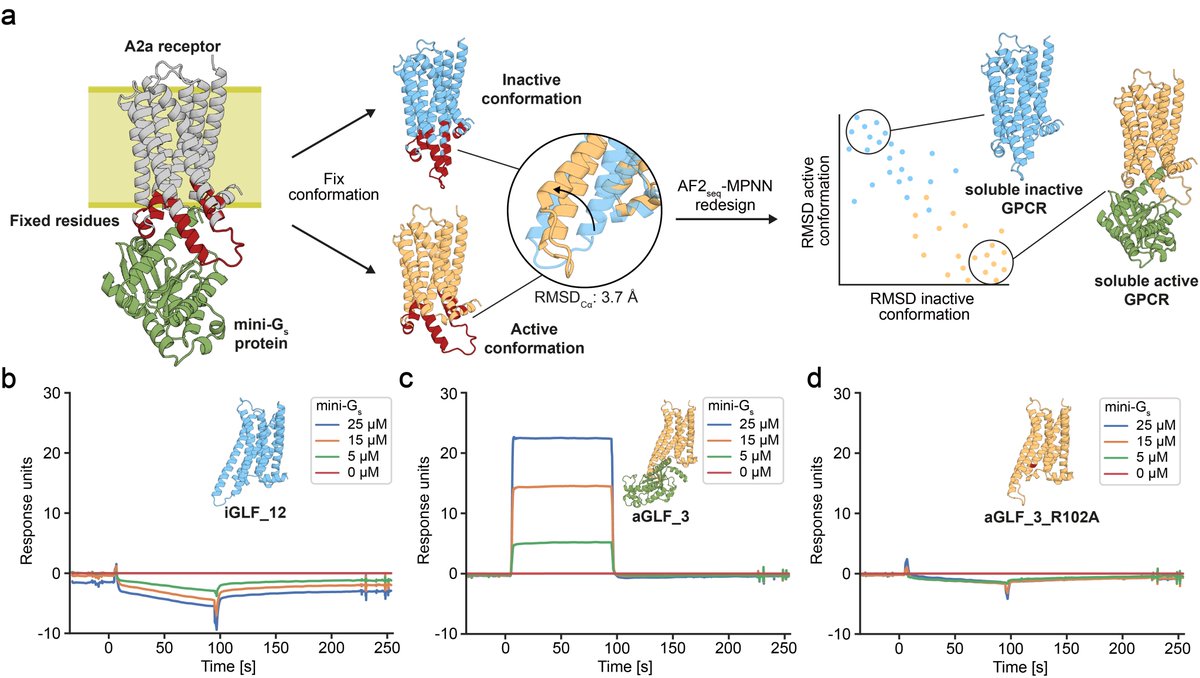
THEY SAID WE COULDN'T DO IT........well, no one actually said that. But in our updated manuscript with @CasperGoverde, @GoldbachNico, and @befcorreia we show you can now design soluble analogues of membrane proteins with preserved functional features!
https://t.co/RcZk0Am3J4
In this comprehensive review now published in @JChemPhys , Alex (@biophysics_dtu) and I highlight the recent advances in the experimental methods to quantitatively study biomolecular phase separation. Really happy to finally see it online!
https://t.co/tuRpUIKx6y
How do proteins mis-fold?
New preprint led by @JAunstrup from @alexander_buell @biophysics_dtu group with MD simulations by Abigail Barclay. We combined experimental measurements of Φ-values with restrained simulations to study the TSE for fibril growth
https://t.co/qKMFunFaUI
Happy to share the publication of our paper in @Nature
Conformational ensembles of the human intrinsically disordered proteome
Work led by @GiulioTesei and @AnnaIdaTrolle. I'll post more later, but for now here is a link:
https://t.co/b3aZ6BbGpB
and a short movie about the work
Exciting news! Our latest preprint on determining surface charge of condensates using microelectrophoresis is available to read now on @ChemRxiv! Check out the research by Merlijn here: https://t.co/dMiX6baaC2
A fascinating work is published today @Nature by Zhang & Zhang et al. on a serendipitous discovery of haemoglobin expression outside the RBC cells--in chondrocytes--and their critical role in keeping our cartilage alive under an oxygen-deprived environment.
https://t.co/DPhuZN1JGE
Our school teachers taught that haemoglobin (Hb) is an oxygen-transporting protein expressed exclusively in the red blood cells. Although there exist occasional sporadic reports of Hb expression outside the RBCs (e.g. neurons, retinal cells etc.), no one would have guessed Hb would play a critical role (required for survival) outside the RBCs.
The discovery
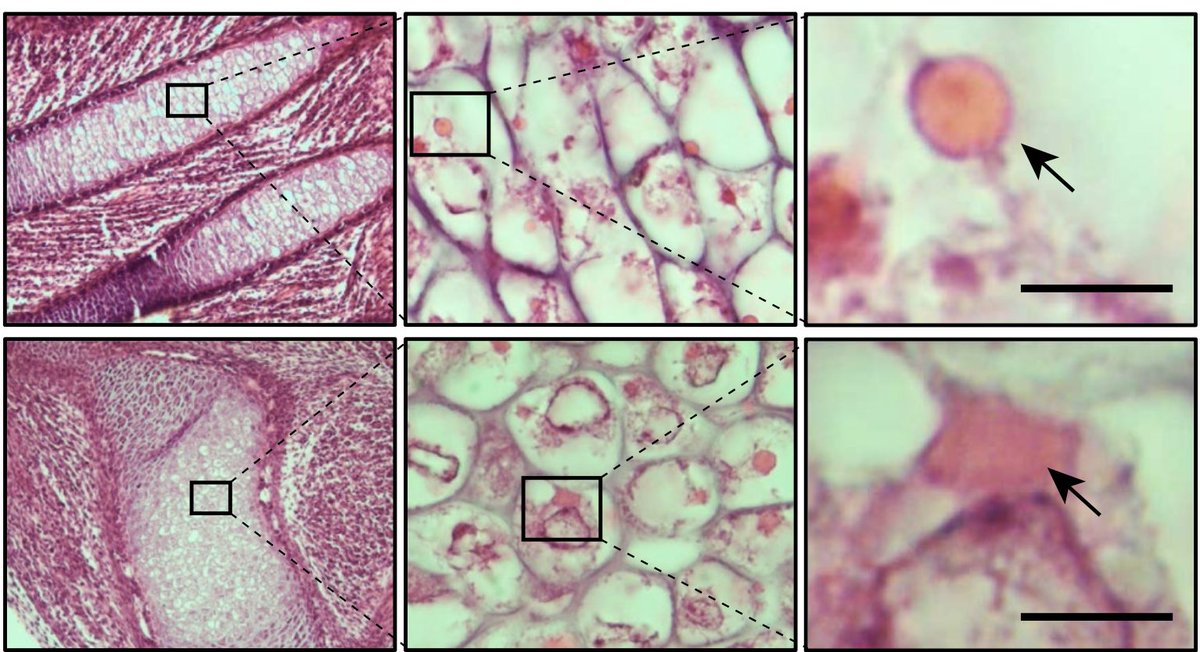
When studying the cartilage growth plate of neonatal mice, the authors noticed eosin-positive structures in the chondrocytes (cartilage cells) that resembled structures seen in RBCs. Out of curiosity, the researchers went on to stain and examine the chondrocytes of different cartilage tissue types both from mice and humans. They realized that no matter the source or species, the cells always displayed eosin-positive structures under the microscope.
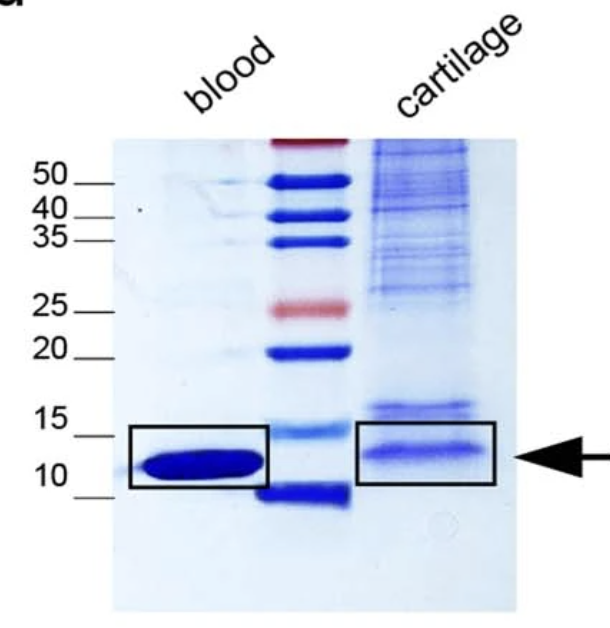
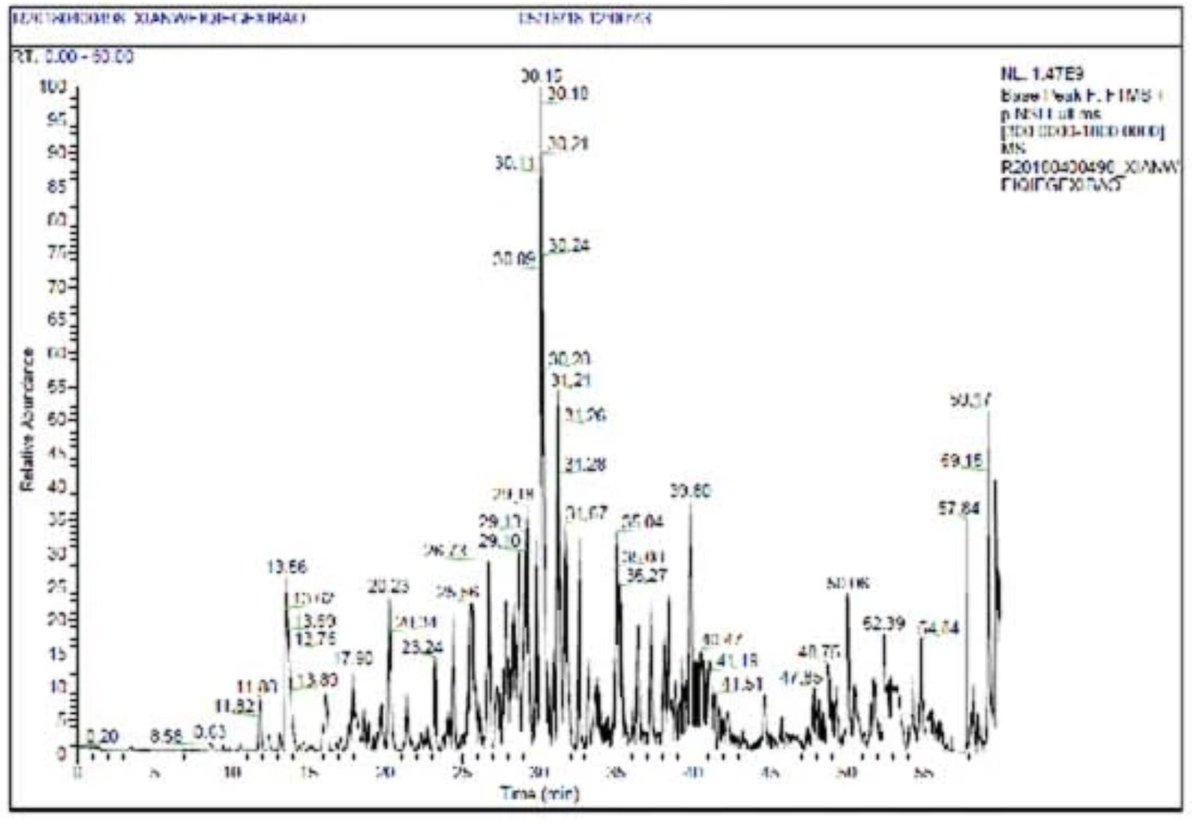
The curious researchers were determined to find out what these structures are made of. They carefully dissected these structures out and studied the protein components using mass spectrometry and were surprised to learn the results: the top hits were Hb proteins.
Unable to believe the results, they went on to study the proteins using different methods--western blotting, immunohistochemistry--and every time they ended up with the same results: the cytoplasm of cells was loaded with organelles-like bodies made of haemoglobin proteins. Finally, they came to the realization that Hb is abundantly produced in chondrocytes. They named these cytoplasmic Hb bodies as "Hedy".
Structure of Hedy
The authors studied the structure and formation of Hb bodies floating in the cytoplasm. Are they like an organelle? Do they have a membrane? Through various experiments, the researchers found that the Hedy structures do not have a membrane. The Hb proteins condense together by phase separation to form organelle-like structures in the cytoplasm. This condensation is itself an evolved process, requiring specific sequence structures of the Hb protein.
Globin switching
We know that there are different forms of Hb each expressed during different developmental stages: embryonic, fetal and adult Hb. There exists a sophisticated molecular machinery (which was believed to be RBC-specific) that switches one Hb type to the other at appropriate times. Using gene silencing experiments, the authors were further awestruck to find that the chondrocytes too switched their Hb types from embryonic to fetal to adult stages, just like RBCs!
Regulation of chondrocyte Hb production
It is well known that hypoxia induces Hb production via upregulating hypoxia-inducible factors (HIFs), an evolutionarily conserved molecular mechanism (Nobel Prize 2019; https://t.co/Sifi8LuYIX). But it turned out that chondrocytes have evolved to increase their Hb expression not via HIF proteins, but through a different protein, the same protein that is required for fetal to adult Hb switching: KLF1 (https://t.co/Zn0X8GpYdq).
How important is Hb for chondrocytes?
Such a high Hb expression in chondrocytes with similar globin switching behaviour as RBCs would mean that this Hb is critical for chondrocytes' survival. By deleting the Hbb gene specifically in the chondrocytes, the authors found that without Hb the chondrocytes die killing the animal a few days after birth.
Conclusion
Continuous oxygen supply is a prerequisite for the survival of cells in all tissues. The only way the cells can receive oxygen is through RBCs in the blood, which requires the tissue to be highly vascularized. When demand exceeds the supply, the cells evolve to survive an oxygen-depriving environment.
Muscles evolved to produce their own globin--myoglobin which has a higher affinity to oxygen than Hb thereby withholding O2 during oxygen excess states and releasing it back during oxygen-deprived state (during exercise). Likewise, the brain has its own globin: neuroglobin (https://t.co/6v78zvHajP).
Today, we are learning that cartilage (an avascular tissue), too, has its own globin. But unlike muscle and brain, have evolved to store oxygen not by making a new type of globin but by making just the same type as the ones in RBCs, but with a higher affinity than RBC Hb.
When it comes to fundamental biology, we often assume that we have found everything and then one day a discovery like this drops, hitting us on the head to make us realize that there is a whole universe of hidden biological secrets waiting to be discovered.
Some recent posts:
1. Gene x sex interaction of PNPLA3 I148M variant (https://t.co/RFegHHRS2z)
2. Effect of consanguineous marriage on the risk of common diseases in offsprings (https://t.co/dTkPsl935K)
3. Whole genome vs. Whole exome sequencing. Which is more cost-effective for genetic association studies? (https://t.co/BCwMzw4g16)