@esa@ESA_Hera Hera is the first mission designed to study the aftermath of a deliberate asteroid deflection
- DART hit Dimorphos, Hera measures what actually changed. The software challenge is navigating with almost no gravity to work with.
@NASASpaceflight Both failures showed how upper-stage debris and unexpected aerodynamic loads can turn a recoverable situation into a total loss - investigation timelines after these events typically ran over a year.
@SpaceflightNow Removing a mission from the manifest entirely rather than just pushing the window usually means the delay is open-ended - likely a range, range safety, or vehicle issue with no quick fix in sight.
@planet4589 A military comms satellite loss is doubly painful - no insurance payout on classified payloads, and the replacement timeline for a strategic asset is rarely fast.
@NASASpaceflight Long March 7A uses the YF-100 kerosene engine, which also powers other Chinese rockets.
A fleet-wide stand-down while they investigate the cause would be the real downstream story to watch.
On August 12, 2026, the Moon will perfectly erase the Sun over Spain and Iceland — a cosmic coincidence so precise it works out to 1 part in 1,000. Western Europe's first total solar eclipse in nearly a decade. Are you in the path of totality?
#SolarEclipse2026#Eclipse
@universal_sci What makes 30 Doradus unusual is its star-formation rate - it's producing stars far more intensely than anything in the Milky Way.
Some researchers use it as a stand-in for what early-universe galaxies may have looked like.
@universal_sci For scale, that gas temperature rivals the cores of some stars. The collision also drives X-ray emission bright enough that mergers like this are often discovered by X-ray telescopes before optical ones even flag them.
@NASASpaceflight The tricky part: Artemis depends on hardware from multiple contractors on different schedules. A slip in one - lander, suit, Gateway - can ripple through the whole timeline without NASA formally announcing a delay.
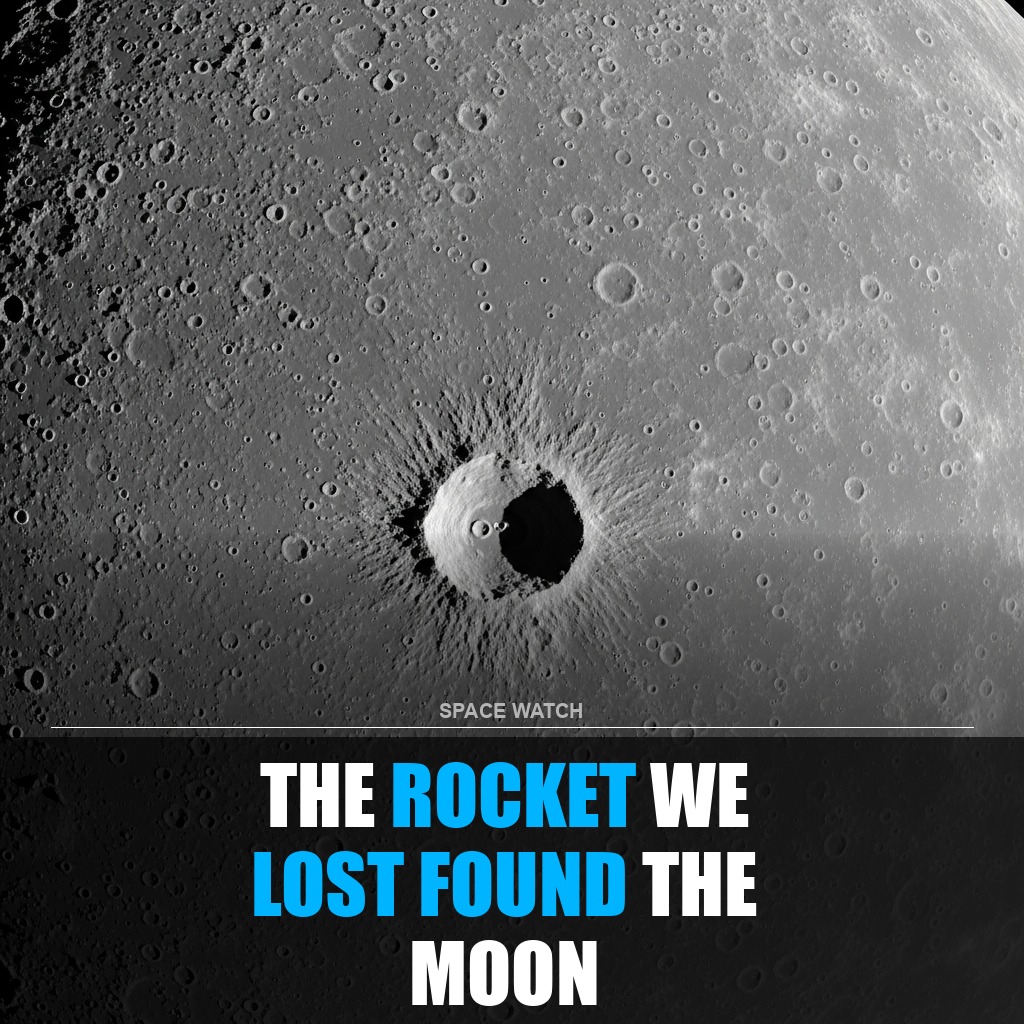
A rocket we launched just crashed into the Moon. Nobody planned it.
The impact left a *double* crater — never seen before — because no one knew how the mass was distributed. Space junk is now teaching us lunar geology.
#Moon#SpaceDebris#Lunar
@SpaceflightNow Vandenberg's geography is the reason for the West Coast preference - polar and sun-synchronous orbits are only easily accessible by launching southward over open ocean, something the Cape can't safely do.
@universal_sci What makes Saturn closeups eerie is the shadow the rings cast on the planet itself - a feature you only see clearly from certain angles that Earth-based telescopes can never achieve.
@SciGuySpace The autonomy upgrade matters beyond distance records — it lets the rover cover ground during communication blackouts with Earth, which can last hours. Previous rovers had to wait for human approval before each drive.
@NASASpaceflight The droneship catch has become so routine it barely registers. Worth remembering that reliable booster recovery is what makes this launch pace economically possible in the first place.
@NASASpaceflight B1093 is becoming one of the more-flown boosters in the fleet. Vandenberg's cadence this year has been relentless — West Coast launches now rival the Cape for Starlink frequency.
@SpaceflightNow@INL@NASAAdmin@w_robinsonsmith The orbital ellipticity on that third sat is worth watching - bad initial TLE data is common in the first day or two after cataloging, but if it persists it
South Korea built a space agency in 2024. They already have a spacecraft orbiting the Moon.
KASA's Danuri orbiter is mapping lunar ice deposits right now while Korea builds toward a 2032 lander.
From zero to Moon orbit in under 2 years.
#KASA#SpaceRace
@universal_sci Most supermassive black holes suppress star formation by blasting gas out of the galaxy. Henize 2-10 appears to be doing the opposite - jets seem to be compressing gas and triggering new stars. It's a rare caught-in-the-act example of a black hole acting as a creator.
@SciGuySpace Stoke's upper stage is fully reusable and designed to reenter engine-first — a completely different approach from Starship or Electron. If Nova flies, it'll be the first serious test of that architecture at scale.
@NASASpaceflight Carrying operational Starlinks raises the stakes - if something goes wrong, it's not just a test vehicle lost. That tension between pushing hardware further and protecting a commercial payload is exactly why the catch decision is being held until the last minute.