Correct.
Using Starlink, a civilian commercial service, for offensive drone strikes to kill people has never been allowed, nor should it be.
Starshield, a different system, is controlled by the US government. What they decide to do is up to them.
Ukraine military violated Starlink terms of service and used it for offensive drone strikes to kill people. That loophole was closed last week.
Starlink remains critical to the defense of Ukraine, as it is the only system that cannot be jammed or blown up, at least for now. Were Starlink to be turned off, the Ukrainian front line would collapse immediately. This is NOT a threat, it is simply a statement of fact.
Starlink was also crucial to preventing Russia from overrunning Ukraine in the early days of the war, as all other means of communication were destroyed or jammed by Russia.
SpaceX has done more to defend Ukraine than any private company on Earth BY FAR.
That said, I have nothing but UTTER CONTEMPT for the virtue-signaling evil warmongers who push for endless slaughter and offer no realistic solution to the conflict. May you burn in hell.
End of story.
JUST IN: Ukrainian President Volodymyr Zelenskyy told ABC News on Friday that the Starlink network is still not working, despite assurances from President Trump. https://t.co/HSuI0jVq5A
Join @NASA today at 2 p.m. EDT to hear the latest updates on our Artemis III mission that will send four astronauts to low Earth orbit next year, and how plans to return American astronauts to the Moon by 2028 are progressing.
Learn where to watch: https://t.co/J5Tjs2PP6j
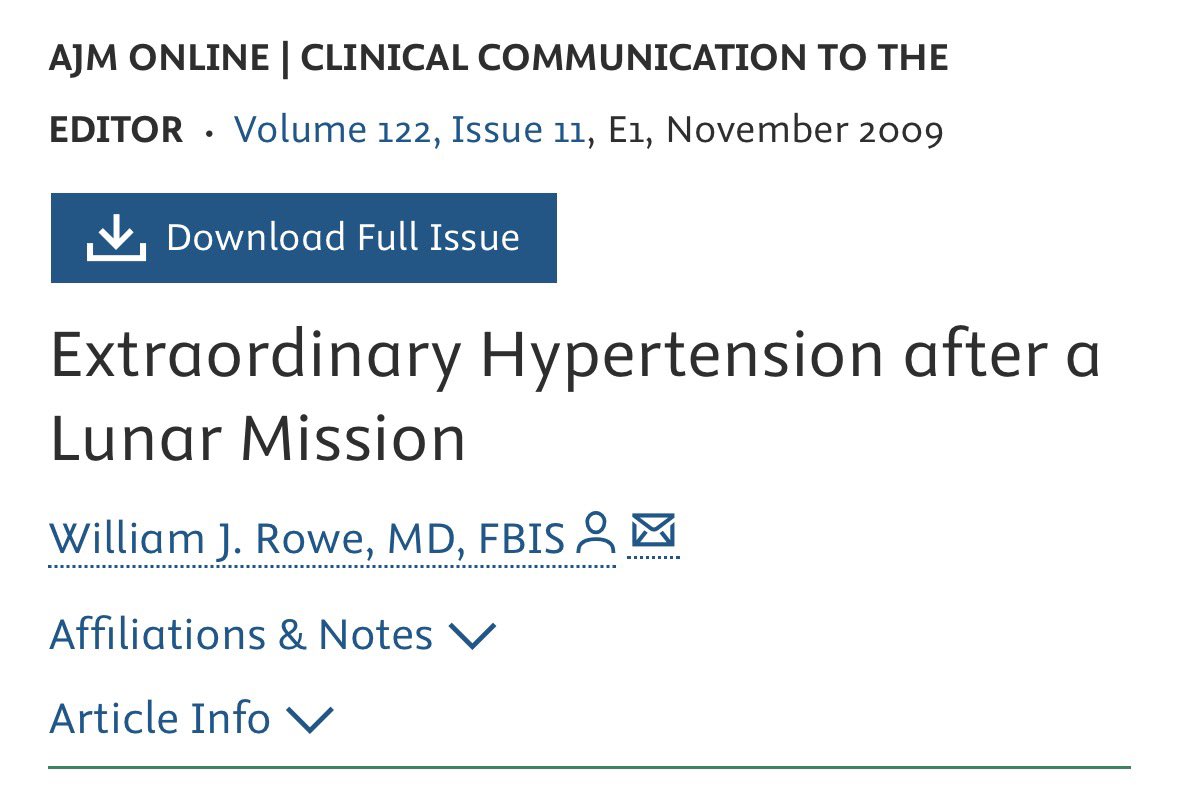
iirc every single Apollo lunar landing mission faced an issue that could’ve led to an abort at best and loss of crew at worst
11: Bingo fuel
12: SCE to Aux
13: 13
14: CSM and LEM almost couldn’t dock
15: 1 parachute out also 2 of the astronauts had serious heart problems
1/2
The 2017 Roadster was an engineering test bed. A lot of that tech transferred to the Model S Plaid, like 0-60 acceleration under 2 seconds. The new Roadster will follow the same pattern, minus the cold-gas thrusters. 800-volt architecture enabling 10 minute charging coming soon.
There are certainly rumblings about the future of astronaut access to low Earth orbit. This often comes up in the context of commercial space stations, where having access to LEO is obviously imperative, but affordable access is really the distinction. In that respect, it doesn't matter how many certified crew vehicles you have, Dragon, Starliner, or otherwise, if the architecture inherently creates a cost barrier that limits demand.
Take a look at where we are at today..
- There are five outstanding and proven SpaceX Crew Dragon spacecraft still under contract for missions over the next few years.
- There are several Boeing Starliner crewed spacecraft that will be modified to address the design issues identified in the PIT report and ultimately certified to launch on ULA's Vulcan. We hope to launch the next uncrewed mission in the months ahead.
- Lockheed's Orion, of which I saw the crew and service modules for Artemis III, IV, and V under development this past Friday at KSC. That visit in itself deserves a long-form post about how hard the NASA teams, our contractors, and partners are working to meet this moment for the nation. That amazing fact aside, we have Orion. It is a crew-certified spacecraft and will fly in LEO next year. Certainly not a vehicle optimized for LEO or affordability, but the capability is there. There is no doubt a long future ahead for Orion on a variety of launch vehicles and paired w/ transfer stages.
- Both SpaceX and Blue Origin are developing landers to return astronauts to the lunar surface, not to mention affordably delivering mass to the Moon in support of the Moon Base. These programs also have a path to support future crewed LEO needs, be that inherent in their existing plans or paired with other spacecraft.
- Other companies, including Blue Origin, have made public comments about internally funding the development of additional crew vehicles. If there is really considerable demand for even more astronaut access to LEO and beyond, then private companies should be able to build the business case and raise the capital. NASA will always be willing to provide subject matter expertise and test facility support for these types of company-funded efforts. And if the capability is there at a lower cost, it is hard to imagine we wouldn't become a customer.
In short, there has never been a time when the United States had so many crew-certified spacecraft options available, with others in development, and so much investment moving in the direction of lower costs to make missions to Earth orbit, the Moon, and beyond more routine.
I would just caution folks against jumping right to NASA funding the business case for every good idea--like why not one more crewed spacecraft. The more NASA gets spread out trying to make everyone happy, the fewer exciting moments we will have like Artemis II and Roman, the fewer X-planes we will put in the sky, and the fewer astronauts we can afford to fly frequently to Earth orbit. The longer programs, like America's long overdue return to the Moon, take to achieve. We need to stay focused on delivering on the national space policy as quickly, safely and affordably as possible.