UPDATE: Debris from the 28 May 2026 anomaly could wash ashore along publicly accessible areas over the coming days or weeks, report debris to 911. Launch vehicle debris is potentially hazardous, direct contact poses a risk to personal health and welfare.
https://t.co/LAvUsRdK4H
NASA is aware of the anomaly that occurred tonight at Launch Complex 36 involving Blue Origin’s New Glenn rocket at Cape Canaveral Space Force Station. Spaceflight is unforgiving, and developing new heavy-lift launch capability is extraordinarily difficult. We will work with our partners to support a thorough investigation of this anomaly, assess near-term mission impacts, and get back to launching rockets.
We will provide information on any impacts to the Artemis and Moon Base programs as it becomes available.
Day 085, orbit 1316 — Did you know you can spot the International Space Station using only your eyes? From the ground, it looks like a very bright star moving across the sky at roughly the speed of a commercial airliner. But unlike an aircraft, it has no headlights or flashing navigation lights. Its brightness comes from the solar panels, which are positioned to catch sunlight and reflect it back towards Earth.
To find out when we’ll be passing overhead and where to look in the sky, check out https://t.co/VleZSlmKS4… I won’t be able to see you, even if you wave very enthusiastically, but I’m thinking of you from up here!
📸 @NASA / @esa – S. Adenot
🎥 ESA (actual elapsed time: 30 min)
#εpsilon • @esaspaceflight • @NASA_Johnson • @Space_Station
Great speech by Astronaut Christina Koch on what it means to be a crew in #Artemis, but also looking from space to planet Earth 🌍 surrounded by a dark universe.
We can only preserve #Earth if the world understands that it has to act as a „crew“ with a common purpose.
Falls Ihr das für eine Wolke gehalten habt: 👀
Beim Start von #ArtemisII waren tatsächlich die ausgelösten Emergency Escape Baskets zu sehen.
👉 Keine Sorge: Das war ein ganz normaler, geplanter Vorgang.
Liftoff.
The Artemis II mission launched from @NASAKennedy at 6:35pm ET (2235 UTC), propelling four astronauts on a journey around the Moon.
Artemis II will pave the way for future Moon landings, as well as the next giant leap — astronauts on Mars.
A proper sendoff 🧑🚀
The Artemis II crew was driven to the launchpad ahead of their upcoming mission around the Moon. After checking their spacesuits and donning their helmets and gloves, the crew will settle into the Orion spacecraft.
🚨ARTEMIS II UPDATE🚨 Teams are working an issue with the flight termination system. The countdown is continuing and additional updates will be provided as available.
Action. Wonder. Adventure. Artemis II has got it all. Don't miss the moment. Our crewed Moon mission will launch as early as April 1.
Learn how to watch: https://t.co/fAg0bGAqEc
Day 043, orbit 0680 – Sunday morning science with Sophie, episode 2: the T-handle wrench, or speeder handle 🔩.
Jour 043, orbite 0680 – La science du dimanche matin avec Sophie, épisode 2 : la clé en T 🔩.
#εpsilon • @esa • @CNES • @Space_Station • @NASA • @NASA_Johnson
We are looking forward to the @NASAArtemis II launch attempt next week.
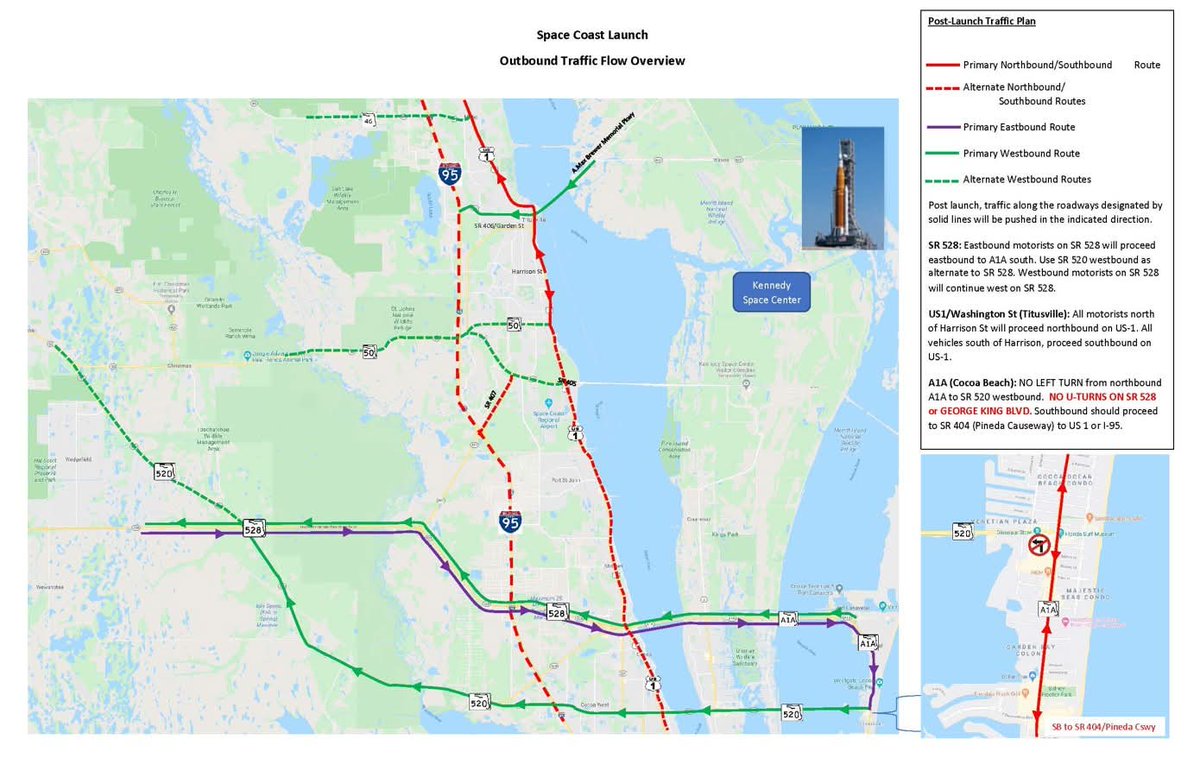
The launch window opens at 6:24 PM on Wednesday, April 1.
Reminders:
🚀 Artemis is the largest rocket launched from NASA's Kennedy Space Center and it will be loud.
#ICYMI: The four astronauts set to fly around the Moon on NASA’s Artemis II test flight arrived at @NASAKennedy yesterday, March 27.
Following their arrival, they showed off the zero gravity indicator that will fly with the crew around the Moon >> https://t.co/UdHLM1HtYg
What will 10 days inside Orion be like?
During Artemis II, the crew will test critical systems and procedures for living and working inside their spacecraft. From spacesuits to life support (and yes, the toilet), here’s what they’ll evaluate on their mission to the Moon.
We've announced a series of transformative initiatives to achieve America's National Space Policy, reflecting upcoming opportunities for world-changing science and discovery.
Learn more about our plans for the Moon, Mars, and beyond: https://t.co/bc4pf4GPS9