🌌 August 2026 could be the best month of the year for skywatching!
From a bright comet and stunning planetary encounters to a total solar eclipse, the Perseids, and a lunar eclipse, this month is packed with celestial highlights.
☄️ August 2 — Comet 10P/Tempel 2 reaches perihelion and becomes a great binocular target.
🪐 August 3 — The Moon passes close to Saturn.
⭐ August 4 — Venus shines between Regulus and Spica.
🔴 August 9 — A close conjunction of the Moon and Mars.
🌞 August 12 — A spectacular day featuring a total solar eclipse, a six-planet alignment, and the peak of the Perseid meteor shower.
✨ August 15 — Venus reaches its greatest eastern elongation.
🌙 August 16 — A beautiful pairing of the Moon and Venus.
🔺 August 26 — Mars lines up with Betelgeuse and Rigel.
🌕 August 28 — A deep partial lunar eclipse lights up the night sky.
🌠 Wishing you clear skies and unforgettable observations this August!
#Comet #Perseids #SolarEclipse #LunarEclipse #StarWalk
NISAR is turning one! 🎉
It’s been 365 days since the satellite launched from India to scan nearly all of Earth’s land and ice surfaces, and measure changes down to fractions of an inch.
It is worth remembering that right now, we are moving through space at incredible speed.
The animation shows the relative speeds, ranging from the Earth's rotation to the motion of our galaxy.
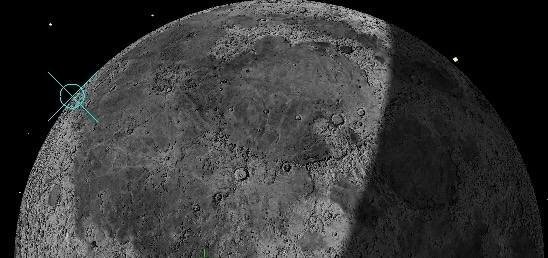
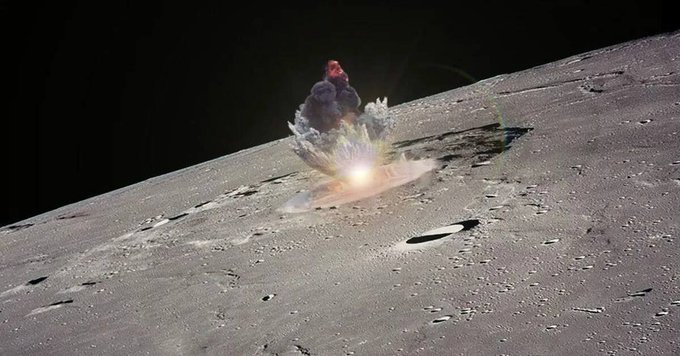
💥 🌑 A rather interesting event is set to take place on August 5—one that might even be visible through telescopes: the second stage of a Falcon 9 rocket will crash into the Moon.
As a reminder, the stage has been in space since January 2025, when it was used in the launch mission for the Blue Ghost and Hakuto-R spacecraft.
❗️The stage is scheduled to impact on August 5 at 06:35 UTC. The impact site is near the Einstein crater, located on the lunar near side close to the northwestern limb.
The impact is expected to create a crater 20 to 30 meters in diameter
🌌⚡ The Universe May Be Expanding Faster Than Our Physics Predicts Scientists have different ways of measuring how fast the universe is expanding, but they don’t all give the same answer. This unresolved discrepancy is known as the Hubble tension, and observations from Hubble and James Webb have helped scientists test whether measurement errors could explain it.
Scientists believe Dark Energy may make up nearly 68% of the Universe. The strange part? No one knows what it actually is. Could empty space itself hold the answer? Or is the biggest discovery in physics still waiting to be made? Which theory do you believe? Save this post if you love space science.
When two black holes collide, space itself shakes
One of the most powerful events in the universe happens when two black holes merge. This cosmic collision sends ripples through space-time called gravitational waves, creating a shockwave across the universe.
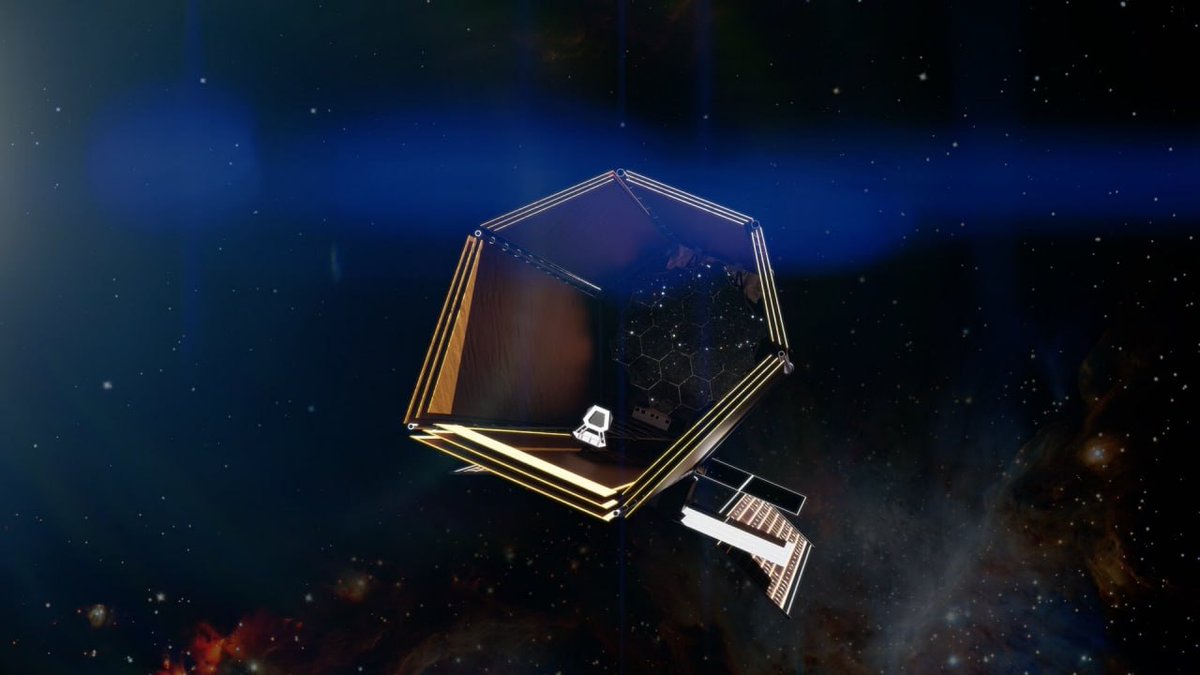
NASA has outlined its plan for building a telescope designed to search for life.
The Habitable Worlds Observatory (HWO) is NASA’s next great observatory. It has an ambitious mission: to observe potentially habitable worlds and characterize their properties. Over the past few years, the project has evolved from a mere concept into a concrete plan; a newly released document details the most interesting aspect—what must be accomplished before the critical review scheduled for the end of the decade.
NASA measures technology maturity using the Technology Readiness Level (TRL) scale. By the time of the mission concept review, three key areas must reach TRL 5, meaning the technologies have been validated in conditions approximating the actual space environment.
The first area is the coronagraph. To see a planet, one must block out the light from its host star. The instrument must suppress starlight to a level of 10⁻¹⁰, doing so right up against the star itself. This is achieved using a deformable mirror featuring a 96×96 array of actuators that bend the mirror's surface with picometer-level precision. All this mechanical hardware—including the control electronics—must operate flawlessly for years while exposed to space radiation. Any light that makes it through is captured by ultra-sensitive detectors capable of counting individual photons.
The second area is stability. Telescopes heat up and cool down, causing materials to undergo creep and jerky movements—disastrous for picometer-level precision. The solution is multifaceted: active thermal control, materials with near-zero thermal expansion (such as Corning ULE and Schott Zerodur), micro-actuators, vibration isolation, and dedicated mirrors to maintain precise pointing.
The third area is sensors. The HWO is envisioned not only as a planet hunter but also as a next-generation observatory. In accordance with the Astro2020 survey requirements, it must operate across a spectrum ranging from near-infrared to far-ultraviolet. They plan to proceed using a "crawl-walk-run" approach, drawing on the experience—and the delays—associated with the James Webb and the upcoming Nancy Grace Roman telescopes. The challenge lies in the difficulty of replicating space conditions on Earth; consequently, they are building specialized testbeds—such as HOST—to verify the integrated performance of all systems.
The critical aspect is that the concept review represents a point of no return: if the project fails to meet key benchmarks, it could simply be cancelled.
Vikram-1’s spectacular liftoff captured in slow motion 🚀
The instant Vikram-1 cleared the First Launch Pad at Sriharikota — over in a blink at full speed, here frame by frame.
Ignition. Plume ballooning off the deck. The first few feet of a rocket bound for orbit.
🎥 High-speed cameras mounted at the pad
#Vikram1 #MissionAagamanInAction
Cleanrooms & hardware are great, but the real magic happens when data pipelines, edge AI, and telemetry algorithms bring those satellites to life.
Would love to see @iiit_sonepat bridge core tech with aerospace too!🚀🛰️
@DhruvaSpace#IiitSonepat#Spacetech#AI
WE NEED MORE COLLABS LIKE THIS BY ENGINEERING UNIVERSITIES IN INDIA.
Dhruva Space and Manipal Academy of Higher Education have signed an MoU to co-develop the ASCENT Centre of Excellence at the MAHE campus in Manipal, expected to be inaugurated in late 2026, combining academic research with industry-grade space engineering infrastructure.
The centre will house a Class 10,000 cleanroom, a Helmholtz cage, and an air-bearing table, and plans to develop at least three CubeSat missions by 2028, a swarm constellation of femto-satellites by 2030, and at least one interplanetary technology demonstration mission by 2035.
Inspiring India's Next Space Revolution!
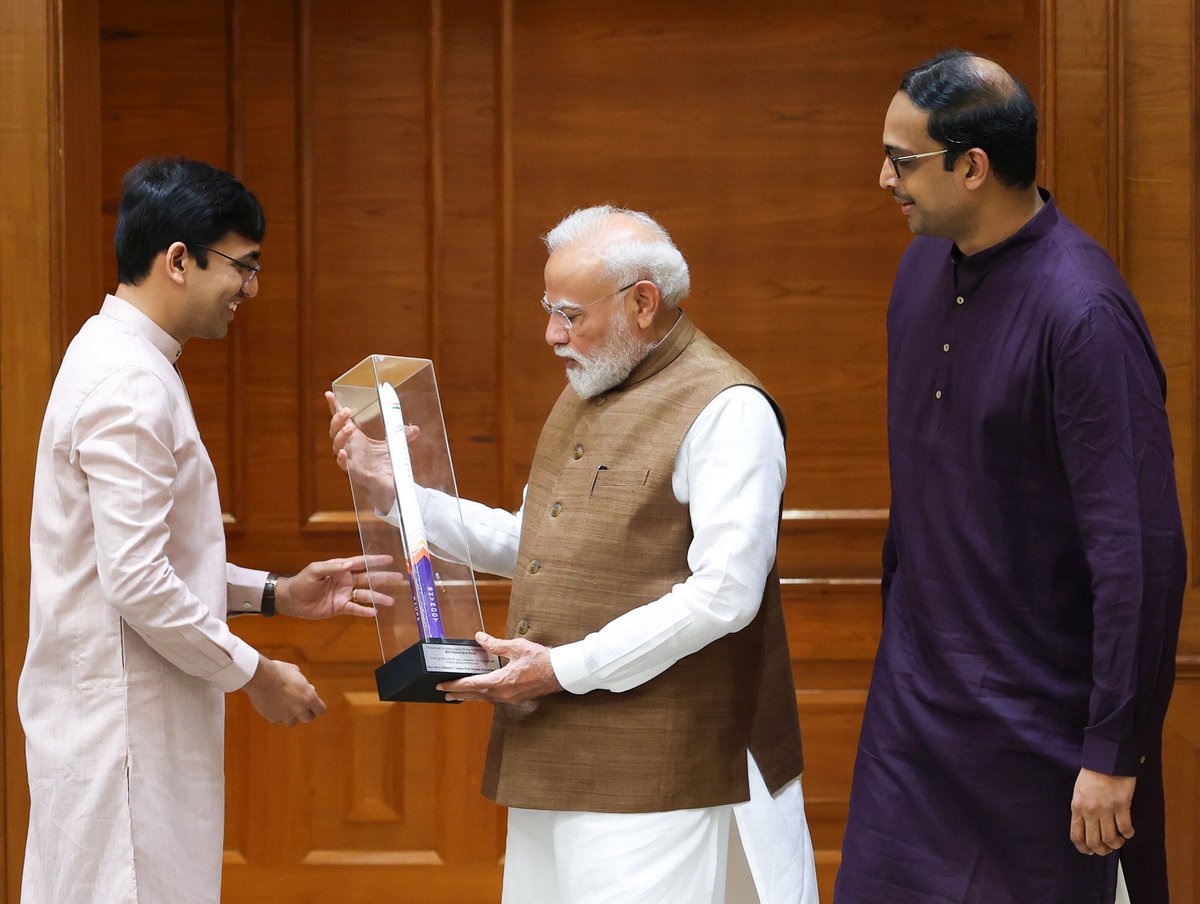
The meeting between the @SkyrootA team and PM @narendramodi highlighted India's growing strength in space technology, innovation, and private enterprise. Discussions on future opportunities and long-term vision reflect the momentum of a thriving space ecosystem, while PM Modi's encouragement continues to empower innovators to push the boundaries of what's possible.
#SkyrootAerospace
99.97% pure methane + LOX — true #methalox, not LNG in disguise.
Our first cryogenic ignition trial: successful.
Small. Short. The first of many.
Mission Blue Frost begins. ❄️🔥
#MakeInIndia#SpaceTech
Maiden flight-test of ‘Kusha’ Long-Range Surface-to-Air Missile was successfully conducted from the APJ Abdul Kalam Island off the coast of Odisha today. This test was conducted against an electronic target simulating high-speed and high-altitude aerial threat which was successfully intercepted by the missile system.
TakeMe2Space Completes Final Integration of the MOI-1a AI Satellite, a 120-Watt, 13-kg, 6U Spacecraft Built with In-House Power, Navigation, and Control Systems
Official look of the MOI-1a AI satellite:
Gaganyatri-designate and the first Indian citizen aboard the ISS, Shubhanshu Shukla, has shared that out of all the space food prepared by the Defence Food Research Laboratory (DFRL), a DRDO lab developing space food for India's upcoming Gaganyaan mission, an extensive menu of Indian dishes was put up for space qualification. After rigorous testing, only three items were certified for flight: Gajar Ka Halwa, Moong Dal Ka Halwa and Amras.
Khichdi, pulao and the rest didn't fail on merit. DFRL ran out of time to complete the full qualification test campaign.
Space food must stay stable for months without refrigeration, survive launch vibration loads, generate zero floating crumbs or excess moisture in microgravity, and clear strict microbial safety limits.
By day 13 he was craving salty/spicy food. Three desserts cleared for flight and not one packet of namkeen. And NASA food isn't exactly known for its masala levels.
Source: India Today
This simulation shows the magnetic fields surrounding two neutron stars during the final 0.03 seconds before they collide.
Each star contains about 1.4 times the mass of the Sun compressed into a sphere only about 24 kilometres across. They are not merely dense objects moving through empty space. Each is surrounded by a magnetosphere filled with powerful magnetic fields and electrically charged plasma.
As the stars orbit faster and move closer together, their magnetic fields become entangled. Some field lines connect one star to the other. Others stretch behind the system, break and reconnect.
This process is called magnetic reconnection.
Magnetic field lines are not physical strings, but they provide a useful representation of the direction and strength of a magnetic field. When the structure of the field changes rapidly, stored magnetic energy can be transferred to the surrounding plasma, producing intense electric currents and accelerating particles to nearly the speed of light.
The basic idea comes from Maxwell’s equations. A changing magnetic field produces an electric field:
∇ × E = −∂B/∂t
Near merging neutron stars, however, the fields are so powerful and the plasma moves so rapidly that the problem requires relativistic electrodynamics and large-scale computer simulations.
The stars are also losing orbital energy through gravitational waves. As that energy leaves the system, their orbit shrinks, their speed increases and the final collision becomes unavoidable.
The merger may produce gravitational waves, a short gamma-ray burst and a kilonova that creates heavy elements such as gold and platinum. But this simulation explores something that may happen even before the collision: rapidly changing X-ray and gamma-ray signals generated by the interaction of the two magnetospheres.
In other words, the universe may begin announcing the collision before the stars physically touch.
🎥 NASA’s Goddard Space Flight Center/D. Skiathas et al. 2025