Richard Feynman at the Cornell University Lecture, 1964 says,
"It doesn't matter how beautiful your theory is, it doesn't matter how smart you are. If it doesn't agree with experiment, it's wrong. In that simple statement is the key to science."
The physicist who spoke five words that took another scientist two days to understand
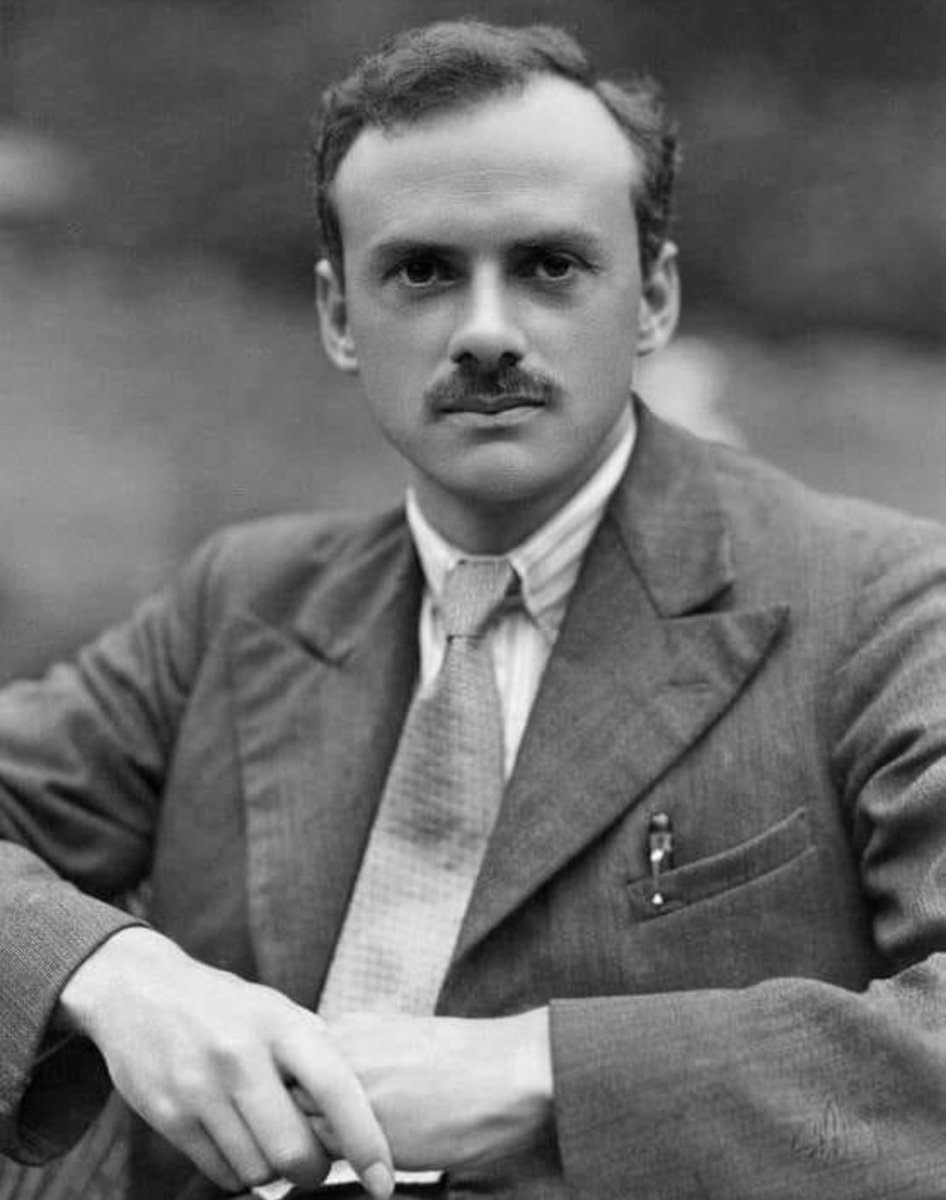
In the 1930s, Polish physicist Leopold Infeld visited Paul Dirac at Cambridge.
He had no idea how difficult it would be to have a conversation with one of the greatest theoretical physicist of the twentieth century.
Infeld climbed the wooden stairs of St John's College and knocked on Dirac's door.
Dirac welcomed him with a friendly gesture and offered him a chair.
Then came complete silence.
Infeld explained that he spoke very little English.
Dirac smiled but said nothing.
He mentioned that Ralph Fowler had suggested a research problem involving positrons.
Still nothing.
Finally, Infeld asked whether Dirac had any objection to his working on the problem.
"No," replied Dirac.
Infeld began explaining his ideas and took out his pen, but it refused to write.
Without uttering a word, Dirac brought him paper and handed him a pencil.
Infeld then asked another scientific question.
Dirac answered in just five words.
Those five words, Infeld later recalled, took him two days to understand.
Before leaving, Infeld asked whether he could return whenever he encountered difficulties.
"No," said Dirac.
This time, of course, he meant that he did not mind.
Infeld left surprised and discouraged, uncertain what to make of the encounter.
He later learned that Dirac's silence was famous among his colleagues.
The story comes from Infeld's own autobiography, Quest: The Evolution of a Scientist (1941), and is reproduced by Walter Gratzer in Eurekas and Euphorias.
I find the most interesting detail to be Dirac's quiet helpfulness. He offered paper, found a pencil, and answered the scientific question, all while saying almost nothing.
A conversation can be extremely short and still contain a great deal of physics.
On September 18, 1783, the 76-year-old Leonhard Euler spent his final day doing mathematics.
Almost blind, he gave a mathematics lesson to a grandchild, worked with chalk on the motion of rising balloons, and discussed the orbit of Uranus, a planet discovered just two years earlier.
Balloon flight was then a remarkable new development. Euler was investigating how high a balloon could rise and how its motion could be calculated.
Later that afternoon, he suffered a cerebral hemorrhage. He never recovered.
But there is an extraordinary detail.
The calculations left on Euler's slate were preserved. In 1784, the Paris Academy of Sciences published them in a paper identifying them as the calculations found after his death.
The work survives today as Euler's paper E579.
Even on his final day, one of history's most productive mathematicians was investigating a scientific problem that had only recently captured Europe's imagination.
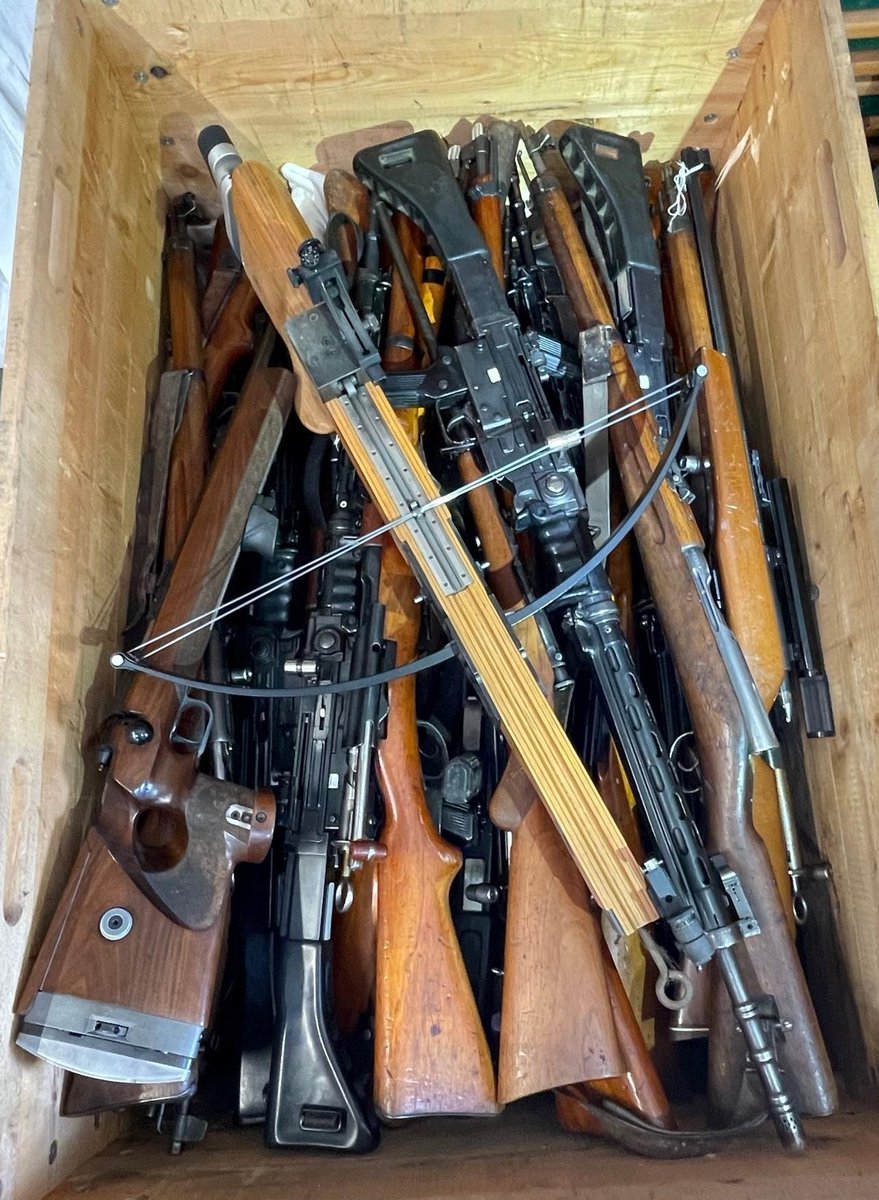
The actor James Earl Jones was in fact an avid firearm collector that had guns from antique to modern. Since his death, his family has auctioned off most if not all of his collection.