"I have only two rules which I regard as principles of conduct. The first is: Have no rules. The second is: Be independent of the opinion of others."
- A. Einstein
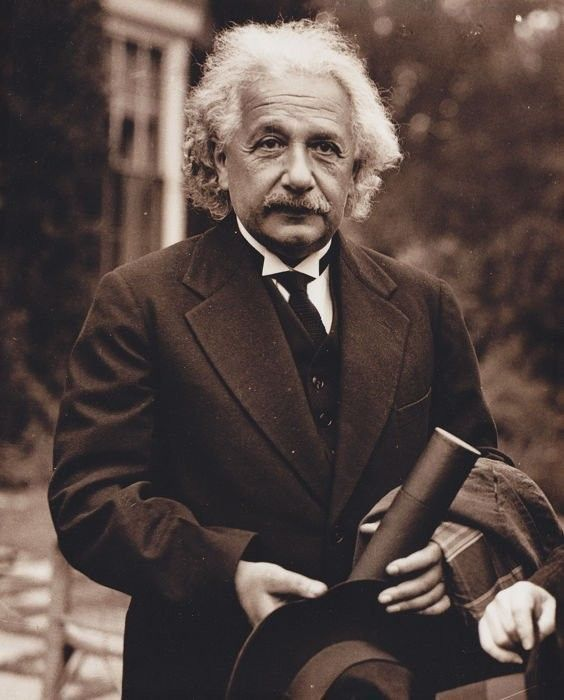
This is Einstein at Princeton, 1935.
He was tasked to find which young physicists would revolutionize science.
His unconventional method found Oppenheimer, Wheeler, and Nobel-Prize winners before anyone knew their names.
Here is his ONE method to spotting genius: 🧵
We are very pleased to welcome Theresa Schoetz to our Invited Speaker lineup for innoLAE 2025!
Watch out for the complete programme which we will announce very soon!
Find out more at https://t.co/pQMDTKEPj9
#flexibleelectronics#plasticelectronics
In 1951, Robert M. Fano, a professor at MIT, assigned his information theory students a deceptively simple-sounding problem as a final term paper: find the most efficient way to represent numbers, letters, or symbols using binary code.
What he didn't reveal was that this was an open problem - one that even Fano himself and Claude Shannon had been wrestling with for years.
One of Fano’s students, David A. Huffman, rose to the challenge. He not only solved the problem but discovered a theoretically optimal solution under certain constraints. This solution - now known as Huffman coding - is the basis for many modern file compression algorithms, including those used in ZIP, JPEG, and MP3 formats.
Costs of software misalignment: Airbus used two versions of CATIA (V4 and V5) across design sites for the development of the A380 aircraft. Due to bend radius wires cut slightly too short, compounded over 100,000 wires, cost Airbus estimated $6.1 billion in production delays.
The newly-refurbished Cash section office of IIT Bombay was inaugurated today by the Director Prof. Shireesh Kedare. Institute functionaries and staff attended the function.
Thank you to our speakers, exhibitors, and attendees for another incredible IEEE SA Ethernet & IP @ Automotive Technology Day!
View the presentations from this year's event here: https://t.co/aHpMcInXNE
The term "patch", meaning a software update, originates from the days when computer code was written on physical cards with holes punched in them. If there was a change in the code, you would "patch" that section of the card with a piece of tape, covering it, and changing it.