Estimating the effect of particulate matter air pollution on preschool attendance using restricted administrative data from the state of Georgia, from Mahta Ghafarianghadim and @GarthHeutel https://t.co/AG8QIJh5xh
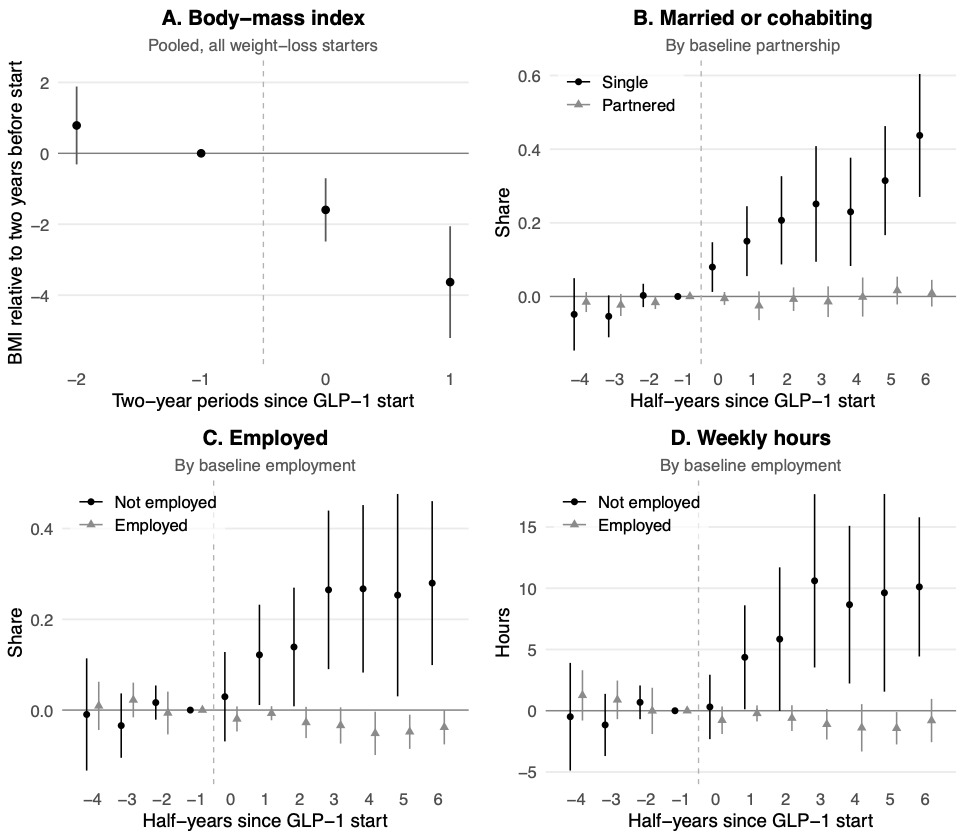
GLP1s for weight loss impact lives beyond health. My new paper shows single women’s marriage/cohabitation rates rise 29pp, employment among nonemployed women rises 27 percentage points after 1.5+ years.
Link to paper below:
GLP1s for weight loss impact lives beyond health. My new paper shows single women’s marriage/cohabitation rates rise 29pp, employment among nonemployed women rises 27 percentage points after 1.5+ years.
Link to paper below:
New research: Is AI making employers view labor as more of a commodity?
In a large online labor market, we find that post-ChatGPT, clients place less weight on signals of human capital and more on price when hiring.
Is GenAI causing the relative decline in early-career hiring? Our latest research finds that these effects may be conflated with another important driver: the rise of WFH arrangements (1/N)
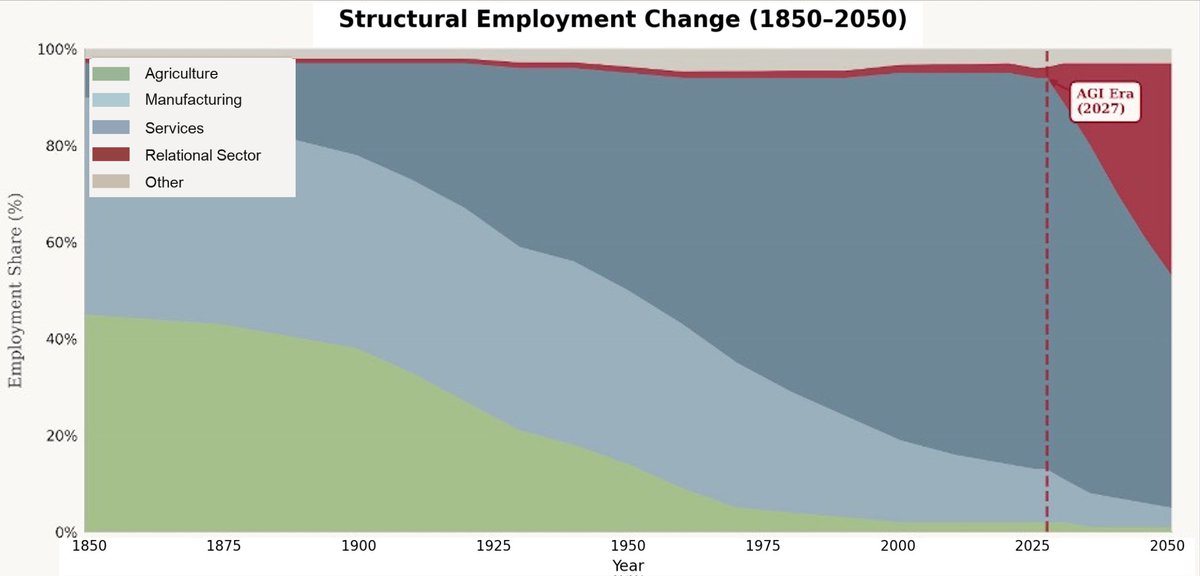
New essay on the economics of structural change and the post-commodity future of work.
1. Almost any question about the impact of advanced AI on the economy needs to start at the same place: what is still scarce? Answer that, and the analysis becomes pretty straightforward. This essay explores what becomes scarce if AI really can replicate most of what humans do in production, and what this mean for the future of jobs.
2. My conjecture, working through the economics: labor reallocates across sectors, and the sector it reallocates to has properties that keep labor a meaningful share of the economy. Ultimately this is about the structure of demand itself. For this, we have to go back to Girard, Augustine and Rousseau: once people's base needs are met, their preferences shift to comparative motives (e.g., status, exclusivity, social desirability). This motive is inherently non-satiated.
4. The key paper is Comin, Lashkari, and Mestieri (Econometrica 2021). As people get richer, they don't buy proportionally more of everything. They shift spending toward sectors with higher income elasticity. They estimate income effects account for 75%+ of observed structural change.
5. The ironic consequence: the sector that gets automated becomes a smaller share of the economy, not a larger one. Agriculture got massively more productive and its share of employment collapsed. Manufacturing too. The "stagnant" sectors absorb the spending and the jobs.
6. So the question is: which sectors have high income elasticity in a post-AGI world? I argue it's what I call the relational sector. Categories where the human isn't just an input into production, it is part of the value.
7. Why does the relational sector have high income elasticity? Because human desire has a mimetic, relational dimension. We don't just want things for their intrinsic properties. We want what others want, and we want it more when others can't have it. Girard, Rousseau, Augustine, and Hobbes all saw this.
8. In work with Kristóf Madarász, we showed this experimentally: WTP roughly doubles when a random subset of others is excluded from the good. And in new work with Graelin Mandel, AI involvement kills the premium. Human-made art gains 44% from exclusivity; AI-made art only 21%.
9. This all comes together for the core argument. The sector that absorbs spending as AI makes commodity production cheap is one where human provenance is part of the value, and demand for it grows faster than income. Exactly the profile that keeps labor meaningful.
10. To be clear about the claim: I'm NOT saying aggregate labor share must rise. It may fall. The claim is about sectoral composition, i.e., where expenditure and employment go once commodities get cheap, and the fact that the sector that will absorb reallocated labor maps to a substantial component of human preferences and desire.
11. If you're interested in the formal model, a linked companion technical note works out all the economics.
Read the essay here: https://t.co/NcjVgn2o8g
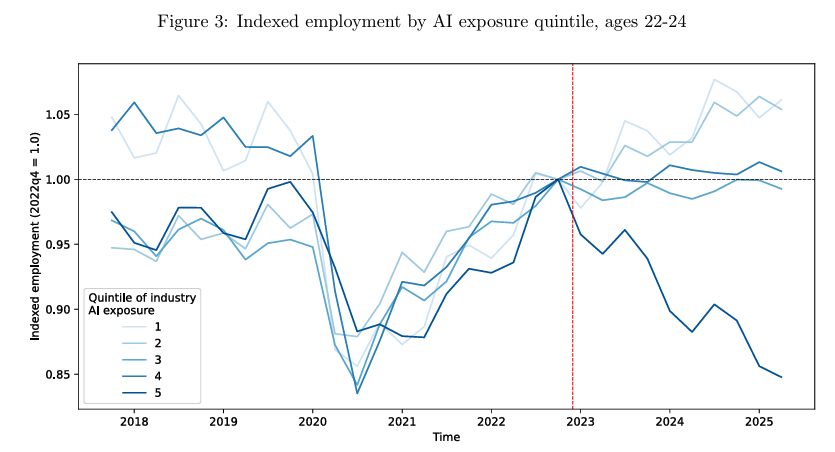
Very interesting paper by Lee C. Tucker at Census, "You’re (not) hired: Artificial intelligence and early career hiring in the Quarterly Workforce Indicators" (link below!). File this as another paper finding weak labor market performance for young AI-exposed workers, with some important nuance.
The paper uses data from the Quarterly Workforce Indicators and industry by state-level AI exposure measures crosswalked from occupation-level exposure data (Eloundou et al., 2024).
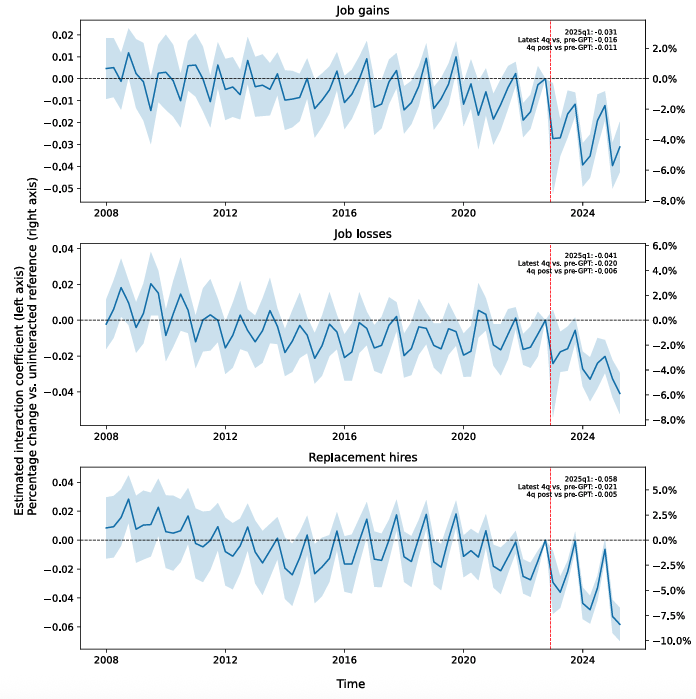
Like the Canaries in the Coal Mine paper, they find a kink in employment around the release of ChatGPT for the most exposed young workers (22-24), both in the descriptive statistics and event study regressions (w/ time and industry-state FE).
One of the unique contributions of this paper is that it separates out the hire and fire dimensions, showing that all of the decline in employment can be explained by reduced hiring.
The event studies are comparing outcomes of young workers in AI-exposed industry-state cells to young workers in other industry-state cells. A young-to-young comparison. But there could be a general decline in exposed cells not unique to young workers, which motivates a triple difference regression. This is where things get a little messier.
The triple difference measures the gap between young and old workers *within* highly exposed industries. Lee finds that employment, hires, and separations of young workers declined relative to older workers in those industries *before* the release of ChatGPT (similar in spirit to Frank et al. (2026) and Iscenko and Curto Millet (2026)).
To make sense of the triple diffs, Lee explores several explanations including remote work, delayed labor market entry (education), and the monetary policy shock. None of these look like a silver bullet, with monetary policy explaining about a 25% of the employment effects.
One of the more puzzling parts of the paper for me is the contrast between the clear pre-AI decline in young worker hires/separations and job gains/losses. Job gains (losses) are a subset of hires (separations) occurring at growing (shrinking) firms. The job losses and gains appear to turn closer to 2022q4, but they are also highly cyclical and noisy.
This paper should raise your priors that there is something happening in the labor market for highly AI-exposed young workers, but it's not clear yet whether that is due to AI. Timing matters, and sometimes it works and sometimes it doesn't. Plus, in the background of all these analyses is the pace of diffusion, which has been rising but was relatively low in 2023 (4%). Conceptually, this puts a lot of weight on a very hard turn in firms' expectations in reaction to the early, buggy ChatGPT that concentrates not on AI-exposed workers, but *young* AI-exposed workers.
PS: There is a symmetry between:
This paper <-> Johnston & Makridis (2026)
Brynjolfsson, Chandar, & Chen (2025) (Canaries) <-> Eckhardt & Goldschlag (2025)
In that Johnston & Makridis (2026) use QCEW to look at total employment effects of AI (via industry exposure) and this paper zooms in on young workers, and Eckhardt & Goldschlag (2025) looked at CPS data for all workers and Brynjolfsson et al. (2025) zoomed in on young workers.
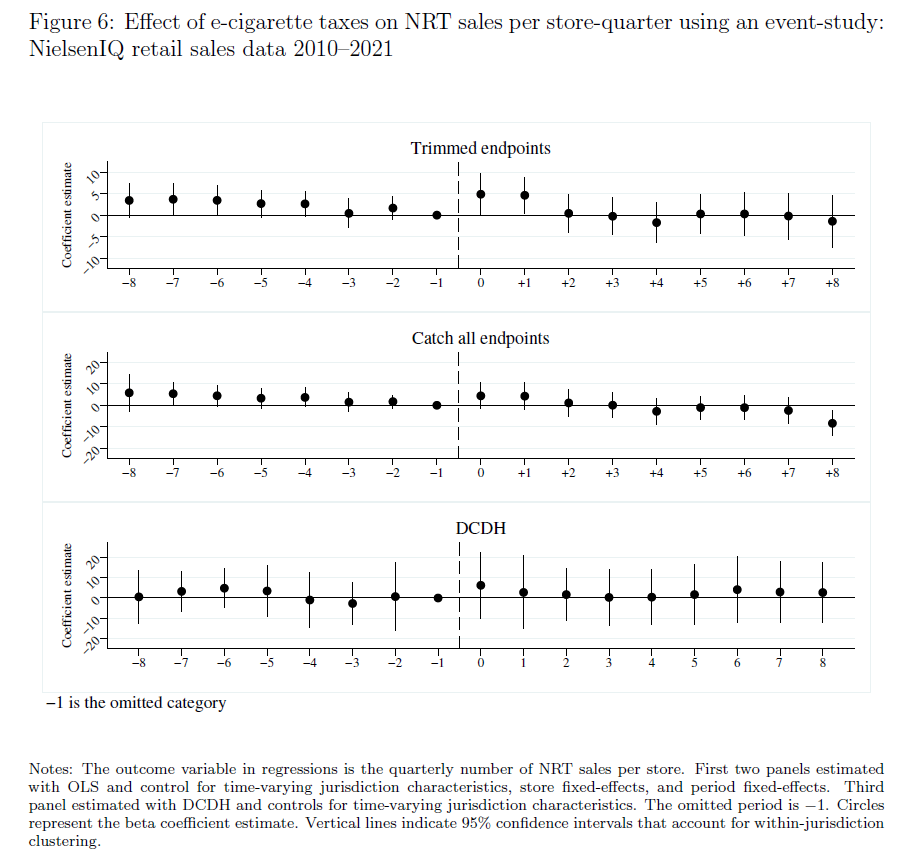
New! Using 2010-21 national data, @mikepesko & @rachelylfung find no meaningful evidence that e-cigs crowd out NRT sales, cessation prescriptions, quitline calls,or smoking quit attempts, suggesting e-cigs reach smokers not interested in quitting otherwise.https://t.co/9ES8rfdnsq
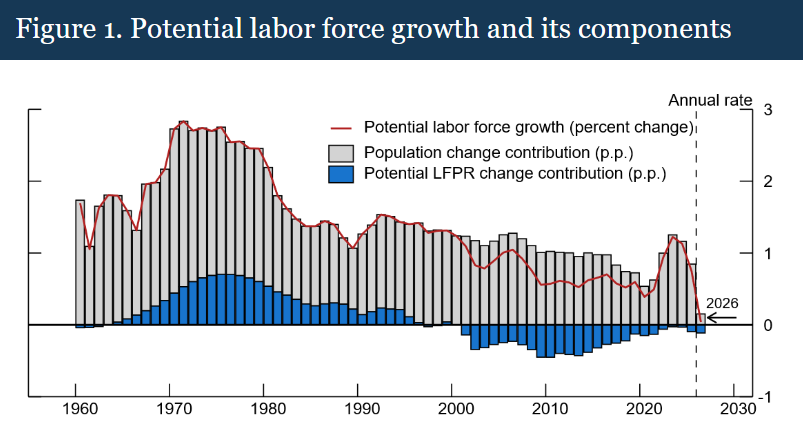
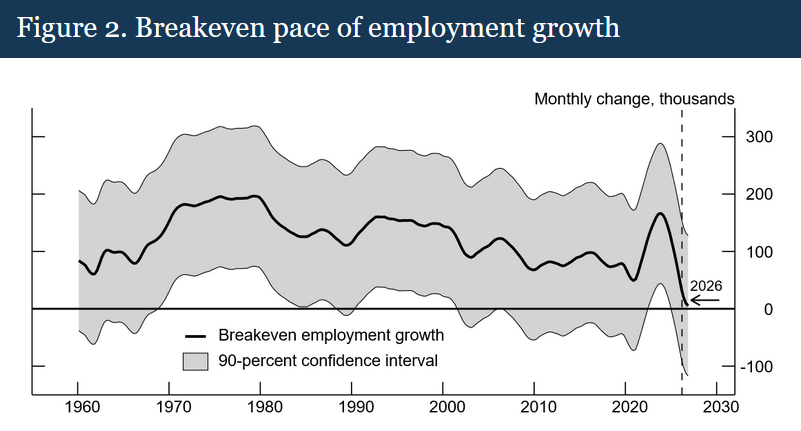
ICYMI: Labor force growth could be near-zero starting this year, due to weak population growth & declining labor force participation. Such weak growth is unprecedented in the United States’ recent history. This has significant economic implications: (1/2) https://t.co/NJfZcHebcn
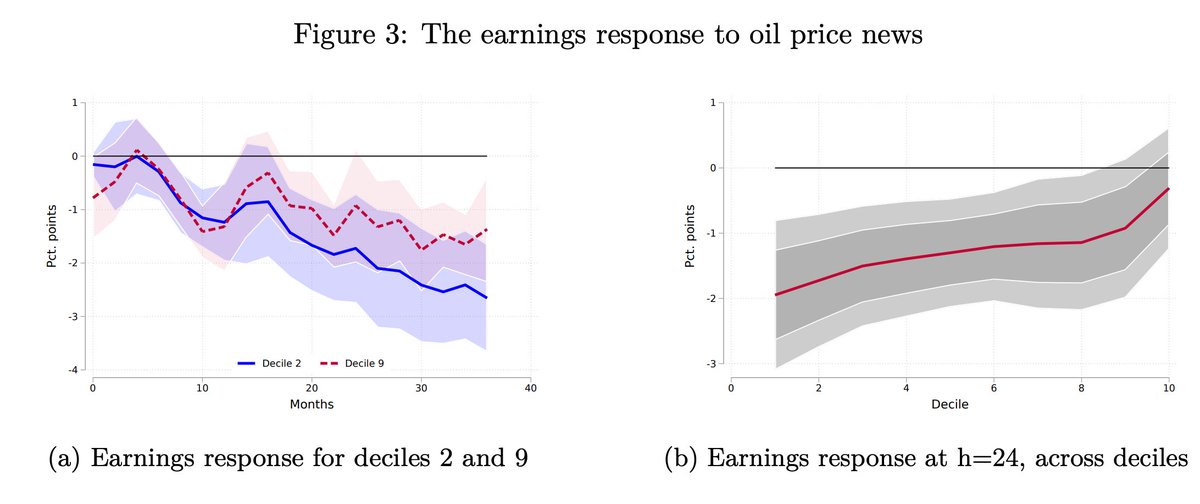
Oil prices just surged 8% in light of recent events. In our recent paper in @IMFEconReview, we study exactly this kind of shock: what happens to workers across the income distribution when oil supply contracts? 🧵
https://t.co/vTxlQYCXPA now includes an interactive map of all 237 ICE detention facilities, comparative scatter plots, & publicly available contracts archive. Designed to support empirical research and institutional accountability.
Link to my substack: https://t.co/zHABqTES6G
According to the conservative @TaxFoundation think tank, the Trump tariffs will cost the average American household $1,300 in 2026 alone, lead to a 0.5% reduction in GDP, and cost 436,000 jobs.
Just a self-inflicted economic disaster.
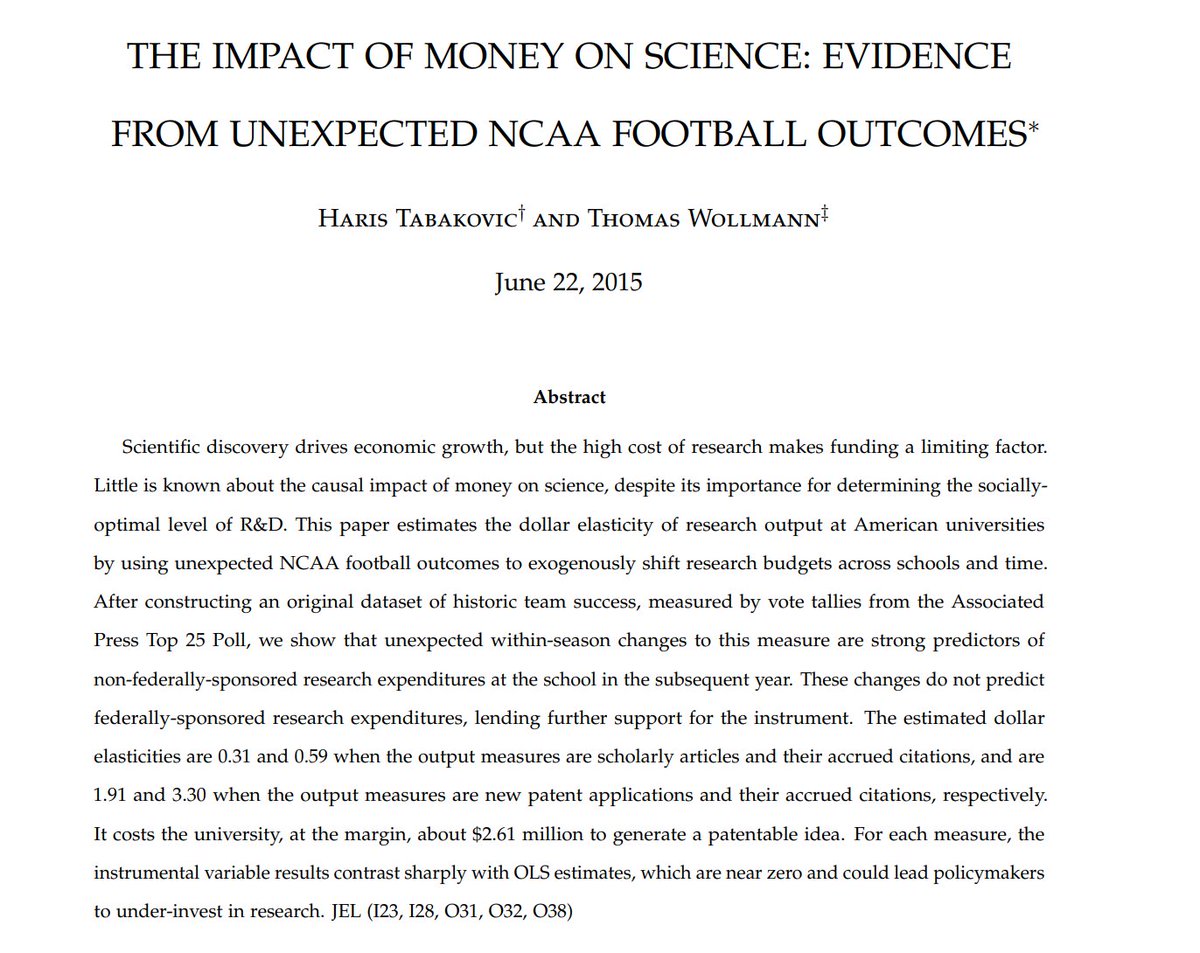
Spending more on academia really does lead to more useful science being done. When schools perform unexpectedly well in football, the university as a whole gets more money. This plausibly random variation leads to more spending on materials, and thus more discoveries. 1/
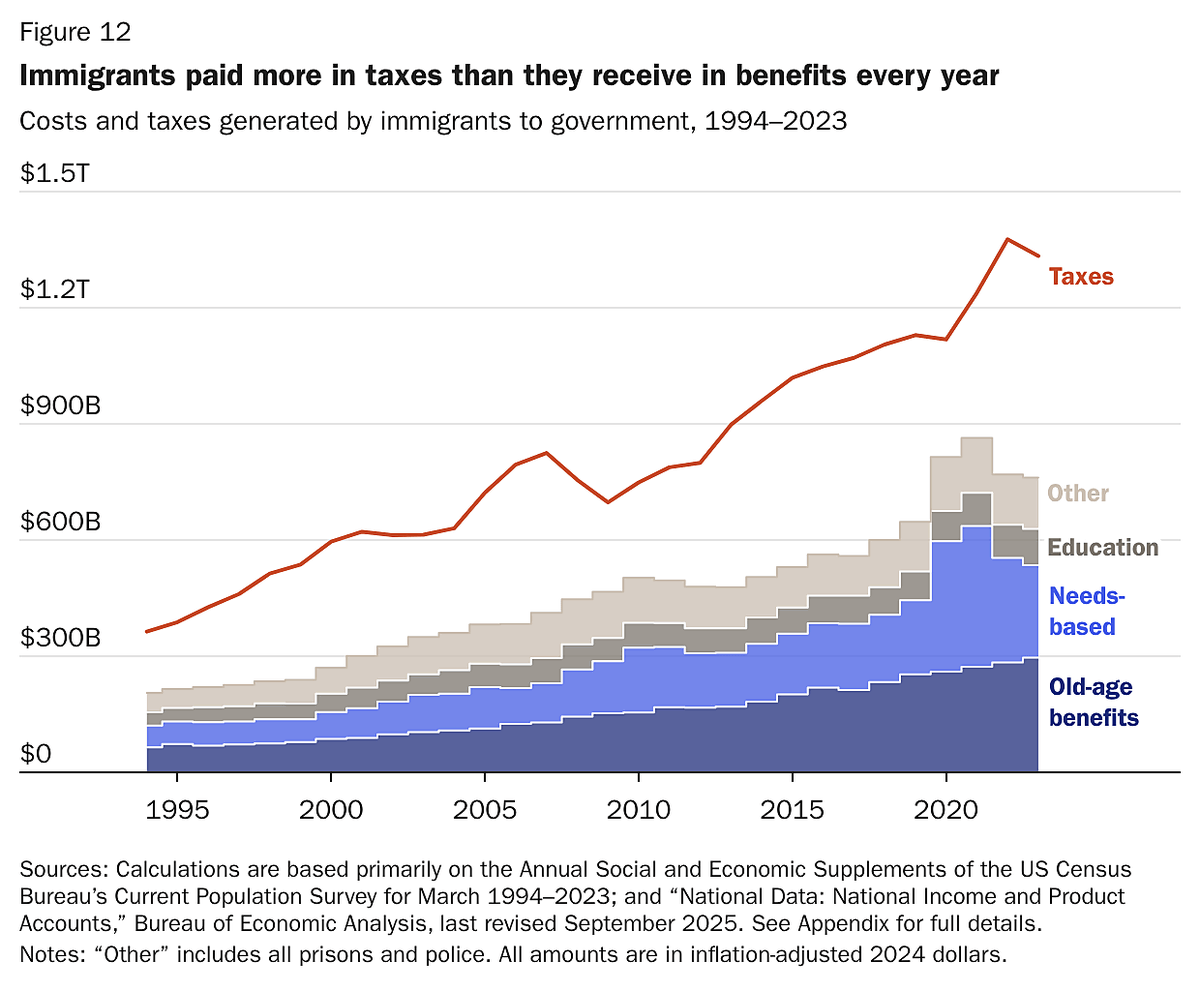
The US immigrant population generated more in taxes than they received in benefits from all levels of government every year from 1994 to 2023.
The Cato study provides the first-ever 30-year analysis of the fiscal effects of immigration on government budgets. Learn more from @David_J_Bier.
https://t.co/MfkUXoopp4
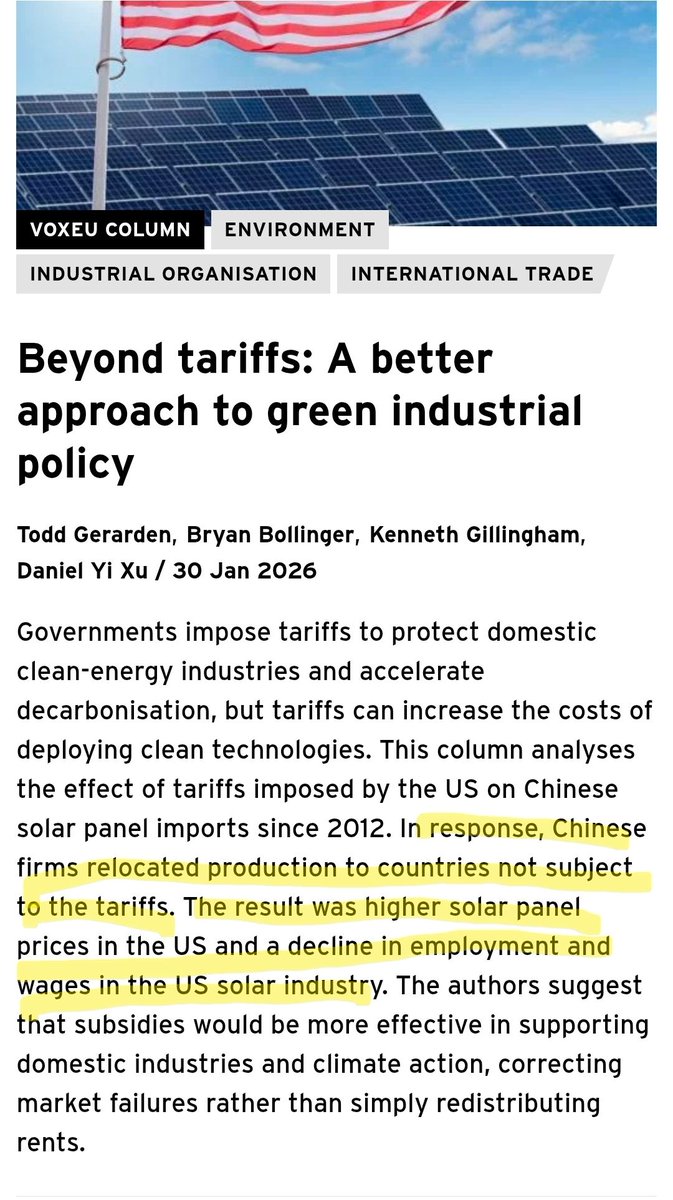
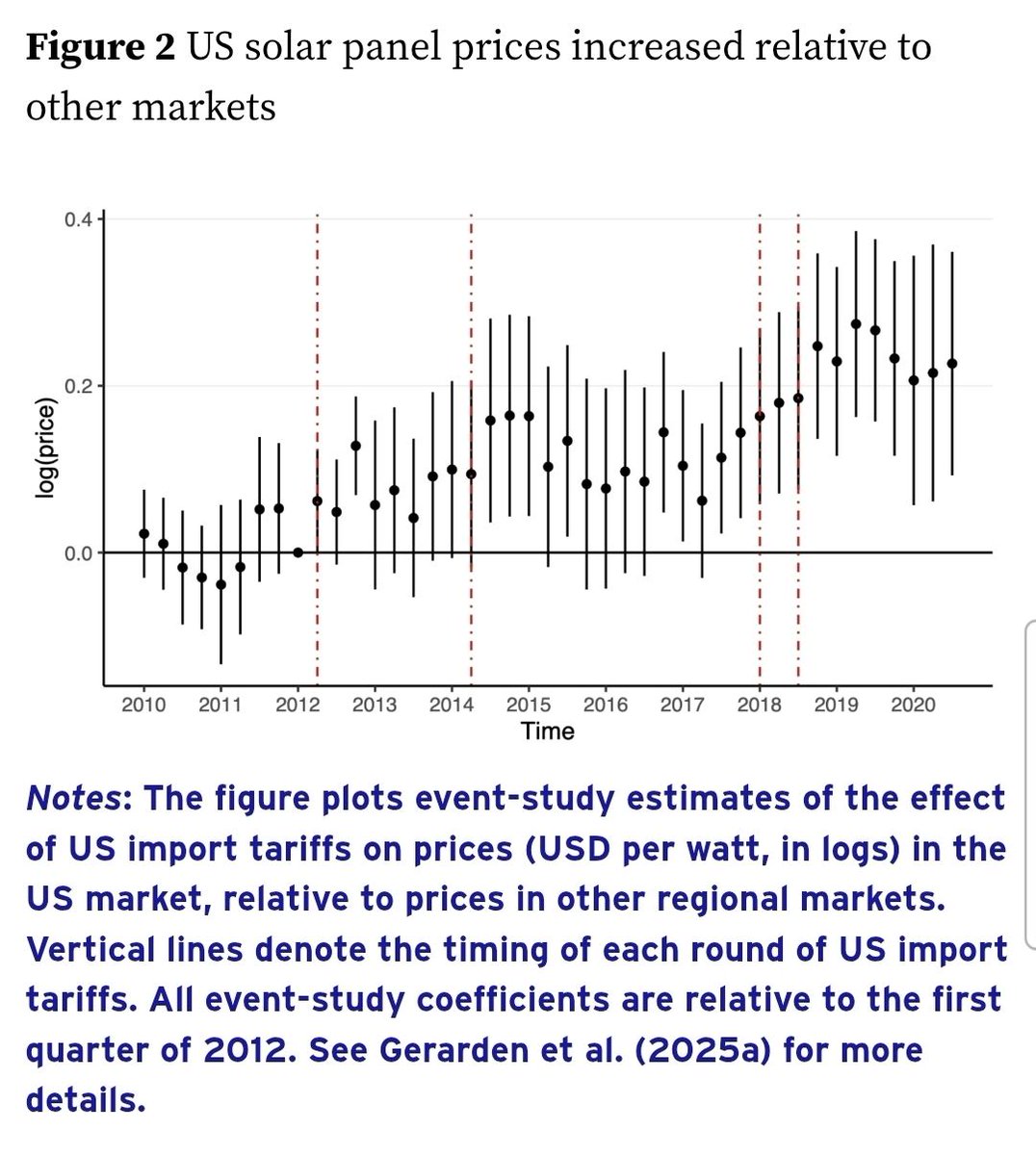
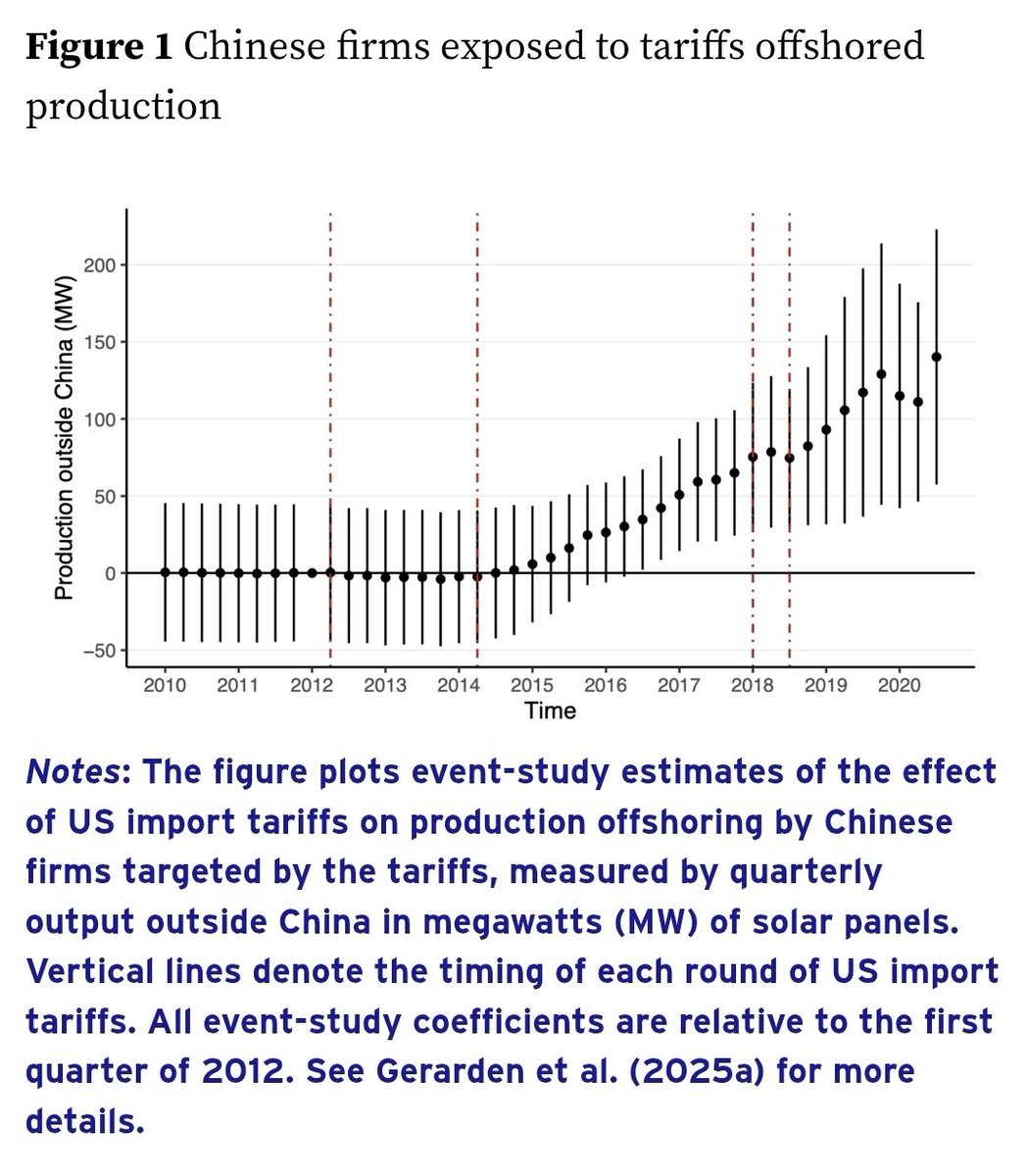
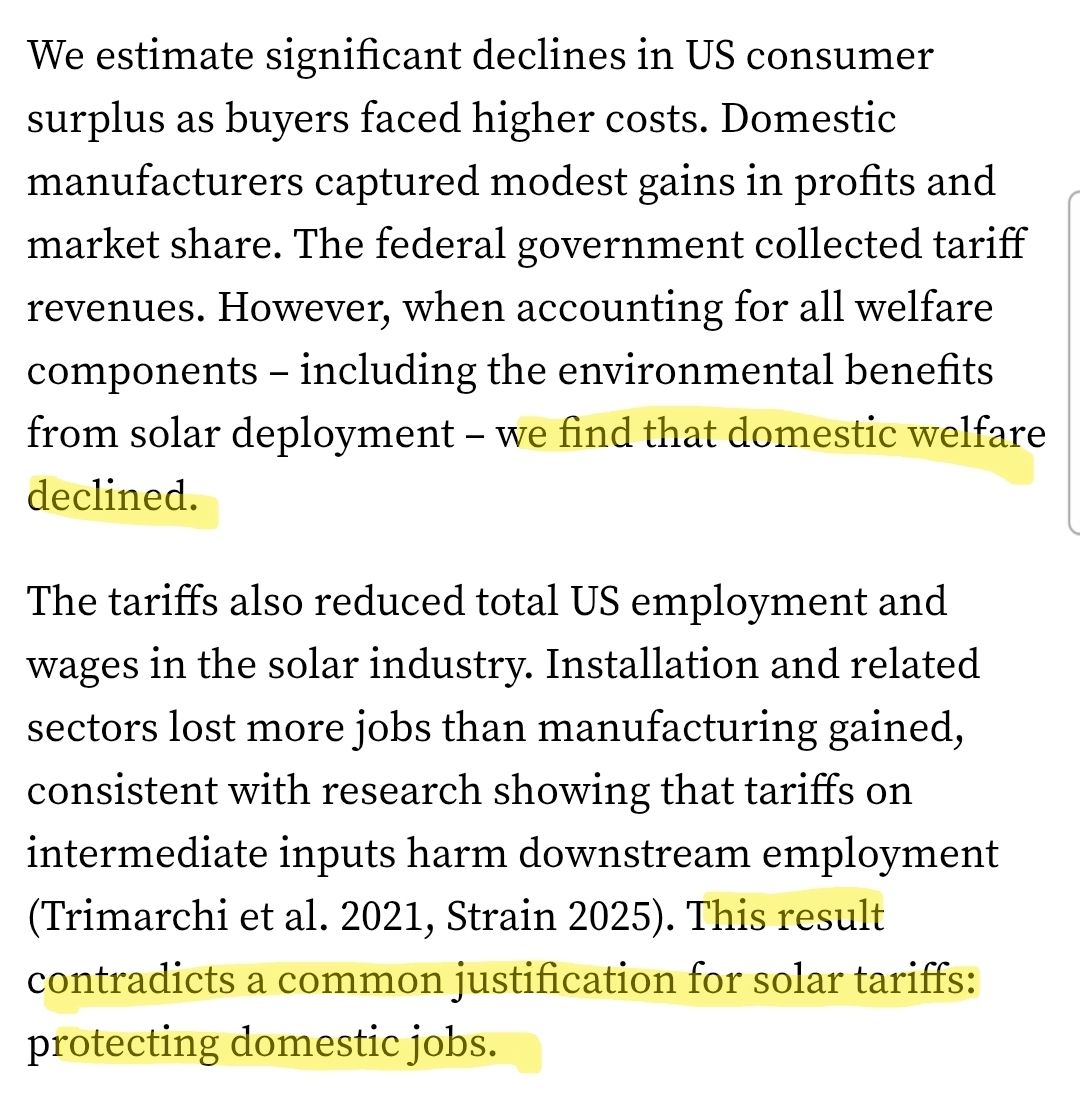
New paper: US tariffs on Chinese solar panels caused 1) Chinese firms to relocate production to countries not subject to the tariffs; 2) higher solar panel prices in the US; 3) a decline in employment & wages in the US solar industry;. & 4) net US welfare losses https://t.co/gFb77kgt9G
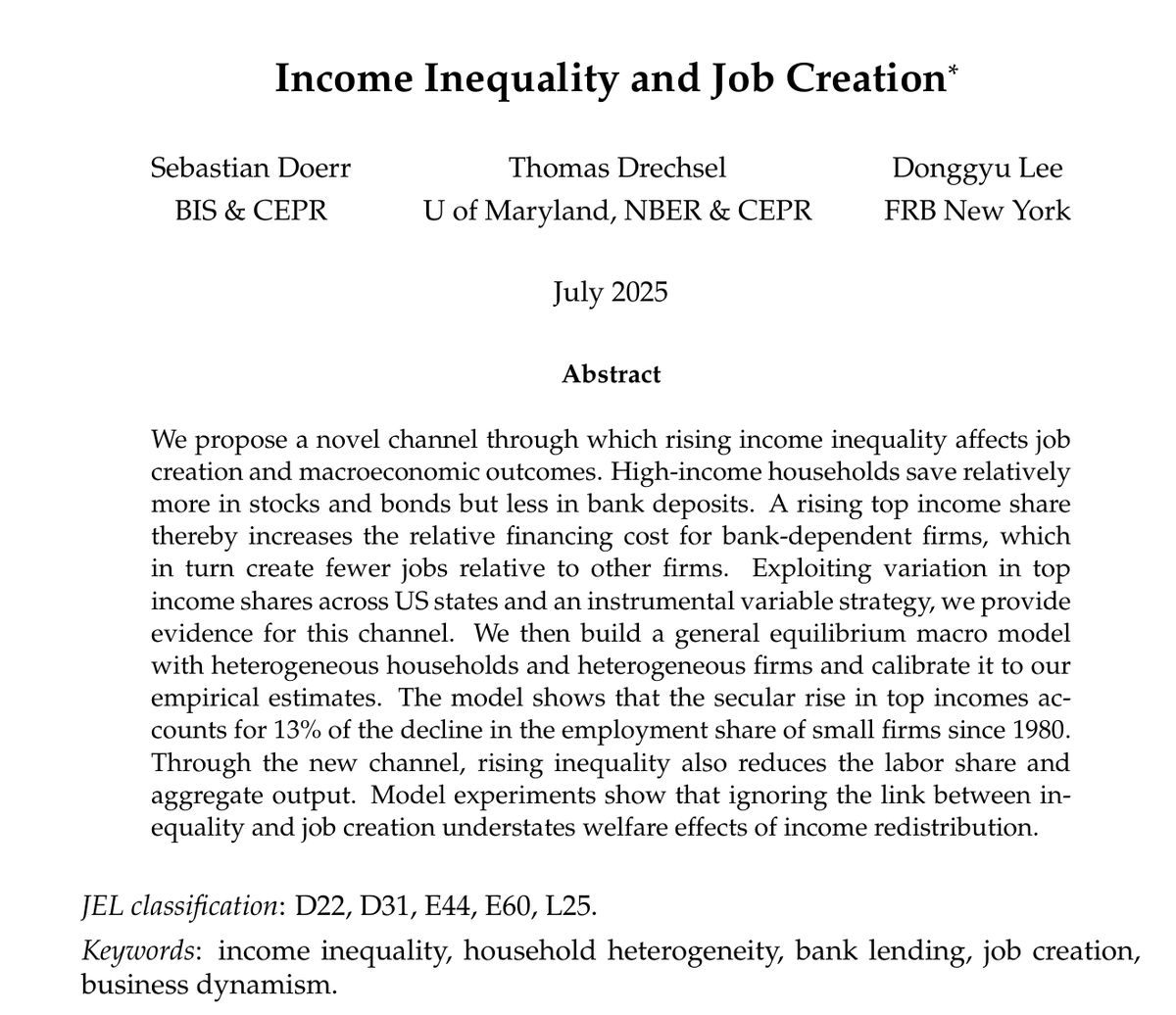
Our paper
"Income Inequality and Job Creation"
with Sebastian Doerr and Donggyu Lee
was just accepted for publication at the Review of Economic Studies!
Link to latest draft: https://t.co/sRab9AcQfq
@RevEconStudies@dglee_nyfed@NYFedResearch@BIS_org
NEW from me:
DOGE is officially the largest one-year cut in the federal workforce since the end of WWII, with 279k jobs lost—though it didn't come close to its goal of reducing the deficit & cut some of the federal government's most effective programs 🧵
https://t.co/8tqdRIfoj4