LC-16 is taking shape.
✔️ Flame diverter installation is underway, built to redirect the immense heat, exhaust, and acoustic energy generated at launch.
✔️ Launch table steel is going up alongside continued work on the LNG tank farm and lightning protection system, raising the first sections of the 531-foot towers.
✔️ Inside the HIF, outfitting continues as the transporter erector upper strongback takes shape.
✔️ The engineering support building is officially open, giving the teams who will operate Terran R launch campaigns a new home on-site.
The boosters for the Artemis III mission are getting stacked!
Technicians are stacking the twin solid rocket boosters for the Space Launch System rocket at @NASAKennedy. The boosters will provide more than 75% of the rocket’s total thrust at launch — scheduled for 2027.
We’re celebrating 20 years of Space Florida! 🚀
On September 1, 2006, a new Florida statute created Space Florida as the state’s aerospace finance, development, and spaceport authority.
As we celebrate, we’re looking back at two decades of growth for Florida aerospace, from record launch years and billions in investment to a workforce helping shape what comes next.
This month, we’ll share some of the milestones, people, projects, and partnerships that helped get us here, along with a look at where Florida aerospace is headed next.
Tomorrow morning, NASA’s Nancy Grace Roman Space Telescope is scheduled to take flight!
Weather officials with the U.S. Space Force’s Space Launch Delta 45 have predicted a 50% chance of favorable weather conditions for tomorrow morning’s launch, with the primary concern being the Cumulus Cloud Rule.
Named after NASA’s first chief astronomer, this next-generation observatory will set out to answer essential questions about dark energy, exoplanets, and astrophysics. With a field of view at least 100 times larger than Hubble’s, Roman could measure light from a billion galaxies in its lifetime!
The spacecraft itself is an impressive sight. Weighing over 20,000 lbs when fully fueled, Roman is over 42 feet long and more than 14 feet wide when fully deployed. Once in space, Roman will orbit roughly one million miles from Earth at the second Sun-Earth Lagrange point (L2), the same orbit as the James Webb Space Telescope.
At 7:26 a.m. EDT, Roman is set to launch aboard a SpaceX Falcon Heavy rocket from Kennedy Space Center. About 8 minutes after liftoff, listen for the double sonic booms as the two side boosters return to Landing Zones 2 and 40 at Cape Canaveral Space Force Station!
Based here at Kennedy, NASA’s Launch Services Program (LSP) manages the Falcon Heavy launch service for this mission. Roman will be LSP’s 109th primary mission! Roman also marks LSP's 14th primary mission to fly with SpaceX, and 4th to be launched on a Falcon Heavy.
Roman is ready for liftoff tomorrow at 7:26 a.m. EDT!
The SpaceX Falcon Heavy rocket carrying NASA's Nancy Grace Roman Space Telescope stands vertical at Launch Complex 39A at Kennedy Space Center in Florida.
Roman is packed up and ready to roll! 🚀
NASA's @NASARoman is now encapsulated in the Falcon Heavy fairing ahead of a targeted launch on Aug. 30 from Kennedy.
Next stop, the hangar at Launch Complex 39A. https://t.co/VU2E0Sm0G8
NASA has selected four companies to provide payload processing facilities under the Spacecraft Processing Operations Contract on‑ramp provision.
Contract awardees are:
- All Points Logistics LLC
- Blue Origin LLC
- Firefly Aerospace
- L3Harris Technologies Inc.
Read more: https://t.co/wlp6kB4sns
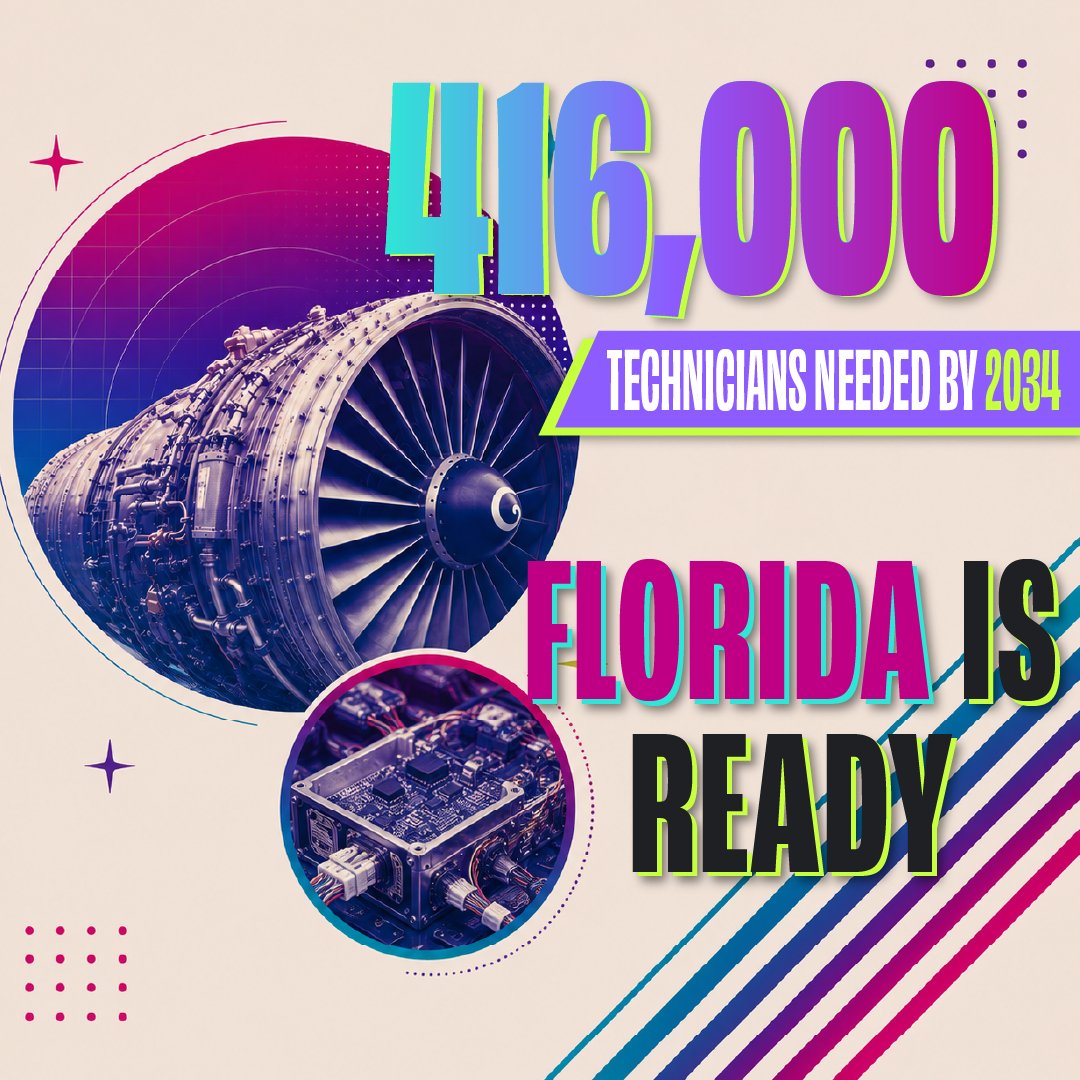
The aerospace industry will need an estimated 416,000 new technicians globally by 2034. Florida's high schoolers are already answering the call: 13,000+ in just the first two years of the Space Florida Academy Program.
Media accreditation is now open for two Kennedy launches, NASA's Nancy Grace Roman Space Telescope and the agency’s SpaceX Crew-13 mission!
The deadlines to apply are July 26 for international media and July 30 for US media. Targeting launch for Roman no earlier than Aug. 30, and no earlier than mid-September for Crew-13.
Learn more: https://t.co/ZnUqWxJDlP
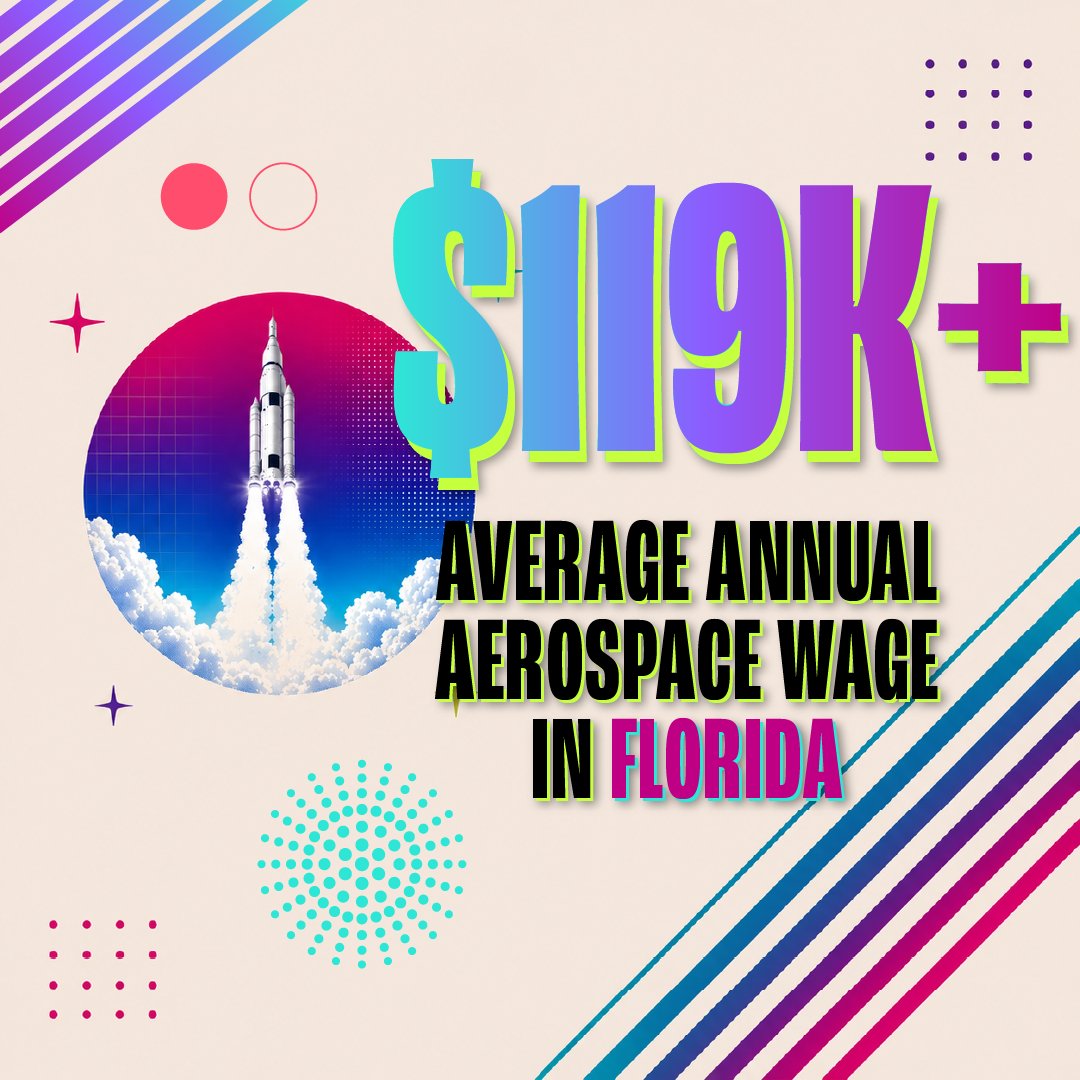
The average annual wage in Florida's aerospace industry is $119,457. These are jobs students can train for right now, in high school, and the Space Florida Academy Program is helping them do it.
https://t.co/J8SwSFuGzd
We made rockets reusable and are rebuilding the internet in space. The next challenge: making life multiplanetary and understanding the true nature of the universe
Watch @ElonMusk deliver a company update to @SpaceX employees
We’re building Launch Complex 36B at Cape Canaveral Space Force Station to support New Glenn’s high-cadence launch operations and infrastructure resiliency. 🚀 Read more: https://t.co/BzTHt5YGmQ
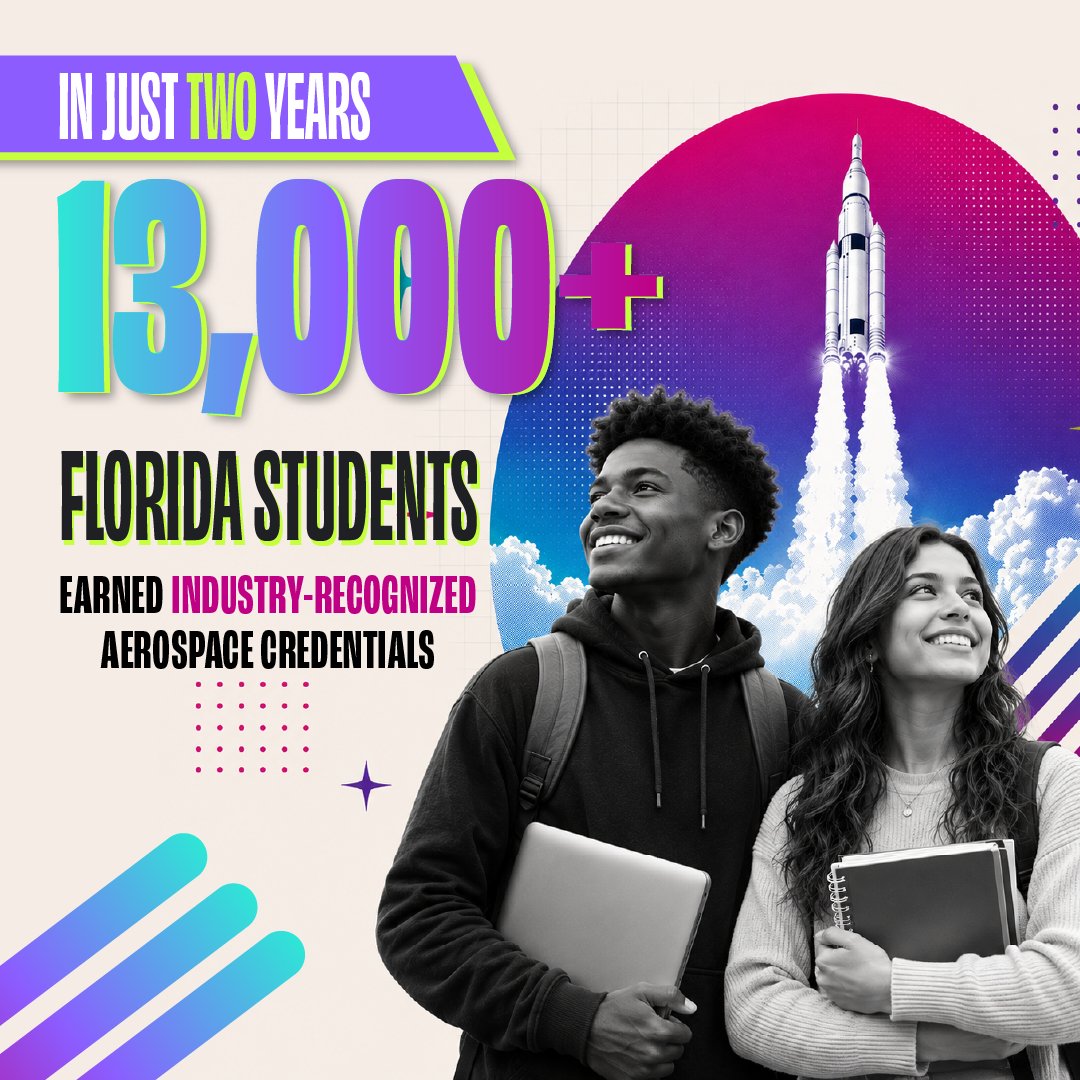
In just two years, the Space Florida Academy Program has helped nearly 13,000 Florida students earn industry-recognized aerospace credentials. And we're just getting started!
https://t.co/J8SwSFuGzd
Airports. Seaports. Now spaceports.
In 2025, spaceports became eligible for tax-exempt Private Activity Bonds, the same financing tool that helped build America's airports and seaports. Space Florida led the decade-long effort to make it happen.
Lower-cost capital for the infrastructure that keeps Florida launching.