Coming soon... Blue’s Chief Scientist Steve Squyres joins the Ascending Node podcast to discuss Blue Ring, the spacecraft that's redefining what's possible for in-space mobility. All-in-one hybrid propulsion, unmatched versatility, and mission-changing innovation.
Introducing Artemis III.
Four astronauts. Three launches. Two dockings. One splashdown.
In 2027, the Artemis III mission will practice docking the Orion spacecraft with two lunar landers in low Earth orbit — the capability we need to return humanity to the Moon’s surface.
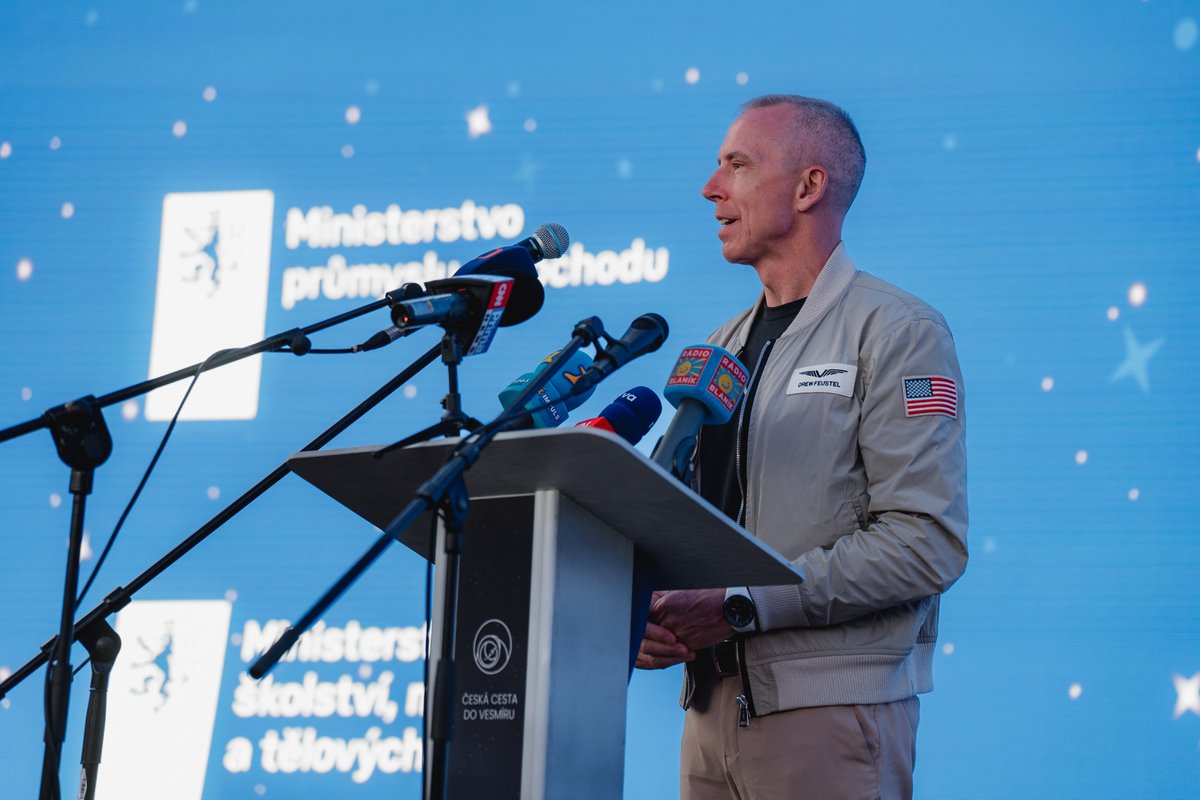
Czech Prime Minister Andrej Babiš announced @astro_ales is on the path to become the first Czech astronaut as part of Vast’s mission to the @Space_Station. Thank you to the Czech Republic, @esa, and @NASA as we work together to advance the future of human spaceflight.
We have a crew! Congrats to these four: our new Artemis III crew! I can’t wait to work with them.
For Artemis III, I will be filling the role as lead Capcom.
Credit: NASA
Day 111, orbit 1722 — In this timelapse, I’m working on an experiment called DNA Therapeutics in the Life Science Glovebox located in the Kibo module. I’m handling blood stem cell samples as part of research exploring the idea of producing large amounts of clinical grade stem cells in space. The goal is to improve their quality, which could help advance treatments for blood disorders and cancer.
Go science, and go cancer research!
🎥 @esa / @NASA
#εpsilon • @esaspaceflight • @Space_Station • @NASAJohnson • @NASA_Marshall • @UConn • @Axiom_Space
🚨 The first launch for the Gaganyaan mission, the G-1 (half-humanoid) mission is all ready to take off in the next 3-4 months. 🚀
ISRO got clearances for G-1 from the National Review Committee in early May, 2026.
Food is far more than sustenance on a space mission. When you live for weeks or months in a confined environment, surrounded by the same walls, the same faces, and the same routines, even the most extraordinary adventure can begin to feel repetitive. Food becomes a small but important escape—a daily reminder of comfort, familiarity, and life back on Earth.
That is why astronauts do not leave their menus to chance. Before we fly, we go through the rather serious business of food tasting. “Tasting” may sound leisurely; in reality, it is closer to an endurance event. We spend hours sampling more than 200 food items, rating each one on a hedonic scale based on how much we enjoy it.
The process has an amusing flaw. By the end of the session, you are so thoroughly full that even excellent food begins to receive mediocre scores. After item number 180, enthusiasm becomes a finite resource.
The exercise matters because space changes the way food tastes. In microgravity, bodily fluids shift toward the head, leading to a feeling similar to having a mild cold. Your sense of smell is reduced, and since smell contributes significantly to taste, many foods lose some of their appeal. Dishes that seem perfectly flavourful on Earth can feel surprisingly bland in orbit.
As a result, you learn to choose the foods you genuinely enjoy. For me, breakfast was often the highlight, granola and oats consistently made the cut.
One final tradition remains undefeated in human spaceflight:
Before launch, we lunch.
Starting the week fresh. 🪒
In space, simple hygiene tasks like shaving require different tools and preparation than they do on Earth. In this photo, NASA astronaut Jack Hathaway uses an electric razor attached to a vacuum that collects loose clippings, keeping the station’s atmosphere clean in microgravity.
Learn more about keeping clean in space with this throwback episode of Houston, We Have a Podcast: https://t.co/AtWSjBQkrw
“When we undertake and achieve the near impossible, we never go alone.”
@rookisaacman, @NASA Administrator, joins @Nasdaq to discuss the experiences that shaped his career, what it means to lead NASA at this pivotal moment, and how the growing partnership between the public and private sectors is rewriting the rules of exploration.
Watch the full episode here: https://t.co/KWxWIzch9e
Vast is expanding into high-power satellites. Introducing our new line of high-power satellite buses that leverage the technologies we’ve developed in-house for our Haven-1 space station and validated with the success of our Haven Demo mission. https://t.co/aITDUjQOzF
Vast is ready to support a continuous presence in space for the US and its allies. Through our hardware-rich, stepping-stone approach to building next-generation space stations, we validate our systems early to ensure readiness, starting with the success of Haven Demo.
Survival training is an indispensable part of astronaut preparation. Engineers on the ground spend countless hours perfecting navigation, guidance, and control systems to ensure a spacecraft lands precisely where intended. But spaceflight has always respected one rule above all else: prepare for the improbable.
In the rare event of an off-target landing in a remote wilderness, the crew may have to rely entirely on their training until rescue teams arrive.
This image was taken at the end of a winter survival exercise after three days of isolated field survival. The flare marks our position for the approaching recovery forces, a small but reassuring reminder that sometimes, after all the sophistication of rockets and computers, survival can still come down to fire, teamwork, and patience.
One of the fascinating things about spaceflight training is its thoroughness. It prepares you not just for the mission you planned, but also for the one you hope never happens.
#shux #space #shubhanshushukla #india #isro
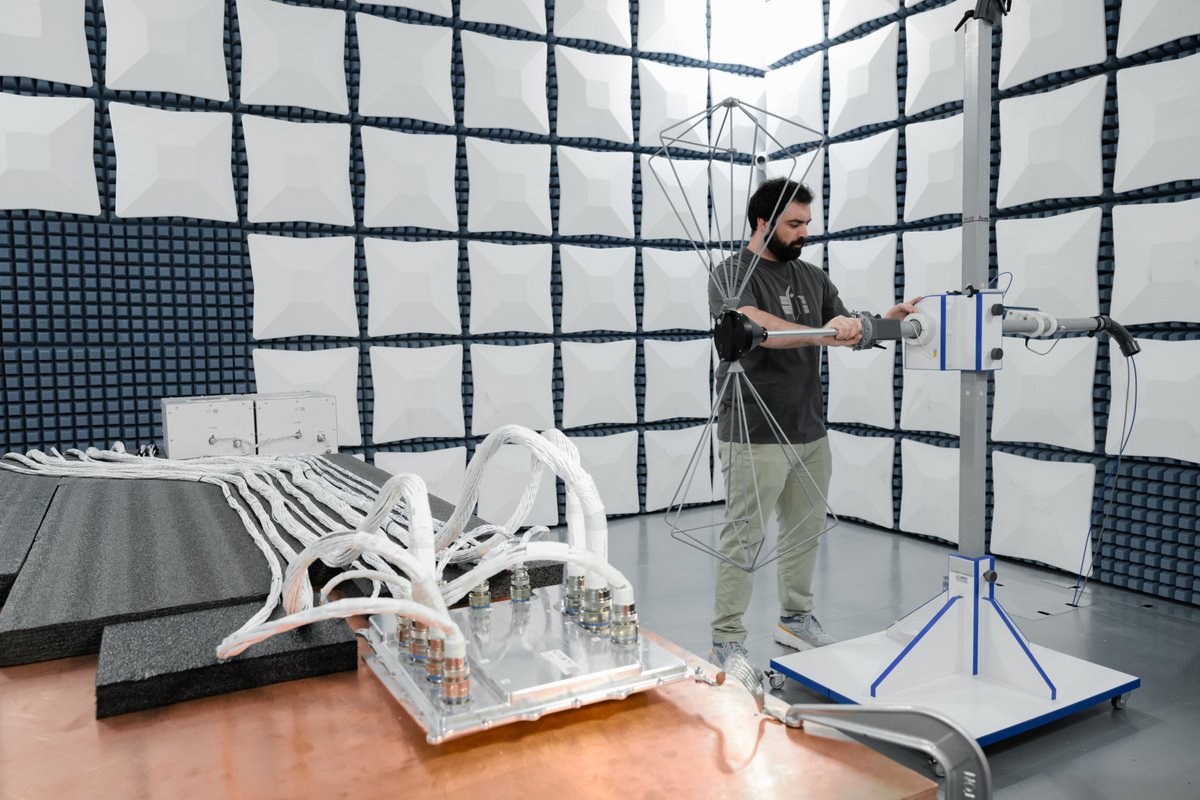
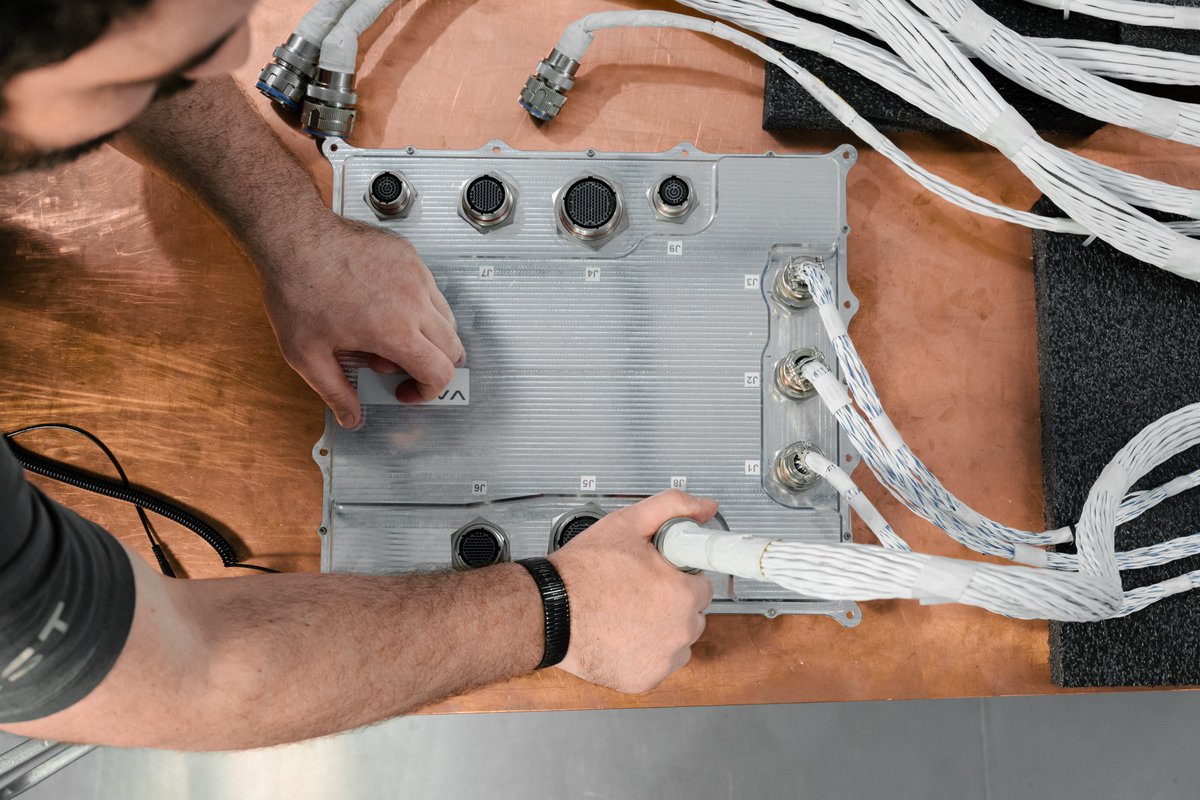
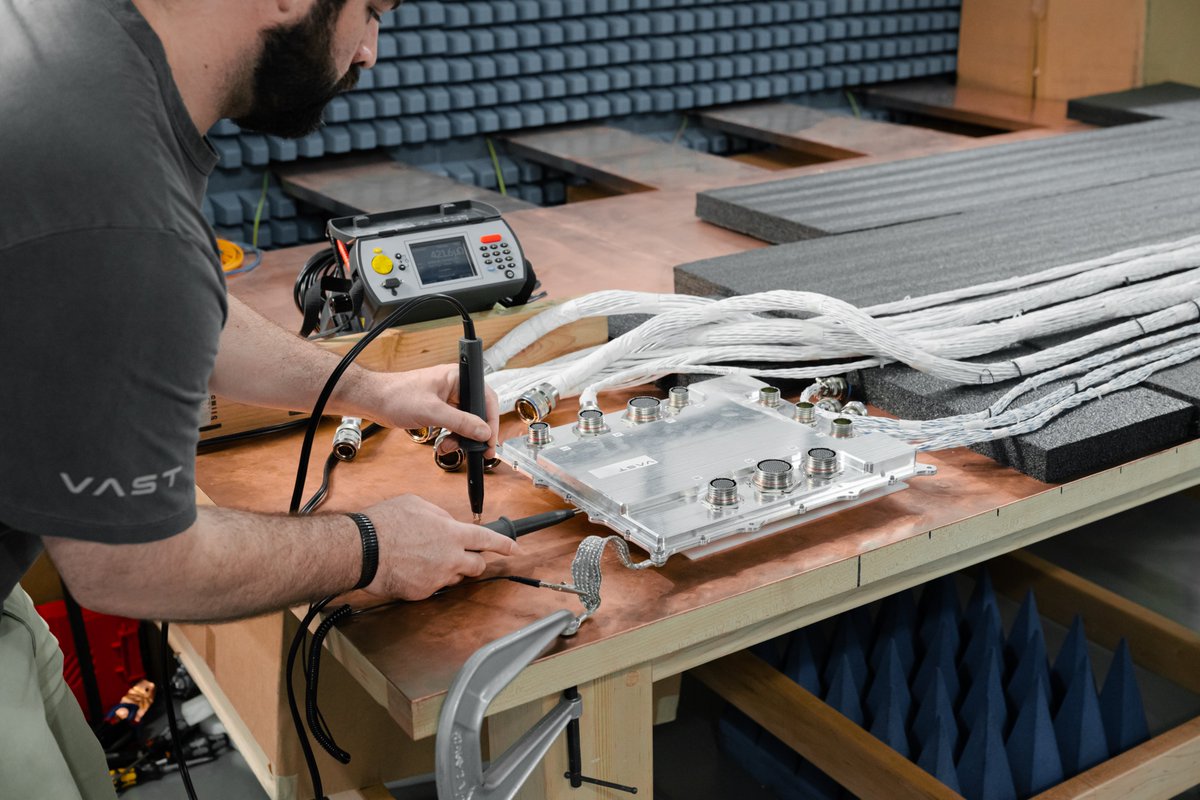
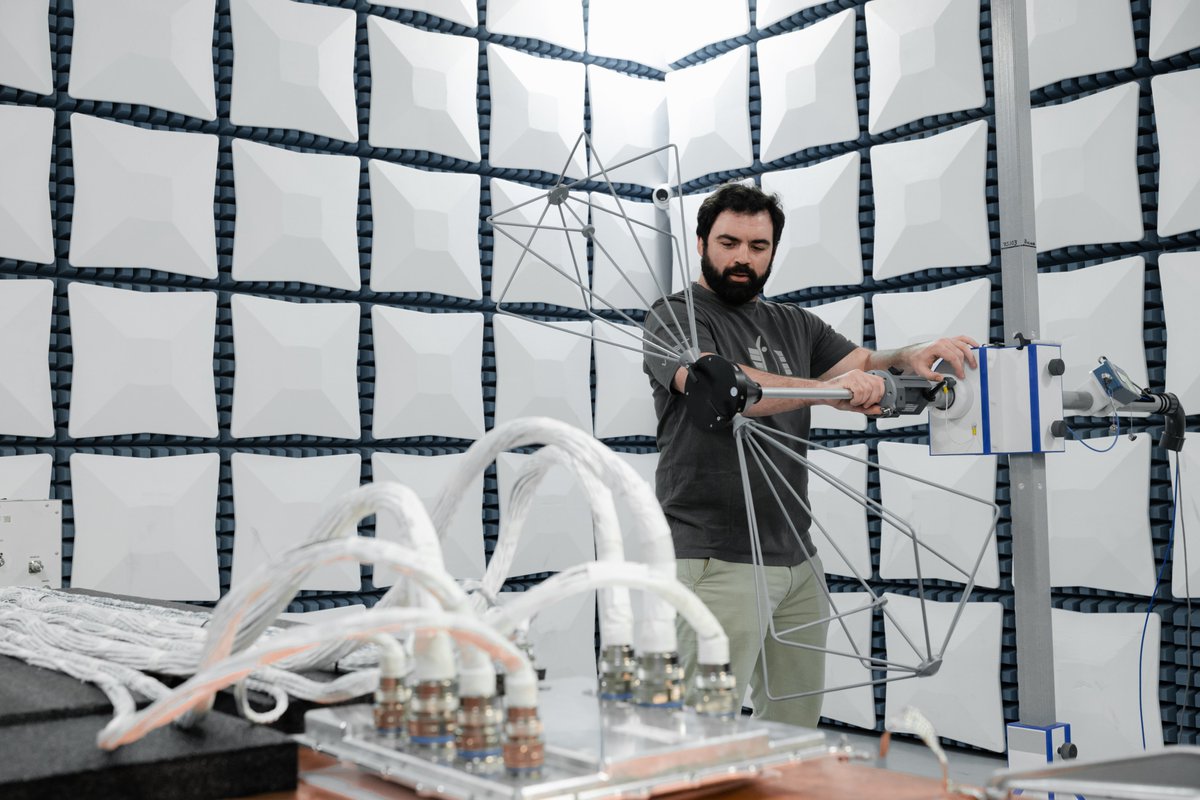
The Vast Control Unit (VCU), our flight computer, is ready for testing in the semi-anechoic chamber at Vast HQ. These tests will confirm the VCU won't cause electromagnetic interference with other systems on Haven-1, scheduled to be the world’s first commercial space station.