Can a single database architecture satisfy both vibe-coded and large scale enterprise apps?
The same approach makes small database ultra cheap to run and branch can also make a large one faster and easier to operate. We call this architecture Lakebase.
I got this question so many times today. "How can you grow 80% at $7B?"
The true answer is that we're finally seeing a breakthrough with AI agents starting to work in the enterprise.
The AIs have been super smart for a while, but have lacked basic context that's in people's heads, or in some SaaS system-or-record. A lot of organizations are deploying FDEs to capture this context, or Ontology, and feed it to the AI. This is labor intensive and expensive. We just automated that with Genie Ontology.
Once you have that enterprise context graph, an AI agent like Genie becomes magical. I find myself no longer waiting for answers from my CRO, CFO, CMO, CHRO etc, I just keep queuing up questions on the phone while sitting in meetings. It'd frankly addictive.
Our customers are starting to do the same, over 70% of all queries on the platform are now generated by Genie agents. This fuels more questions to the platform, which drives consumption, which drives revenue. That's the simple answer.
Today, we announced that we crossed $7B in revenue run-rate, growing over 80% year over year in Q2.
We also shared:
🚀 $100M+ revenue run-rate for Lakebase
🚀 $1.5B+ revenue run-rate for Lakehouse, growing over 100% year over year
🚀 Continued positive adjusted free cash flow
And we raised $5B in our latest fundraise.
We’ll use this capital to invest in:
1️⃣ Lakebase, our serverless Postgres database built for AI agents
2️⃣ Genie, our AI coworkers that actually understand your business data
3️⃣ Unity AI Gateway, our multi-AI governance solution that helps control costs
@iamVictorDey shares more in @Forbes:
https://t.co/y2LdxysBNi
@heng_yan Oh you're right! Key point being that open source GLM is over 300 tokens per second. This matters for agents (we all hate waiting 10 minutes for responses). Proprietary frontier models are at best at 100 tokens per second. So 3x speedup really matters for agentic workloads.
Really excited to open source a new project: Omnigent, a meta-harness for AI agents.
It lets you build multi-agent coding and custom agents, sitting above Claude Code, Codex, Pi, and agent SDKs to let you compose them. It also adds live collaboration and rich control policies.
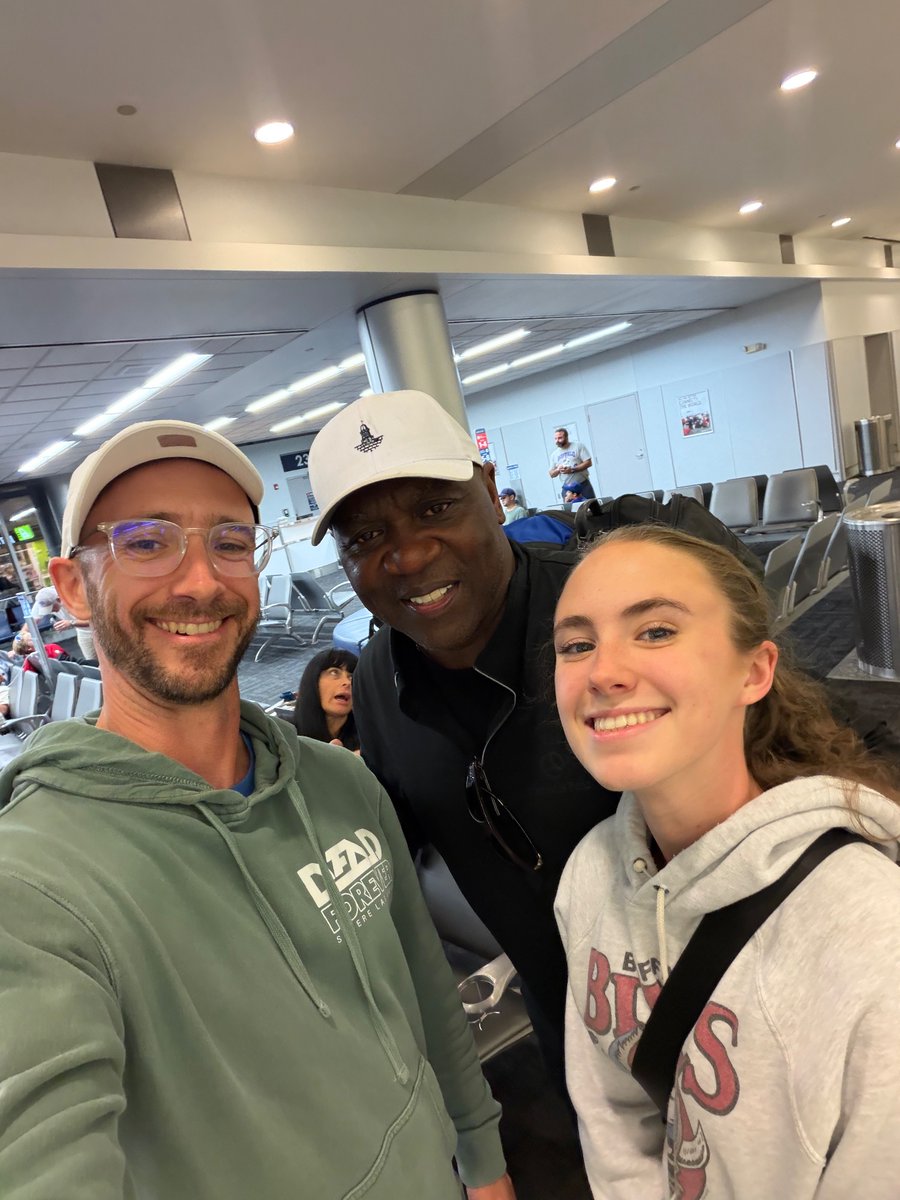
Harper and I ran into one of my childhood hero’s postgame today :) putting alongside some evidence of generational life-long #billsmafia#gobills@thurmanthomas
“We need to shift security left, and we need to make sure that it’s a part of the everyday workflow of developers, obviously security and operations professionals.”
Listen to more from GitLab Chief Strategy and Marketing Officer Ashley Kramer’s @theCUBE interview with @googlecloud's @stephenorban here https://t.co/QSOxTVMPTu
@Glean's AI platform, built on @GoogleCloud, helps you connect the dots across your data so you can make better decisions, faster. ⚡️
Watch the full interview: https://t.co/L0rBDZV2rK
#MarketplaceMarvels#AI#CloudComputing#TechI... https://t.co/4vU8qE7XpX
Datadog expands swiftly on @GoogleCloud Marketplace! 🚀 The company’s observability and security tools integrate seamlessly, ensuring smooth cloud migrations and AI workload monitoring.
👉 More here from #theCUBE: https://t.co/CFkEThjV4t
#MarketplaceMarvels#GoogleCloud #datadog #CloudComputing #AI #CloudComputing #AI #TechInnovation @DataDogHQ@StephenOrban@YrieixG
Announcing @AnthropicAI’s most intelligent model, Claude 3 Opus, is now in public preview on #VertexAI.
Opus delivers state-of-the-art performance on highly complex tasks like financial analysis, drug discovery, and interactive coding. Try it today → https://t.co/ZjzP8ocdQR