Happy to share our latest work "Large-scale energy decomposition for the analysis of protein stability". We use simple simulations to predict the impact of mutations on stability of more than 250 mutants in different folds. https://t.co/ozw2RVrcTG
#CompChem#CompBiol#AI#Biotech
👏👏Congrats Dr. Mollapour! Read more about his work studying the chaperone code, and his current NIH-funded grant studying chaperone proteins linked to cancer ⤵️
https://t.co/xU6NSv8JJS
🙏🙏🙏Honored and humbled. Huge Congratulations to @Bio_BRU and a big thank you to @sistonheat for all her hard work. Looking forward to the exciting journey ahead!
Thrilled to announce Dr. Mehdi Mollapour @MedMol as our new CSSI President (2025–2026) and Dr. Adrienne Edkins @Bio_BRU as President-Elect (2027–2028)! Huge thanks to Dr. Lea Sistonen @sistonheat for her dedicated service as Immediate Past President. https://t.co/GhaDFNbfme
From all of us at Cell Stress Society International, warm wishes for a healthy and peaceful holiday season! May we find renewal and resilience, just like the cells we study, as we head into the new year. Here’s to continued growth, discoveries, and brighter days ahead!
Meet our Senior Editors at Cell Stress & Chaperones @elsbiomedchem - Dr. Melody Clark dives into the fantastic world of chaperone biology in non-model organisms #HSP70 and their adaptations to life in freezing seas and climate change https://t.co/IxtIcnNhT9
Meet our Senior Editors at Cell Stress & Chaperones @elsbiomedchem - Dr. Elizabeth Repasky, exploring the impact of physiological stress on the immune system. https://t.co/IxtIcnMK3B
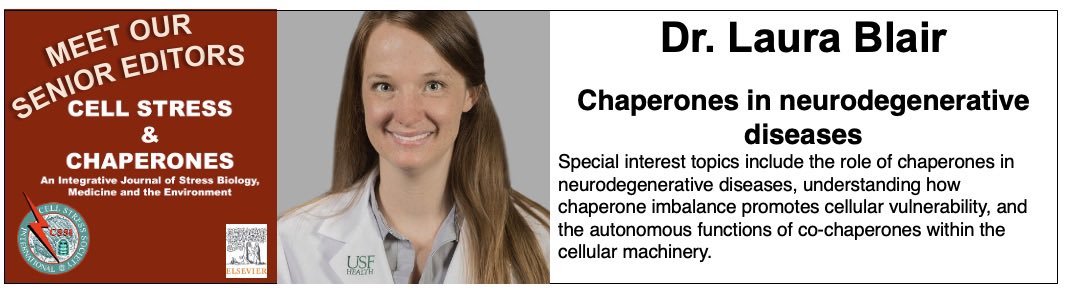
Meet our Senior Editors at Cell Stress & Chaperones @elsbiomedchem Dr. Laura Blair @LauraJBlair focusing on the role of chaperones in neurodegenerative diseases, exploring how chaperone imbalances can lead to cellular vulnerability https://t.co/IxtIcnMK3B
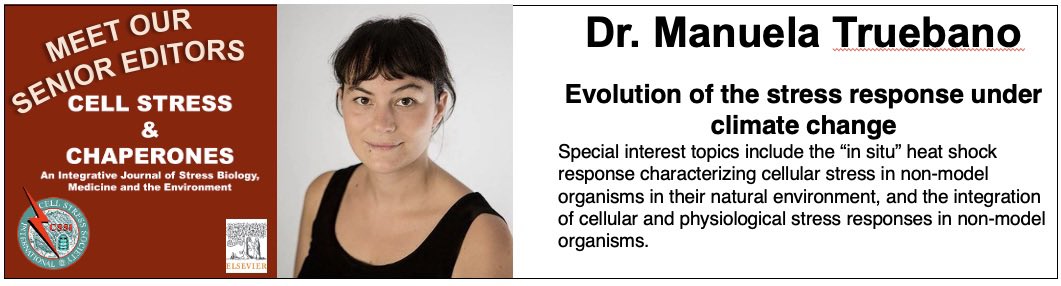
Meet our Senior Editors at Cell Stress & Chaperones @elsbiomedchem Dr. Manuela Truebano explores stress responses in the context of climate change focusing on the heat shock response in non-model organisms https://t.co/IxtIcnMK3B
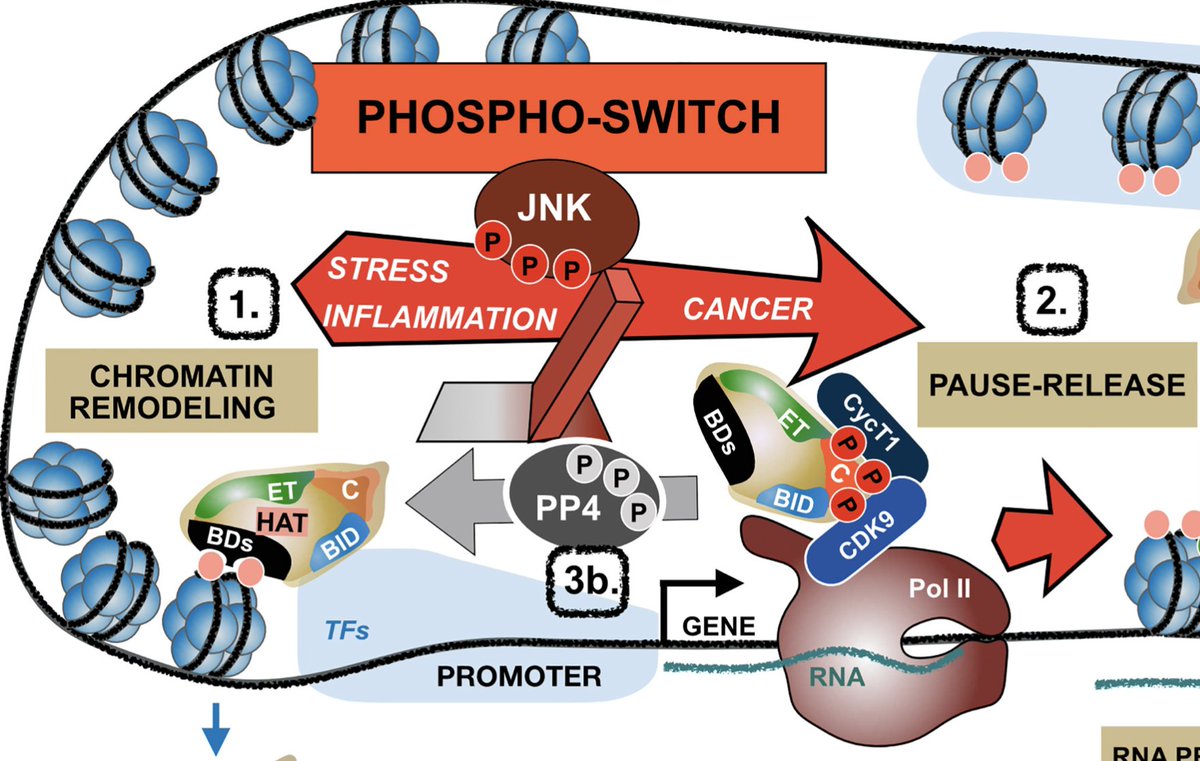
Fascinated by molecular switches that transition cell states and coordinate transcription. Was a privilege to preview the Singer lab's latest @MolecularCell, describing how multitasker BRD4 transitions from chromatin remodeler to transcription activator. https://t.co/O4Wi5ABY30
Our paper is out @CellReports! To identify new protectant proteins we expressed tardigrade genes in bacteria and screened for those that could improve desiccation survival. It was a fun (and effective) screening approach Check it out and see what we found! https://t.co/caCtCjVOvL
Check out our latest work on Networks in Health and Disease! Advances in computational methods to study protein interactions & network-level function. #ComputationalBiology#ProteinNetworks https://t.co/n7zExsuHVn
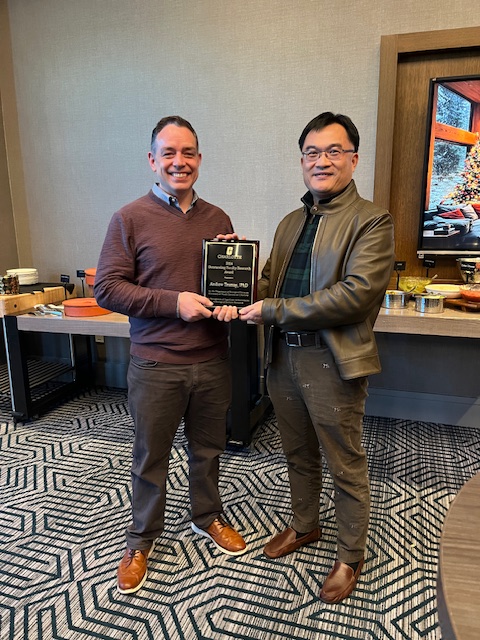
Please join me to congratulate my colleague Dr. Andrew Truman @TrumanLab as the recipient of the 2024 Outstanding Biological Sciences Faculty Research Award! Well deserved Andy!
Check out more details:
https://t.co/ggoVftweV3
@unccharlotte@49erAlumni@UNCCFaculty
Meet our Senior Editors at Cell Stress & Chaperones @elsbiomedchem Dr. Laura Blair @LauraJBlair focusing on the role of chaperones in neurodegenerative diseases, exploring how chaperone imbalances can lead to cellular vulnerability https://t.co/IxtIcnMK3B
Meet our Senior Editors at Cell Stress & Chaperones @elsbiomedchem Dr. Manuela Truebano explores stress responses in the context of climate change focusing on the heat shock response in non-model organisms https://t.co/IxtIcnMK3B
Meet our Senior Editors at Cell Stress & Chaperones @elsbiomedchem - Dr. Elizabeth Repasky, exploring the impact of physiological stress on the immune system. https://t.co/IxtIcnMK3B
Meet our Senior Editors at Cell Stress & Chaperones @elsbiomedchem - Dr. Melody Clark dives into the fantastic world of chaperone biology in non-model organisms #HSP70 and their adaptations to life in freezing seas and climate change https://t.co/IxtIcnNhT9