I have enough notes on this to write an entire book
If there is interest, I will pull them together for you guys
Success is measurable
Quantify your actions and have clarity in the bets you take in life. Your time and energy are the most scarce form of capital to YOU, what you want to do is make it a scarce form of capital to OTHERS as well.
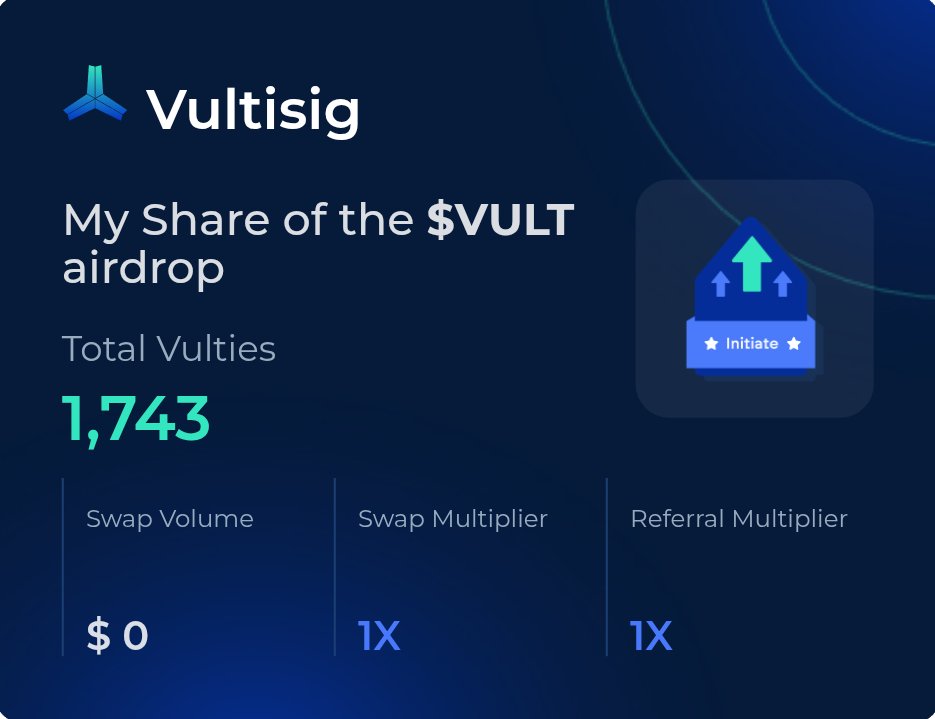
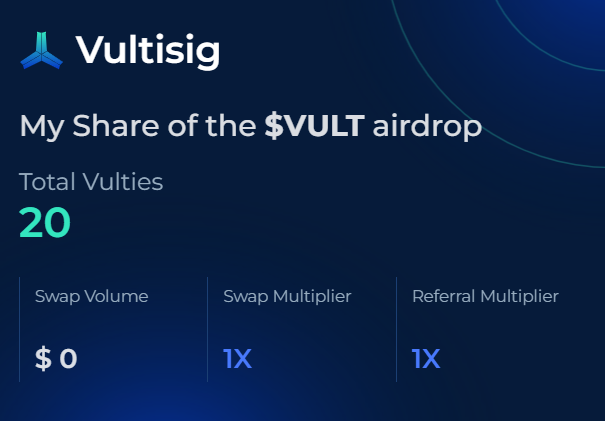
🎯 Have you checked the new Airdrop Season yet?
Let’s make it interesting.
We’re giving away $50 USDC 💸
→ 5 winners get $10 each
Here’s how to enter:
1️⃣ Open the airdrop page → Achievement
2️⃣ Tap Share, copy image
3️⃣ Quote this tweet with the pic
Let the flexing begin 🧠💪
The most undervalued AI project in all of crypto:
$CFGI is a pioneering AI trading platform that has a 91.30% win rate..
Yep, you read that right.
The picture below shows all her successful trades in the last few days...
Notice how they are all green?
A thread about the industry-changing project that has been 6x KYC 👇
Things in China’s favor:
1. US needs to roll a lot of debt in the first half of 2025.
2. Midterm elections are a risk for Trump if he goes too hard for too long.
3. The Chinese, culturally, are world champions at being willing to endure hardship.
4. China controls a lot of rare earth metal production.
Things in the US’s favor:
1. China needs to fight deflation and already has a lot of debt.
2. Net importers have the advantage over net exporters in a trade war.
3. US can make trade deals with countries that net export to the US and net import from China where US tariffs are dropped if those countries puts up tariffs on Chinese imports.
4. The CCP really doesn’t want to see civil unrest like during the late stages of their zero covid policy.
5. US has geographic control of many global canals and shipping routes. This is why Panama was important.
Net-net I think the US wins this chicken game. Probably still best for someone like Singapore to try and broker a meeting so neither side has to approach the other first and they can both save face.
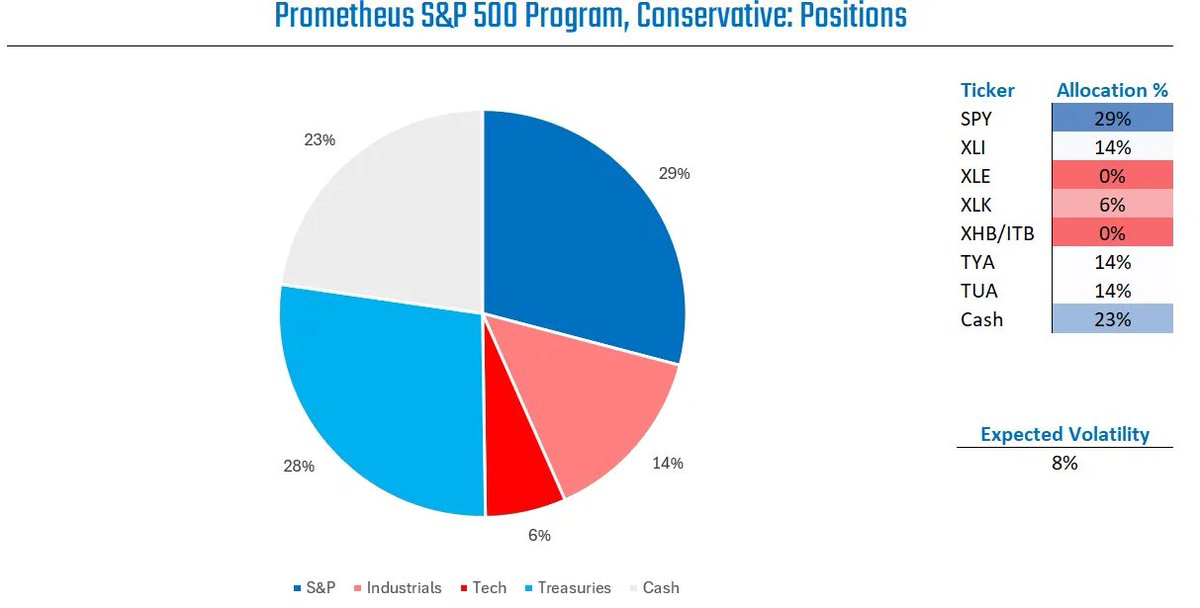
Prometheus S&P 500 Program 🤖🔥🚀
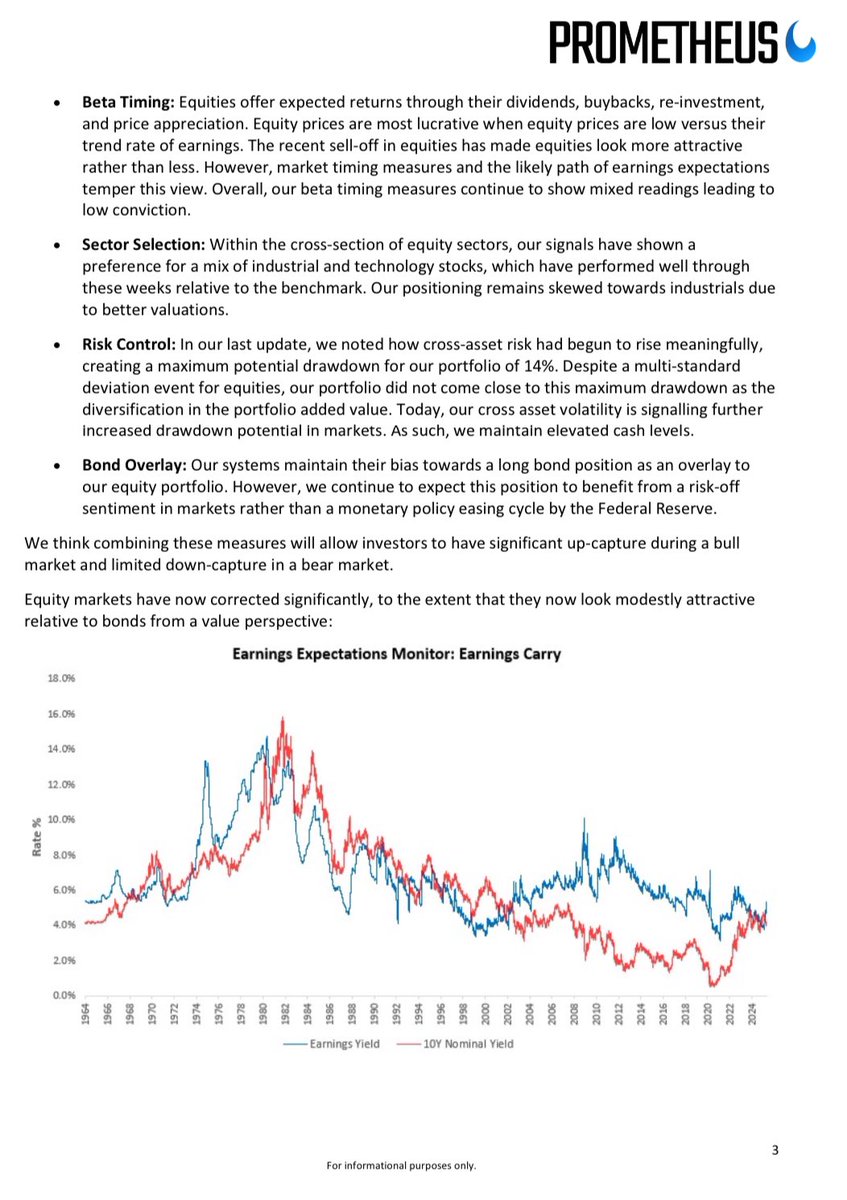
“Equity prices are most lucrative when equity prices are low versus their trend rate of earnings. The recent sell-off in equities has made equities look more attractive rather than less.”
https://t.co/dF6D2qszmK
Long post -- TRADING FAST MARKETS, excerpt from Alpha Trader. Super relevant right now.
1. Correct position size is the difference between winning and losing in a crisis. Too big is not OK; you might blow up or get fired. Too small is not OK either; you need to seize the moment.
Trading in fast markets is when the most money gets made and Alpha Traders emerge. I remember as volatility went to the moon in 2008, I changed my normal trade size in USDMXN from 20 million to 3 million and I was still amazed (scared) by the volatility of my P&L. If you can size dynamically using forward-looking estimates of volatility, that is ideal. Look at what options markets are pricing for 1-week volatility. If you can’t do that, look at the average daily range over
the past five days.
2. Keep an open mind and use your imagination. When COVID-19 hit, the market took oil from $65 to $50 as concerns about consumer demand knocked a market that was already bulled up on “cheap” energy stocks. Then the OPEC meeting in early March crumbled and crude plummeted from $50 to $27 in a week. The pressure from COVID-19 started the ball rolling then the Saudi pledge to pump like crazy broke the back of the oil market. Anyone watching oil go from $65 to $50 might have thought that was enough of a move. “It’s a big move! I’m going the other way!” Not a good plan. Which leads to the next point about crisis markets.
3. In crisis markets, there is no such thing as overbought and oversold. Don’t be the person that fades the whole bear market all the way down. In a crisis, stocks can stay oversold for ages and then get wildly overbought days later. You need to differentiate between run-of-the-mill sentiment driven risk aversion and crisis risk aversion.
Most risky asset sell-offs are routine affairs that should be traded using sentiment and overbought and oversold signals. When you see put/call ratios or the Greed & Fear Index or DSI or whatever positioning indicators flashing a reversal signal, it is normally time to pounce. But in a real economic or financial crisis, these signals are useless.
4. Have courage. Insane markets are the reason you got into this business. Don’t hide under your desk and hope for the tornado to pass. Get involved and trade like you know you can. Don’t put yourself in a position where you look back years later with regret. It is better to try and fail than to forever wonder what might have been.
By the time the 2008/2009 Global Financial Crisis was over, careers were made and lost. Some of those lost were not people that blew themselves up but just traders that sat there doing nothing while their peers extracted insane P&L out of thin air. Most of my best trading memories are from crisis periods because these periods deliver fast, volatile and exciting markets.
Like any high stress profession (pro sports, jet fighter pilot, professional poker...), trading success comes down to how you respond in the periods of extreme stress. Don’t be shy, get involved.
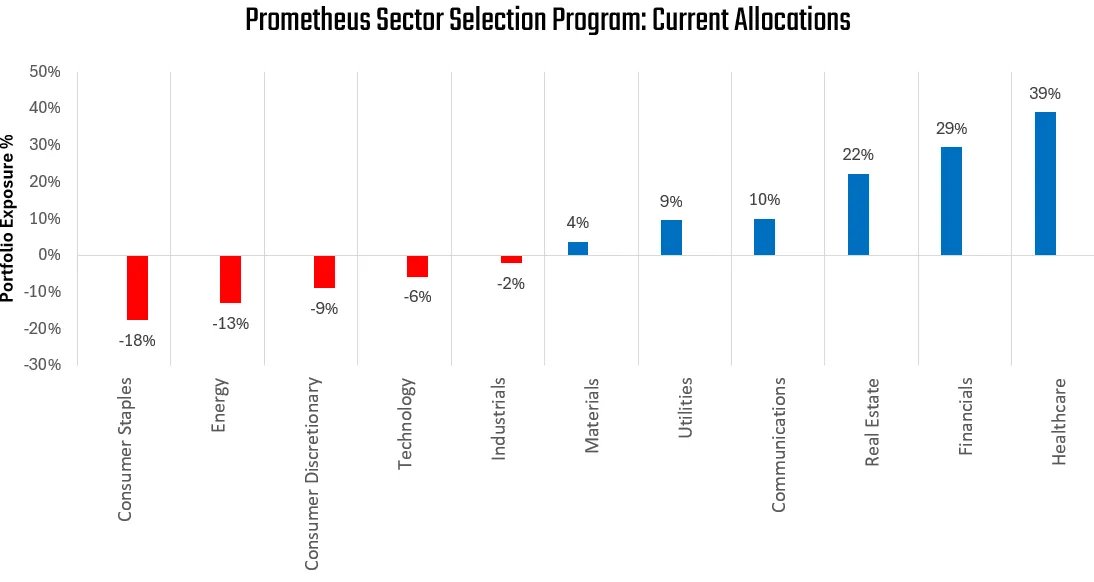
1/ The Momentum Strategy: Ride the Strongest Trends
This strategy uses our Q-Score Momentum Model to select sector ETFs showing the strongest upward momentum. It’s built to capture short-term market trends with a systematic, rules-based approach.
Debunking Hyperliquid FUD (Part 1: HLP, liquidations, and platform guarantees)
It's sad to see coordinated misinformation campaigns targeting Hyperliquid, which have led to widespread misunderstanding of what we are all working so hard to build.
In response, this series of posts provides detailed, factual explanations of how Hyperliquid works. As a community, we must actively fight FUD by spreading the truth. The tone with which we do this also matters: the best way to grow as a protocol and ultimately house all finance is to remain humble and welcome more users into the ecosystem.
--
The first post focuses on HLP and liquidations on Hyperliquid.
High level summary
The FUD is that the Hyperliquid protocol is subject to large losses stemming from manipulation. On the contrary, Hyperliquid's margining design mathematically guarantees platform solvency. Note that HLP’s losses are isolated to the vault itself, and Hyperliquid does not depend on HLP’s operation to exist. This was true even before the JELLY incident. After the JELLY incident, there is an additional change to protect HLP from losses during backstop liquidations. The fundamental changes are to HLP, not the platform itself.
HLP background
HLP is a permissionless protocol vault pioneered by Hyperliquid. HLP does not collect fees from depositors, and historically has returned 60M USDC in pnl to its depositors. On CEXs, this profit typically goes to the internal market making desks instead of users.
HLP plays two roles: market making and backstop liquidations. In terms of market making, HLP runs a passive strategy that accounts for less than 2% of Hyperliquid's total volume. The vast majority of volume on Hyperliquid is between two non-HLP users.
Liquidations
On Hyperliquid, liquidations are first sent to the book as a market order. This allows any user to participate in providing liquidity to liquidations, which is profitable flow on average. On other exchanges, this flow is internalized by the exchange as a revenue source.
HLP only performs backstop liquidations, which involves taking over positions that are unable to be market liquidated. When account values go negative, the last resort for platform solvency is auto-deleveraging (ADL). ADL closes underwater positions against the most profitable and highly leveraged positions on the other side, ensuring the protocol's solvency. ADL is extremely rare but importantly targets the attacker's position on both sides during manipulation attempts as described below.
JELLY incident
An attacker recently attempted to exploit HLP by opening a large long and short against themself. Open interest caps allowed a position worth 4M USDC at the time of trade, but the logical issue was that HLP collateralized the liquidation with its full balance. It is false that the platform itself had solvency risks, but HLP was indeed overexposed to the manipulation.
Changes made
Now the liquidator component vault of HLP has capped collateral, limiting its potential loss by backstop liquidations. A historical analysis was conducted based on this new system. Apart from the JELLY incident, this change would not have caused additional ADLs in the past, even during extreme volatility. However, it would have minimized HLP’s losses during the JELLY incident to low six figures, which is far less than the attacker spent on market manipulation. In particular, ADL would have closed the attacker’s momentarily profitable long position, leaving other JELLY positions untouched.
Validators now actively discuss delistings in an open governance forum on Discord. Several interesting dashboards have been created by users and validators: https://t.co/szhzxLnfr5, https://t.co/nvOxx9UfEV.
Market cap of the underlying spot assets will likely be an important input into delisting considerations. While delistings are important to ensure that users on the platform do not suffer from potential price manipulation, they are not required for platform solvency.
New state of margining system and HLP
Hyperliquid still functions as before, handling under-collateralized positions in the order of 1) market liquidations 2) backstop liquidations 3) ADL. Backstop liquidations on HLP now have additional protections to cap the total losses, making mark price manipulation attacks more expensive than the limited available gain from HLP. HLP's role continues to shrink as Hyperliquid grows, and at this point is nonessential to the protocol's operation. HLP still exists as a source of protocol yield through backstop liquidations and providing consistent background liquidity.
How Are You Positioned In Equities?
I will try to cover a lot of ground here: the macro view, how we're thinking about portfolio risk, beta management, and alpha generation.
1/23
A fully transparent look at how we're managing equity risk for Alpha & Beta 🧵
Prometheus Asset Allocation has been unscathed by *expected* tariffs.
Now we’re looking to navigate *implemented* tariffs successfully.
Video update for the Asset Allocation program goes out tomorrow.
https://t.co/dF6D2qszmK
Our average allocation across retail portfolios to Treasuries/Cash was 50% going into this event, recognising the significant uncertainty baked into markets.
Plan for the worst outcome, and all your surprises shall be pleasant ones.
https://t.co/dF6D2qszmK
Most FX guides I've read on here are either too basic or too academic.
I have just dropped one I wish someone gave me years ago.
30 minutes or so to read.
If you trade FX, read it. If you don't, maybe you should.
https://t.co/zf1pOJlXXg
1/ Want to Understand Where Prices Are Headed? Look at the Futures Price Curve 📉📈
In futures trading—especially with commodities like Crude Oil—the price curve offers key insight into market sentiment, volatility, and strategic positioning.
Let’s break it down 🧵👇
"When a society loses its moral compass, it collapses from within." – G.K. Chesterton
A Thread Exposing the Decline of the West
1. The Celebration of Obesity
1/ Friday the $SPX closed with more Puts coming in. In the chart below you see the 25 delta skew. This track the SPX OTM calls and puts.
Since it is the weekend, let's learn more how to read this chart🧵
1/ What Is the Volatility Smile? 📈😐📉
The Volatility Smile is a U-shaped curve that shows how implied volatility (IV) changes across different strike prices within the same expiration.
It reveals market sentiment, tail risk, and trading opportunities—let’s break it down. 🧵👇
🎁 $VULT WL GIVE AWAY 🎁
6 days left until @vultisig will launch the $VULT token at only a $3,000,000 FDV!
The first 24H, only WL holders can buy. Do you want to win a WL spot?
▫️ Follow @ThorTrades8 & @vultisig
▫️ RT + Like
Winners will be selected in 48H.
FYI Investors have invested at a 70M FDV! 🤯