Super excited to share that my daughters (high school seniors) published this cookbook for teens (and adults!). Kudos to their mom on motivating them that cooking is a life skill. Please do support them by buying a copy (great gift!) & leaving a review
https://t.co/adwV5IFUED
Absolutely brutal day for AI fantasies:
Nvidia $NVDA: down 6.2%
Broadcom $AVGO: down 7.92%
Coreweave $CRWV: down 7.07%
Nebius $NBIS: down 12.27%
Oracle $ORCL: down 9.59%
Worst of all?
OpenAI is rumored to be looking for government to invest, a huge sign of weakness.
Less than 24 hours after the S&P said no to fast-tracking, things are looking very different.
Spencer Pratt got 0 out of 24,000 votes in a late night LA ballot drop.
0/24,000
A guy getting around 30% support got 0 out of 24,000.
Astronomically small probability of happening.
Impossible.
California no longer even hides it.
Doors need to be kicked in.
Satya thinks Anthropic and OAI will build their own clouds long-term and therefore they couldn't keep allocating compute to OAI vs. their own products. $MSFT
"let’s face it, Anthropic over time or OpenAI over time will build their own, it makes sense."
X
This is a crime. This is deliberately exposing the general public to the most overvalued company in the history of the stock market in order to prop up an IPO that jailbreaks the entire index/pension/retirement fund system.
This is selling suicide pills at the drugstore.
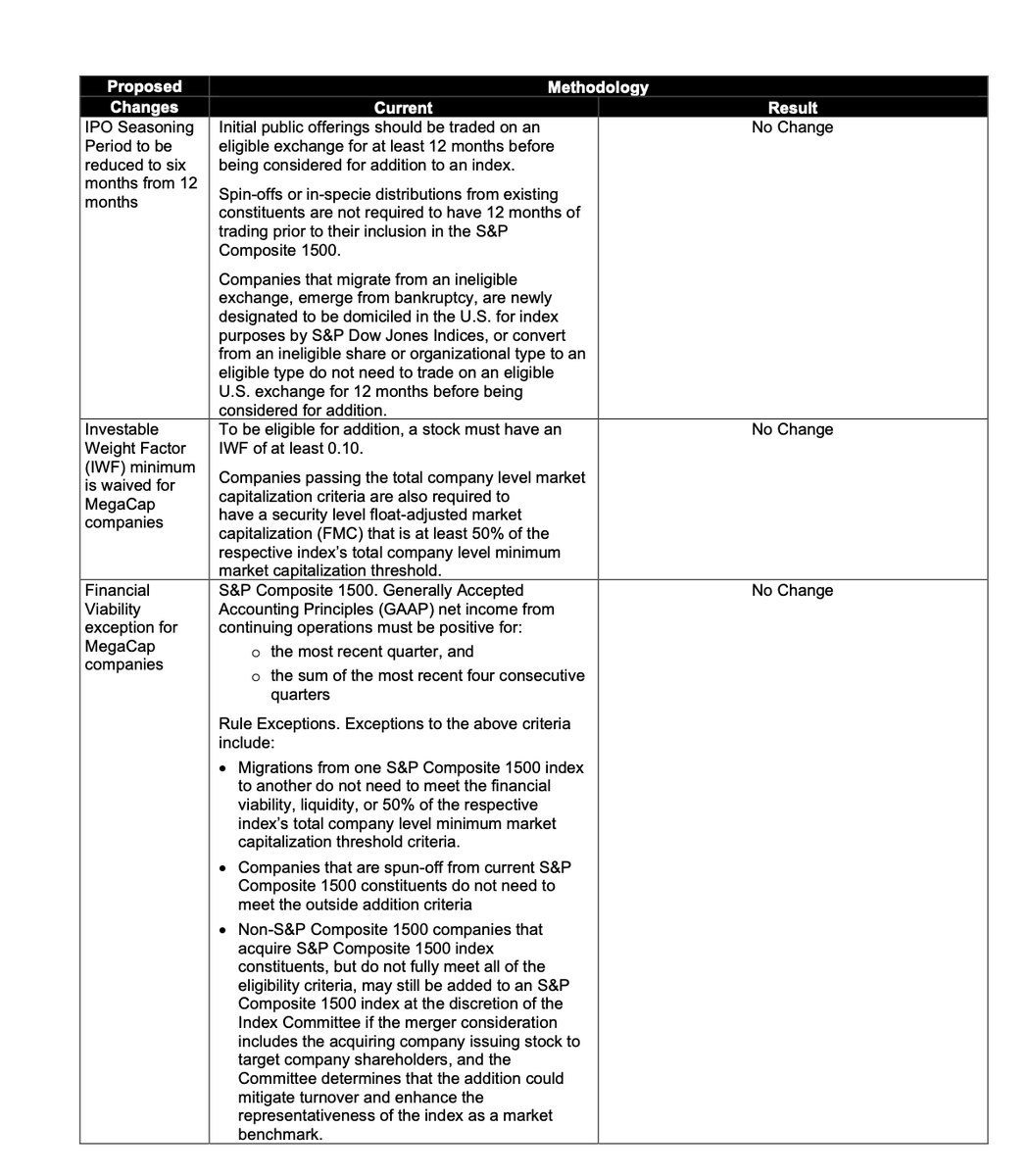
Wow, the S&P Dow Jones Indices has just officially announced that they will NOT be changing their inclusion rules to make it easier for “MegaCap” companies (such as @SpaceX) to be fast-tracked into the S&P 500.
Their reasoning:
"S&P DJI determined that exceptions to the financial viability, seasoning, and IWF requirements should not be granted solely based on market capitalization. The decision not to adopt the proposed exceptions preserves core index principles by maintaining consistent application of these key requirements. Although there may be trade-offs between strict adherence to these eligibility requirements and broad representativeness, the current methodology provides substantial market coverage and sector balance. As a result, the indices can continue to meet their stated objectives while preserving their role as representative and investable benchmarks for the U.S. equity market.
No changes will be made to the eligibility criteria including financial viability screens, seasoning period, or minimum IWF, for the S&P 500, S&P MidCap 400, or S&P SmallCap 600 as a result of the S&P Dow Jones Indices consultation on the treatment of MegaCap companies. Accordingly, there will be no changes to existing methodology for this index family."
This means that the earliest @SpaceX could be eligible to be added to the S&P 500 would now be June 2027.
The requirements that will now remain in place are:
• No changes to S&P 500 eligibility rules for mega-cap companies.
• Mega-cap companies will still need to wait 12 months after their IPO before being considered for S&P 500 inclusion.
• S&P will not waive profitability requirements for mega-cap companies. The company must have positive GAAP net income in the most recent quarter, and the sum of the most recent four consecutive quarters.
• S&P will not waive minimum public float requirements for mega-cap companies. At least 10% of a company's shares must be publicly tradable ("free float").
The S&P rejected proposals that would have:
• Reduced the IPO seasoning period from 12 months to 6 months
• Waived profitability requirements
• Waived minimum public float requirements
DeepSeek is becoming more popular among US enterprises as companies look for cheaper alternatives to Anthropic and OpenAI
“DeepSeek takes top spot on 'trending' list as companies look for alternatives to OpenAI and Anthropic, spending tracker's report says Chinese artificial intelligence start-up DeepSeek took the top spot on a major US business spending index in June, surging as more companies swap out expensive American options like OpenAI and Anthropic in favour of more affordable alternatives.”
Nothing to see here
Introducing model routing to Factory.
Factory Router picks the right model for every task, automatically.
Maintain frontier performance while cutting costs by 25%.
Harvey just published a study showing a hybrid setup, open source GLM 5.1 as primary worker, routing to Opus 4.7 only when needed beats pure Opus 4.7 on quality and costs less.
This is the multi-model routing thesis proved in production on one of the hardest benchmarks in enterprise AI.
The insight isn’t that open source beat frontier. It’s that smart routing beat brute force. Using the most expensive model for every task is not a quality strategy. It’s a laziness tax. The teams building routing layers that send each task to the right model at the right cost are now demonstrably ahead on both dimensions simultaneously.
Inference optimization just became a first-class competitive advantage. Legal proved it first because the stakes forced the discipline.
We partnered with @FireworksAI_HQ to train open-source models for legal. Here's what we found:
1) Hybrid legal agents can beat frontier models on quality and cost by routing selectively to a frontier advisor.
We tested a hybrid setup where GLM 5.1 served as the primary worker, routing tasks to Opus 4.7 as an advisor when needed.
GLM invoked Opus sparingly, just 0.83 times per task on average.
The hybrid setup beat Opus on both quality and cost: 18% all-pass vs 14%, at $368 vs $954 across the same 100 tasks.
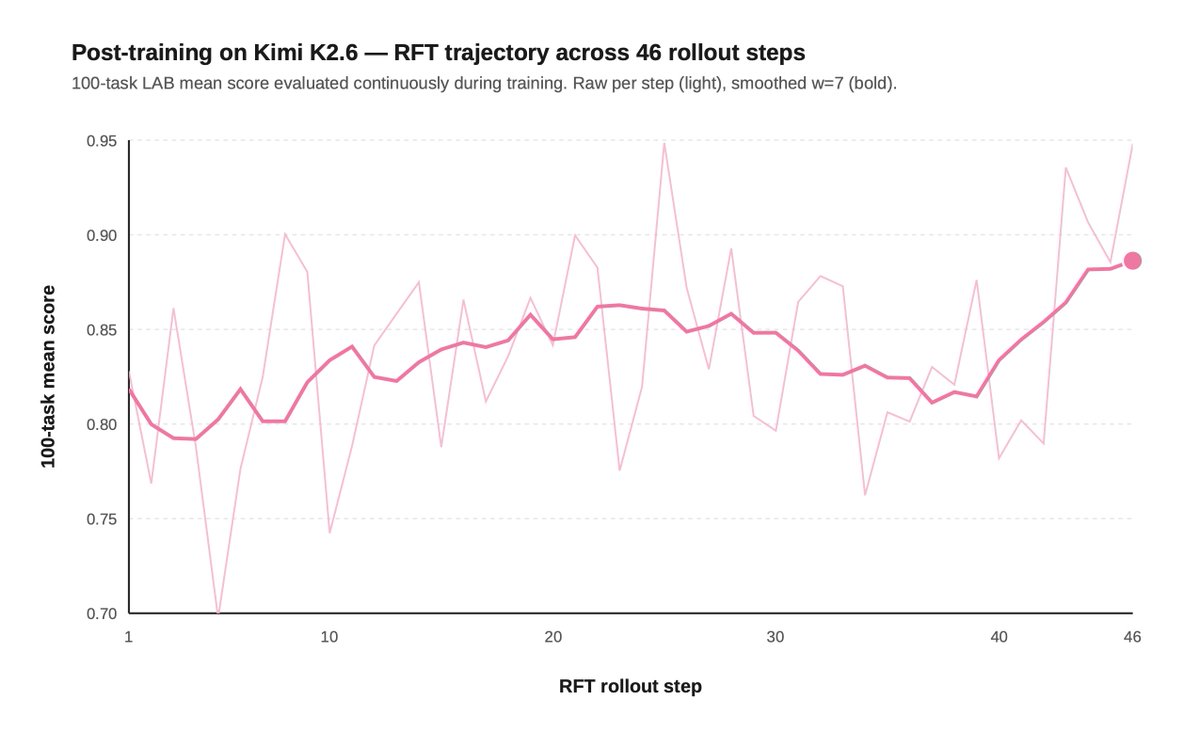
2) Post-training can push open models to frontier-level legal performance.
On a 100-task slice of our Legal Agent Benchmark (LAB), SFT moved Kimi 2.6's all-pass rate from 11% to 15%, beating Opus' 14%.
But the cost gap was even more striking: $84 vs $954 across the same 100 tasks, or ~11x cheaper.
We're excited to continue working with @FireworksAI_HQ on the next generation of open-source legal agents.
"Failing grades soar as professors see greater AI usage, dwindling math skills in UC Berkeley computer science classes." (Link to news article in comment).
AI can make you smarter faster but AI can also make you dumber faster.
I would not encourage AI adoption too early by school or college students, until they learn the fundamentals right.
Pulled the trigger today and switched 100% of Lindy traffic to DeepSeek v4, churning from Anthropic models.
Saves us millions of $ and we're actually seeing an *increase* in performance on many core use cases. Transformative for the business.
Students are failing UC Berkeley CS classes at an alarming rate. More than 35% of students failed CS 10, a course described as “a gentle but thorough introduction to computer science.” In the past few semesters, less than 10% of students failed the class.
Pauling's recommendation was straightforward.
Vitamin C: 3,000 to 5,000 mg per day. Some patients took more. Pauling himself took 18,000 mg per day. He lived to 93.
L-Lysine: 3,000 to 5,000 mg per day. Lysine competes with Lp(a) for binding sites on artery walls. At sufficient doses, the lysine binds to Lp(a) in the bloodstream before it can attach to damaged collagen. It can even pull existing Lp(a) deposits loose.
L-Proline: an additional amino acid that works with lysine to block Lp(a) binding from a different angle.
The logic is simple. Vitamin C strengthens the artery wall so it does not crack. Lysine and proline prevent Lp(a) from patching cracks that already exist. Together, they address both the cause and the consequence.
This is not a drug. These are nutrients your body already uses. Available at any health food store for a few dollars.
Pauling and his colleague Matthias Rath discovered that plaque deposits in human arteries are made up of a specific form of cholesterol called lipoprotein(a). Lp(a). Not ordinary LDL.
Here is what they proposed.
When vitamin C is chronically low, collagen production drops. Collagen is the structural protein that holds your artery walls together. Without enough vitamin C, the arterial walls weaken and develop micro-cracks.
Your body is not stupid. It senses the damage and sends Lp(a) to patch the cracks. Like a bandage on a wound. Like plaster on a broken wall.
Over time, more cracks form. More Lp(a) is deposited. The patches build up. That buildup is what we call atherosclerotic plaque.
The plaques are not the disease. They are the repair attempt. The disease is chronic vitamin C deficiency. Subclinical scurvy.
Pauling and Rath tested this on guinea pigs. They deprived them of vitamin C. The guinea pigs developed rapid atherosclerosis filled with Lp(a). When they restored vitamin C, negligible Lp(a) was found in the arteries.
The jobs data coming out continues to suggest the opposite of what a lot of people had thought would happen.
Just take engineering, as the prime example of the area with greatest AI impact (and perceived risk). Most companies now have far more software projects than ever before because of AI, and effectively only engineers are going to be the ones doing that work.
You can get by for a while by being non-technical building software, but eventually someone has to understand what the thing is that got built, has to maintain it, has to fix security issues that come up, upgrade the systems beneath it, and so on. That’s all jobs.
Now apply that to a number of other job functions. AI is going to cause companies to hire more in sales because agents can let them process more leads and do more customer research. AI will cause an explosion of new marketing roles because of how much more efficient it is to launch campaigns and target. The list goes on.
AI is going to have the opposite effect that lots of people thought on jobs.
This has all the familiar hallmarks of the peak of an investment bubble
Stage 1: An influx of investor capital (i.e. dumb VCs with money burning a hole in their pocket) gives rise to fundamentally unprofitable business models (AI Labs)
Stage 2: This sends false price signals throughout the economy (i.e. selling compute at negative margins), causing massive misallocation of capital (businesses and employee workflows built around artificially cheap compute) .
Stage 3 (you are here): The false price signals inevitably clash with economic reality. In a race to show less horrific cash burn ahead of their IPOs, OpenAI and Anthropic have switched to consumption-based pricing models, and now we're suddenly finding out that companies like Uber and WalMart are cutting back on consumption
Stage 4 (coming to a stonk near you): Lots of paper wealth gets vaporized
🚨 Sam Altman warns OpenAi and Anthropic are experiencing severe pullback on Ai spending as companies put significant restraints on spending to restrict costs. The company warns investors it’s the first time this has happened in Ai and something we never expected. The buildout costs aren’t sustainable to allow profitability to hyperscalers or end users.
$soxx $dram