Sumner AI: Your beacon in the AI world. First-hand announcements, captivating AI news, and hot topics. Fostering understanding of AI's potential. Got questions?
Learning how to use AI is your golden ticket to future success.
For the next 30 days I will be posting one short prompt tip per day.
These tips are designed to help you build powerful prompt writing skills.
One day at a time
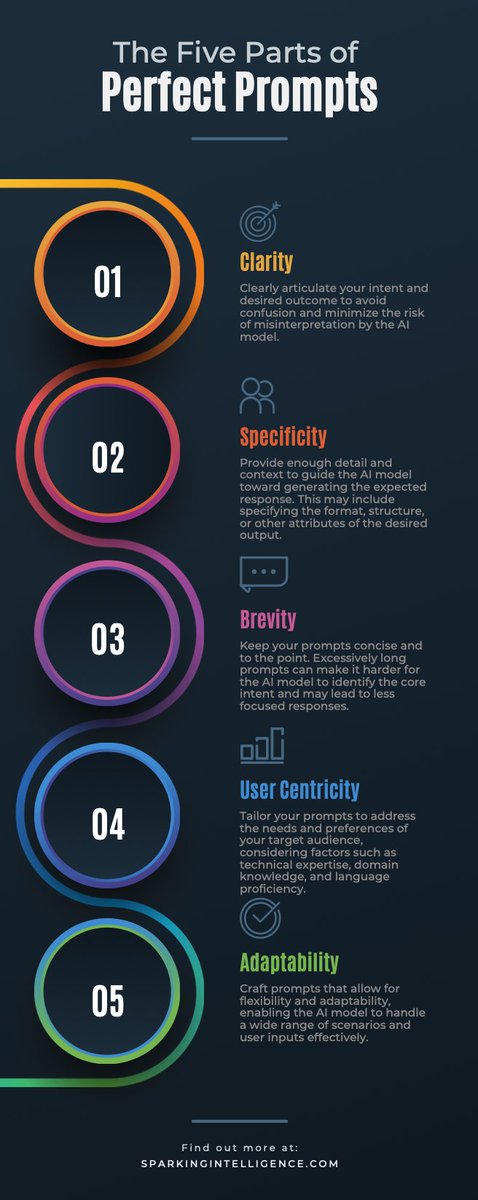
Here's your first tip of the day:
Every good prompt should be:
- Clear
- Concise
- Specific
- Adaptable
- Context-rich
Adding Memory is important to help Chains and Agents remember previous interactions. Below are a few memory types you can use for your @langchain apps.
1) ConversationBufferMemory: Keeps a list of the interactions and can extract the messages in a variable.
OK, I see a ton of LLMs being developed but none have really gotten adoption outside of small group of AI developers.
When will that change?
@BrianRoemmele we need a guide to help us figure out the pros and cons of each model. Have you seen anything like that?
Code Interpreter will be available to all ChatGPT Plus users over the next week.
It lets ChatGPT run code, optionally with access to files you've uploaded. You can ask ChatGPT to analyze data, create charts, edit files, perform math, etc.
Plus users can opt in via settings.
Zapier 🤝 FlowiseAI
Excited to be part of @zapier AI apps family! Connect customized LLM flow with over 5k+ app integrations 🎉
To get you started, here's 4 zap templates you can use
🧵
Surprisingly, I am finding more difficulty working with the front-end stuff than with the actual AI generation stuff.
Tweaking the UI still takes me a couple of hours, while creating full-on LLM chains takes me no more than a couple of minutes.
And I think there are two reasons for this:
1. Unlike JS, I already knew how to code in Python.
2. @langchain makes everything so simple and easy that it's not even funny.
For example, take a look at the first feature I am working on.
The entire backend code was done in 5 minutes or less.
Here's how I did it step by step.
As you'll see, the code is indeed very simple, so feel free to bookmark this and it revisit later when you start building your own AI apps.
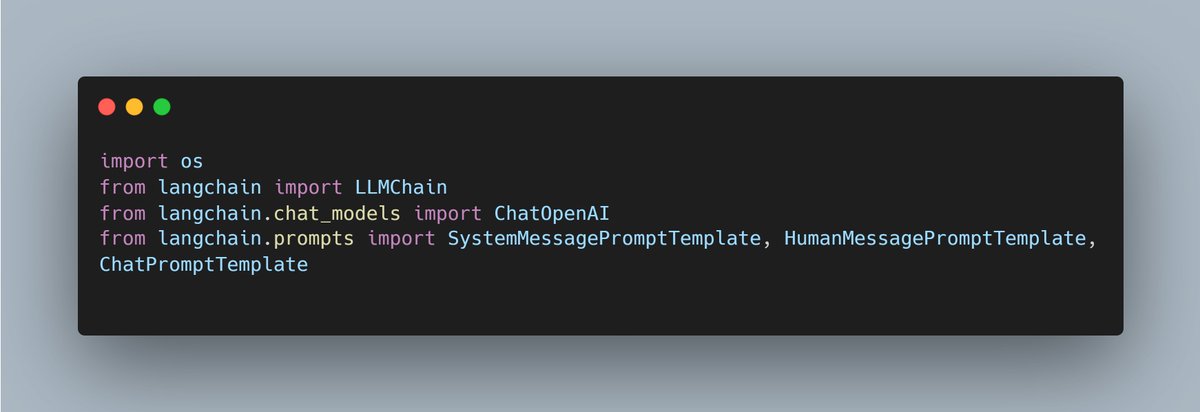
1. Imports
First things first, let's start with the basic imports.
Since we will be using the chat model, I will use the templates that include the system message and the human message.
The new models from Open AI now have increased the steerability of the system message, and so I want to make sure that I take advantage of this.
But you could simply import the standard PromptTemplate if you wanted to use fewer lines of code.
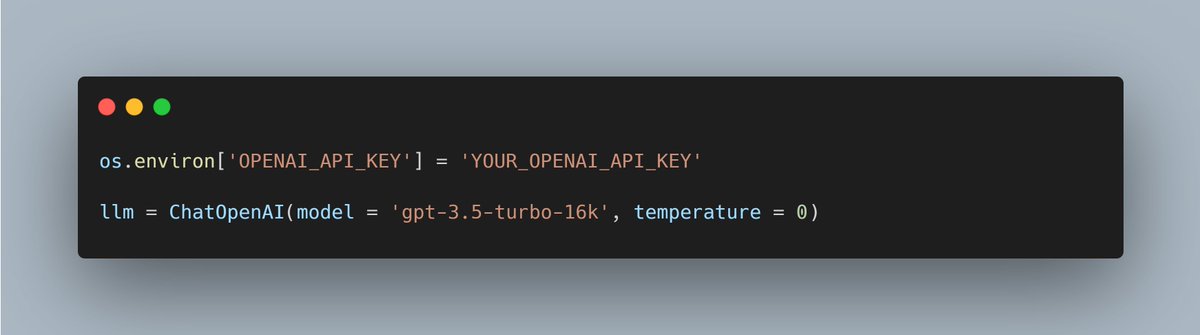
2. LLM
Since we will be using ChatGPT 3.5 model with a 16k context window, let's make sure to create it.
The good thing with Langchain is that you can do this with only two lines of code.
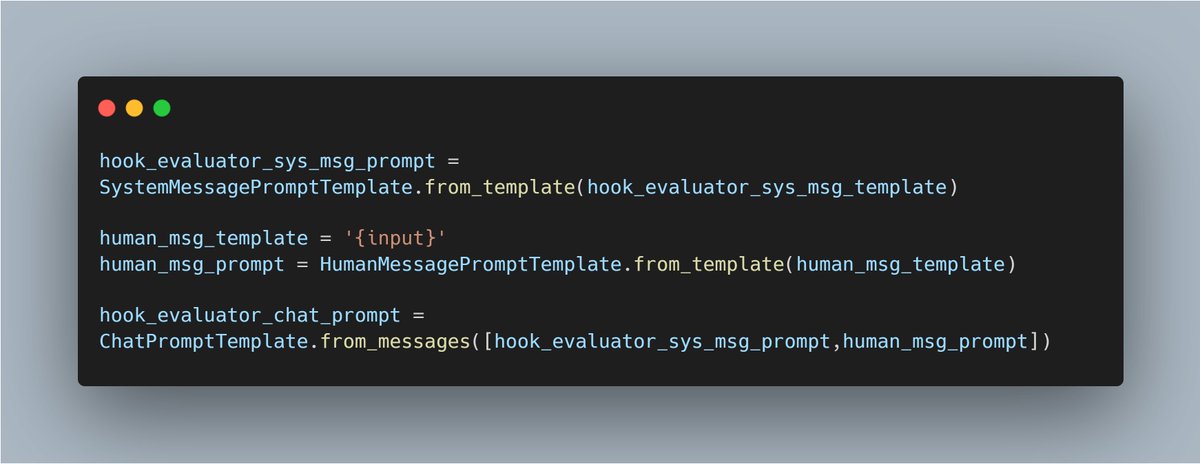
3. Prompt pt. I
Now let's create a variable to store the prompt we have created for our feature.
This prompt will be called as a system message anytime we use the feature in the app front-end.
This particular prompt is quite long and detailed, as you can probably tell already. But this is only because we are trying to do something very specific.
Simpler tasks will require simpler prompts, so adjust yours accordingly.
PS: This is the exact same prompt as my last breakdown by the way.
4. Prompt pt. II
Next up, let's finish the entire prompt.
We do so by creating the human msg prompt (which will be simply a basic one) and stringing together the system message and the human message templates to create the complete chat prompt.
5. Create the chain. (code in the comments due to twitter image limit)
And now that all of the hard work infrastructure work is already handled, let's create the LLM Chain.
Simply follow the code above to create the LLM chain and call it with whatever text you want to run through this specific prompt.
Now, my next step is to connect this backend code seamlessly with the UI.
The FastAPI connection is already up with this particular endpoint. So hopefully with can hit the
Stay tuned for the next updates.
Noticed something fascinating(ly digusting) about AI-generated summaries of essays: they don't just make them shorter, but also make the ideas more conventional. Which makes sense given the way the AIs are trained.
Document splitting is common for vector storage / retrieval, but useful context can be lost. @langchain has 3 new "context-aware" text splitters that keep metadata about where each split came from. Works for code (py, js) c/o @cristobal_dev, PDFs c/o @CorranMac, and Markdown ..
When you split documents, you lose context
But don't lose too much!
Awesome work by @RLanceMartin, @cristobal_dev, @CorranMac to minimize context loss by adding tags to metadata!
We released Open Orca, the project and dataset that brings GPT-4 reasoning to open models yesterday.
https://t.co/M9tsZPfk08
This dataset aims to reproduce the stunning results from Microsoft Research's Orca paper showing a small model besting ChatGPT in hard reasoning.
🧵 1..
AI is a game-changer for marketing.
I just made this promo video using AI in a few seconds.
It's super easy.
Here's how to easily make attention-grabbing videos for Free: 👇
All you have to do to recall prior context in ChatGPT is paste the share link from your original chat into a browsing enabled new chat and ask it to read it.
Is this a context hack I just randomly found? Does everyone know about this already?
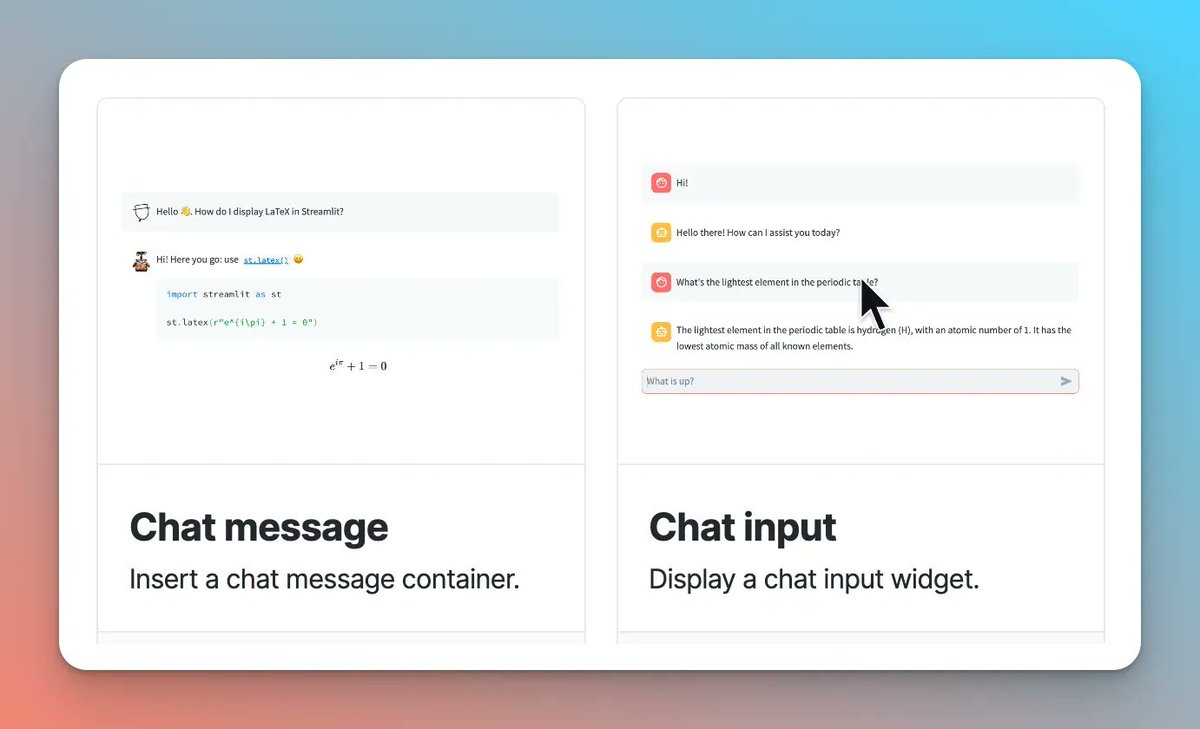
🚨 Just released: st. chat_message and st. chat_input—two new chat elements that let you build conversational apps directly in Streamlit. 💬
📖 Docs: https://t.co/Vq5ytw0zuC
📝 How to use them: https://t.co/D0RKz8yVnP
🧵 (1/4)
🪄Under 40 lines of @streamlit and @langchain code to get an interactive, inspectable, agent-powered LLM app up and running 🪄
Chat with search demo: https://t.co/xuqlpUEQiI
Demo code: https://t.co/wf0FdLeFzV
Streamlit integration docs: https://t.co/eeezB1AyL8