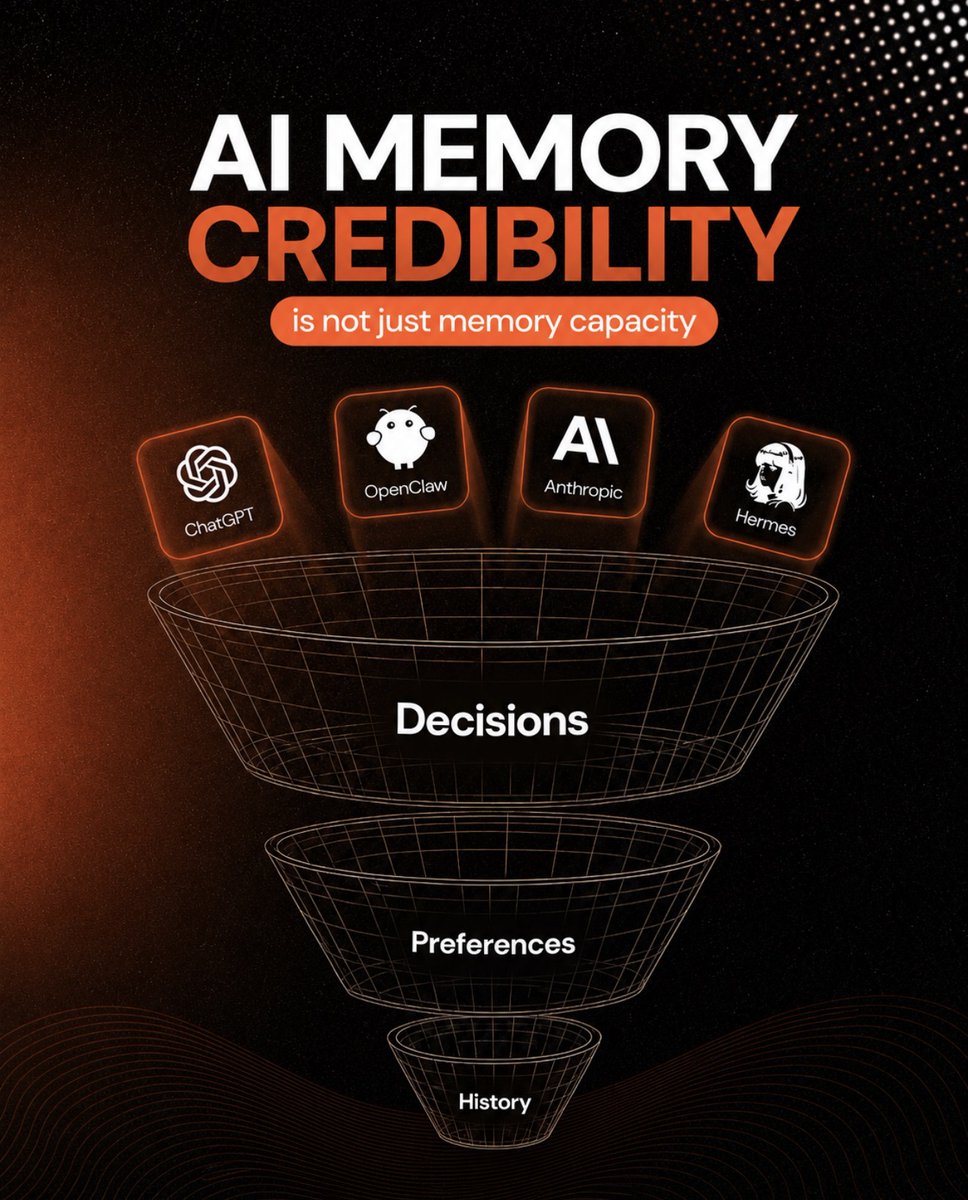
We just open-sourced AtomicMemory.
The AI memory industry has a black-box problem.
AtomicMemory is a configurable open-source SDK + self-hosted Core engine for memory your AI can inspect, correct, swap, and run on your own infrastructure.
Apache 2.0. HTTP-first. Docker quickstart.
https://t.co/pSn52AL7zQ
An enterprise agent should remember where the last conversation ended. Continuity makes every interaction more dependable.
Power your agents with Atomic Memory Cloud.
https://t.co/R8rRzhogHV
Let your system run autonomously.
Give your agents memory they can use across sessions, and your team a way to see what was stored, retrieved, corrected, and why.
Configurable memory for AI agents, now in Public Beta.
https://t.co/mQaXsTWcDl
llm-wiki v1.0: From Compiler to Programmable Wiki
Renditions of @karpathy's idea is mostly compiled sources into a knowledge base. v1.0 changes the question from "what does it compile" to "what do you want to build?"
Introducing llm-wiki-compiler CLP 🧠
https://t.co/ByBzRaskvQ
Get early access for agent memory that survives the session.
SDK, CLI and Python install paths are ready for builders who want persistent memory across real agent workflows.
Now live for teams building with Claude Code, Cursor, Codex and MCP ⬇️ https://t.co/oapAmzLNw5
Shout out to our Speakers joining on Narrative Day🙌🏻🔥
Goldchau (@Goldchau_eth ), Co-Founder of Decentralised Intelligence (@Didotxyz_ ), building infra for autonomous agents at the intersection of AI and decentralised systems.
Aileen (@Aileentech ), Co-Founder of Atomic Strata (@AtomicStrata ), in exploring semantic memory that helps agents maintain context and auditable workflows.
Jordan, Founder of Bored2AI, building fast AI video tools that let creators turn ideas into stories and worlds without a studio.
Gideon (@CrazGideon ), Core Contributor at CreatorFi (@TheCreatorFi ), building the creator economy layer of Web3.
Darren (@Dmeister00 ), CMO of Tomoland (@tomoland_app ), an AI-powered 3D social sandbox turning "build-and-play" into a self-sustaining digital economy.
🧠Together on the panel: AI Frontier — Convergence, infra, and next-gen agents.
📍BlackBixon KL
📅28th July 2026, 11AM–5PM
⚠️RSVP: https://t.co/v4czWNwDRN
The more agents you run, the more memory matters.
With GPT-5.6 Ultra, one task can now split into parallel agent workstreams that stay active across complex projects. That only works when each agent can share decisions and source evidence while keeping corrections tied to current context.
Agent teams need memory that stays inspectable and revisable as the workflow changes.
Self-improving agent loops need real memory discipline.
Each failed run should teach the system something useful for the next attempt, while corrections and review notes keep the workflow improving without flooding the agent’s context.
If your agent cannot remember cleanly, can it really improve?
Agent memory without grounding just becomes context pollution.
Most memory stacks are append-only. No provenance or way to correct false beliefs, just more text crammed into your context window. Memory needs source tracking and update semantics so you can track each fact's source and edit what your agent believes and why.
Don't build on a black box.
https://t.co/myfjcxekGy
The teams adopting MCP at scale are discovering that tool access is easy but tool governance is hard.
Opening up every tool in the stack to your agent is a connectivity win but a governance risk. The missing layer is not access, it is audit: knowing which tools an agent reached for, what it remembered from each interaction, and which actions needed approval before execution. MCP is the pipe but you still need the guardrails.
Access and audit are two different problems that get solved at different layers with @AtomicStrata