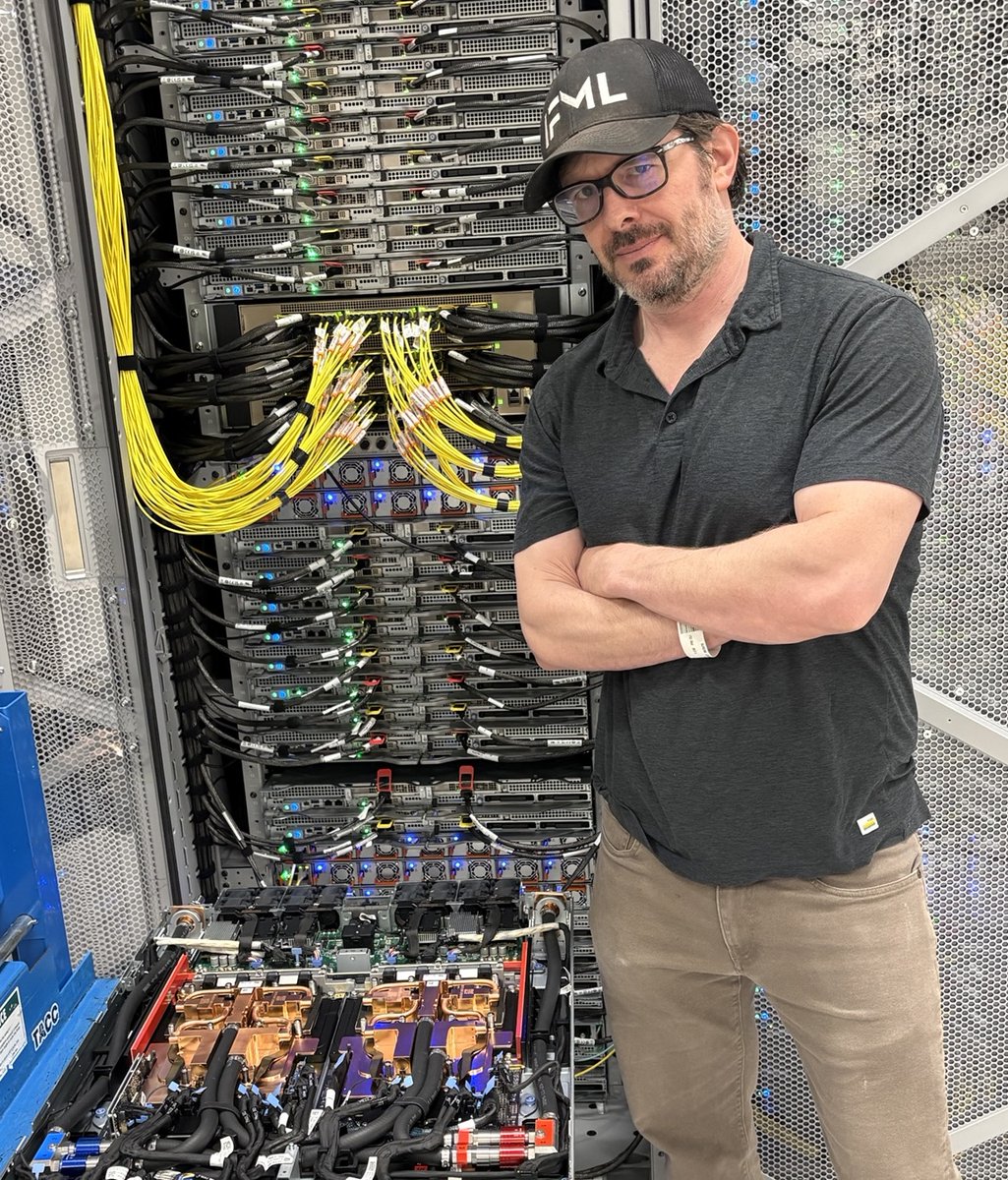
4000 GB200s just arrived in Texas for the Horizon TACC cluster. I'm informed this is the largest academic supercomputer. Very excited to start training some open models with this bad-ass machine.
(photo courtesy of Adam Klivans, director of NSF IFML)
Introducing Gemini 3.8 Flash, another jump in Gemini's agentic + coding capabilities, and our 3rd updated Flash model in only 6 weeks...
This model has been a ton of fun to work with, excited to see what you all think!
Google Research and Google DeepMind researchers just used Teamwork in Antigravity to achieve breakthroughs in theoretical computer science, research mathematics, and systems engineering. Teamwork is a multi-agent framework where agents propose, stress-test, and build solutions autonomously over hours or days. It uses a lot of tokens and is overkill for everyday tasks, but if you're tackling frontier, long-horizon challenges - give it a try!
I'm incredibly excited to lead the new NSF Center for Human and Robot Co-Adaptation!
It is one of three new $30M, 5yr Centers launched under the @NSF STC program, and is led by @UTAustin , with partners @IUBloomington , @MIT , @TuftsUniversity , @UUtah , and @Yale
@ShriramKMurthi@JulesJacobs5@devanbu Not only should anonymity go away, all submitted papers should be publicly available as preprints with authors’ names visible.
We applied AlphaEvolve's autoresearch powers to an ML pipeline tackling one of the most famous problems in CS: time complexity of matrix multiplication (ω). We improved the SOTA! A small step for ω (similar to recent works), but a nice milestone for AI https://t.co/qE2gmjKg6h
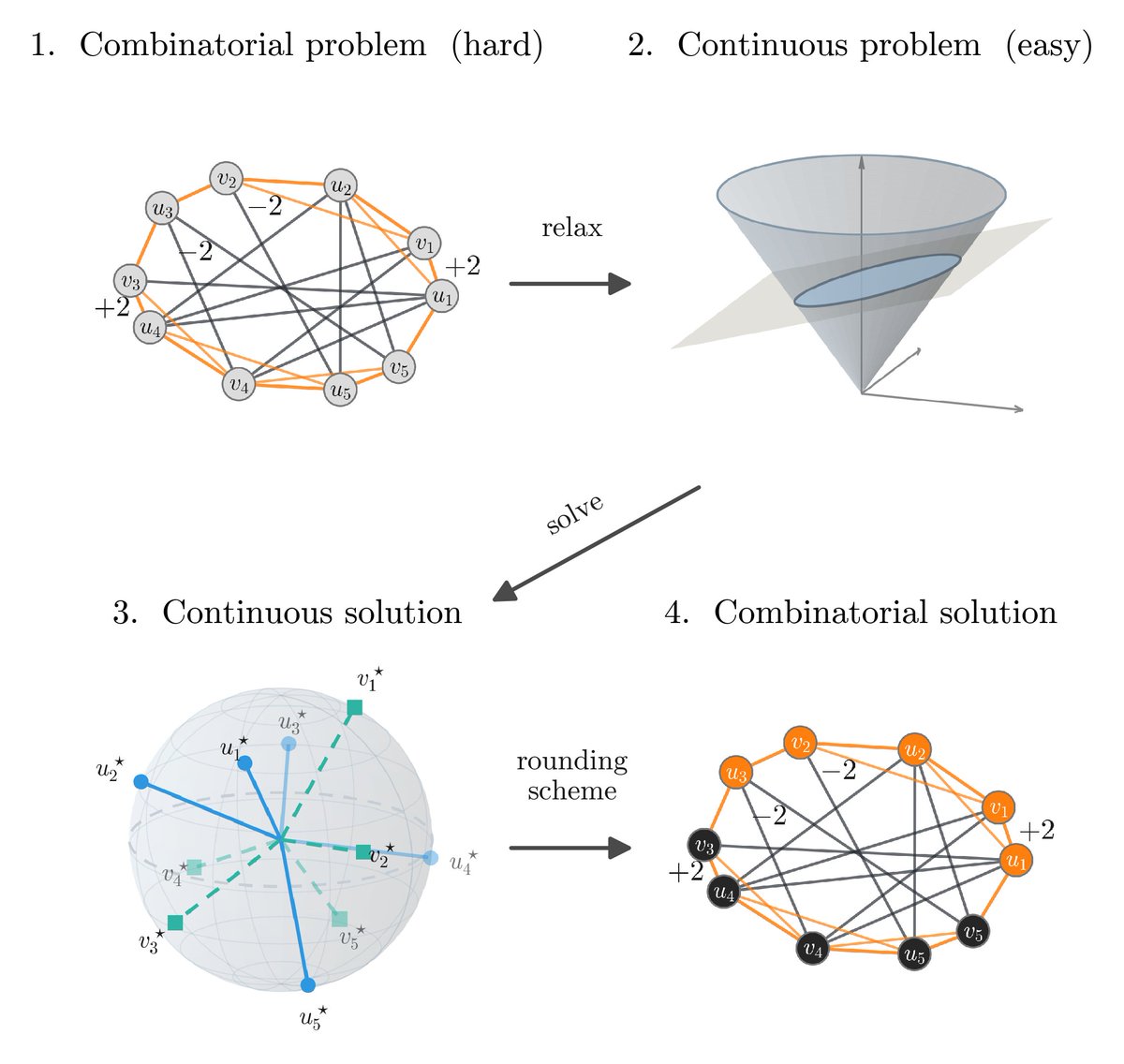
The Grothendieck constant is 1.7...!
We are excited to share this breakthrough on a 70 year-old problem discovered through a year-long human-AI collaboration.
We publish both the math and AI setup because academics should shape AI-assisted research to keep it fundamentally human.
Gemini Robotics 2 is here, with our new suite of models, robots can now reason through every movement to manage tasks that weren’t possible before, like tying delicate knots - and even team up to solve complex workflows. Huge congrats to the robotics team on this great milestone!
Our self-improving agents optimized the full @vLLM_project inference stack, with up to 16% more throughput and interactivity for @deepseek_ai v4 Pro and @Zai_org GLM 5.2 on B200s (no MTP).
Every change was verified and our agents got better and faster at it with each iteration.
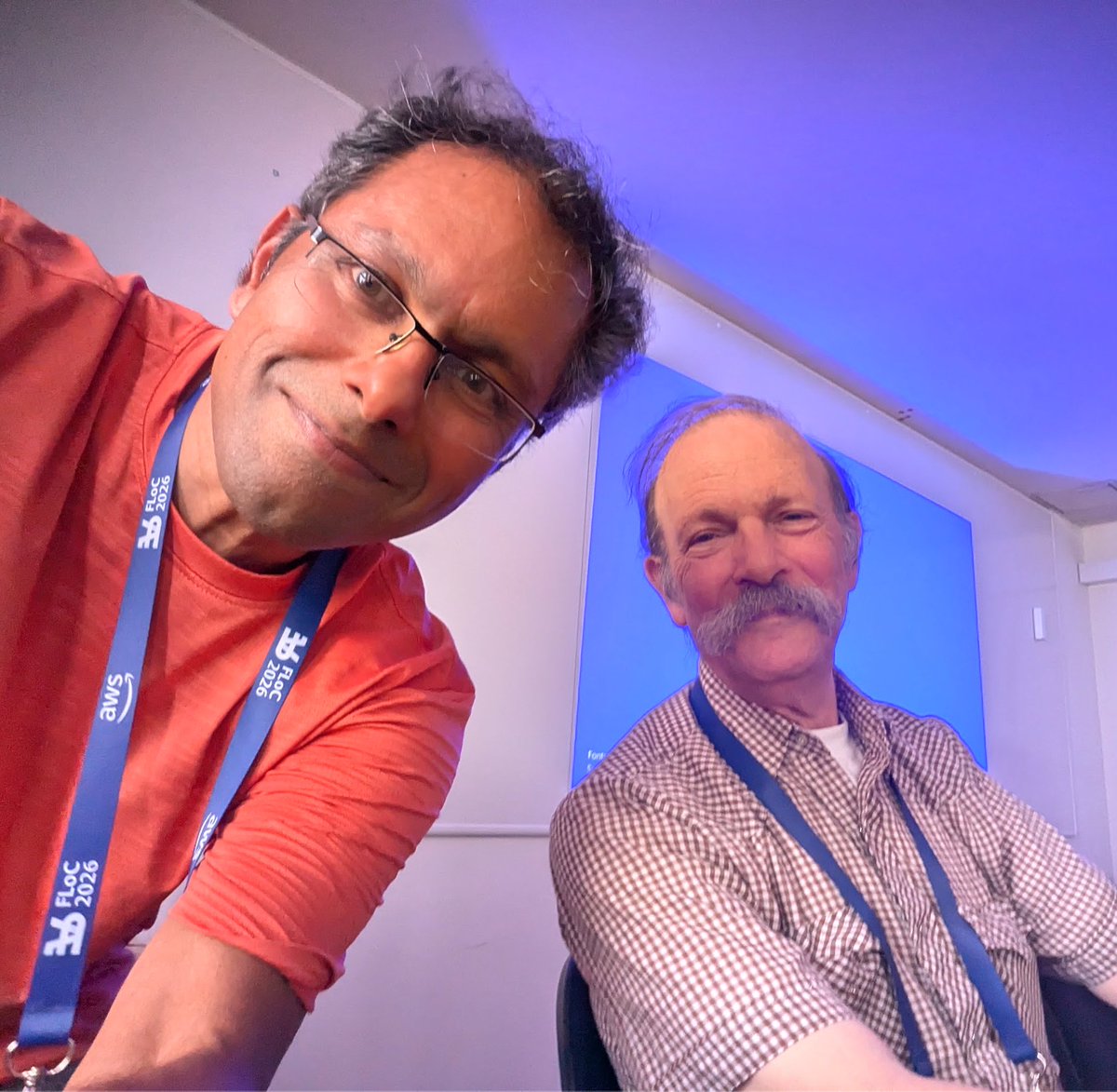
0/ At the AIMCS (AI for Math and CS) workshop at FLoC 2026, @swarat ran a really fun panel on "How should the Formal Methods community respond to AI progress?" He put a lot of thought into very good questions, so here are my answers to them: ↵
A strong and secure open ecosystem is important for the world to benefit from AI. We’ve always supported and contributed heavily to open source and science from Jax to Transformers to AlphaFold to Gemma open models which have now been downloaded 300M+ times. And the standards framework we’ve proposed supports responsible deployment of both open and proprietary models.
Very happy to support this on behalf of Google. We have long benefited from open source, are big contributors to open source and in fact have consistently made open weights models with Gemma available from @GoogleDeepMind@demishassabis . Onwards!
True story: About 10 years ago there was a long article (NYT maybe?) about the end of trucking, estimating that automating truck driving will wipe out something like 1%-2% of the GPD because a surprisingly large number of people work as truckers and they single-handedly support a certain roadside industry including some restaurants.
I remember reading that when it came out then asking my uncle, who sells insurance to trucking companies, how his job will change when self-driving trucks take over. He laughed and said they won't, driving a truck is only part of what truck drivers do. They are responsible for their cargo so they sleep in their trucks and are what keep people from breaking in to steal the cargo. He said self-driving trucks would be a bonanza for thieves. That's not something the long article mentioned at all, it's not something I've heard discussed much at all, yet ten years later, trucks are still driven by humans. Turns out people in an industry understand what a job entails a lot better than people outside the industry.
I know the OP is tongue-in-cheek, but I think the situation with mathematicians is similar and that it's helpful to think through why.
An exceedingly small amount of a mathematician's time is spent disproving old conjectures, the thing AI is doing now that's making headlines. Even if formalization proceeds far enough that AI's basically become theorem-proving oracles (not just useful but unreliable proof assistants, as they are now), theorem-proving is a substantial but far from complete portrait of what mathematicians do. They also ask important questions, sense where interesting theorems are lurking, interpret these theorems, find uses for these theorems, produce new definitions and entire theories to capture and explain why these theorems are true and where they come from.
Even if you grant that AI will eventually excel at these more taste-oriented, and more creative in an open-ended sense, tasks, there's more. Mathematicians collaborate with people outside of math to help them use all this math--which means seeing where it could be used, helping to use it, interpreting the results, and so on. They also launch startups that commercialize some of this math.
Think of something like bitcoin. That was a combination of understanding the human desire for decentralized currency, understanding what properties would be desired in it, understanding what preexisting math would be used and how to use it, putting all these pieces together and communicating it to the public, and afterwards there's also implementing it and commercializing it and extending it. Think how many more inventions like this we'll have with AI assisting at all stages--now ask yourself, will this progress happen more quickly or less quickly if we stop educating and employing human mathematicians?
And this brings up another part of the story. When most people refer to mathematicians, I suspect they mostly have in mind academic mathematicians, meaning university professors. So that means mathematicians are also educators, training the next generation in mathematical thinking. Even if AI can *do* an incredible amount of math, perhaps eventually all of it better than all humans, I don't think there will be no need for mathematical education.
Learning to think mathematically helps train and sharpen our brains in powerful ways, even if you end up in a different career. I don't think it's a coincidence that people like Larry Tribe (one of the most important constitutional law scholars, and Obama's former research mentor) started a PhD in math before switching to law. Or that Robert Zimmer, a math professor, served as president of U Chicago for 15 years. For Christ's sake, even the pope has a degree in math! None of these examples are technically doing math in their careers, yet I'd be willing to bet all are thankful for their math education and found it beneficial in their careers. I suspect we will always need math educators, and guess who is best suited to teach math? People who know math. (Maybe one day all educators are replaced by AI, but that's so distant and speculative I won't bother addressing it.)
Maybe self-driving technology means truck drivers can now drive all day AND night. That means truck drivers are twice as valuable. I think the story with math is similar. Looking back at the long history of math and its incredible role in society, science, technology, the economy, it seems much more likely that we're empowering mathematicians to do more than ever, not eliminating them.
We are rapidly building a world in which the most important thing everyone uses is literally a giant mathematical contraption (ok, I'm with @GaryMarcus that it's not just raw LLMs, there's also the powerful harnesses that are arguably more CS than math, but still, the massive engine to these machines is written in math)--does that really sound like a world where we'll no longer need mathematicians?
From one Noah to another, don't count on it :)
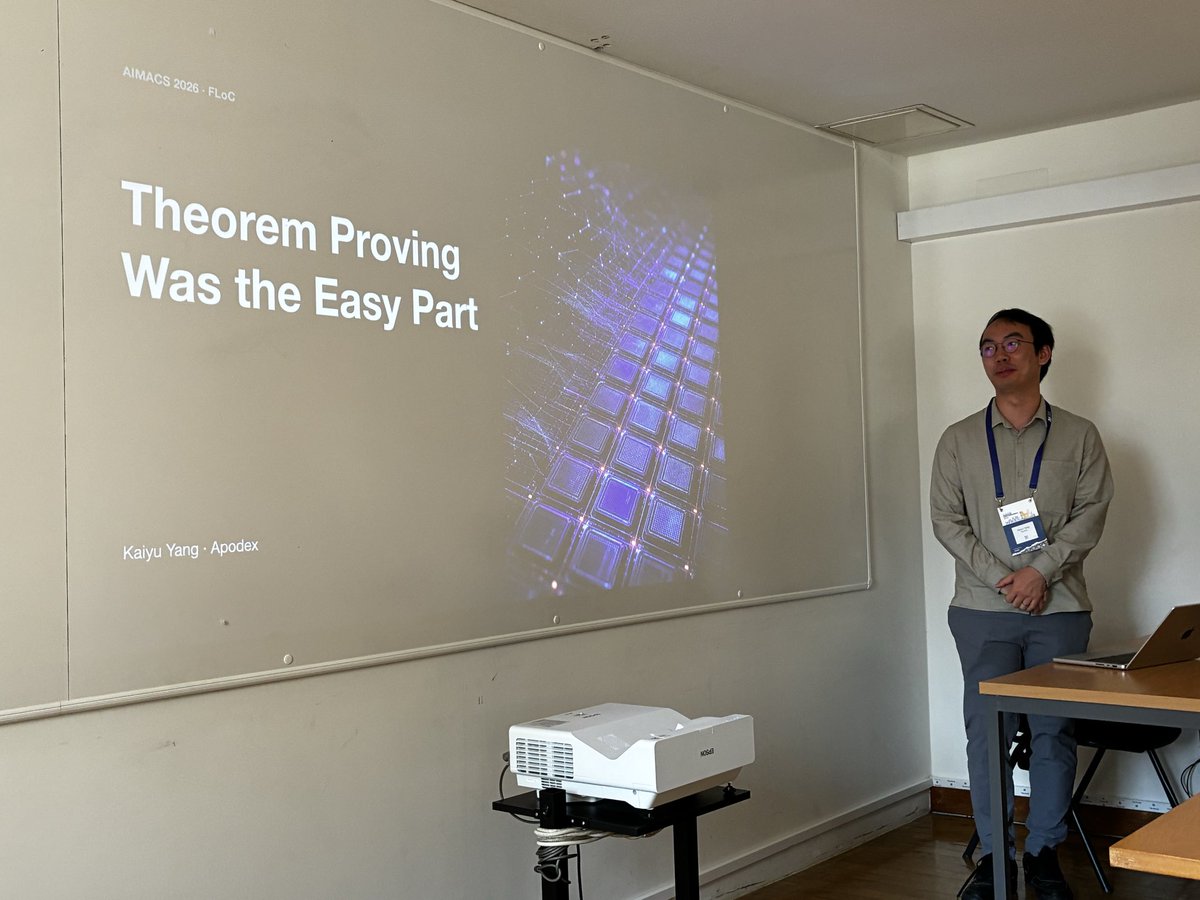
Great #AIMACS26 talk earlier by @lorisdanto on making sure LLMs generate grammatically correct structured artifacts. Now Clark and Sorrachai are giving a tutorial on Lean CSLib.
If you are at #FloC26, come to the workshop on AI for Math and Computer Science (AIMACS) on July 25!
* Tutorial by @KaiyuYang4 on AI-aided theorem-proving
* Tutorial by Clark Barrett and Sorrachai Yingchareonthawornchai on #CSLib, the Lean computer science library
* Talks by @lorisdanto, @gtsoukal, and Moa Johansson
* A panel on how computer scientists should respond to AI progress, with @vardi, @ShriramKMurthi, Pavithra Prabhakar, and Armando Solar-Lezama. I will moderate.
* Many very interesting posters.
https://t.co/lAK5ZDWNlY
https://t.co/y1oKw38l8h