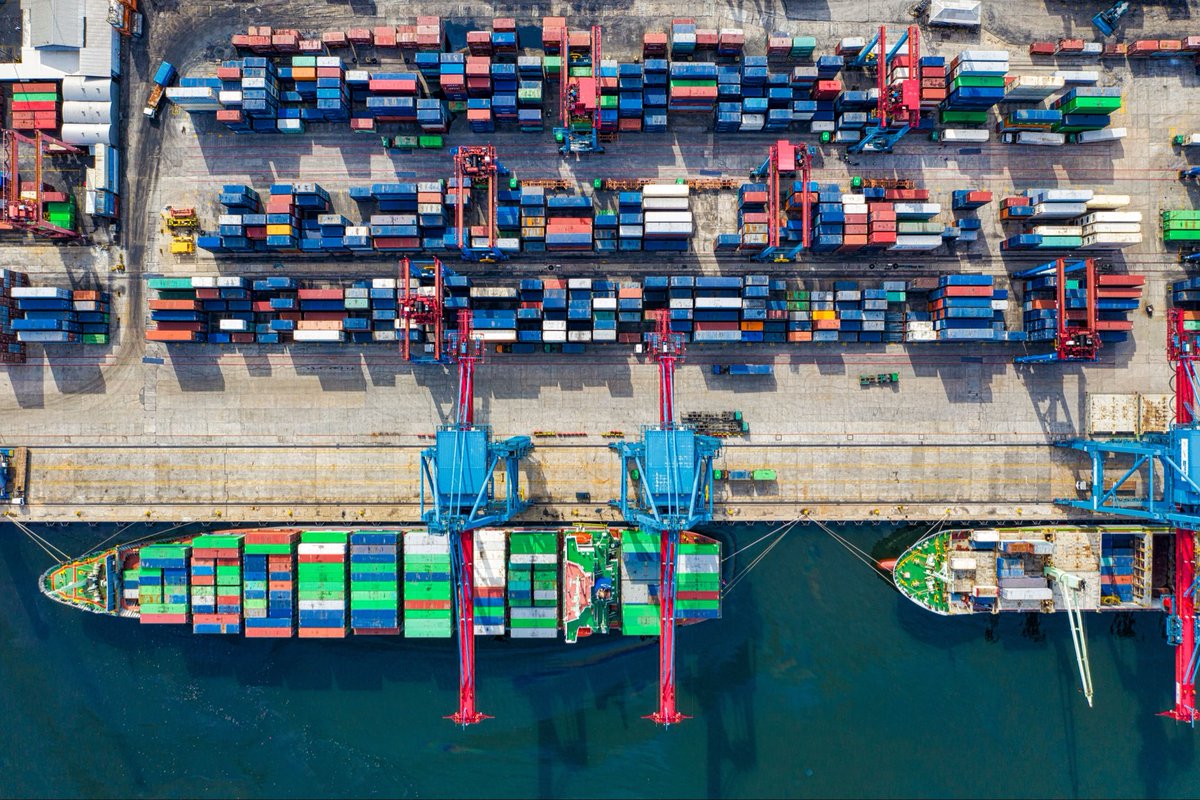
RWA taught crypto to hold what banks produce. Treasuries, funds, credit, equities. Receipts for activity crypto cannot see. What produces them is still open. $125 trillion a year. Nobody in crypto is building on it.
https://t.co/WruO9AyXAQ
@SuperstateInc@ValinorDigital Daily liquidity is the unlock: private credit becomes infrastructure when the asset can circulate without losing its underwriting context.
@FireblocksHQ@citsecurities@The_DTCC Live DTC collateral movement is the milestone: tokenized assets become infrastructure when ownership and transaction state travel together.
@centrifuge@OliverWyman@MorganStanley Collateral mobility is the real market: assets become productive when value and the evidence behind it can move together.
@plumenetwork@strata_markets Card receivables clear onchain because Visa and Mastercard settle to the registered holder; the same tranche structure reaches B2B invoices the day someone builds that settlement record for trade.
@ZenithFdn@The_DTCC DTC-custodied securities in live production on Canton shows tokenization scaling fastest when it starts from the existing custodian of record, with fifty vendors building on top of that record.
@leeky_k_crypt Remortgages are a smart first use case because the asset, the parties and the proof of completion are all known to the banks in advance, and the harder test comes when tokenised deposits settle trade between two companies that have never met.
@Tokenicer A task force with every major bank and several competing ledgers at the same table is exactly how a standard gets written, and the winner will be whichever record format the other ledgers agree to recognise.
@AlphaInsiders@IBM Keeping ISO 20022 as the front door is the whole point: banks adopt new rails when the message stays familiar and only the settlement underneath changes.
@samconnerone@arc@getliquid_io A $3.5 trillion market running on spreadsheets means the deal itself has no shared record, and the moment that record becomes something every counterparty can verify, the spreadsheet stops being the system.
@CrazCryptoDegen Fair, they are late to the party. What they bring, though, is the one thing crypto never had: a view of who pays whom. That is the layer worth watching now.
CRYPTO RUNS ON SOMEBODY ELSE'S ECONOMY
HEADLINES FROM YESTERDAY:
• NYSE + Blockchain-com sign on tokenized stocks
• Binance puts $100M into Circle
• ECB wants MiCA's bank-deposit rule gone
• Canada's six largest banks move on tokenized deposits
Put them next to each other and you get a picture.
SECURITIES ONCHAIN
@NYSE and @blockchain signed to bring tokenized US stocks and ETFs to Blockchain com's users. @moonpay bought North Capital for regulated private-markets rails. Myseum is tokenizing its own Nasdaq shares.
The securities layer is moving onchain faster than most people expected. Every one of those tokens is a claim on a company, and the chain has never seen the company.
MONEY ONCHAIN
@binance put $100M into @circle and extended USDC for five years. @SoFi is moving a $25B card program to stablecoin settlement on @Mastercard.
Stablecoins are at $304B, 99% of it dollars, backed almost entirely by cash and short-term government debt. The issuers are already among the biggest buyers of short-term US Treasuries.
CRYPTO WAS BORN IN OPPOSITION TO GOVERNMENTS. FIFTEEN YEARS LATER ITS BIGGEST MEASURABLE JOB IS FUNDING ONE.
THE WHOLE LAST CYCLE WENT INTO T-BILLS. NONE OF IT WENT INTO REAL COMMERCE.
That is no failure. A new settlement layer that starts by financing the safest borrower on earth has found a sensible first customer. It is still just the first one.
BANKS ONCHAIN
Canada's six largest banks launched a joint initiative to develop tokenized deposits. @Infosys and @chainlink are standardizing onchain rails across infrastructure that serves 1.7 billion accounts.
A tokenized deposit brings something a stablecoin never had: the bank behind it. The bank sees the deposits come in, the suppliers get paid, the invoices get collected, the payroll go out. That view is what lets a bank lend to a company in the first place.
Crypto gets the tokenized deposit. The bank keeps the view.
ECB CUTS THE THREAD
The @ecb and the euro-area central banks want the MiCA rule that forces significant stablecoin issuers to keep 60% of reserves in bank deposits scrapped. Tether had already refused an EU license over it.
That rule was one of the last direct links between stablecoin reserves and bank balance sheets, and now the central banks themselves are cutting it. Stablecoin money is being pushed toward pure liquidity, further away from anything that finances a business.
THE PICTURE
Securities on top, stablecoins underneath, and banks bringing in their own deposits with their own view of the economy attached.
Crypto has built the money layer and is building the product layer. Both sit on somebody else's economy. The US Treasury on one side, the banks' clients on the other.
Crypto still has no way of its own to see one company selling to another.
THE GAP
The Asian Development Bank puts unmet trade-finance demand at $2.5 trillion a year. Tokenized private credit actually outstanding is single-digit billions, and the bigger headline number is mostly Figure's home-equity loans.
The capital exists. The demand exists. What is missing is the record: order, acceptance, shipment, delivery, invoice, payment. Two named companies, written down where a lender can read it.
THE CAPITAL IS THERE. THE PROOF IS MISSING.
WHAT IT MEANS FOR PROOF OF TRADE
Tokenized stocks sit on top of companies. Tokenized deposits carry the banks' view of them. Proof of Trade is the layer underneath both: real commerce itself, recorded onchain.
Money is onchain. Securities are going onchain. Banks are bringing their money onchain.
Real commerce is still missing, and it is the only layer that would be crypto's own.
@Abbas___allie@injective Trade receivables are the perfect test case, the invoice already exists, the buyer already exists, the only thing missing was a record both sides could not edit after lunch.
@susanwliu@numeral@SpamRoss Sales tax compliance is the kind of market nobody tweets about and everybody pays for, which is exactly where the best fintech companies keep getting built, congrats to the team.
@adamagb A Charizard clearing seven figures with global bidders and no marketplace tax is the best tokenization pitch of the year, and it did not need a single slide.
@nremond Every CTO preparing for 24/7 markets is really preparing for the day the phrase "after the close" stops existing, respect for calling it early.