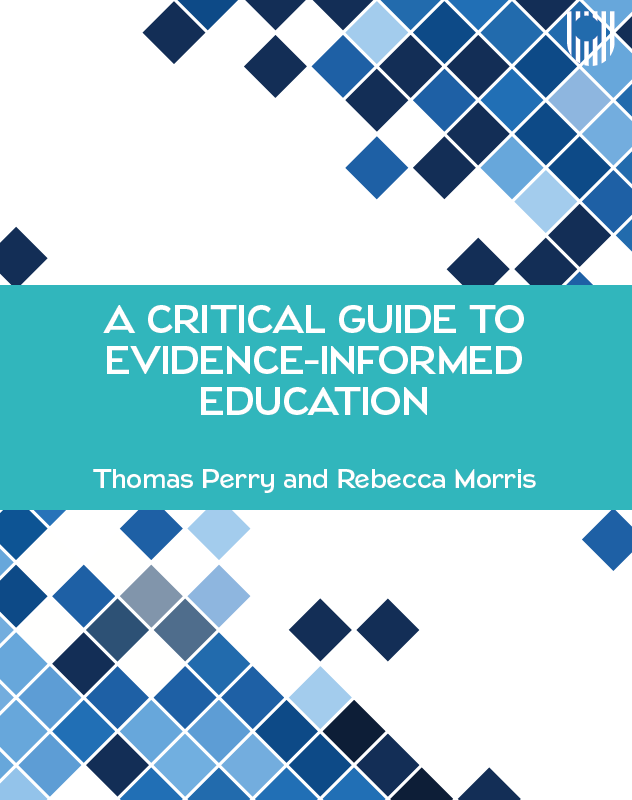
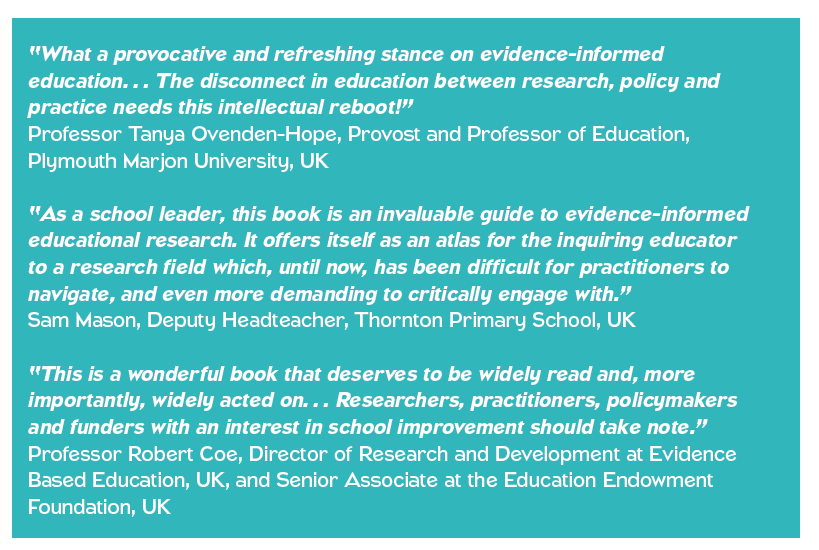
Out today!: 📣 A Critical Guide to Evidence-Informed Education📖. A book on the challenges of using evidence to improve education policy and practice by @RE_Morris1 and me. 🎉 https://t.co/YS1MDUAliK
📣PhD Studentship Opportunity📣
Interested in education inequalities, policy, & quant methods?
Apply for this ESRC-funded PhD (Warwick & B'ham) on pupil school mobility + educational/labour-market trajectories in England.
Deadline: 27 April
Details: ⬇️
https://t.co/3Jrt4BUhZx
Laurence Lessard-Phillips and I will be supervising the research. Don't hesitate to get in touch with informal enquiries about whether this might be suitable for you.
📣PhD Studentship Opportunity📣
Interested in education inequalities, policy, & quant methods?
Apply for this ESRC-funded PhD (Warwick & B'ham) on pupil school mobility + educational/labour-market trajectories in England.
Deadline: 27 April
Details: ⬇️
https://t.co/3Jrt4BUhZx
@C_Hendrick@johngelis I’d certainly agree that the family of approaches we label spaced retrieval practice r a gd bet and should b widely used. Also that we r getting better at codifying the nuance. But there's still a lot that needs an expert eye to get right which eludes even well controlled studies
@C_Hendrick@johngelis I think part of the difficulty is that it isn’t really an “it”. “Spaced”, “retrieval”, and even “practice” can each mean quite different things in classrooms; and if course “works” depends on what outcome, for which pupils, with what prior knowledge, content and design etc etc
Interested in edu inequalities, education policy, & quantitative methods?
We’re advertising an ESRC-funded PhD (Warwick & B'ham) on pupil school mobility and educational and labour-market trajectories in England.
Deadline: 20 Feb 2026.
Details here ⬇️
https://t.co/73S2rom5Nb
Interested in edu inequalities, education policy, & quantitative methods?
We’re advertising an ESRC-funded PhD (Warwick & B'ham) on pupil school mobility and educational and labour-market trajectories in England.
Deadline: 20 Feb 2026.
Details here ⬇️
https://t.co/73S2rom5Nb
@olicav@C_Hendrick As well as just trying to figure out replication (attempt/success) rates, we also found some of the difficulties of definition and what counts as direct/conceptual replication gave us food for thought and how slippery it is in more applied and complex research spaces like edu.
We launched our UK Survey report from the #esrc Sustainable School Leadership research project today.
Important findings on leaders' work (& workloads), wellbeing, career journeys & plans, professional learning, views on school contexts/ cultures & more! https://t.co/fCPfAhCBmS
Good morning 🌅
It’s Sunday, which means it’s time for another #Edujobs bulletin.
An hour of the latest jobs in education but not in school classrooms.
Shout if you land one of these, people do!
Share if I miss one you know of
Wave if you’re watching.
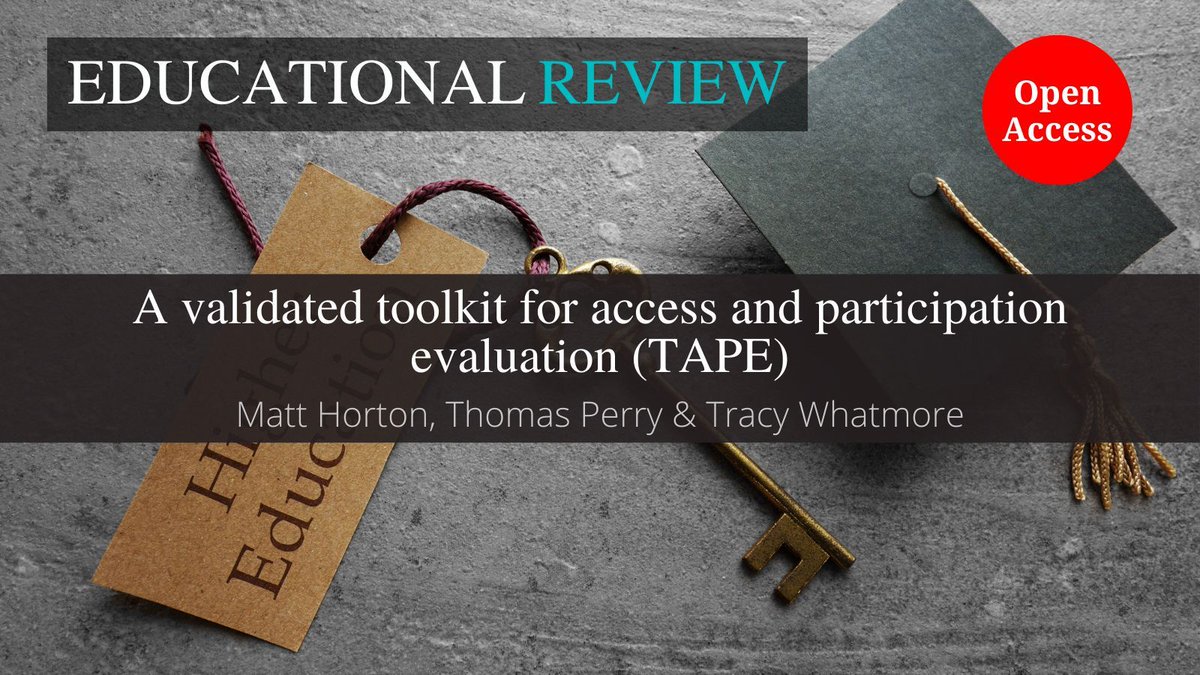
Matt Horton, @TWPerry1, & Tracy Whatmore offer a validated Toolkit for Access and Participation Evaluation (TAPE). Learn how it can improve higher education access for under-represented groups 🗝️🎓
#HigherEd#SocialMobility#Research
https://t.co/BKXR5aG2NA
New paper validating the Toolkit for Access and Participation Evaluation (TAPE) now out! May be of interest to those working in widening participation and HE evaluation:
📄 You can access the full validation results in Educational Review Journal here: https://t.co/qowvP24M2d
4/5
💡 Why use TAPE?
- Free to use
- Accurately measures the impact of WP activities on pupil AABs
- The first toolkit to demonstrate predictive validity
- Provides a meaningful baseline to understand pupils’ strengths and barriers
- Supports targeted, preventative interventions