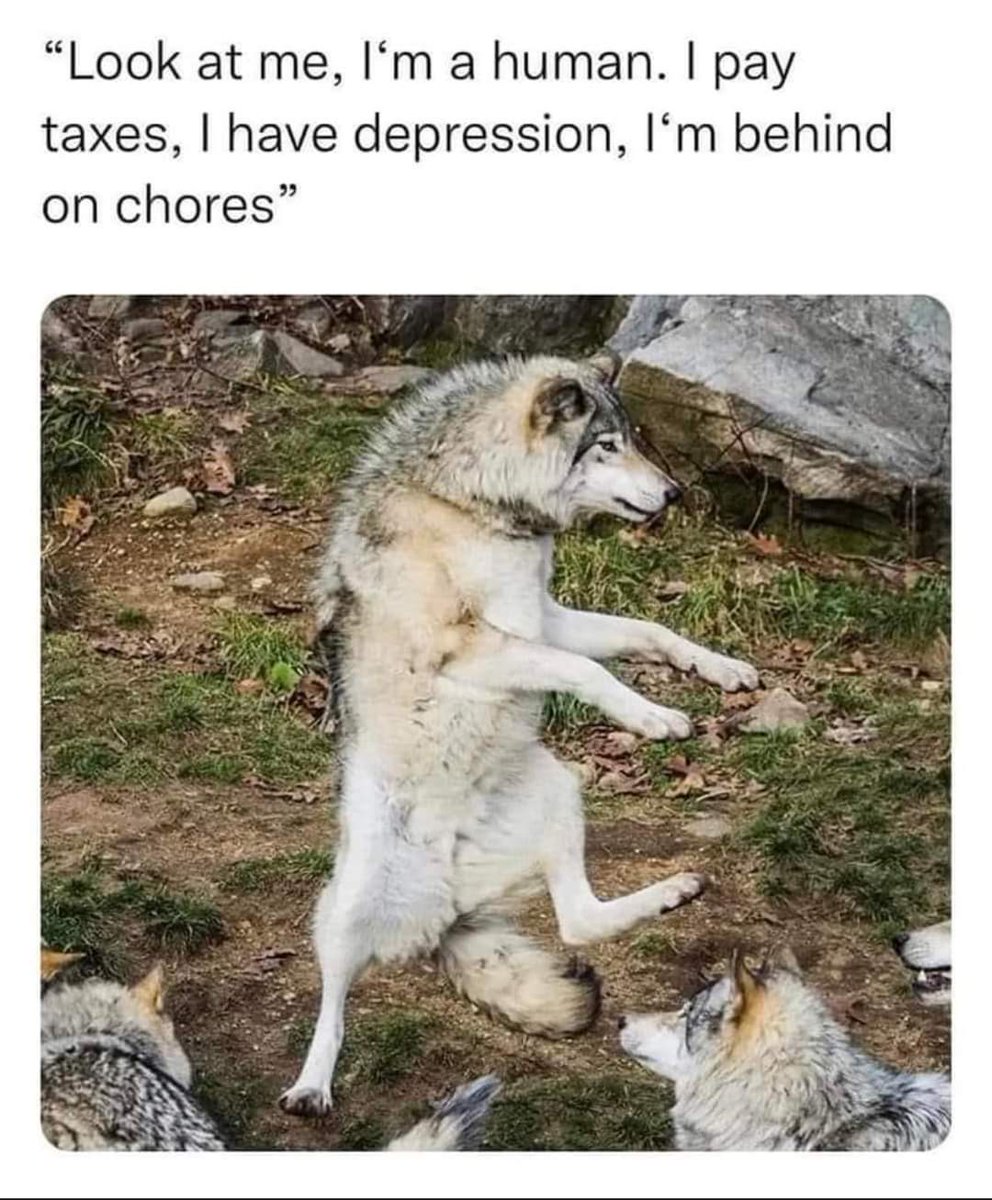
After reading the article, they aren’t de-extincting dire wolves. They are genetically modifying grey wolves to phenotypically resemble what they think dire wolves looked like.
This is not a dire wolf.
Fact-check: no.
Hamas was the largest victor in the 2006 election with 44% of the vote, so not a "majority" back then. There hasn't been a vote since. The median age in Gaza is 18, meaning nearly half the population wasn't even born then. Moreover, half the population back then wasn't eligible to vote.
Back of napkin calculation shows that only around 10% of Gaza's current residents ever voted for Hamas.
There hasn't been an election since 2006 because Hamas is despotic. They are not the will of people, but subjugate the people. They are more like a criminal mafia than a government. There are plenty of books that delve into this. I recommend the book "Son of Hamas".
Polls showing "support" for Hamas are difficult to interpret, because what's the alternative? In any event, this article describes a poll taken back in July 2023 that shows the unpopularity of Hamas's policies:
https://t.co/kf8bwoWQbH.
In that poll, 70% said they'd rather PLA from the West Bank take over the administration of Gaza, with Hamas giving up its military units. 50% wants Hamas to accept Israel and work toward a 2 state solution. 62% want a permanent cease fire with Israel.
Blaming a population for atrocities of their despotic rulers and bombing them in punishment is a warcrime.
Would killing wolves save deer fawns? The group that put up this billboard just south of our area stated the intent of the billboard was to support wolf management and wolf hunting, presumably to save deer fawns from being devoured by wolves.
The general idea—wolves kill fawns ergo by killing wolves we save fawns—put forth by this group is, at its essence, a scientific statement that can be examined objectively. And that is our intent in this post. Does the evidence indicate that hunting wolves would increase deer fawn survival in any significant way?
And for today, lets forget about the ">54,000 fawns" estimate. We will examine that estimate in another post soon. The number of fawns killed by wolves each year is actually quite irrelevant to this discussion. The real metric of interest here should be fawn survival (the percent of fawns that survive until a certain point in time).
The evidence indicates that killing wolves will almost certainly have no impact on the number of surviving deer fawns. Fawns die from multiple causes and the causes of mortality can compensate for one another.
Increased mortality due to one source often means less mortality from a different source and–very importantly here–overall fawn survival can remain unchanged. This process is referred to as “compensation” or “compensatory mortality" by biologists.
Put another way, if wolves and hunters don’t get them, then coyotes and bears will, and the same number of fawns will survive either way. There is appealing and persistent thinking that because wolves and other predators kill fawns, fewer wolves/predators will therefore increase fawn survival. Such reasoning is as faulty as it is appealing.
Studies of fawn survival illustrate this well:
Two studies in wolf range in Minnesota found that 47-49% of fawns survive past the first 3-4 months of life, when fawns are particularly vulnerable. In wolf range in northern Wisconsin and the Upper Peninsula of Michigan, fawn survival was 45% and 49%, respectively
Now those numbers from wolf range might seem low but context is crucial here. The reality is that most deer fawns are born to die—whether there are wolves or not.
A study in 2018 examined/synthesized all fawn survival studies in North America and determined that fawn survival in forested ecosystems averages 41%—a survival rate less than that found in wolf range.
In fact, the lowest fawn survival rates were in the southwestern US. Consistent with this trend was a study published just a few weeks ago from Northern Georgia where only 16% of fawns survived their first 12 weeks of life.
And a study published in 2020 found that in a predator-free area of Delaware—i.e., an area with NO wolves, NO coyotes, NO bears, NO bobcats— only 44% of fawns survived their first 3 months of life.
And importantly, in every study of fawn survival in wolf range that we are aware of, wolves killed a smaller percentage of fawns than other predators in all of these studies but 1. And in that one study wolves and bears killed a similar percent of fawns.
The point is that if we reduced wolf populations, fawn survival would almost certainly remain unchanged. Part of this is because coyotes and bears are primarily responsible for fawn deaths in wolf range, not wolves.
Now, some might struggle to understand how this is possible given the “overpopulation” of wolves. Well, it is really quite simple to a degree: coyotes and bears can occur at much higher densities than wolves do.
Translation: even if an individual coyote or bear kills less fawns than an individual wolf, there are still many more coyotes and bears around so cumulatively coyotes and bears kill a larger percent of fawns than wolves.
For instance, coyotes in wolf range can exist at densities 10 times that of wolves. Lets say the typical coyote kills 1 fawn a year and the typical wolf kills 5 (we are not saying this is actually how many they kill…these numbers are simply to illustrate our point.)
In this scenario, the coyote population kills twice as many fawns as the wolf population even though each individual coyote only kills 20% the number of fawns an individual wolf does.
And take a guess at what predator will most likely fill the ecological void left if we start substantially reducing wolf populations? You guessed it: coyotes. So by reducing one predator, we very likely increase the densities of another…and predation on fawns remains the same.
Ok, we will stop there for today before this post gets way too long. There are other aspects of this billboard that we are looking forward to examining in the coming days.
But, our conclusion is that there is very little objective, scientific information to indicate that killing wolves via a wolf hunt will have any impact on fawn survival. In fact, all the evidence we are aware of clearly indicates killing wolves will do nothing.
Sources referenced:
Carstensen et al. 2009. Survival, birth characteristics, and cause specific mortality of white-tailed deer neonates. Journal of Wildlife Management.
Kunkel and Mech. 1994. Wolf and bear predation on white-tailed deer fawns in northeastern Minnesota. Canadian Journal of Zoology.
Warbington et al. 2017. Cause-specific neonatal mortality of white-dailed deer in Wisconsin, USA. Journal of Wildlife Management.
Kautz et al. 2022. Compensatory human and predator risk trade-offs in neonatal white-tailed deer. Global Ecology and Conservation.
Dion et al. 2020. White-tailed deer neonate survival in the absence of predators. Ecosphere.
Gingery et al. 2018. Landscape-level patterns of fawn survival across North America. Journal of Wildlife Management.
Edge et al. 2023. White-tailed deer fawn survival and the influence of landscape characteristics on fawn predation risk in the Southern Appalachian Mountains, USA. PLoS One.
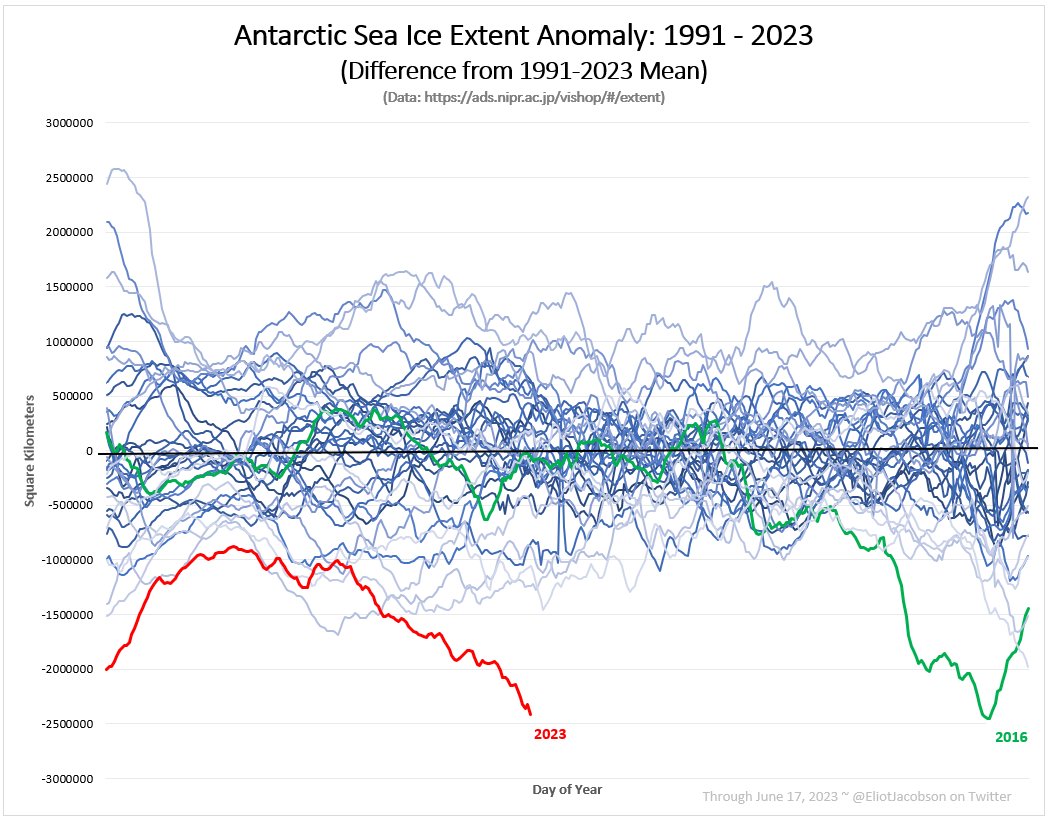
What's happening to Antarctic sea ice extent isn't getting enough global media attention. And by "enough" I mean none. Nothing. This ongoing and dramatic collapse is completely absent from today's news.
Yesterday's sea ice extent was 4.02σ below the 1991-2023 mean (1-in-34,000).
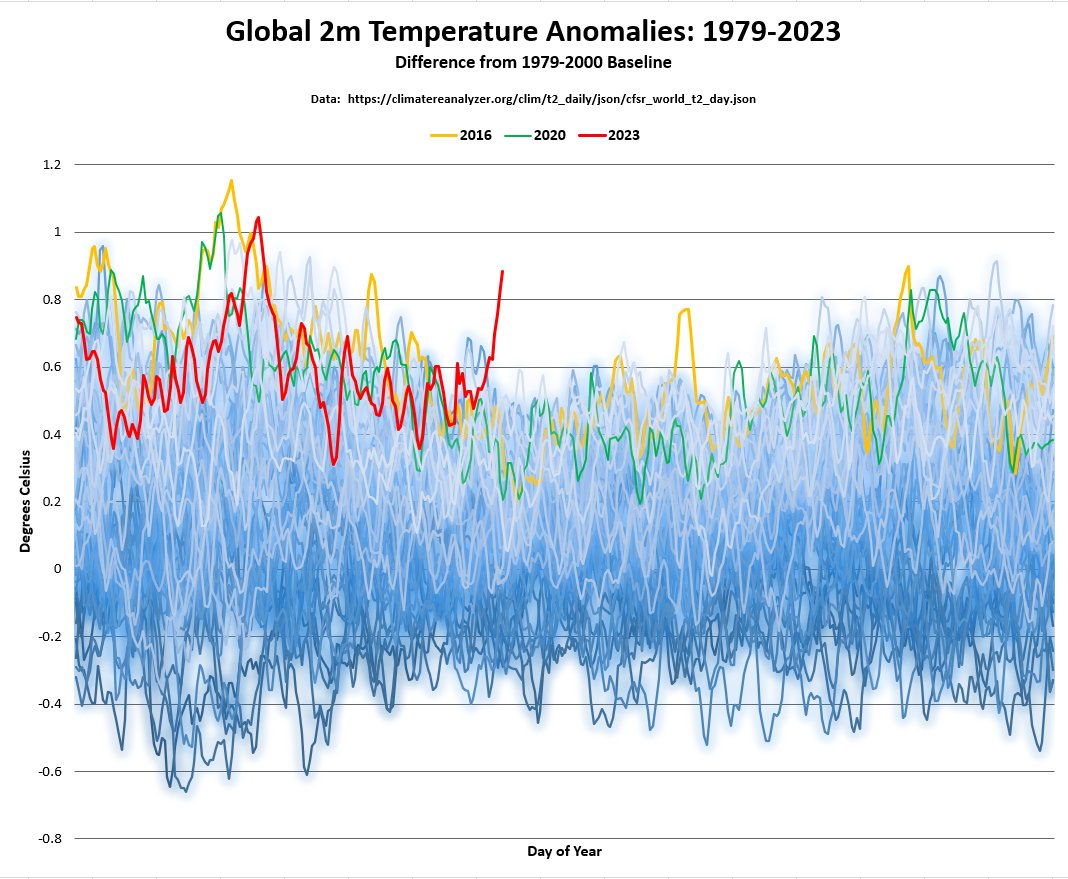
And here we have it -- the global 2 meter temperature anomalies, through today, with 2023 in red.
What's happening right now with global temperatures leaves me speechless (but not numberless).
4.81 sigma. 1-in-1,300,000.
You go.
Alaskan officials gunned down ~100 brown bears + cubs from a helicopter last month.
Let that sink in.
They claimed the killing was to aid caribou, but science shows the herd's main threats are climate change, overgrazing, brucellosis disease + poaching.
https://t.co/sS6WYcbXra