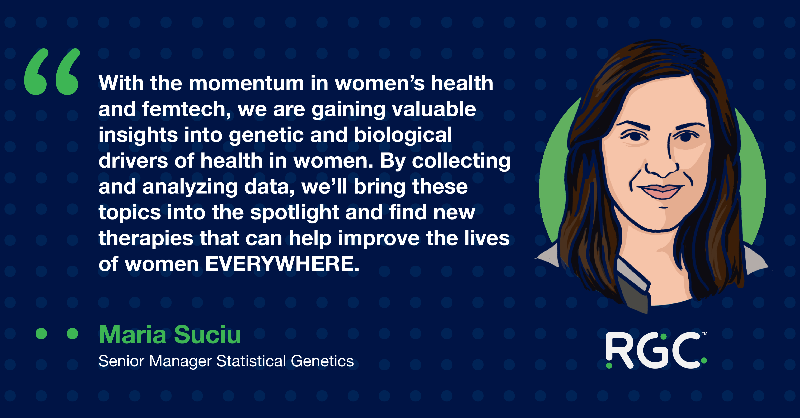
How could genetic research improve the lives of women everywhere? RGC's @MariaC_Su is diving deep into data analysis to speed discoveries that have the potential to improve women’s health. This #WomensHistoryMonth, learn about Maria's work and her upcoming #WITSNE23 session.
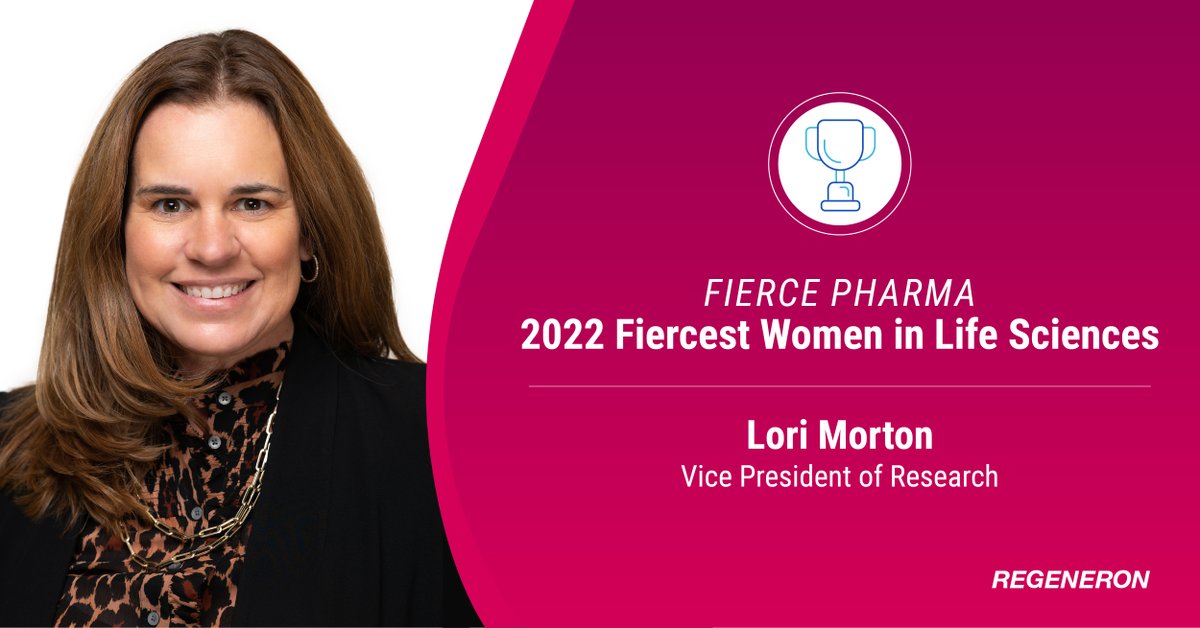
Congratulations to Dr. Lori Morton, Vice President of Research, on being named one of the 2022 Fiercest Women in Life Sciences by @FiercePharma!
Beyond Lori’s important work in the lab, she is committed to advancing women in science and STEM education. https://t.co/N3SJlbsFjm
In our latest #RegeneronPerspective, Mary E. Haas of our Cardiometabolic Translational Genetics team, reflects on the team environment that made the CIDEB discovery possible. Listen as she dives into the power of our collaboration.
Hear from Olukayode Sosina, a key geneticist in the discovery of the CIDEB mutation, as he shares the pivotal role our large exome-based data set played in the research process.
Our DNA makes us unique and is where our superpowers may be hidden. By diving into a database of around 2M sequenced exomes - the functional parts of DNA - @RegeneronDNA’s uncovering the hidden heroes that may spark the future of genetics-based medicine. #SpectacularScience
🔈Geneticists, researchers and the science-curious — you’re invited to the 4th International Founder Populations DRIFT Symposium. Join us in-person or virtually October 24th-25th to hear from powerhouse speakers and learn about breakthrough genetic research. Register now! #ASHG22
This Thursday, I’m giving a talk on an exciting story of a drug target discovery for nicotine addiction. If you’re attending #WCPG2022, come to my talk, you won’t be disappointed :)
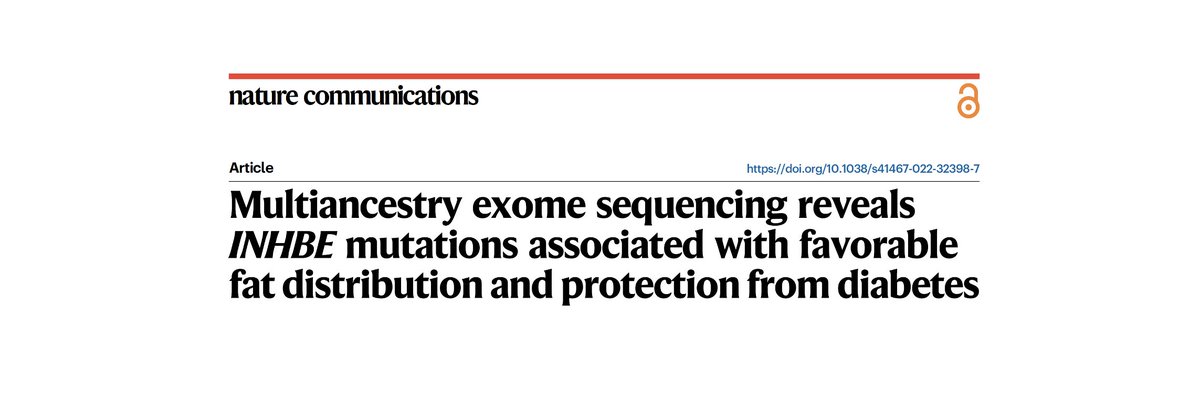
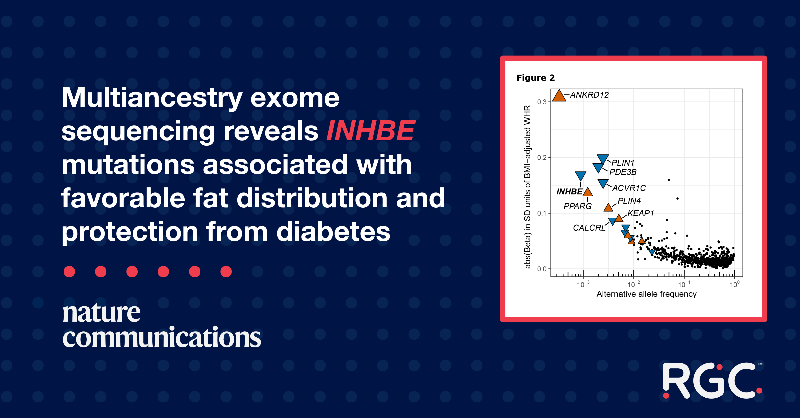
🚨 Largest multiancestry exome analysis of body fat distribution discovers INHBE mutations associated with favorable adiposity and PROTECTION from diabetes! 🚨
Check it out @NatureComms
https://t.co/H4F1T6aIqF
RGC strikes again: Our team studied exomes from 600K+ individuals across 5 ancestries and uncovered mutations in a liver-specific gene called INHBE that were associated with favorable fat distribution and protection from type 2 diabetes. Read the full story @NatureComms.
🚨 Publication alert: largest to date multiancestry exome analysis of body fat distribution discovers INHBE mutations associated with favorable adiposity and PROTECTION from diabetes! 🚨
Out today in @NatureComms
👇🧵 key takeaways below…
https://t.co/AkpdfKkU3N
We are thrilled to partner with the @MountSinaiNYC Million Health Discoveries Program. A study of genetics and health in 1 million diverse patients will provide the knowledge we need to improve #precisionmedicine, patient care and therapeutics.
Imagine it’s 1988, you’re a young scientist who knows the key to human health is in our genes, but the technology to turn that knowledge into medicine doesn’t exist yet. So, you build it. That’s our origin story. See where we’ve been and what’s next for our #SpectacularScience.
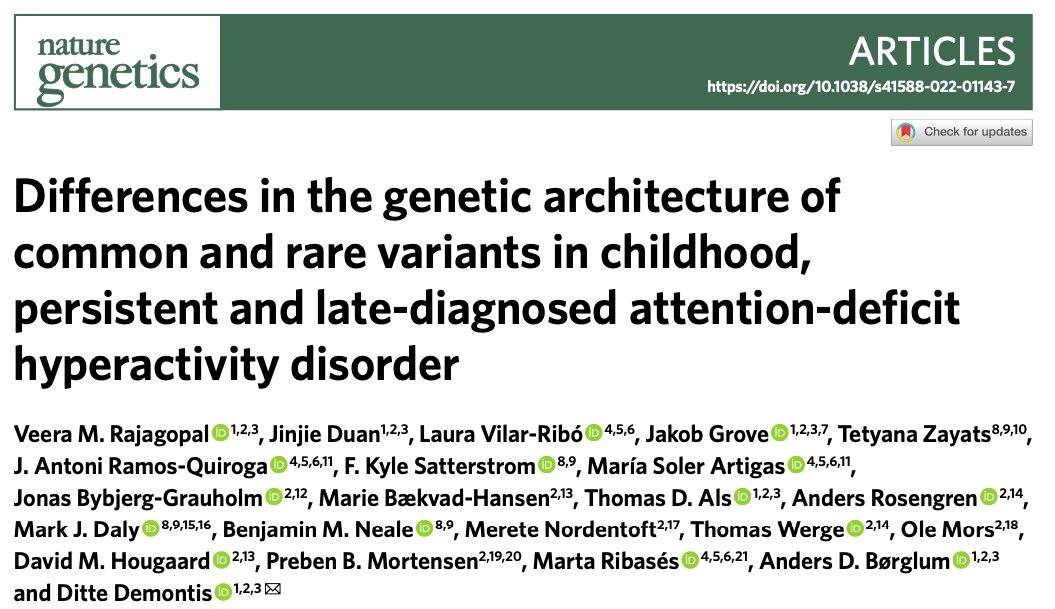
Please to inform that my postdoc work with my wonderful supervisors @DemontisDitte and @AndersBorglum is now published in @NatureGenet . This paper marks an important advancement in the ADHD field. 🧵
https://t.co/VIeRr9BGfT
Awesome to see that even with exciting targets like HSD17B13 there is still room for even more discoveries like CIDEB aimed at helping with chronic liver disease.
This is such a high area of unmet need that we need all the help we can get to improve patient outcomes!
Our discovery of mutations in the CIDEB gene that protect against liver disease is published in @NEJM, leading to possible #RNAi therapeutics for NASH by Regeneron & Alnylam. 🚨
https://t.co/Y1PSQz9K3i
A short summary of the key findings 🧬🧵↓
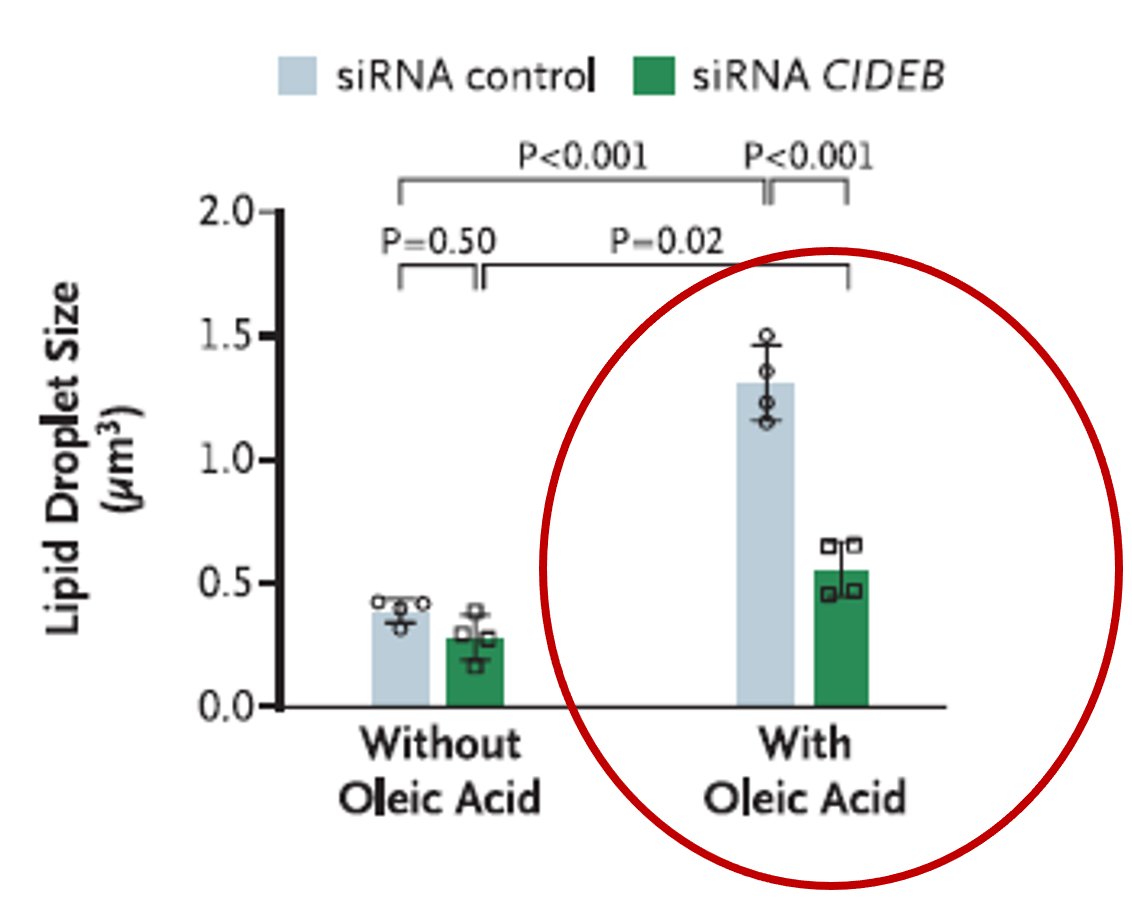
On the biology side: CIDE-family proteins are known to enable buildup of fat droplets within cells. We experimentally showed that in liver cells, silencing CIDEB with siRNA prevents fat buildup and formation of larger lipid droplets.
Lipid droplets play a central role in NASH!
The amazing thing of @RegeneronDNA is that we now “pass the baton” to our colleagues and top-notch medicine developers to drive the CIDEB program forward.
And now back at it: unearthing protective human genetics that may lead to new medicines.Stay tuned!
https://t.co/Q7mWEoPHFR
Our latest research identified mutations in the CIDEB gene that are highly protective against nonalcoholic forms of liver disease. We're using this discovery to bring potentially promising new therapies to the clinic to help people with NASH. #RGCResearch