Here are some common microservices patterns:
▶️ API Gateway Pattern: This pattern involves having a single entry point for all client requests, which then routes those requests to the appropriate microservice.
▶️ Circuit Breaker Pattern: This pattern is used to handle failures in a microservice architecture. When a microservice fails or becomes unresponsive, the circuit breaker trips and redirects requests to a fallback service.
▶️ Service Registry Pattern: This pattern is used to keep track of all the services in a microservices architecture. The registry acts as a central directory for service discovery.
▶️ Service Mesh Pattern: This pattern involves adding a layer of infrastructure between microservices to handle cross-cutting concerns such as service discovery, load balancing, and security.
▶️ Event-Driven Architecture Pattern: This pattern involves using events to communicate between microservices. Each microservice can publish events and subscribe to events published by other microservices.
▶️ Saga Pattern: This pattern is used to manage transactions that span multiple microservices. It involves breaking the transaction into smaller, individual steps and using compensating actions to undo completed steps if an error occurs.
▶️ Bulkhead Pattern: This pattern is used to isolate failures in a microservices architecture. Each microservice is placed in a separate container, so if one microservice fails, it does not affect other microservices.
▶️ Sidecar Pattern: This pattern involves deploying a separate container alongside each microservice to handle cross-cutting concerns such as logging, monitoring, and security.
▶️ CQRS Pattern: This pattern involves separating the read and write models in a microservices architecture. The read model is optimized for querying data, while the write model is optimized for updating data.
▶️ Strangler Pattern: This pattern involves gradually replacing a monolithic application with microservices by gradually adding new microservices and removing functionality from the monolith.
🔥 Join Amigoscode today for premium programming courses - https://t.co/Y65dNK4E0y
#microservices, #softwarearchitecture, #apigatewaypattern, #circuitbreakerpattern, #serviceregistrypattern, #servicemeshpattern,
8 Sites to Practice Coding with Exercises
https://t.co/1gVeGzQF3B
https://t.co/jrPPtgtQ1d
https://t.co/544rNMC6kq
https://t.co/uiqSsvx6kO
https://t.co/zcqfs2W5pl
https://t.co/pcwohCZimK
https://t.co/S1LAtwvTyc
https://t.co/zkSDgiH4Xs
Harvard's CS50 courses are some of the most popular on the web.
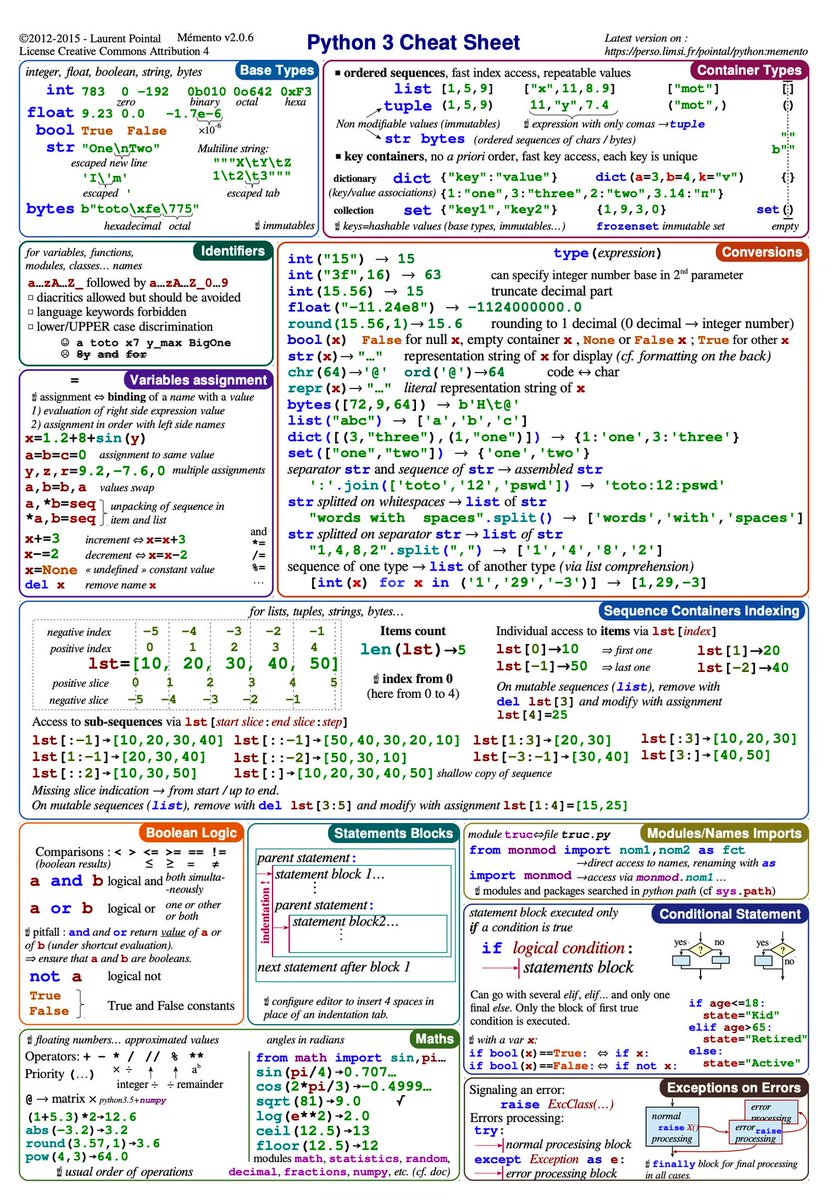
And freeCodeCamp just published their Intro to Artificial Intelligence with Python course.
You'll learn graph search algorithm theory, reinforcement learning, classification, & much more.
https://t.co/vDPBIyH2N6
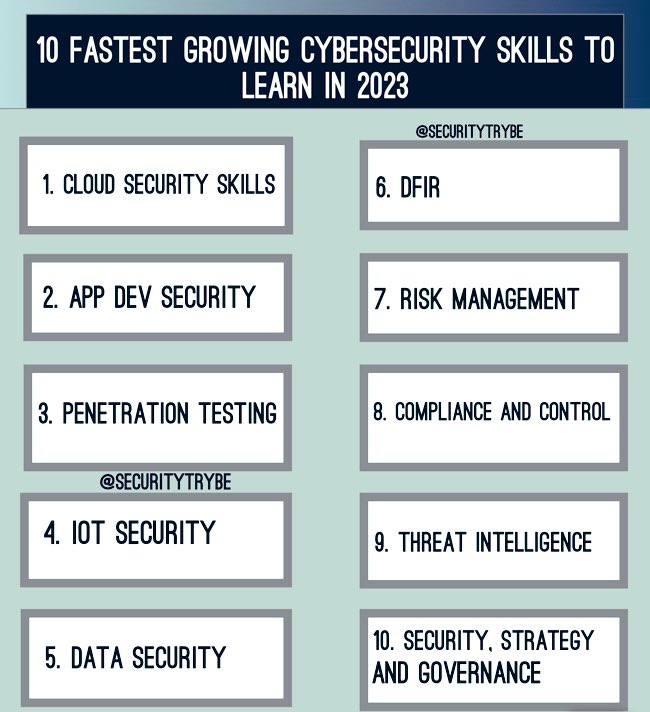
Here are 5 FREE Entry-Level Cybersecurity Certifications For Beginners
1 Introduction to IT and Cybersecurity
https://t.co/a4yL7geUkn
2 Introduction to Cybersecurity
https://t.co/tkxh03q3v9
3 introduction to Cybersecurity
https://t.co/pURkcRDCKS
If you’re looking to learn WEB DEVELOPMENT, here’s a fully loaded MATERIAL for you, all for FREE.
https://t.co/wQl8LIwsjx
Share with PROGRAMMERS on the TL.
Here’s description of 9 types of API testing:
➡️ 1. Unit Testing: Involves testing individual components or functions of an API in isolation to ensure they function correctly and produce the expected output.
➡️ 2. Functional Testing: Focuses on testing the overall functionality of the API, verifying that it performs as intended and produces accurate results.
➡️ 3. Integration Testing: Tests interactions between different components or services within an API to ensure they work together seamlessly and communicate effectively.
➡️ 4. Load Testing: Evaluates the API's performance under heavy load by simulating a large number of concurrent requests to identify potential bottlenecks and optimize resource usage.
➡️ 5. Security Testing: Aims to identify vulnerabilities in the API by testing for potential security risks, such as unauthorized access, data leakage, or injection attacks.
➡️ 6. Stress Testing: Pushes the API beyond its limits by applying extreme conditions, such as high traffic or limited resources, to determine how well it can handle such scenarios.
➡️ 7. Negative Testing: Involves deliberately sending invalid or incorrect inputs to the API to verify that it responds appropriately with error messages or other expected behaviors.
➡️ 8. Boundary Testing: Focuses on testing the limits of the API's inputs, such as minimum and maximum values, to ensure it handles these boundaries correctly.
➡️ 9. Usability Testing: Evaluates the user-friendliness of the API by assessing how easily developers can understand its documentation, endpoints, and responses, ultimately enhancing the developer experience.
🚨 Join Waiting List for New 10+ Hour Linux Course - https://t.co/EolNQecppN
#apitest #API #APItesting #apitesting #software