The convergence of AI, Crypto, and Robotics isn't just a trend; it's a multi-trillion-dollar technological supercycle.
The @paulbarron Venture Studio is officially stepping out of stealth to fund the future. Built on the back of over 3,000 hours of exhaustive, data-driven research and deep-tech sentiment tracking, the mission is simple: find, incubate, and scale projects that bridge digital brains and physical execution.
We aren't just guessing where the tech ecosystem is heading; we've built the analytical framework that proves it. The future belongs to decentralized intelligence and automation. Follow along as we change the venture landscape. 🚀
👁️ Beyond motor control, where does the Neuralink roadmap lead?
The long-term horizon isn't just about restoring what was lost; it's about expanding what the human body can do.
The next frontier of BCI development aims to bypass biological limitations entirely: the Blindsight Project, which bypasses damaged eyes to send visual data directly to the visual cortex, potentially restoring sight to those who are completely blind.
Elon Musk’s Neuralink lets you control technology with your mind.
Neuralink’s first human brain implants are already happening, and they combine robotics, AI, and neuroscience to directly link the human brain with machines.
The Robotics and AI Institute built this with NVIDIA, using NVIDIA Isaac™ Lab.
This is only the beginning of the end.
So why does AI need extreme mobility?
Military and recon: an unmanned bike that slips through alleys, mountain trails, and war-zone debris on its own tracking targets or hauling payloads with no human in the line of fire.
Tactical surveillance: strap on 360° cameras, thermal, and LiDAR, and you've got a high-speed security platform patrolling rugged borders no normal vehicle can reach.
Genius marvel or dystopian red flag?
Gabbit Robotics co-founder Nicole Mattero on why the next AI winners won't fight over your screen, they'll fight to get closer to you:
She kicks things off with what she admits is a hot take:
"My hot take is that hardware is the only moat going forward because anyone's going to be able to spin up a model and make it really good and really cheap."
Her logic is simple. Once a strong model is cheap and easy for anyone to build, the model alone can't set you apart.
So what actually protects you?
"Where does that leave you? Basically companies that have tactile modes such as hardware are the only ones that actually survive."
Hardware, though, is only one piece of her argument. The second piece is data:
"The models that win in the long run are the ones where private data is their [moat]."
From there, Mattero ties the two together. Hardware gives a company one moat. The ability to gather unique personal data gives it another. Put both in place and the edge starts to multiply:
"When you have a company that has hardware as a [moat], but then B is able to collect really unique personal data, that also becomes a [moat]."
And that, she says, is the reason so many foundation model companies are reaching beyond the screen and into the physical world:
"That's why I think a lot of these foundation models are like, let's get something in the home or on the person. It gives them an edge on both fronts."
🚨Anthropic just showed a 24-minute workshop on how to actually do prompts for Claude.
Taught by the people who built it.
Free. No registration. No paywall.
I've seen $300 courses that don't cover what they teach in the first 8 minutes.
Watch it and bookmark it now.
Elon Musk: Optimus Will Be Bigger Than the iPhone
At Tesla’s 2025 shareholder meeting, Elon Musk positioned Optimus, Tesla’s humanoid robot, as the biggest product launch of all time, larger than smartphones in impact and scale.
He claims it will have the fastest production ramp of any complex manufactured product, targeting one million robots per year initially and scaling to ten million.
His vision: every human will want a personal robot, with multiple industrial units for every household.
Musk argues Optimus will surpass the best human surgeons in precision and perform procedures beyond human capability. Tesla’s real breakthrough isn’t the car; it’s positioning itself as a robotics and AI company reshaping labor and healthcare.
Elon Musk reveals Tesla is building a 30,000-robot academy where humanoids learn from each other.
Cars were easy. Tesla had ten million on the road, beaming back driving data every second.
But humanoid robots?
There weren't ten million Optimi yet. There weren't ten.
Robotics had run data-starved for decades. Tesla decided to fix it.
You couldn't train a humanoid that had never been deployed.
So Musk built a school for them instead.
"We can have at least 10,000 Optimus robots, maybe 20-30,000, that are doing self-play and testing different tasks."
Tesla called it the Optimus Academy.
Picture a warehouse the size of a chip fab.
Thirty thousand humanoid robots inside.
Picking things up. Folding clothes. Walking. Tripping. Catching themselves.
Failing in ways no human roboticist had thought to script.
Each watching the others, learning what the human body shouldn't have made look easy.
Every move generated a data point. Every failure generated a sample.
Every robot taught every other robot.
In simulation, Tesla could spin up a million robots overnight.
But simulated physics lied about friction, slip, and drift.
Real physics didn't.
Cars learned from drivers. Optimi learned from each other.
Each generation made the next one cheaper, faster, smarter.
By the tenth generation, no human would recognize the curriculum.
Recursive learning at electromechanical scale.
Musk, on closing the loop:
"You use the tens of thousands of robots in the real world to close the simulation to reality gap."
Whoever opened the academy first owned the species.
P.S. I made a playbook breaking down 100+ most powerful decision making mental models used by history's greatest thinkers.
5,000+ downloads. 113 five-star reviews.
Grab a free copy here:
https://t.co/u2q1uUm9vD
If you're new here, follow @GeniusGTX for content on the greatest minds in economics, psychology, and history.
— Elon Musk ( @elonmusk ), CEO of Tesla and SpaceX, on Dwarkesh Patel's ( @dwarkesh_sp ) podcast
China's DR02 humanoid robot is carrying firefighting gear now.
Walking into emergency-response work with heavy equipment.
Robots are moving from demos to dangerous jobs.
🤖 Moving intelligence into the physical world! These 5 private robotics pioneers are redefining automation, humanoid tech, and autonomous systems:
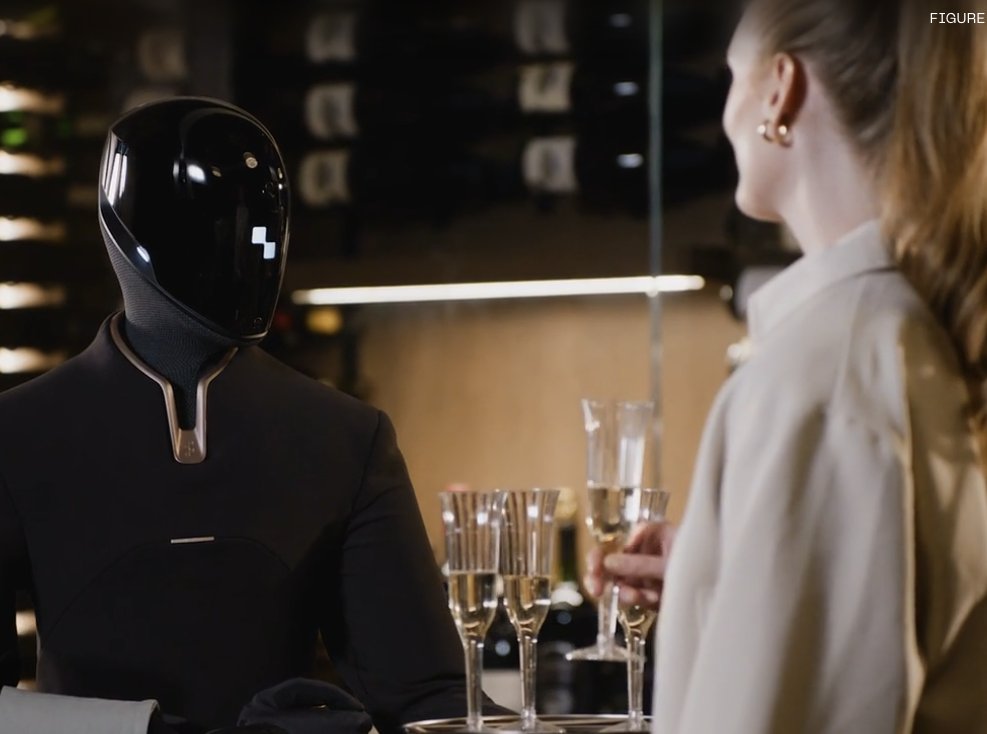
@BostonDynamics – Industry legends leading advanced mobility, from Spot to the fully electric Atlas. @Figure_robot – Building next-gen autonomous humanoids designed for deployment in the workforce. @Sanctuary_AI – Creating Phoenix, a humanoid robot powered by their Carbon AI control system. @Standard_Bots – Making industrial automation accessible with affordable, AI-powered robotic arms. @Nuro – Pioneering localized commerce with their custom autonomous delivery vehicles.
1X Technologies has started mass production of its NEO humanoid robot at a factory in California.
The factory can build up to 10,000 robots each year and aims to exceed 100,000 units annually by 2027.
Some NEO robots are already working in the factory, helping with tasks like moving parts and handling logistics.
📊 Portfolio Update
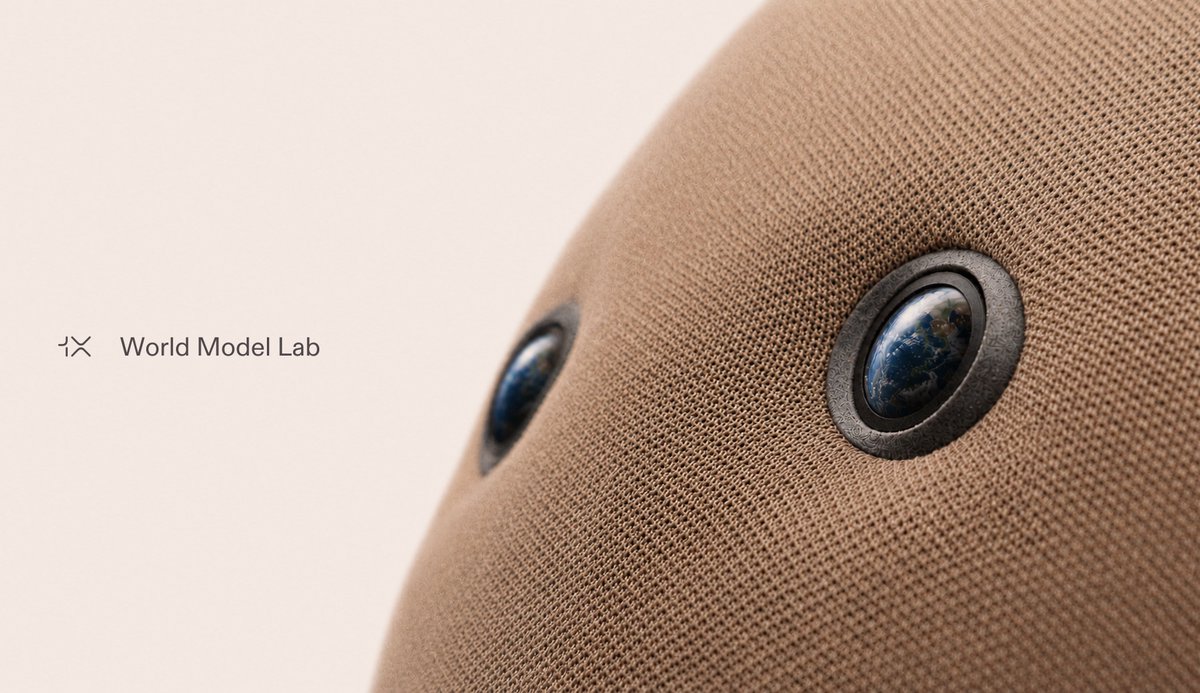
@1x_tech has launched the World Model Lab, a major step toward building foundation models designed specifically for humanoid robots.
The objective is not task-specific automation. It is developing systems that understand and interact with the physical world at scale.
For humanoid robotics, this is one of the most important frontiers in AI.
As humanoid deployments scale, data becomes a strategic asset.
The companies that can connect robot deployment, data collection, and model improvement into a continuous feedback loop may develop a meaningful advantage over time.
How did Atlas learn football – and why? Go behind the scenes of School of Football with @Hyundai_Global and discover a glimpse of the Next of robotics. Keep reading for more from our team: https://t.co/beDiNEGosc
Next Starts Now
#Hyundai#NextStartsNow#Atlas#BostonDynamics #SchoolofFootball #Robotics
It looks like a wide range of robots will emerge from here,assembled using the MICO modular robotics platform
desktop, wheeled, dual-arm, and humanoid robots...
adapted for applications in warehouses, service sectors, and the home...
OpenAI Robotics is hiring, looking for exceptional full-stack hardware, ops, systems, and ML engineers to help us program and manufacture robots that are useful for society.
AI should be able to help people in the physical world. In the short term, we are focused on robots to support skilled workers to build our future infrastructure; in the long term, we imagine everyone having a personal robot doing anything they need.
Our world simulation research program, led by Aditya Ramesh (@model_mechanic), has evolved over the past year into OpenAI Robotics. Progress is rapid, and based on a foundation of co-design between robotics hardware and ML research.
If you love working hands-on across the robotics stack and want to build the future, please consider joining us. Send an email with your background and evidence of exceptional accomplishment to: [email protected]
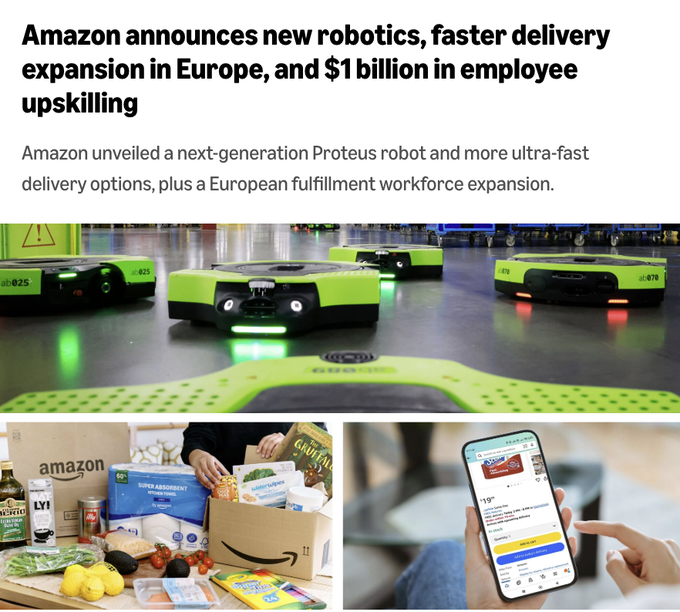
$AMZN is expanding robotics and faster delivery with next-gen Proteus robots, STARK automation and Amazon Now 30-minute delivery.
It is also investing roughly $11B+ to modernize European fulfillment, add 25,000 jobs and expand worker training.