It's so cute how the @OpenSuSE Linux installer changes the installation process when you try to install it during Christmas time—nice easter egg. This is why I love #Linux devs. Festive transformation is amazing.
Turns out it’s not legal. The FTC is suing Adobe over it and it’s likely it will result in a massive fine.
On top of all the lost customers for life, like me.
Adobe is only the major company where I felt defrauded thanks to pricing practices.
Adobe is running the exact same dark pattern, even now. It's just too much free money, at the expense of people who think $54.99/month means $54.99/month, and not "commit to an annual plan and pay 12x$54.99/month (or terminate for a massive penalty)."
This should not be legal.
This dark pattern: https://t.co/6txfEM02Wu
Well done on Adobe for ripping off customers (and continuing to do so). I'm done with anything Adobe, thanks to this.
Stay away from Adobe products, if you don't want to feel that you are ripped off, using dark patterns, is my advice.
All it takes for a company to lose you for life is to fool you once. I signed up to a monthly Adobe subscription, only to realized it was a *yearly* one paid monthly (?!) when I tried to cancel, and Adobe did not let me.
That was it: me done with Adobe. I cannot recommend them.
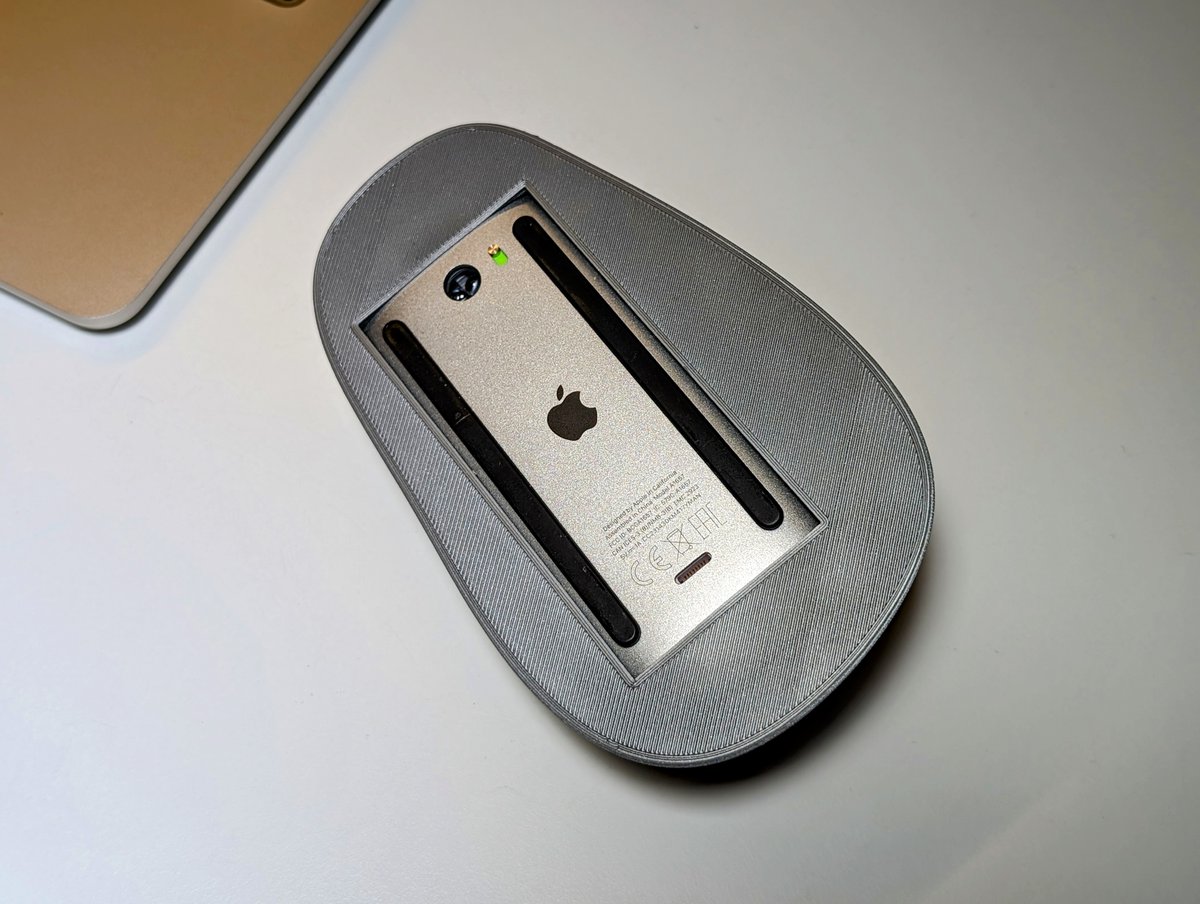
I hacked the Magic Mouse.
And created the world's first ergonomic Magic Mouse with no weaknesses.
Yes, you can charge it via USB-C right while you're working!
More details + demo in the thread
Wissenschaft heißt, Modelle zu suchen, die möglichst viele Beobachtungen möglichst einfach erklären.
Schwurbelei heißt, möglichst viele Beobachtungen zu suchen, die sich mit einem von Anfang an vorgegebenen Modell erklären lassen.
Zwei völlig entgegengesetzte Strategien.
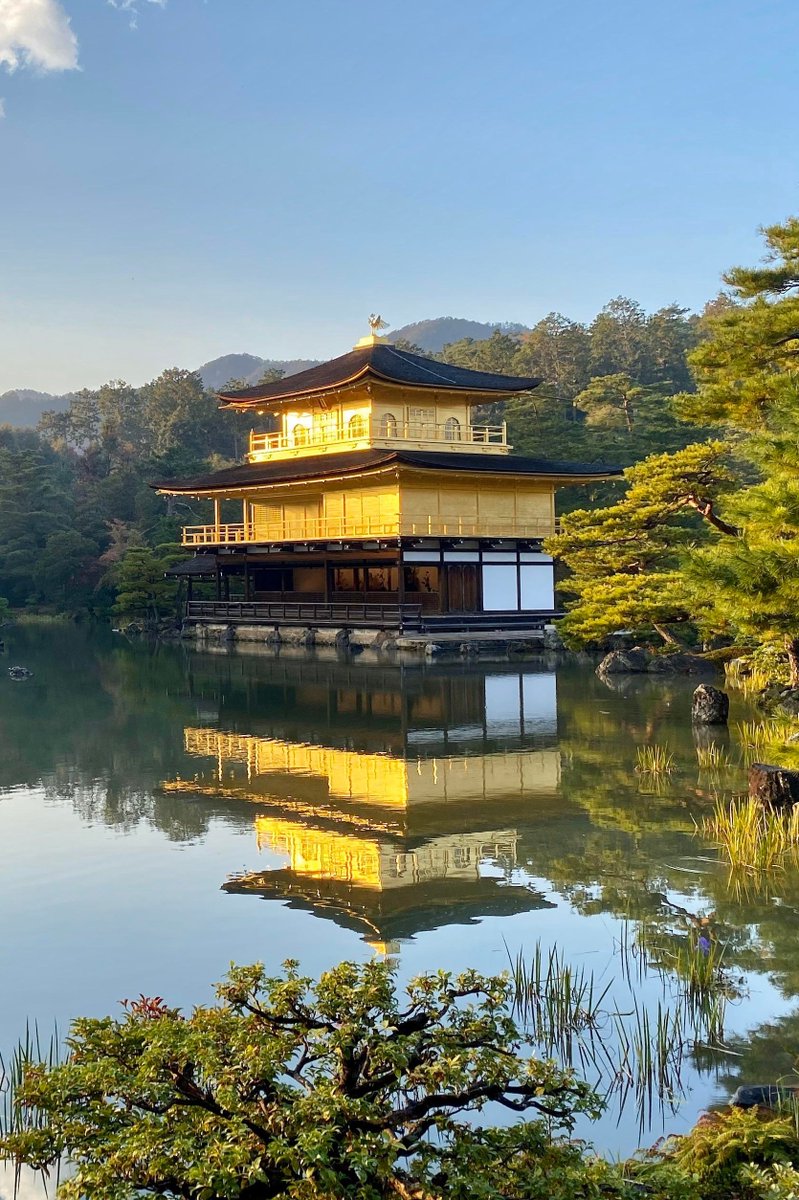
The Temple of the Golden Pavilion in Kyoto, Japan, was originally built 600 years ago. But it has been burned down and rebuilt twice.
So how old is it? And is it still the same building?
Here's what Douglas Adams, author of The Hitchhiker's Guide to the Galaxy, said about it:
'I remembered once, in Japan, having been to see the Gold Pavilion Temple in Kyoto and being mildly surprised at quite how well it had weathered the passage of time since it was first built in the fourteenth century. I was told it hadn’t weathered well at all, and had in fact been burnt to the ground twice in this century. “So it isn’t the original building?” I had asked my Japanese guide.
“But yes, of course it is,” he insisted, rather surprised at my question.
“But it’s burnt down?”
“Yes.”
“Twice.”
“Many times.”
“And rebuilt.”
“Of course. It is an important and historic building.”
“With completely new materials.”
“But of course. It was burnt down.”
“So how can it be the same building?”
“It is always the same building.”
I had to admit to myself that this was in fact a perfectly rational point of view, it merely started from an unexpected premise. The idea of the building, the intention of it, its design, are all immutable and are the essence of the building. The intention of the original builders is what survives. The wood of which the design is constructed decays and is replaced when necessary. To be overly concerned with the original materials, which are merely sentimental souvenirs of the past, is to fail to see the living building itself.'
So that was Douglas Adams' view — that whether a building is "original" really has nothing to do with the actual age of its materials and when they were put together, but is defined by the form they take and when it was decided to arrange them in that way, regardless of how recently they have been made and installed.
So even if we reconstruct an old building with new materials — as happened at the Temple of the Golden Pavilion after it was burned down in the 1950s — it is still an authentically old building.
It is surprising to learn how many "old" buildings have, indeed, been rebuilt in this way. Some examples include the Frauenkirche in Dresden, St Mark's Campanile in Venice, the old towns of Warsaw and Frankfurt, the Yellow Crane Tower in Wuhan, and even the Great Ziggurat of Ur in Iraq.
This is essentially an architectural version of the Ancient Greek conundrum of the Ship of Theseus. Imagine an old ship in a harbour. If all its separate parts were replaced, one by one, over the course of one hundred years, would it still be the same ship? If not, when did it become a different ship? And, in either case, how old would the ship be after one hundred years had passed?
We generally think that an old building, once destroyed, is surely lost forever — and that to rebuild it would be somehow inauthentic or artificial. Perhaps this isn't the case. Perhaps we can rebuild, brick for beam and gable for window, any old and important structure which has been lost to war and catastrophe without losing its age or authenticity.
So, was the Temple of the Golden Pavilion built in 1397 or 1955... or both?