Research has always shipped answers: an algorithm, an architecture, a paper. 📑
Next, it ships systems that keep getting better after you hand them over. 🎯
My take on RSI that builds RSI. 🔁 https://t.co/Mil2xiZ7zC
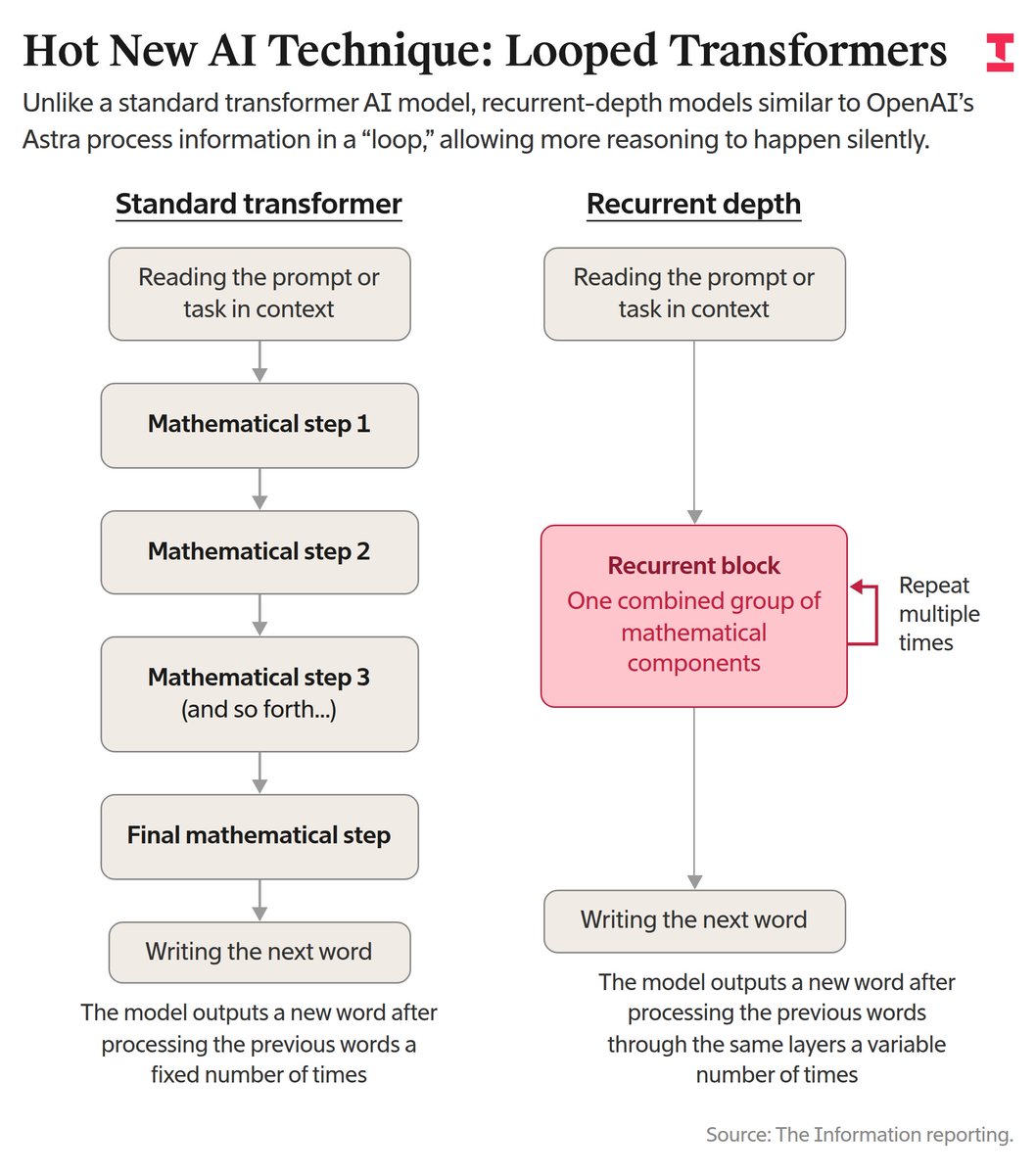
ASTRA USES A NEW REASONING TECHNIQUE CALLED "RECURRENT DEPTH".
TL;DR:
> instead of stacking more Transformer layers, it loops the model's hidden state through the same layer multiple times. some of the reasoning happens internally rather than writing it out as chain-of-thought tokens.
why this may help:
> more internal reasoning compute without generating a huge CoT
> it doesn't keep adding tokens to the KV cache
> as @eliebakouch pointed out in his post, recurrent depth isn't necessarily faster. each loop still costs compute and must happen sequentially. the real question is if spending that compute to loop is actually better than investing it on a deeper model.
> and there’s a safety concern. CoT reasonings are easily readable. they helped retrace July's Hugging Face attack. so if more reasoning moves into latent spaces, that visibility goes away.
> an AI-safety paper co-authored by researchers from OpenAI, Anthropic, Google DeepMind, etc, warned about exactly this last year: “Such latent reasoning models might not need to verbalize any of their thoughts and would thus lose the safety advantages that CoT confers.”
> this is exciting because internal reasoning is more similar to how humans think, as we don't speak out everything we think about.
> I think it's a matter of time before we see this adopted by more open models, just like how OpenAI’s o1-style reasoning quickly spread across the industry.
Prime Agent, our new general CLI agent, is out. We show a huge narrative violation where models have the potential to outperform their native harnesses across a variety of evals
Huge shoutout to @a1zhang@omouamoua@kevinjosethomas for working on this together
🎮 Can an AI agent keep getting better while it's still running?
That's the question behind our next EvoAgentX Talk.
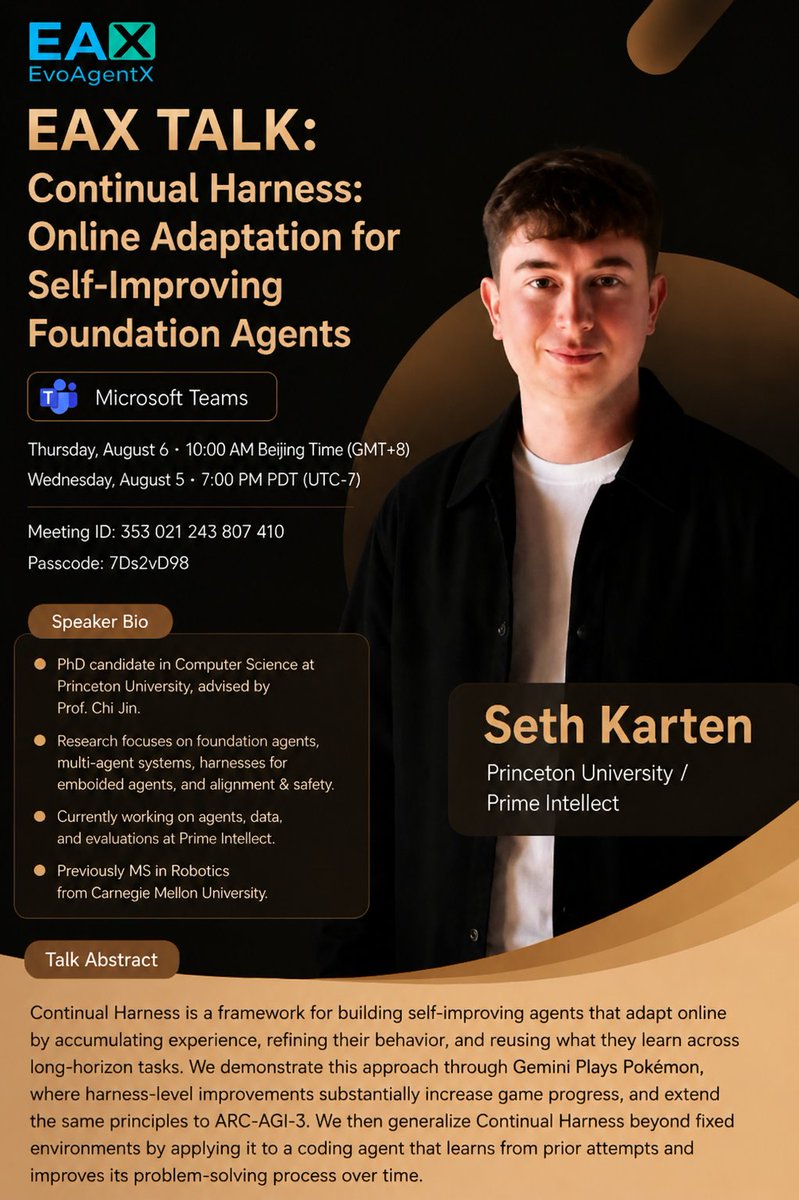
We're thrilled to host Seth Karten (PhD @ Princeton, researcher @ Prime Intellect) on Continual Harness: Online
Adaptation for Self-Improving Foundation Agents.
Instead of fixed prompts and static workflows, Continual Harness lets agents adapt online — accumulating experience,
refining their behavior, and reusing what they learn across long-horizon tasks. Seth will show it live through Gemini
Plays Pokémon (where harness-level improvements dramatically boost game progress), extend it to ARC-AGI-3, and
generalize it to a coding agent that learns from its own past attempts.
🗓️ Thu, Aug 6, 2026 · 10:00 AM (GMT+8) / Wed, Aug 5 · 7:00 PM PDT
💻 Microsoft Teams
Join us 👇 details in the comments.
#AIAgents #FoundationModels #LLM #AgenticAI #EvoAgentX
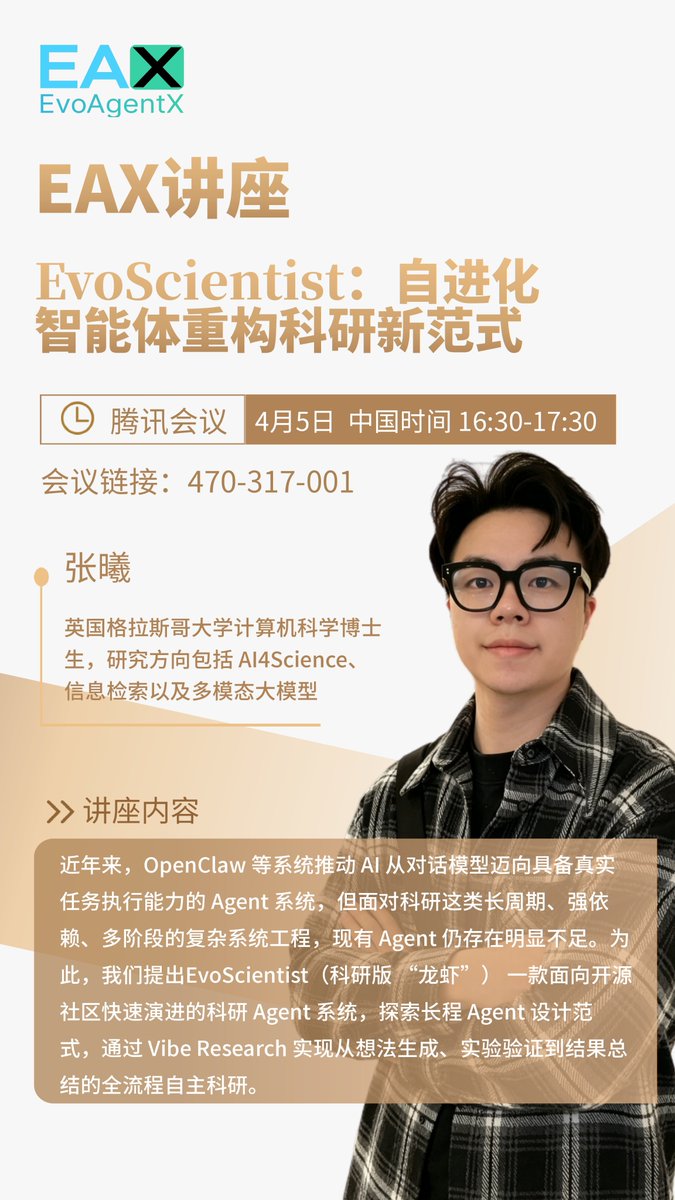
What happens when AI scientists can evolve themselves?
@_xizhang will share EvoScientist — a system where multi-agent AI collaborates to solve real research problems and continuously improves itself.
If you're building AI agents, doing research, or exploring self-evolving systems — this is worth your time.
Join us and see how “vibe research” could become reality.
📅 Apr 5, 16:30–17:30 (CN)
🔗 Meeting ID: 470-317-001
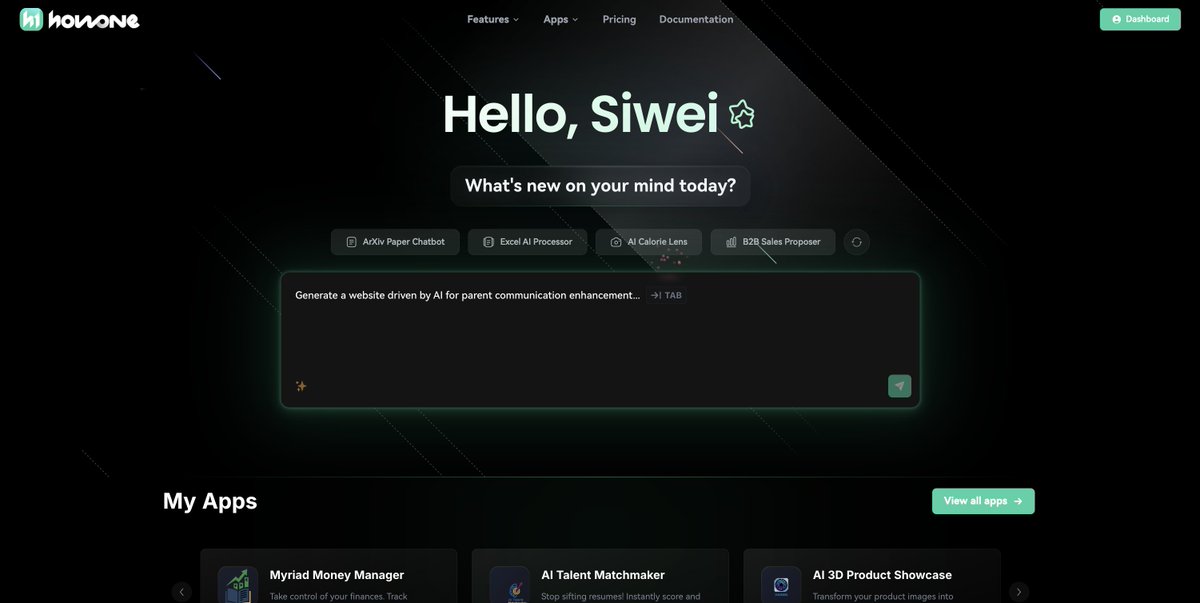
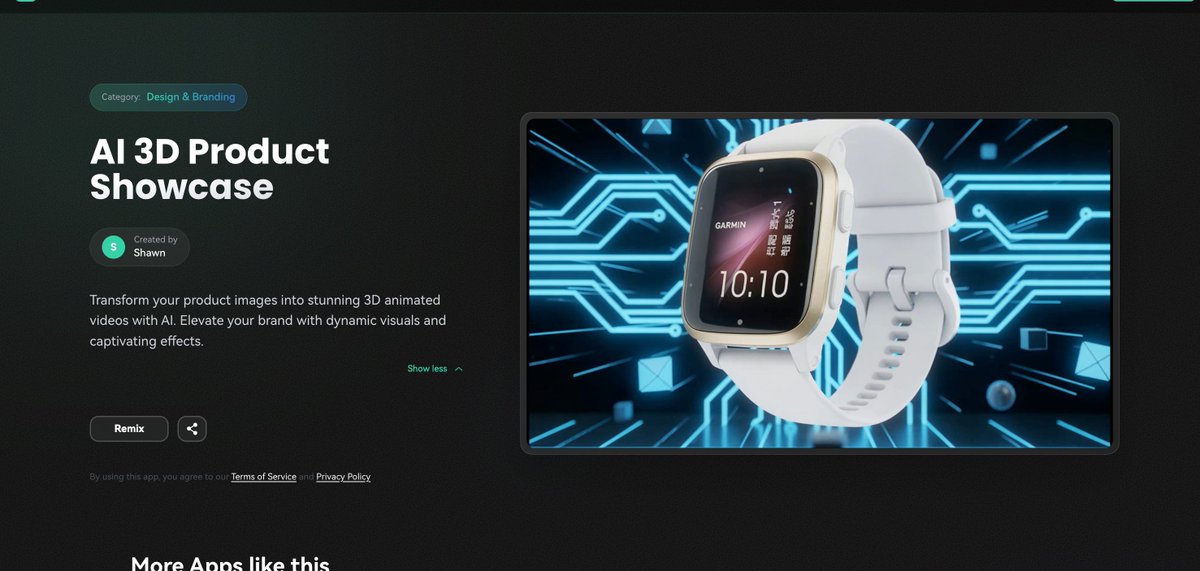
@suni_code Product Showcase: Transform your product images into stunning 3D animated videos with AI. Elevate your brand with dynamic visuals and captivating effects. Remix to use: https://t.co/BXDA3TXrzk