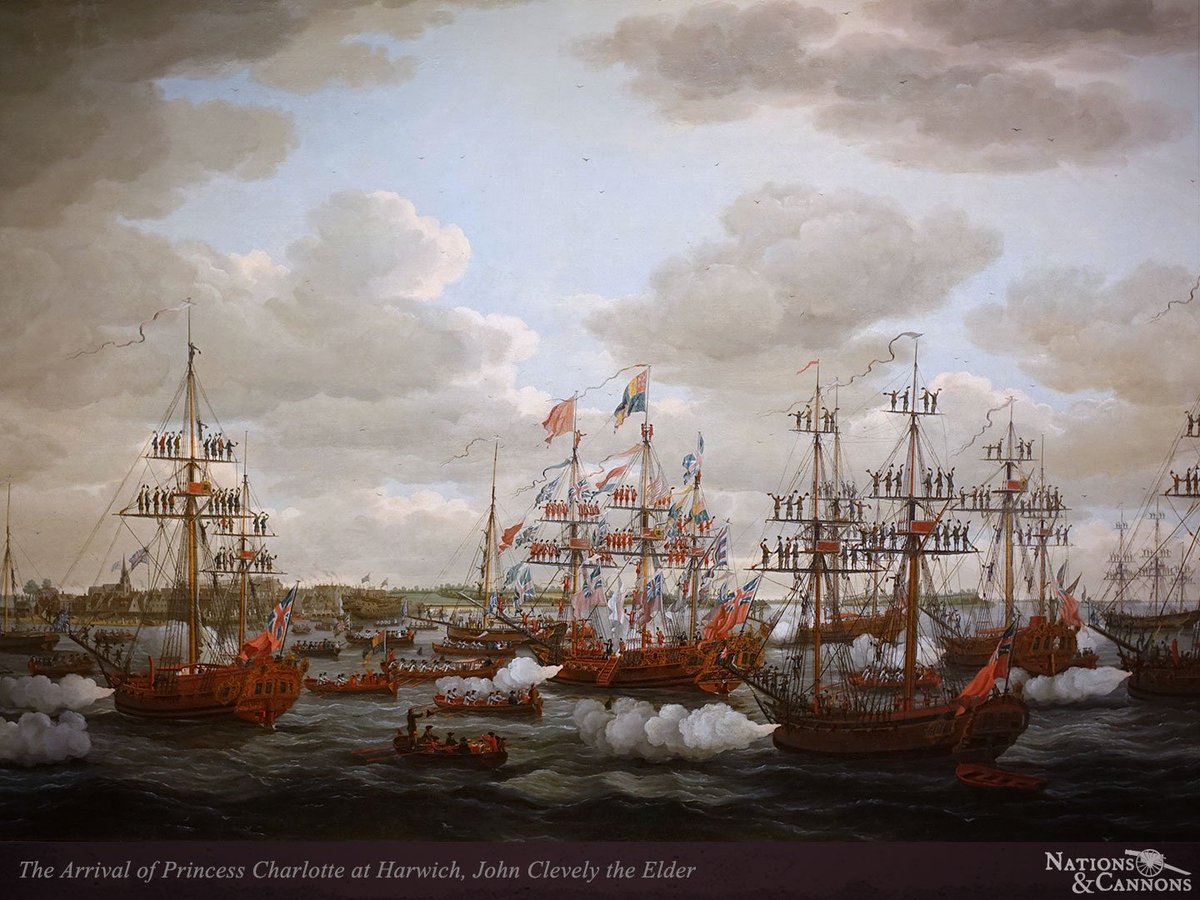
250 years ago today, on June 29, 1776, New Yorkers looked out at the water and saw a nightmare on the horizon. The British fleet had arrived, and so many ships filled the bay that witnesses said the masts looked like "a forest of pine trees" growing out of the sea. The timing could not have been more brutal.
This was the empire's answer to the rebellion, and it was overwhelming. The first wave of around 45 warships and transports dropped anchor off Sandy Hook and Staten Island carrying General William Howe and roughly 10,000 troops. Within days it kept growing. Then his brother Admiral Richard Howe arrived with more. It would eventually swell into one of the largest seaborne invasion forces of the entire 18th century, hundreds of ships and tens of thousands of professional soldiers and German mercenaries, aimed at one city.
Now sit with the timing. While that forest of masts was filling the harbor, delegates down in Philadelphia were in the final days of debating whether to declare independence. They voted for it on July 2 and signed off on the wording on July 4. So at the exact moment America was being born on paper, the most powerful military on earth was already anchored off its coast, getting ready to strangle it in the cradle.
The people of New York understood exactly what they were seeing. Alarm bells rang, panic spread through the streets, and soldiers sprinted to their posts to stare at a force they had almost no hope of matching. Washington's army was outnumbered, outgunned, and about to get badly beaten in the battles for New York that followed.
That's the part that gets lost in the fireworks every Fourth of July. Independence wasn't declared from a position of strength. It was declared with an enemy armada already sitting on the doorstep, knowing full well what was coming. They signed their names anyway.
This is cavitation inside a piston diaphragm pump.
Most engineers spend their entire careers hearing this destructive phenomenon. Almost none ever get to see it with their own eyes.
When pressure drops below a critical threshold, liquid instantly flashes into vapor, creating thousands of microscopic bubbles throughout the system. It happens in milliseconds, invisible to the naked eye in standard metal pumps.
But when pressure rises again, those bubbles don't just disappear quietly. They collapse violently, sending shockwaves rippling through the metal components. The result is catastrophic. Valves get destroyed. Seals get shredded. Pump chambers get hollowed out from the inside, one microscopic implosion at a time.
Cavitation is one of the most destructive forces in industrial fluid systems, responsible for equipment failures that cost thousands of dollars per incident. Engineers have studied it for decades through sensors, pressure readings, and the telltale sounds it makes. But they've never been able to watch it happen in real time.
Until now.
The clear plexiglass head on this LEWA pump changes everything. For the first time, pump engineers can observe cavitation as it occurs, watching the bubble formation and violent collapse that destroys their equipment. It's like finally seeing the invisible enemy that's been wreaking havoc on industrial systems.
This is what happens when engineering innovation meets visualization technology. Sometimes the most powerful breakthroughs come from simply making the invisible visible.
The Bondtech INDX passive tool doesn't have to be just for the printer. 🖊️⚙️ MiniVan designed this simple pen based on that exact part. It uses a standard Pilot G2 ink refill prints quickly and might just become your new favorite desk pen. https://t.co/XPddYk7mn9
We printed this chameleon with Bondtech INDX on Prusa CORE One+ – and it’s a nice showcase of what it does best.🦾 Eight loaded materials, clean color changes, no purge tower, and just 19.2 g of wasted filament for the whole print.♻️
https://t.co/mrOD1QNj6R
🏰 CASTLE VOTING CLOSES AT MIDNIGHT
Will the girls win Medieval Times tickets or will they turn into a pumpkin?
We only need to be in 4th place to win. Any and all votes are appreciated! Please feel free to Share. 😀
https://t.co/UVJbnYWYpO@
@ChrisPirillo The 404 is cool. I’m sure you could add interaction with a Mobil device. Like I expected tilting my phone to make the banner flap around.
BLACK FRIDAY SALE — Save 30% on all print orders on my website for the next week. The perfect time to get your order in before the holidays!
Shop prints from all eleven Starship flight tests and nearly 400 other rocket launches from the last decade.
@joeltelling, joel, JOEl. Check out this crazy 3D printing with a mosquito probiscis. “line widths as fine as 20 micrometers (about the width of half a human hair)”
#A mosquito proboscis has been repurposed as a biodegradable, ultra-fine 3D printing nozzle, enabling high-resolution printing at lower cost and with reduced environmental impact. @ScienceAdvances https://t.co/QOHTEyzrB5 https://t.co/ammsq2R2xL
Das erste und derzeit einzige Level3 System weltweit, bei dem der Fahrer TikTok nutzen, am Laptop zocken oder einen Döner essen darf, haben Mercedes & BMW.
Tolle Leistung, auf die wir stolz sein könnten.
Geht aber leider in der grellen Varporware-Show von Tesla komplett unter.