We need digital signs so the OPP can lower speed limits in winter and to keep heavy GTA traffic moving, not pandering to people with lead feet and no sense of self-preservation.
Starting this summer, we’re increasing speed limits wherever it’s safe to do so on highways across Ontario, getting drivers where they need to go faster.
By October, close to 90 per of Ontario’s highway network will be at 110 km/hr, reflecting the speed for which our highways were designed.
Find out more: https://t.co/GTLJDuwVVr
@FirstClassDuck@kevlap017@JakeLandauTO If government wants to cut costs, improving equipment utilization through regulating reliable train paths and fewer delays is a good option.
(VIA Rail has to have larger crews partly because Transport Canada requires it, but provides a better on board service level as a result.)
@kevlap017@JakeLandauTO Ridershare like Amigo is a good idea in principle because it fills vacant seats, provided there’s good safety assurance built into the platform. However, it covers only part of the driver’s true cost of operating their vehicle, let alone the total cost of driving to the economy.
@moretransitso We need to call in the Japanese to straighten this out. Tokyo metro systems retrofit gates rather than costly full-height PEDs, and thus also avoid a complete rework of station ventilation.
TMU/Dundas would definitely qualify for gates like these:
@RM_Transit There are major crossings that still need to be done, like Golf Club Road. That’s not a constraint so much as something that needs to be done anyway that also becomes an enabling activity.
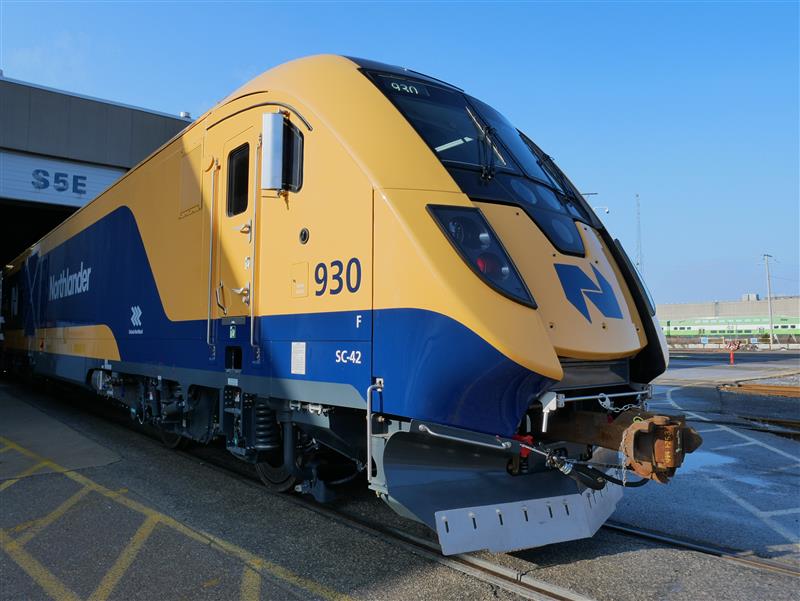
Today, our government reached another major milestone in bringing back Northlander passenger rail service.
We’ve successfully acquired 205 kilometres of railway between North Bay and Washago, securing a dedicated corridor that prioritizes passenger service, improves reliability, better connects families and workers across central and northeastern Ontario, and supports timely freight movement so goods can move more quickly and efficiently across the province.
@Giovany2121@Captain_Gallo@the_transit_guy This is how most of Europe does it: Tracks are publicly owned and dispatched, private sector buys guaranteed freight train paths.
North America does things the other way around, public sector buys train paths which are often slow and unreliable.
@BiniIrl Adding tracks to the CN corridor seems logical and it was tried, before HFR was proposed. It went over budget and underdelivered badly, so the Auditor General got involved. Unless the regulatory environment is completely overhauled it may not be much better a second time around.
@EricONCA@ttcdoors CSA R114, the Canadian method for risk evaluation and assessment for railway systems is new since Line 5 was designed, but it does that. The Transport Canada figure for statistical value of life is also significantly higher than that used in the UK.
https://t.co/rWmEWQVtzz
@cllrainslie Markham or Agincourt as a shoulder station, Union as the terminus. Platform reoccupancy can be less than 15 minutes if well designed, so half hourly service is easily possible using only a single track at Union, although there needs to be a plan for future expansion.
@BiniIrl Seeing them lad out like this gives a clear picture of how overbuilt some of these stations are. They’ve got more vertical circulation than the average London Underground station and yet the trains have less than half the capacity on twice the headways.
@PrabSarkaria Please compare with excavation volumes for the Canada Line or most European metros, where project costs are lower. Making a very big hole is rather expensive and is not necessarily the most effective way to invest money in transit.
@AlexanderGlista We’re going to need a shoulder station for Alto, and if it’s a Agincourt that should be planned as a hub with SSE and Sheppard.
(I know multi-agency integrated transportation planning is harder to find than a white moose…)
@MikeFerrell15@TransportAction That appears to have been tried for set 2213 and then not continued in favour of turning the sets to run locomotive forwards.
@JoshMatlow What’s needed is to reverse a lot of the past few decades of downloading, because if you think Toronto is having a hard time, with its enormous potential property tax base, try looking at the balance sheet in smaller municipalities!