mTOR inhibitors stop cancer cells from dividing, but they rarely kill them. New work in @MolecularCell from @LukeGilbertSF & lab reveals a mechanism connecting mTOR signaling, cholesterol biology, and ferroptosis that could turn growth arrest into cancer cell death.
How does a cell learn? In our new perspective in @Nature we propose a model where the properties of the AP-1 family of transcription factors – stress-induced feedback, regulatory combinatorics & cellular memory – encode a mechanism for cellular learning. https://t.co/Hzmq319EaD
our review on how non-mutagenic factors promote cancer out now in @Nature. Thanks to PROMINENT @CancerGrand colleagues Allan, Eve, Abel and @nlbigas. @IARCWHO
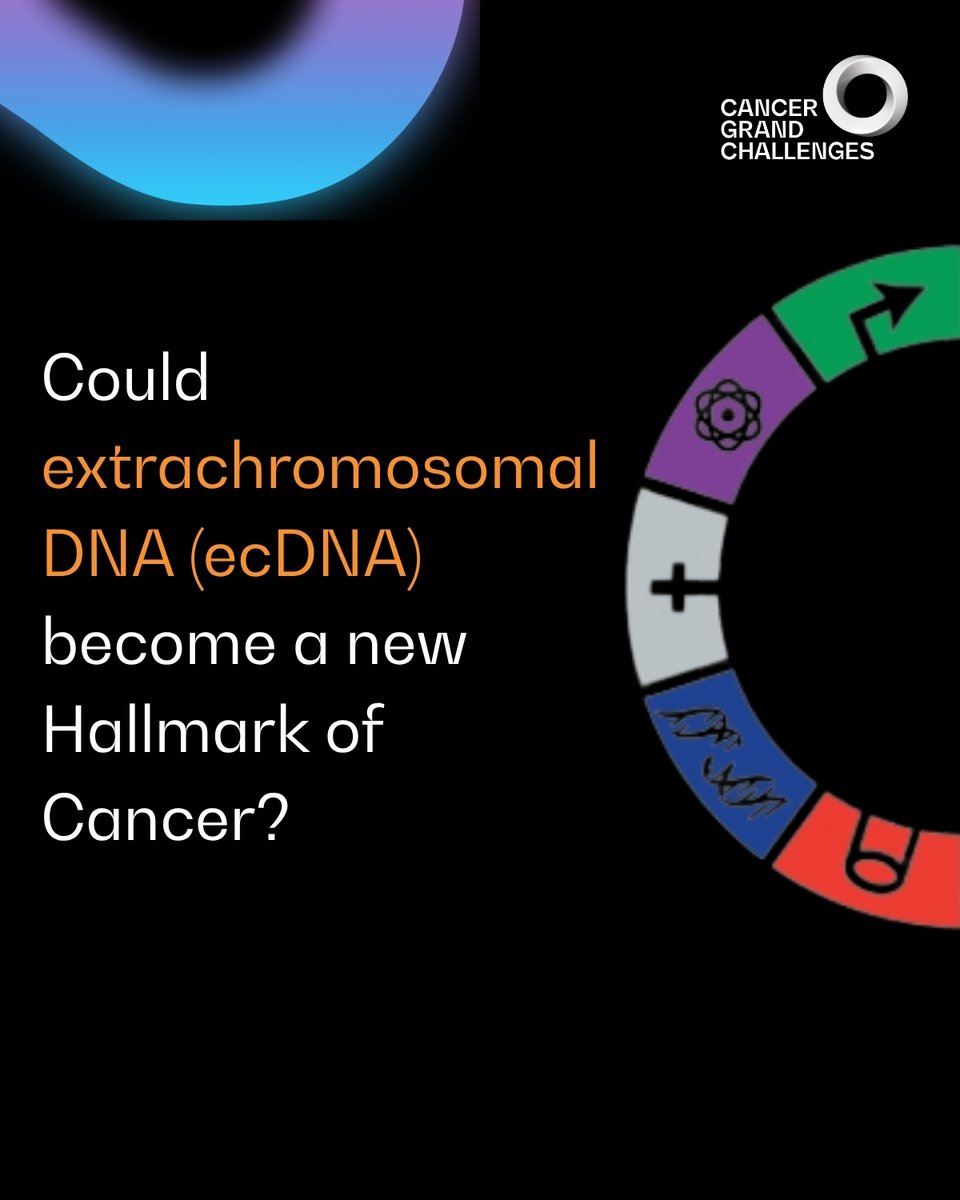
For over two decades, the Hallmarks of Cancer have shaped how we understand, study, and treat cancer and has consistently represented a unifying conceptual framework for cancer biology.
But cancer research doesn’t stand still. New discoveries are challenging long-held assumptions and reshaping the field.
A new review published today as part of the special issue to commemorate 25 years of the original “Hallmarks of Cancer” paper in @CellCellPress highlights how team eDyNAmiC is reframing our understanding of extrachromosomal DNA (ecDNA) and its central role in therapy resistance.
Led by @PaulMischel, team eDyNAmiC is proposing a more holistic perspective by integrating ecDNA into the broader Hallmarks of Cancer framework.
🔗https://t.co/lHO0ZZRb6O
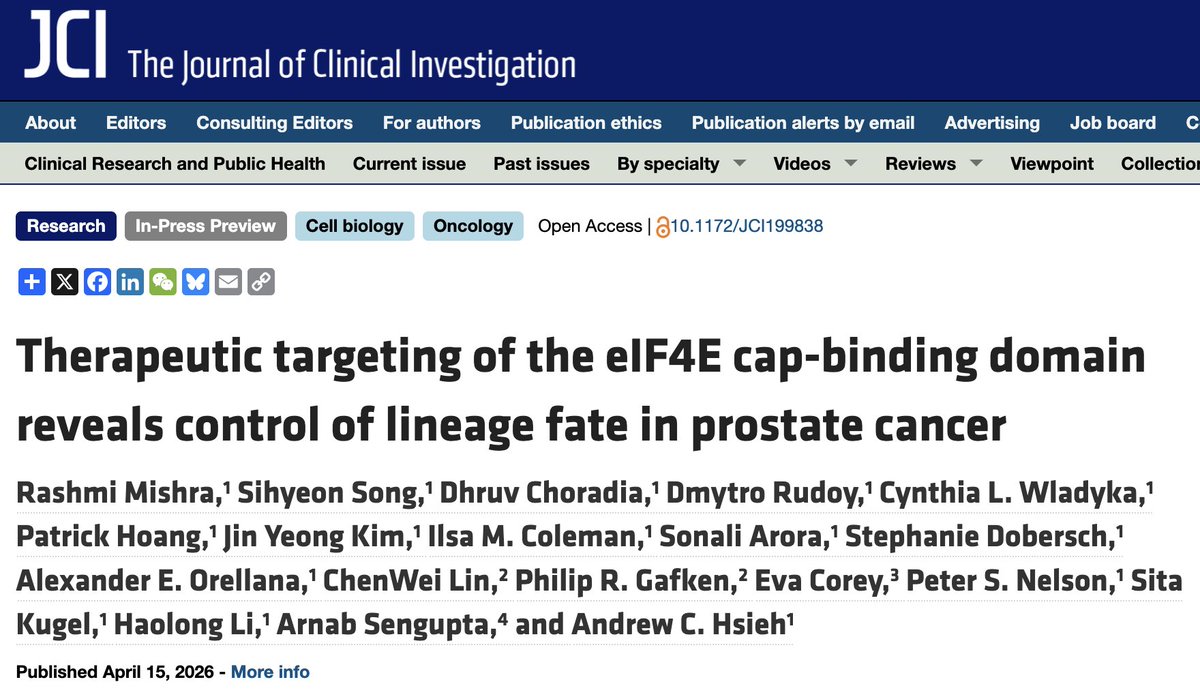
Ever wonder how toggling protein synthesis impacts cellular identity? Dr. Rashmi Mishra @HsiehLab did and through a clever drug screen discovered that the cap-binding domain of eIF4E regulates lineage fate in prostate cancer. Story hit newsstands today: https://t.co/dwv6z2untc
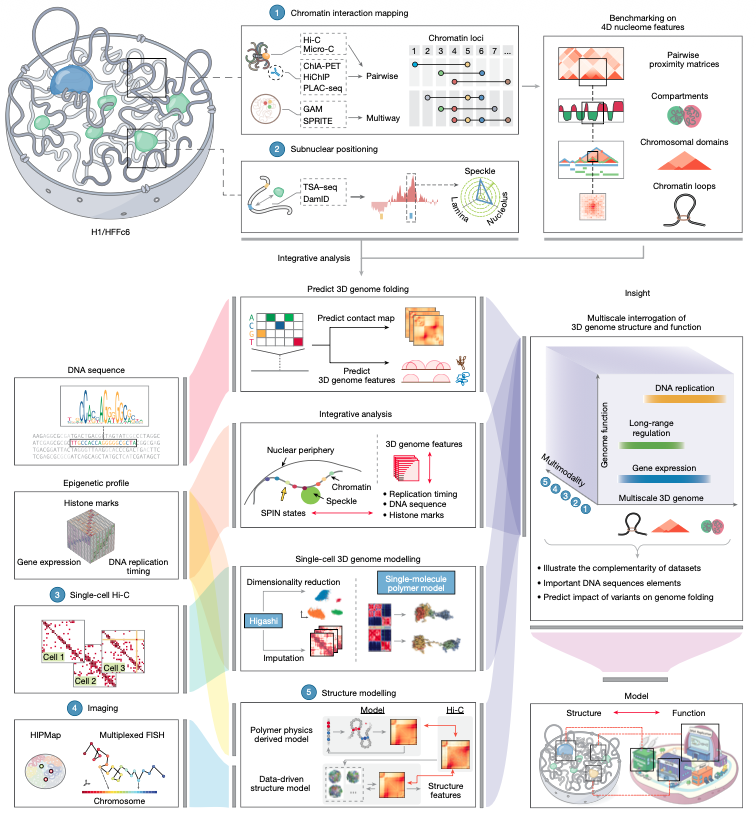
Many people think of the genome as a string of "letters." The human genome, say, has 3.2 billion base pairs of DNA organized across 23 pairs of chromosomes.
But the genome is a 3D object. Genes located on entirely different chromosomes might be clustered together. Mutations in these "distant" genes can lead to disease in surprising ways.
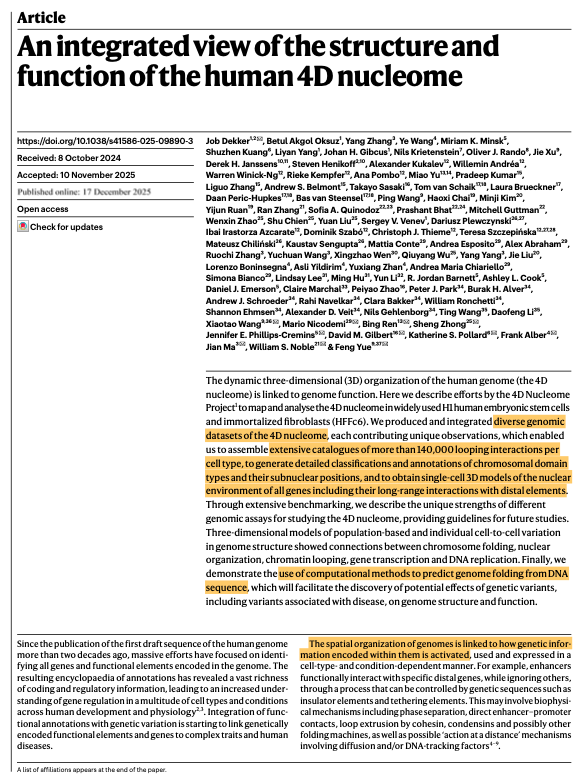
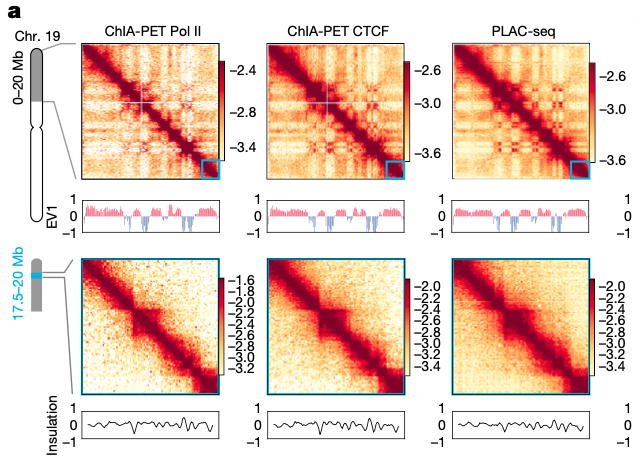
For a new paper in @Nature, researchers released several "maps" of human genomes from two types of cells: embryonic stem cells and fibroblasts. They compared methods to see which ones are least biased, and found many long-range interactions between genes.
The article does a good job explaining how “the genome is organized at different scales”:
> On a single chromosome, histones control which parts of the DNA sequence are accessible and expressed.
> At the scale of hundreds of thousands of bases, “chromatin loops in a dynamic manner,” the authors write, bringing distant genes closer together. > Across chromosomes, sequences "cluster together in space to form subnuclear compartments."
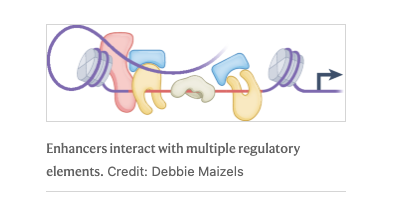
Examples abound. Enhancers, for example, are short DNA sequences that regulate the expression of far away genes. They do this by *physically* touching the genes they control; a protein called cohesin grabs the DNA and tugs it into big loops.
Even promoters, which are thought of as being associated with one gene or operon, can cluster together across many genes! A protein, Ronin, grabs promoters and pulls them together. This is apparently done mostly for genes that tend to be "on," as it helps enzymes find genes faster/not have to diffuse far away to find targets. (This also happens with genes that tend to be "off;" so-called polycomb proteins grab onto promoters, cluster them up, and silence all of them at once. It's a way for the cell to conserve energy.)
One consequence of this spooky "action-at-a-distance" is that diseases might arise from mutations in unexpected locations. Editing these regulatory sequences, in other words, might in turn affect a gene located on an entirely different chromosome that *is* associated with that disease.
Genetic mutations linked to autism, for example, are known to disrupt the 3D organization of the genome. A single deletion at a gene, TAL1, also affects its ability to form long-range chromatin interactions with other genes, leading to leukemia. There are probably many other, as-yet-undiscovered, instances of this.
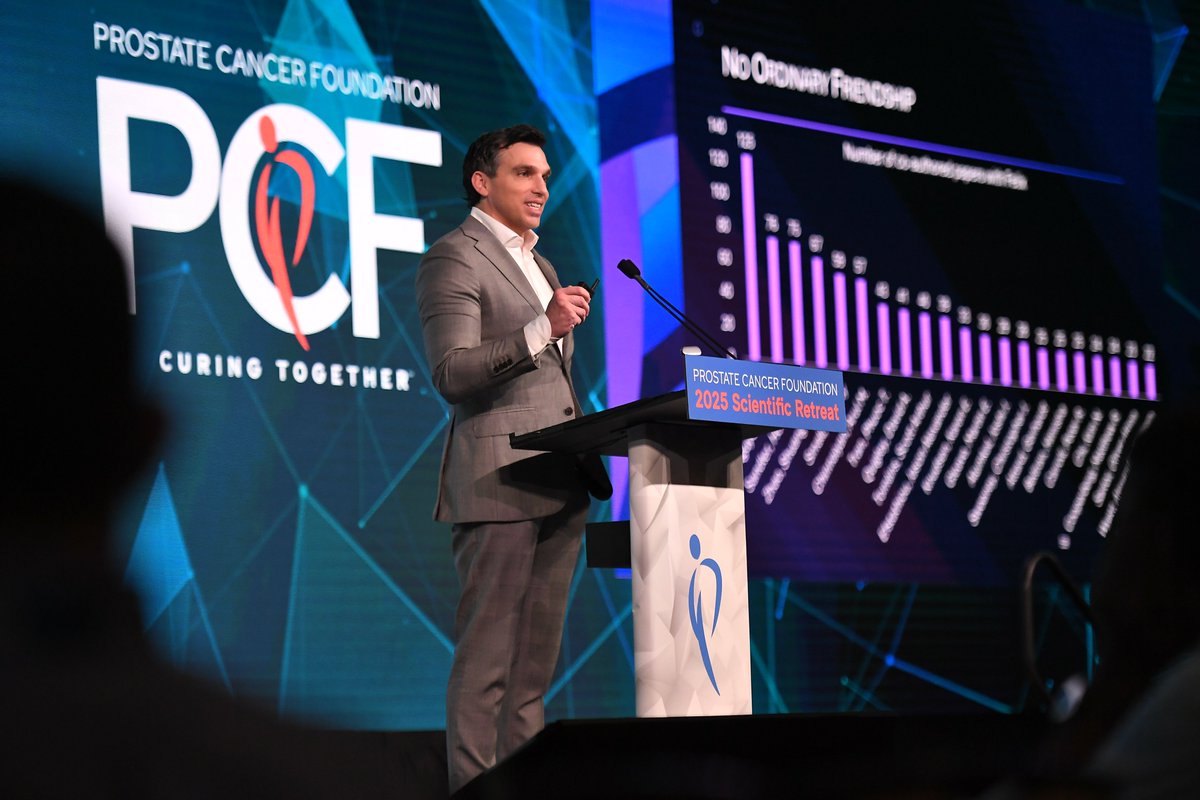
Congratulations to the @PCFnews 2025 PCF Young Investigators! 👏👏🙌
Over 50% are women this year — a long-awaited milestone. We finally broke the ceiling! #PCFRetreat25
Honoring the legacy of Dr. Felix Feng, a visionary leader whose work transformed how we understand and treat #prostatecancer. Dr. Daniel Spratt reflects on his groundbreaking research in genomics and prostate cancer biology.
Years ago we tried to model cancer-associated fibroblast (CAF) subtypes in vitro, but gave up because only the proliferative subtype survived culture (duh!). This study could change all that: Perturb-seq with CRISPRa of 1,836 TFs induces diverse fibroblast states in vitro(!). 👏
Researchers have developed a #DeepLearning system called BioEmu that rapidly generates diverse protein conformations, enabling fast, accurate insights into protein flexibility and function.
Learn more this week in Science: https://t.co/Pe15hm9F52
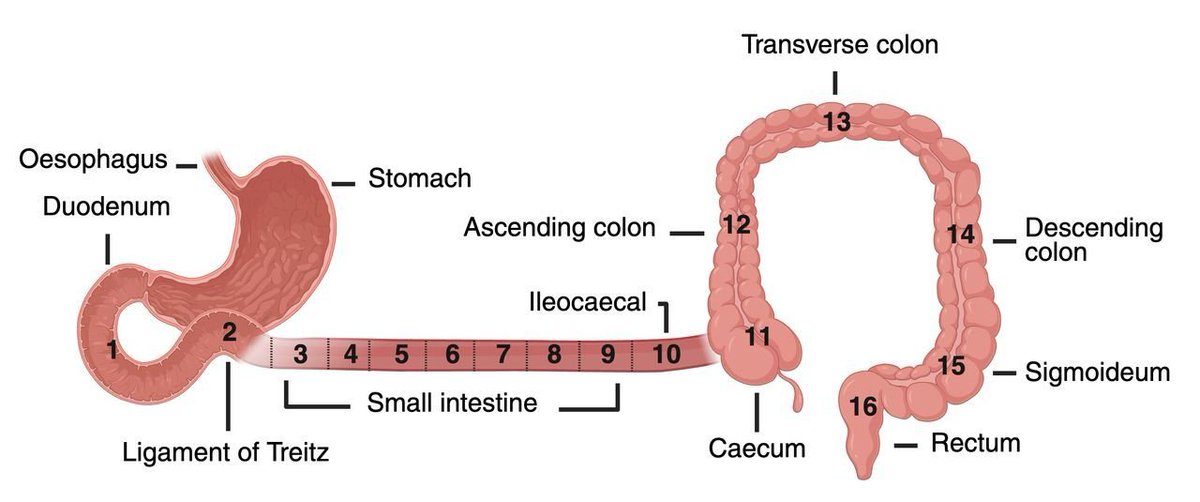
Today, @HannahVigh et al. unleash a freely available and searchable database of the human intestinal transcriptome - an atlas of the expression of 19,739 genes from 16 sites along the intestinal tract. Check out the landscape of your favourite gene here: https://t.co/ydcWR4pbCX
The heterogeneity of HeLa cell-lines undermines reproducibility.
HeLa cells were obtained without informed consent.
==> Researchers should avoid using HeLa cells unless required by a special justification.