The Yaden Lab studies psychedelic & other altered states of consciousness. In the Johns Hopkins Center for Psychedelic & Consciousness Research @JHPsychedelics
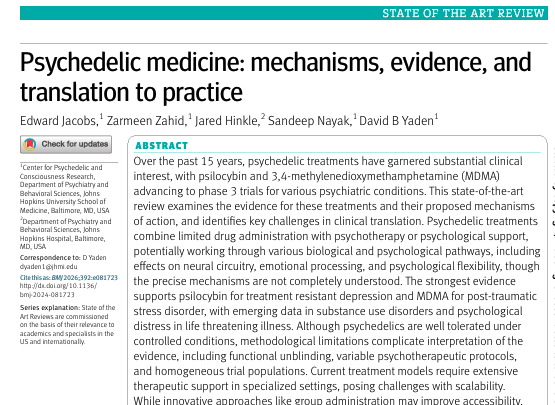
This was commissioned for generalist physicians, not the psychedelic research community. That constraint was clarifying. We had to decide: if a non-specialist reads one thing on this topic, what should it contain?
https://t.co/PZONdo1c9n
Drs. Fred Barrett and David Yaden have received a 2026 Johns Hopkins Nexus Award alongside fellow JHU scientists, educators, bioethicists, and economists. Their convening will bring together leaders across clinical, ethical, economic, and public health fields to advance critical conversations around the future of psychedelic policy. As the science matures, so must the policy conversations around it, and we are grateful to Johns Hopkins for supporting that work. https://t.co/ncln2h9cN2
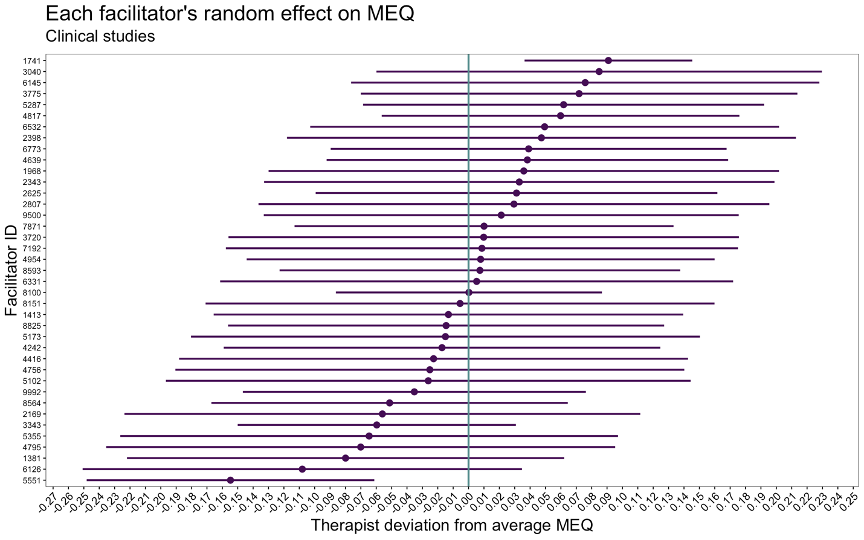
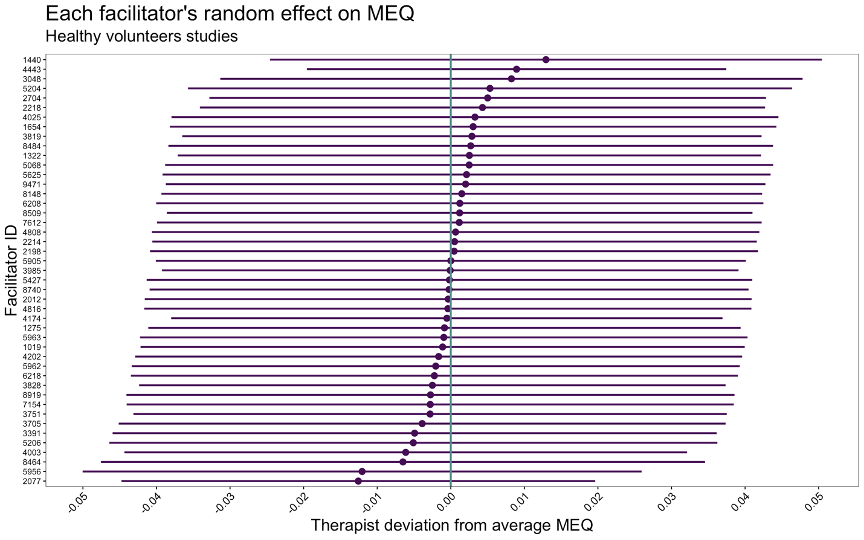
Caveats: only Hopkins studies, only MEQ data, only psilocybin trials.
In clinical settings, facilitators can meaningfully shape patients' experiences, which may carry into therapeutic effects.
📄 Check out the full paper for more:
https://t.co/seL9tKJOTr
We published these findings last year, and I thought that is my last first author paper from my PhD (clearly it wasn't... ^_^).
4/9
https://t.co/5NSaX7mN5Q
My main PhD question explored the effects of psychedelic DOI on anxiety-like behavior. We found that there is a dose dependent response, with DOI's action on anxiety, but not locomotion mediated through the 5-HT2ARs.
3/9
We investigated the mechanistic pathway underlying the DOI-evoked anxiolytic response and this led to my primary PhD findings: 5-HT2ARs on vHpc PV interneurons are responsible for DOI induced decrease in anxiety on EPM.
5/9
https://t.co/xFZTIAHQk0
Our (@zarmeen_z Jared Hinkle @sdpnayak@ExistWell) State of the Art Review on psychedelic medicine is now out in @bmj_latest.
A few thoughts on why we wrote it the way we did. 🧵
The final chunk of my PhD is now published online. Grateful for @ViditaVaidya, and co-authors @Mahathi_VR and @Noname_shre
We show that chemogenetically activating, but not inhibiting vHpc->BA projections can module anxiety-like response on the EPM.
https://t.co/GJtLiNtVGy
1/9
What exactly it would mean for psychedelic research(ers) to be "independent"?
Very pleased to share a new piece on the benefits & risks of independence in psychedelic research, w/ @ExistWell@r_ehrenkranz@briandavidearp@eddietalksdrugs
In other words, facilitators seem to have the biggest impact on psychedelic experiences when therapeutic stakes are highest. For healthy volunteers, the experience was shaped almost entirely by the drug itself and individual differences, not who facilitated the session.
Roland Griffiths was my post-doctoral Mentor. He led the field in pharmacology research on caffeine and "club drugs" long before he began his work on psilocybin. People forget his other contributions. This article finally highlights some of this work. https://t.co/6AOGZbW8MO
New paper led by Dr. Praachi Tiwari (@PraachiTiwari)!
The psychedelic DOI alters locomotion depending on dose and species (through 5-HT₂A receptors). This matters for understanding anxiety-like behavior in animal models of psychedelics.
(w/ @ViditaVaidya and her great lab)
The final first author paper from my PhD is finally out!!!
We find that DOI changes total movement in rats and mice differently, and not all strains of mice respond the same way. This change in locomotion at 1mg/kg DOI seems to be 5HT2A dependent.
https://t.co/5NSaX7mN5Q
How should we approach psychedelic therapies for teenagers?
“Very carefully, very cautiously, if at all” seems like the correct (if coarse-grained) answer.
In a new paper, we articulate one concern that we think hasn't had enough attention, and sketch a response. [1/11]
Oregon’s psilocybin services (~$3000 at the higher end) are often described as quite expensive. But when making this claim, we should ask: expensive compared to what?
https://t.co/oalSerULFO
When we started to promote replication studies (e.g. Koole & Lakens, 2012) we had a scientific culture where publishing a direct replication with a null result was practically impossible, and most didn't even consider trying. That culture has changed - although still not enough.








![eddietalksdrugs's tweet photo. How should we approach psychedelic therapies for teenagers?
“Very carefully, very cautiously, if at all” seems like the correct (if coarse-grained) answer.
In a new paper, we articulate one concern that we think hasn't had enough attention, and sketch a response. [1/11] https://t.co/hggFDIwNOz](https://pbs.twimg.com/media/HGWP84aWIAANAhN.jpg)


