Coming soon, the Sustainable European Laboratories network! Created to promote, support and coordinate all green lab initiatives across Europe. stay tuned for more @SELS_Network#sustainability
PhD student wanted! Join the Svejstrup lab in our endeavour to understand the mechanisms of gene transcription and the transcription-DNA damage interface #RNAPII#UCPH 🧬🧩 https://t.co/SkmGHBHawS
Check out the fascinating work of Maria Moriel lab in how Lipid Droplets host Nucleoporins, and watch the video that @MorieLab and @ThierryBsr made together to explain it all!
https://t.co/HD6fwlR280
Environmentally sustainable research is the only way forward. Thank you @FEBSnews for the invitation to share my views on such an important topic. https://t.co/WJvOwah3kl
#sustainableresearch
Our method for “Multiplex Cell Fate Tracking by Flow Cytometry” is out! If you struggle to figure out where your cell populations are coming from, take a look!
https://t.co/FGsamAHlSM
@TheCrick
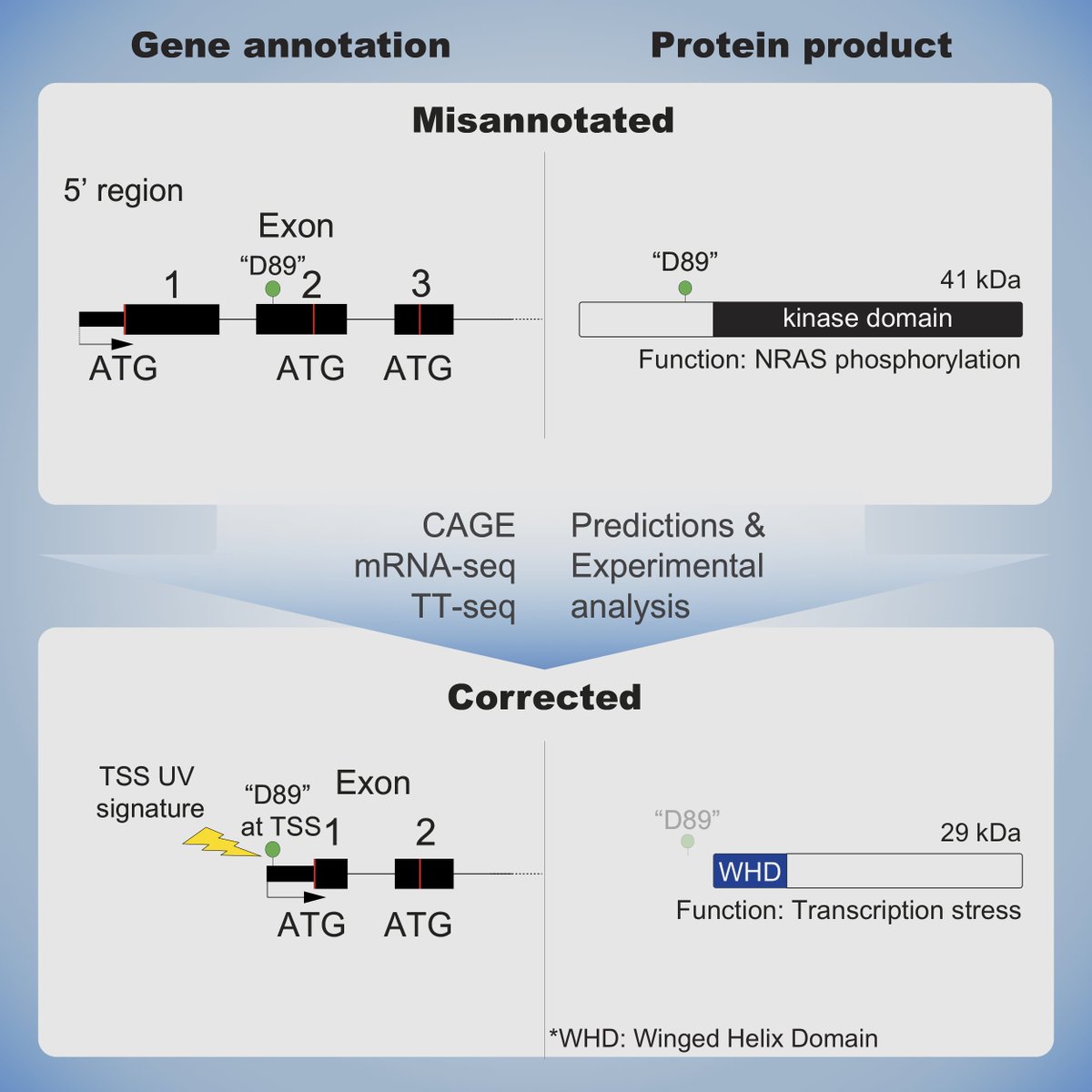
There has been a refinement to last year's Cell paper identifying STK19 as a #melanoma oncogene. Rodríguez-Martínez et al argues, among other things, that STK19 is probably not a kinase for NRAS. Below, STK19 is shown localized to the nucleus. https://t.co/WvzRcInucW
@MartaRodrgzMart@ThierryBsr @MNoeGonzalez @CharlesSwanton@JulianDownward@TheCrick Hej! Very interesting story! I would love to hear about how it came about in the first place. Just presented it for journal club today, we came to the conclusion that lots of the experiments were overkill! We were convinced very early on!
This is a fascinating read...Title doesn't sound super interesting (to someone who had never heard of STK19), but start reading...it's a very careful challenge to published work.
This is a must read for the melanoma research community. I, too, have been unable to find evidence that the relevant isoform of STK19 exists in melanoma cells in my own RNA-Sequencing data
Thank you all for the overwhelming response to our work, summarised in the graphical abstract below. And to clear up any doubts, here is also our response to Yin et al.’s comments.
https://t.co/F4oDBwJ0vH
https://t.co/FHlAgyqp7w